NCLT Mumbai Approves Resolution Plan in Cosmos Co-operative Bank Ltd. v. Shubhada Tool Industries Pvt. Ltd.
Court / Authority
NCLT & NCLAT
Update / Judgement Date
30 Aug 2026
Source
WCP News Bulletin
Author
Manas Yadav — WCP Legal Desk
Reading Time
2 min read
View Count
1

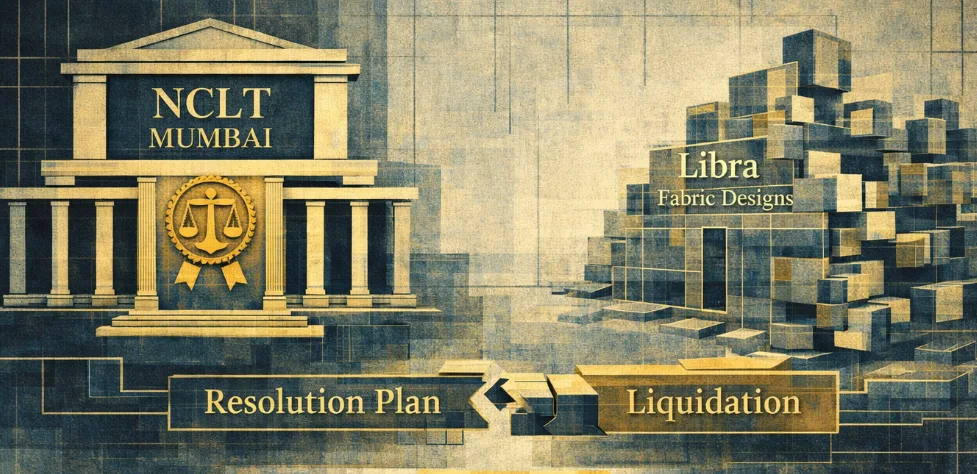
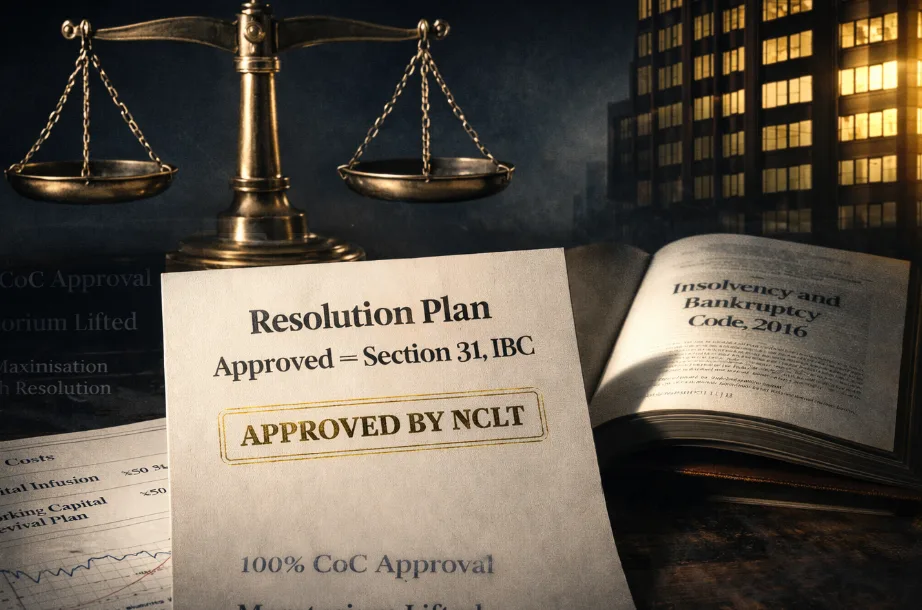
The National Company Law Tribunal, Mumbai Bench (Court III), by its order dated 24 March 2026, approved the resolution plan submitted by CIAN Agro Industries & Infrastructure Limited in the CIRP of Shubhada Tool Industries Private Limited, reaffirming the primacy of creditor commercial wisdom under the Insolvency and Bankruptcy Code, 2016.
CIRP Background and Resolution Process
The Corporate Insolvency Resolution Process commenced on 17 January 2025 upon admission of a Section 7 application filed by Cosmos Co-operative Bank Limited, which constituted the sole member of the Committee of Creditors. The admitted financial debt stood at approximately ₹56.85 crore, while operational liabilities were limited to statutory dues. The Corporate Debtor, engaged in manufacturing hand tools, had ceased operations since FY 2021–22.
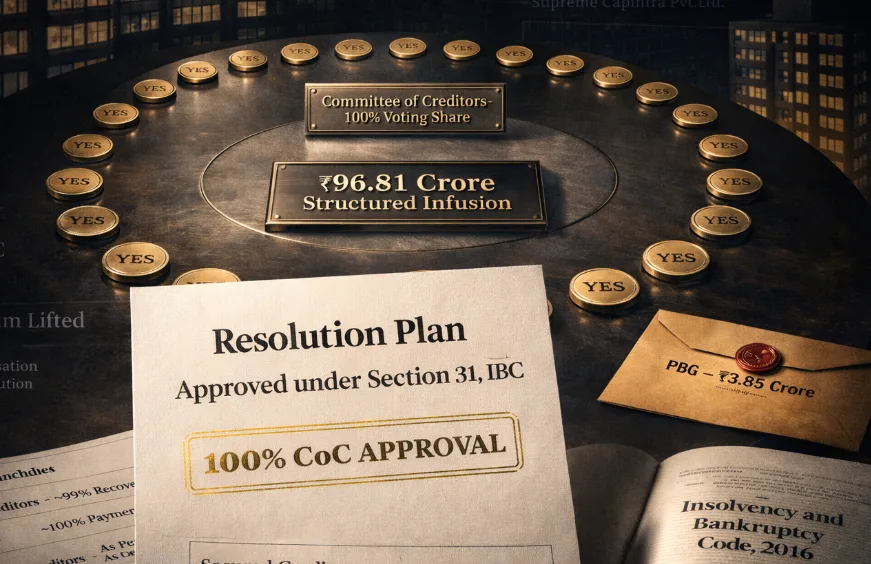
The resolution process was competitive and iterative. Six expressions of interest were received, ultimately narrowing down to two serious applicants—CIAN Agro Industries and Industrial Asset Transaction Services Pvt. Ltd. Multiple rounds of negotiations and extensions were granted to enhance value. After successive revisions, CIAN emerged as the highest bidder with a plan value of ₹9.75 crore. The plan was approved by the CoC with 100 percent voting share on 6 October 2025, following extensions that took the CIRP to 270 days. The plan reflects a significant haircut, with secured financial creditors recovering approximately 16.7 percent of admitted claims. Government dues are settled at a nominal amount, while CIRP costs are fully provided. Importantly, the plan value exceeds the liquidation value, satisfying viability requirements under the Code.
Tribunal Reasoning and Legal Implications
The Tribunal held that the resolution plan complies with Sections 30(2) and 31 of the Code and reiterated that its jurisdiction is limited to statutory scrutiny. Relying on K. Sashidhar and Essar Steel, it emphasized that commercial decisions of the CoC, even where consisting of a single creditor, are non-justiciable on merits. The plan provides for complete capital restructuring, extinguishment of existing shareholding, and transfer of management to the resolution applicant, with interim oversight by a monitoring committee. Implementation is structured over 360 days with phased payments.
A notable feature is the allocation of avoidance transaction recoveries to secured financial creditors, who will also bear litigation costs. This reflects flexibility in structuring contingent value within resolution plans. The ruling reinforces the IBC’s emphasis on finality, feasibility, and creditor autonomy, even in cases involving deep haircuts and single-creditor dominance.
Full Judgement / Attachment
Full Judgement
Frequently asked questions about NCLT & NCLAT
- What are the NCLT and NCLAT?
- The National Company Law Tribunal (NCLT) and the National Company Law Appellate Tribunal (NCLAT) were constituted on 1 June 2016 under the Companies Act, 2013. The NCLT sits in benches across India, and the NCLAT hears appeals from it, with its principal bench in New Delhi and a bench in Chennai.
- What cases does the NCLT hear?
- The NCLT is the Adjudicating Authority for corporate insolvency under the IBC. It also hears company law matters, including oppression and mismanagement petitions, schemes of merger and demerger, reduction of capital, and class action suits.
- What is the time limit to appeal an NCLT order to the NCLAT?
- Under the Companies Act, the appeal is due within 45 days, extendable by up to 45 days. Under the IBC, it is due within 30 days, extendable by up to 15 days. These outer limits are strictly applied.
- How can I check NCLT case status or orders?
- Case status, cause lists and orders are available on the NCLT website (nclt.gov.in) and the NCLAT website (nclat.nic.in), searchable by case number, party name or bench.
- How can White Collar Professional help with a NCLT or NCLAT matter?
- Post your requirement on White Collar Professional to receive proposals from verified Company Secretaries, Insolvency Professionals and Advocates, compare them, and pay securely through the platform. This page also tracks the latest NCLT or NCLAT NCLT and NCLAT judgements as they are reported.