
The Division Bench dismissed the connected writ appeals, while making a limited modification to the Single Judge’s findings concerning the Bar Council of Kerala. In light of…
Civil Law
Update / Judgement Date
19 Nov 2025
Source
WCP News Bulletin
Author
Sakshi Bhardwaj — WCP Legal Desk
Reading Time
4 min read
View Count
1
Headnote:
The Bombay High Court rejected a civil application filed by the Zilla Parishad authorities seeking condonation of 3 years and 3 months delay in filing a review petition against the 2019 judgment in W.P. No. 6728/2019. The Court held that local self-government bodies are not exempt from the law of limitation and must show “sufficient cause” like any other litigant. Mere administrative delays, policy decisions, and bureaucratic processes do not constitute valid reasons. Relying on Supreme Court precedents including Postmaster General v. Living Media India Ltd., (2012) 2 SCC 563 and State of Madhya Pradesh v. Ramkumar Choudhary (2024), the Court emphasized that delay cannot be condoned mechanically or on grounds of “government procedural delays.” Finding no plausible explanation for allowing limitation to lapse, the Court dismissed the application, resulting in automatic disposal of the review petition.
Background:
• The applicants—CEO, Education Officer (Primary), and Chief Accounts Officer of Zilla Parishad Aurangabad—were respondents 4 to 6 in the original writ petition filed by Ambadas Jumde.
• The writ petition was decided on 11 June 2019.
• The applicants sought to file a review petition only in 2022, resulting in a delay of 3 years and 3 months.
• They filed Civil Application No. 6737/2025 seeking condonation of this delay.
• The justification offered:
– The decision involved financial implications.
– Local self-government required time to take policy decisions.
– Bureaucratic and procedural processes caused delays.
– Instructions from the State Government were received late.
– Delay was “neither intentional nor deliberate.”
Issues:
Whether the applicants established “sufficient cause” to justify condonation of a huge delay of 3 years and 3 months in filing a review petition?
Arguments:
Applicants' Submissions:
• Administrative and policy decision-making in local self-government is slow.
• Time was required to obtain approvals and complete procedural compliance.
• Benefit wrongly extended in 2019 order needed correction through review.
• Undertakings by petitioners to refund excess amounts justified moving review.
• Delay was unintentional, and no benefit would accrue to applicants by filing late.
Respondents / State (AGP):
• Opposed the application.
• Asserted absence of sufficient cause and extreme delay without valid justification.
Court’s Analysis & Reasoning:
Law of limitation applies equally to government bodies.
The Court emphasized that government entities are not entitled to special relaxation.
Explanation of delay must relate to the period before limitation expired.
Referring to State of M.P. v. Ramkumar Choudhary (2024) and Ajit Singh Thakur Singh, the Court held that events after limitation expiry cannot constitute “sufficient cause.”
Routine administrative delays are not sufficient cause.
The Court relied heavily on Postmaster General v. Living Media (2012), observing:
• Government cannot cite bureaucratic red-tape as a blanket excuse.
• Condonation is an exception, not the rule.
• Law of limitation binds government like any other litigant.
Applicants’ explanation was vague and unsubstantiated.
Claims that policy decisions are time-consuming or that sanctions were delayed were found inadequate and unsupported by details.
Public bodies must act with diligence.
Citing CIT v. Harinagar Sugar Mills Ltd. (2015), the Court held that government officers have a duty to act promptly, especially in financially significant matters.
Three years and three months delay is excessive and unjustified.
The Court concluded that no material showed why the applicants could not act within the prescribed limitation period.
Held:
Civil Application Rejected
The Court held that the applicants failed to show sufficient cause for condonation of a long and unexplained delay.
Review Petition Dismissed
Since delay was not condoned, the Review Petition itself did not survive and was disposed of accordingly.
Final Order
Civil Application No. 6737/2025 is rejected.
No order as to costs.
Review Petition (St.) No. 26394/2022 stands disposed of due to rejection of delay condonation.
Citation: 2025:BHC-AUG:31904-DB
Case: Chief Executive Officer, Zilla Parishad Aurangabad & Ors. v. Ambadas s/o Yeduba Jumde & Ors.
Court: High Court of Judicature at Bombay, Bench at Aurangabad
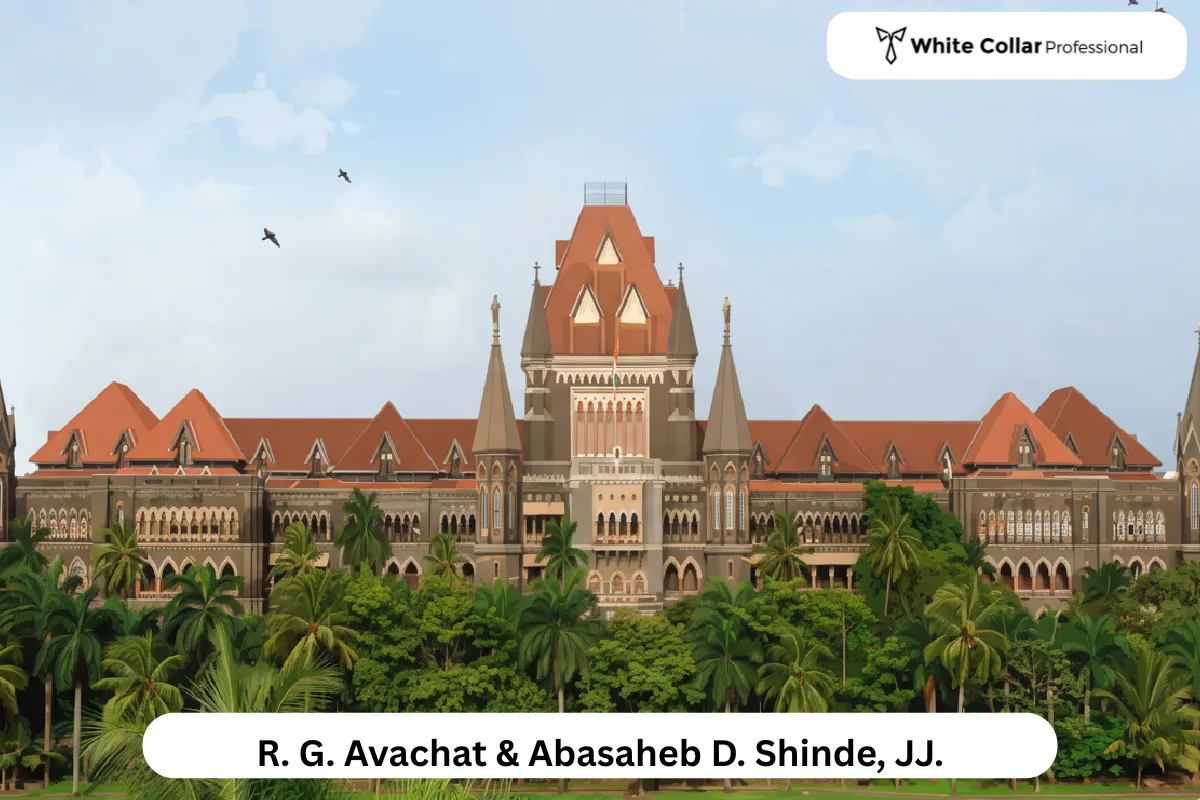
Coram: R. G. Avachat & Abasaheb D. Shinde, JJ.
Decision Reserved On: 11 November 2025
Decision Pronounced On: 20 November 2025
Civil Application No.: 6737 of 2025
In: Review Petition (St.) No. 26394 of 2022
In: Writ Petition No. 6728 of 2019
© 2026 White Collar Professional Technologies Pvt. Ltd. All rights reserved. CIN: U74999MH2024PTC000001
The Division Bench dismissed the connected writ appeals, while making a limited modification to the Single Judge’s findings concerning the Bar Council of Kerala. In light of…

The High Court held that the trial court was not justified in directing the parties to undergo fresh DNA testing when the existing expert report had not been rejected for legally…

The High Court held that a subsequently communicated minimum 20% local-content requirement, including an indigenously developed EMS software condition, could not be…
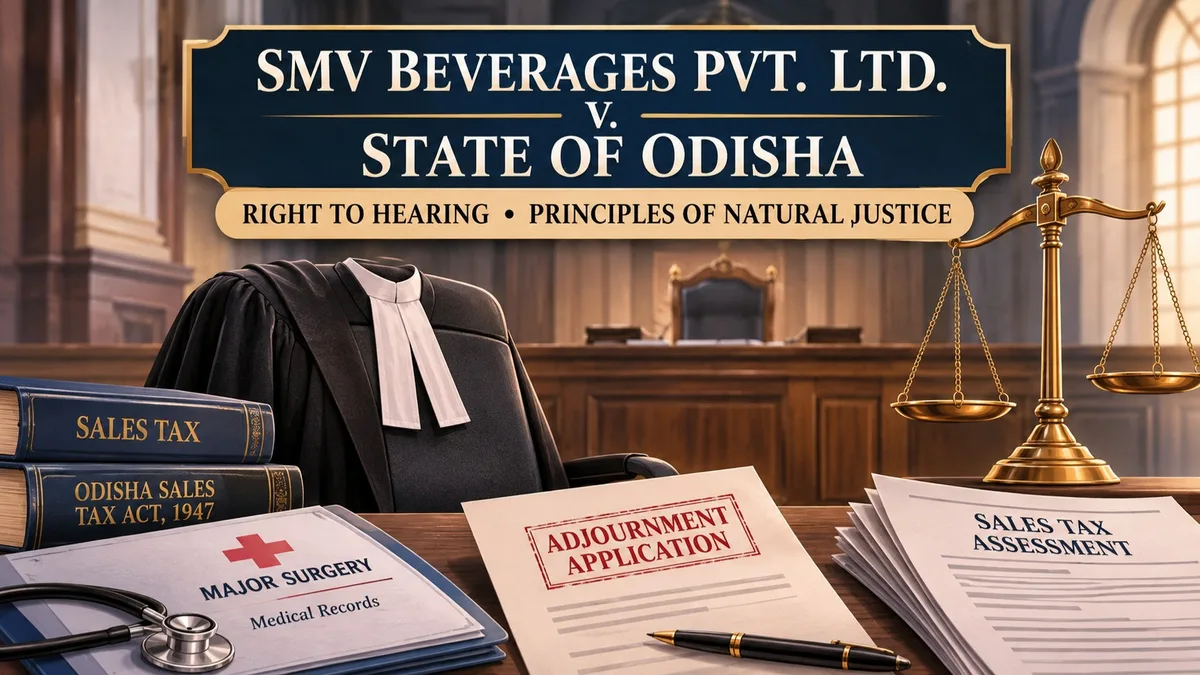
The Division Bench held that the petitioner had been deprived of a reasonable opportunity to present its case before the Commissioner of Sales Tax. An adjournment request must be…

The High Court exercised its inherent jurisdiction to quash a POCSO FIR and the pending trial after obtaining independent reports verifying the parties’ marriage, family…

The Division Bench held that the writ court had exceeded the proper scope of the dispute between the supplier and KSBCL by deciding, in effect, the Revenue’s separate tax…

The High Court considered the petitioners’ request for regular bail in an Enforcement Directorate prosecution alleging money laundering under the Prevention of Money Laundering…

The High Court upheld the appellant’s conviction under Section 18 c of the NDPS Act for possession of opium but reduced the sentence of seven years’ rigorous imprisonment to the…

The High Court dismissed the State’s appeal against acquittal, holding that the trial court’s view was a reasonably possible view on the evidence and that material inconsistencies…
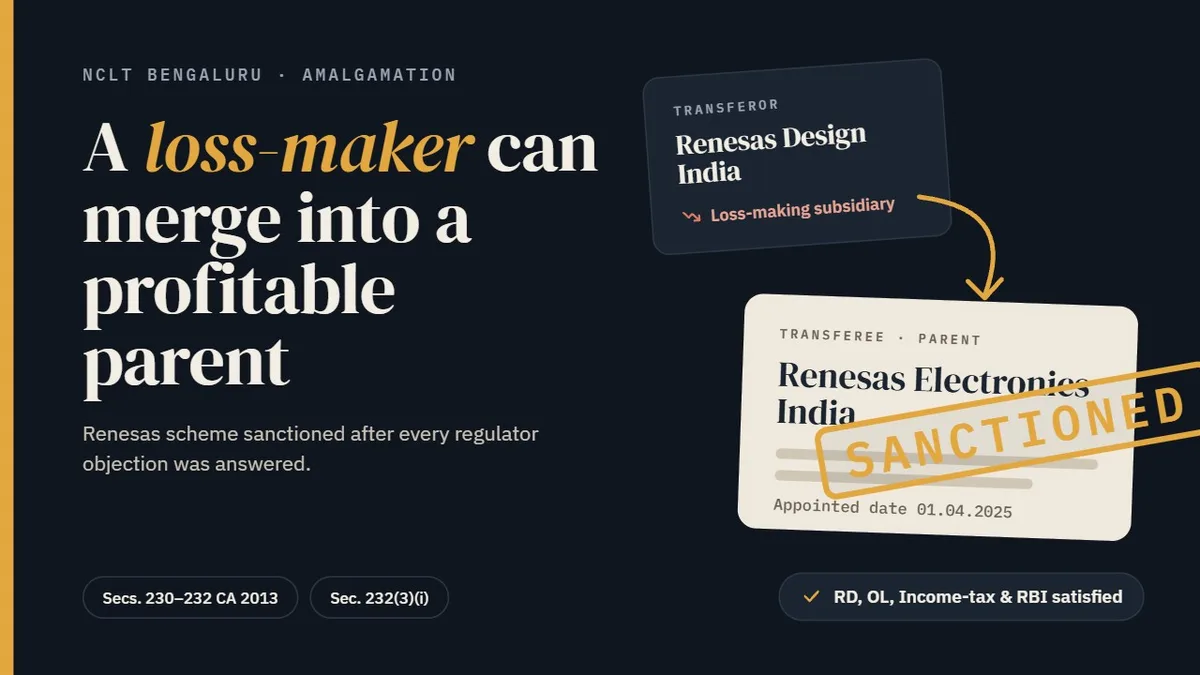
Renesas Design India Pvt. Ltd., a loss-making wholly owned subsidiary engaged in semiconductor design, and its parent Renesas Electronics India Pvt. Ltd. sought sanction of a…