
The Division Bench dismissed the connected writ appeals, while making a limited modification to the Single Judge’s findings concerning the Bar Council of Kerala. In light of…
Civil Law
Update / Judgement Date
26 Nov 2025
Source
WCP News Bulletin
Author
Sakshi Bhardwaj — WCP Legal Desk
Reading Time
3 min read
View Count
Headnote:
The Bombay High Court dismissed a series of appeals filed by eight individuals seeking injunctions against demolition of their structures by the Municipal Corporation of Greater Mumbai (MCGM). The Court held that all structures were illegal encroachments on land belonging to a Co-operative Housing Society, located within a prohibited railway buffer zone. The Court found that the appellants had suppressed earlier litigation involving the same cluster of illegal structures, which amounted to material concealment and disentitled them to equitable relief. Census certificates and repair permissions were held insufficient to establish legality or ownership. Consequently, all appeals and interim applications were dismissed.
Background:
• Eight appellants filed separate suits in 2024 seeking permanent injunctions restraining MCGM from demolishing their structures, claiming long-standing possession.
• Their suits relied on identical documents: 1976/1980 census records, 2000 census receipts, 1982 repair permissions, electricity bills, and photographs.
• The structures stand on 107 sq. m. land belonging to Nemi Krishna Co-operative Housing Society, situated near Kandivali Railway Station, within 150 metres of Platform No. 1.
• MCGM issued notices under Section 349 of the Mumbai Municipal Corporation Act for removal of unauthorized structures.
• Appellants alleged high-handed demolition attempts and argued that the structures were protected and long-standing.
• However, the appellants did not disclose earlier litigation involving 27 illegal structures previously adjudicated in the same location—an omission later found to be deliberate.
Court’s Observations:
• The appellants filed suits as if they were owners, while knowing that the land belonged to the Housing Society. This itself was misleading.
• Suppression of earlier litigation amounted to suppresso veri, suggestio falsi, which is fatal to equitable relief.
• The structures were illegal from inception, located on prohibited railway buffer land, and never granted any occupancy rights by the land-owning Society.
• Census records and repair permissions nor confer title or possessory rights sufficient for injunction.
• The Court held that the Trial Court was correct in refusing interim injunctions because the appellants failed to show:
– a prima facie case
– balance of convenience
– irreparable loss
• Granting an injunction would have the effect of protecting illegal encroachments on a third party’s land, which is impermissible.
• MCGM had followed due process by issuing statutory notices; therefore, the demolition action could not be restrained.
Legal Provisions Discussed:
• Section 349, Mumbai Municipal Corporation Act, 1888 – Power of MCGM to remove unauthorized and dangerous structures.
• Principles of Equity – Suppression of material facts disentitles a litigant to relief in equity (injunction is an equitable remedy).
• Doctrine on Illegal Structures – Courts cannot protect illegal construction or encroachments through injunctions.
• Civil Procedure Code (CPC) – Requirements for interim injunctions (prima facie case, balance of convenience, irreparable harm).
Citation: 2025:BHC-AS:51318
Case: Ganpat Shankar Chougule v. Municipal Corporation of Greater Mumbai & Ors. (with connected matters)
Court: High Court of Judicature at Bombay
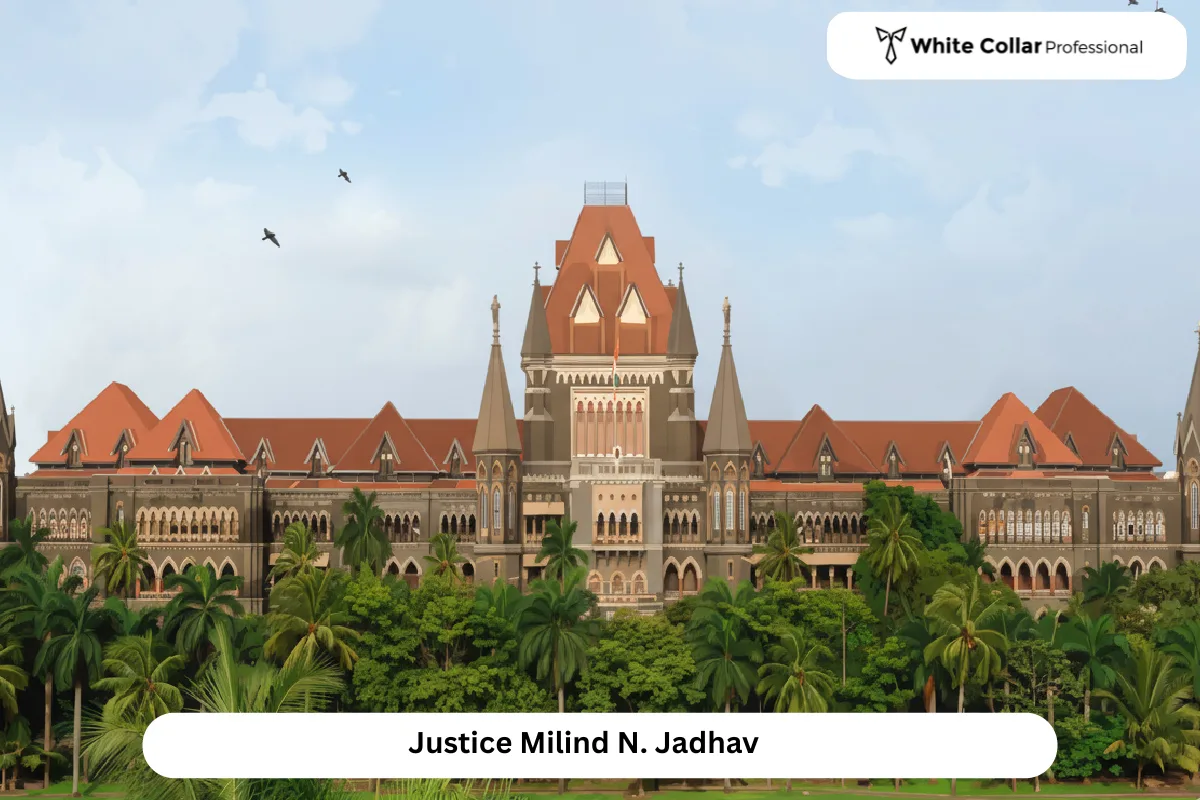
Coram: Justice Milind N. Jadhav
Date of Decision: 26 November 2025
Appeal From Order No.: 226 of 2025 (with 227/2025, 247/2025, 248/2025 & connected AOs and Interim Applications)
© 2026 White Collar Professional Technologies Pvt. Ltd. All rights reserved. CIN: U74999MH2024PTC000001
The Division Bench dismissed the connected writ appeals, while making a limited modification to the Single Judge’s findings concerning the Bar Council of Kerala. In light of…

The High Court held that the trial court was not justified in directing the parties to undergo fresh DNA testing when the existing expert report had not been rejected for legally…

The High Court held that a subsequently communicated minimum 20% local-content requirement, including an indigenously developed EMS software condition, could not be…

The Division Bench held that the petitioner had been deprived of a reasonable opportunity to present its case before the Commissioner of Sales Tax. An adjournment request must be…

The High Court exercised its inherent jurisdiction to quash a POCSO FIR and the pending trial after obtaining independent reports verifying the parties’ marriage, family…

The Division Bench held that the writ court had exceeded the proper scope of the dispute between the supplier and KSBCL by deciding, in effect, the Revenue’s separate tax…

The High Court considered the petitioners’ request for regular bail in an Enforcement Directorate prosecution alleging money laundering under the Prevention of Money Laundering…

The High Court upheld the appellant’s conviction under Section 18 c of the NDPS Act for possession of opium but reduced the sentence of seven years’ rigorous imprisonment to the…

The High Court dismissed the State’s appeal against acquittal, holding that the trial court’s view was a reasonably possible view on the evidence and that material inconsistencies…
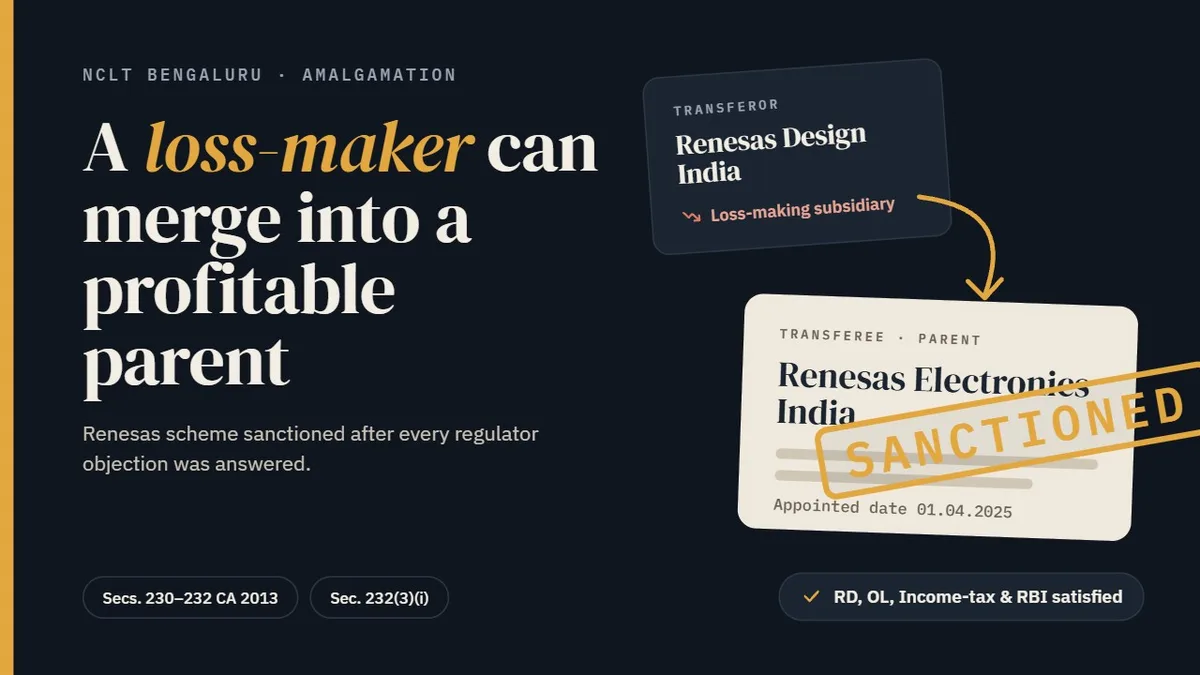
Renesas Design India Pvt. Ltd., a loss-making wholly owned subsidiary engaged in semiconductor design, and its parent Renesas Electronics India Pvt. Ltd. sought sanction of a…