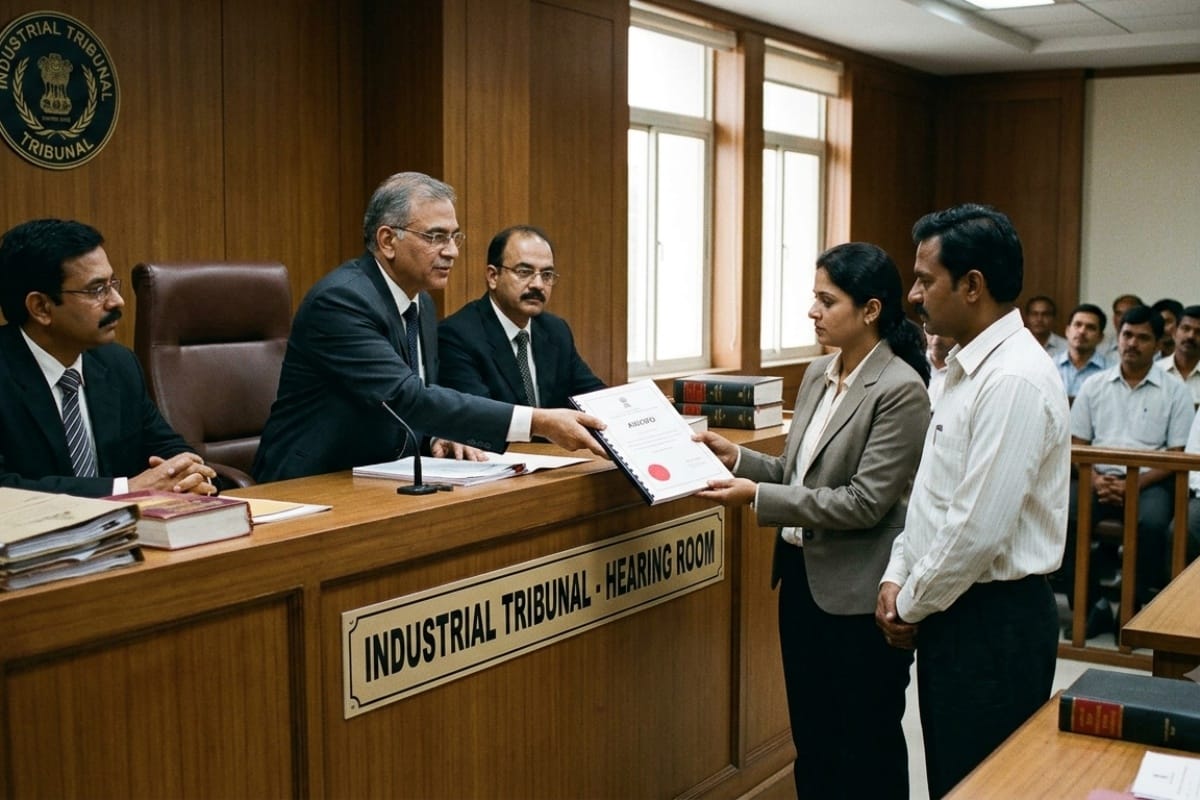
Deciding two connected writ petitions arising from a common Industrial Tribunal Award, the Delhi High Court set aside the Tribunal's direction granting hotel workmen a further…
Labour Laws
06/09/20264 min read
Update / Judgement Date
26 Nov 2025
Source
WCP News Bulletin
Author
Sakshi Bhardwaj — WCP Legal Desk
Reading Time
3 min read
The Bombay High Court held that rateable value (RV) of a property must be determined primarily on construction cost, quality, age, and intrinsic features in accordance with standard rent principles. The Court ruled that the Small Causes Court and the Additional District Judge erred in reducing the RV solely on the basis of a neighbouring plot’s assessment without establishing true comparability. The comparative method cannot be applied in isolation without evidence of similarity in construction. The matter was remanded for fresh determination in line with established legal principles.
• The Respondent was allotted Plot No. 345 (3000 sq. ft.) in Pune’s Market Yard by the Agricultural Produce Market Committee in 1976.
• Pune Municipal Corporation (PMC) initially offered concessional rateable value until 1983; thereafter, RV was reassessed on construction cost basis.
• In 1985, PMC fixed RV at ₹9,300 for similar godowns of 1500 sq. ft. with mezzanine.
• Respondent constructed a new RCC structure (1300 sq. ft.) with mezzanine (200 sq. ft.) in 1985–86.
• PMC issued notice proposing RV at ₹30,600, but finalised it at ₹9,300 w.e.f. 01/05/1985.
• Respondent challenged the assessment, and the Small Causes Court reduced RV to ₹2,600, relying on the assessment of an adjoining plot.
• The Additional District Judge affirmed this reduction.
• PMC filed the present writ petition challenging the legality of this approach.
• The comparative method cannot be applied merely because two properties are adjacent; similarity must be proven in terms of construction year, cost, design, and materials.
• Respondent admitted he had no knowledge about the age or cost of construction of the adjoining comparable property relied upon by the lower courts.
• A newly constructed RCC godown from 1985–86 cannot be equated with an older structure from 1979–80 in absence of supporting evidence.
• Rateable value must reflect standard rent principles, considering age, quality, intrinsic features, and construction cost—not geographical proximity alone.
• The Small Causes Court and ADJ failed to identify any flaw in PMC’s assessment and ignored binding precedents requiring construction-based evaluation.
• Comparative uniformity is not mandatory, nor can it override primary statutory factors.
• Courts below committed a jurisdictional error by reducing RV from ₹9,300 to ₹2,600 based solely on an unverified comparative assessment.
• Section 154, Maharashtra Municipal Corporations Act, 1949 – Determination of rateable value.
• Standard Rent principles under the Bombay Rents, Hotel and Lodging House Rates Control Act, 1947.
• Article 226, Constitution of India – Judicial review of quasi-judicial assessment orders.
Citation: 2025:BHC-AS:51498
Case: Municipal Corporation of the City of Pune v. Satishkumar Satyanaran Agarwal
Court: High Court of Judicature at Bombay
Coram: Abhay Ahuja, J.
Date of Decision: 27 November 2025
Writ Petition No.: 3009 of 2000
Deciding two connected writ petitions arising from a common Industrial Tribunal Award, the Delhi High Court set aside the Tribunal's direction granting hotel workmen a further…

Headnote The Delhi High Court dismissed a prosecutrix's appeal against acquittal of the accused on charges under Sections 328/376 2 n /377/506/509 IPC, despite DNA evidence…
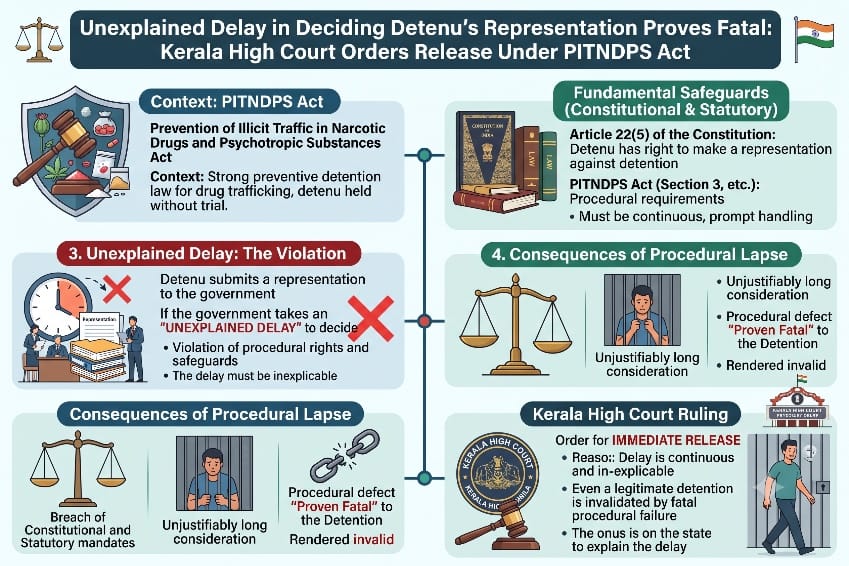
Fathimath Thasneem V.K. v. Union of India and Others | High Court of Kerala at Ernakulam | 3rd September, 2026 A habeas corpus writ petition by the wife of a detenu challenging…
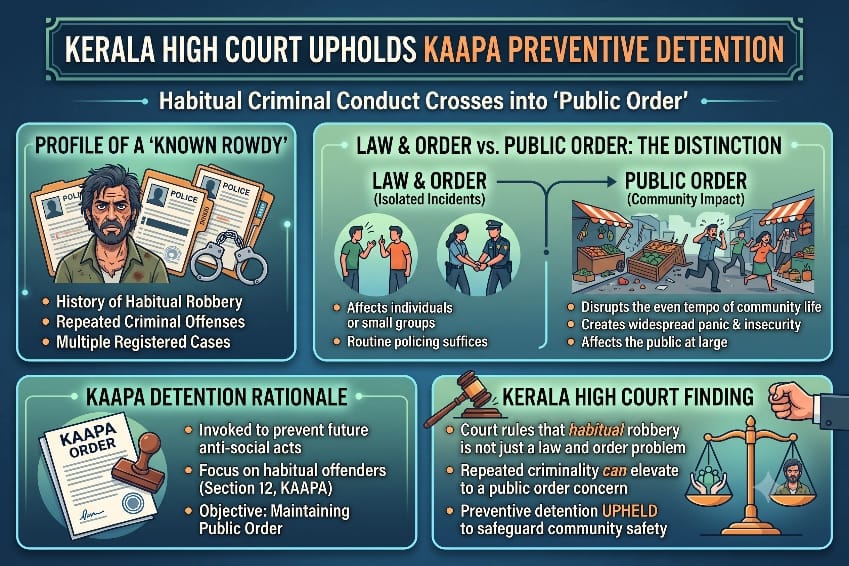
Thasmitha Abukutty v. State of Kerala and Others | High Court of Kerala at Ernakulam | 2nd September, 2026 A writ petition by the wife of a preventive detenu challenging a…
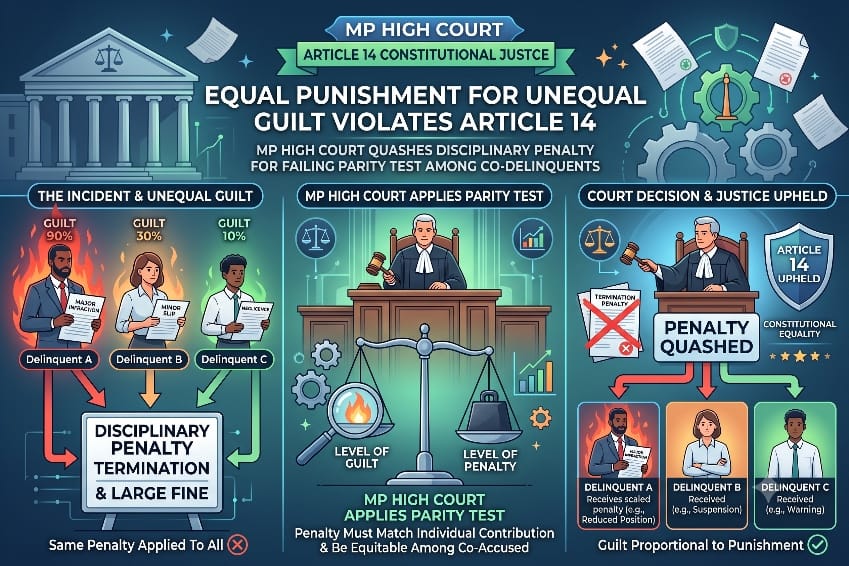
Brahm Kishore Dixit v. The State of Madhya Pradesh and Others | High Court of Madhya Pradesh, Gwalior | 1st September, 2026 A writ petition under Article 226 by a police Assistant…
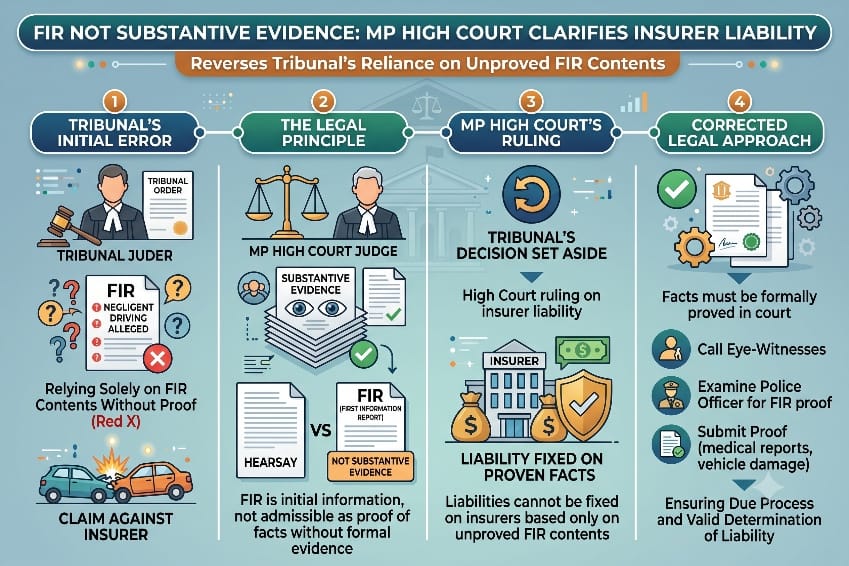
Anil Kumar Patel v. Smt. Munni Bai Barman and Others | High Court of Madhya Pradesh, Jabalpur | 1st September, 2026 A Motor Vehicle Act appeal under Section 173 1 against a Claims…
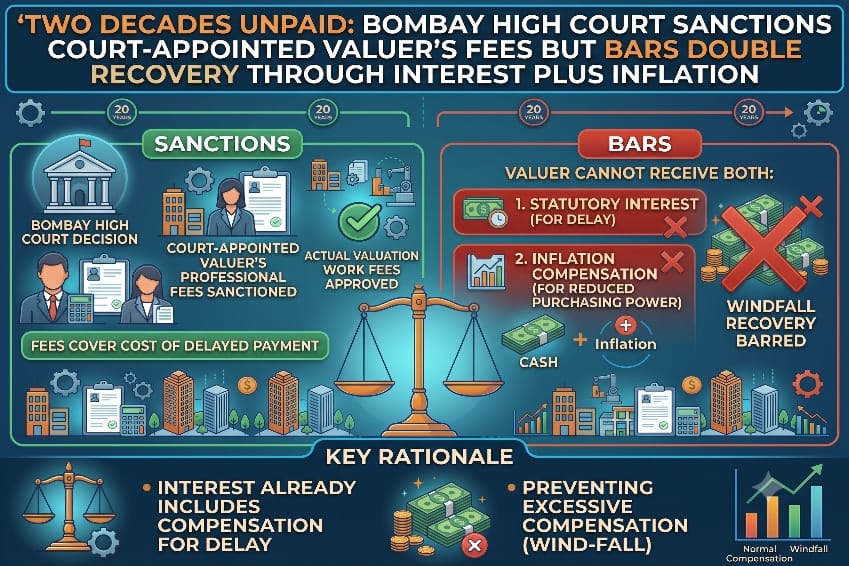
M/s. Kuber Mutual Benefits Ltd. & Ors. v. The State of Maharashtra & Ors. | High Court of Judicature at Bombay Appellate Side | 3rd September, 2026 A Court Receiver's Report…
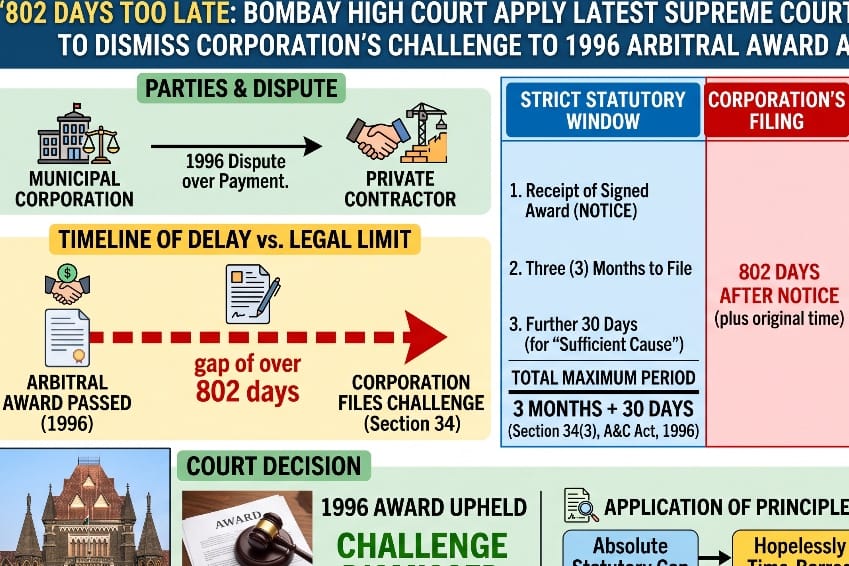
The Municipal Corporation of Greater Bombay v. M/s. Atul Raj Builders Pvt. Ltd. | High Court of Judicature at Bombay Ordinary Original Civil Jurisdiction | 3rd September, 2026 A…
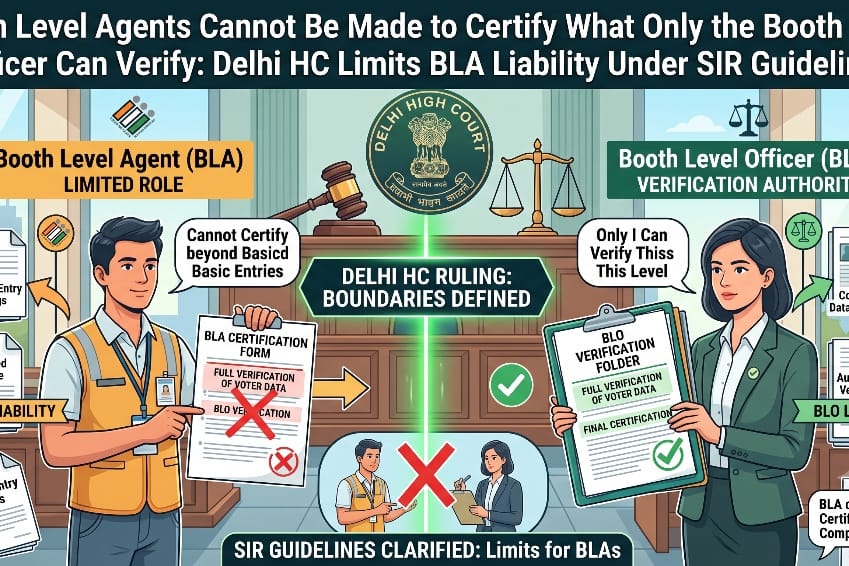
Devender Yadav & Anr. v. Election Commission of India & Anr. | High Court of Delhi Single Judge | Decided on: 03.09.2026 In a challenge to the Election Commission of India's…
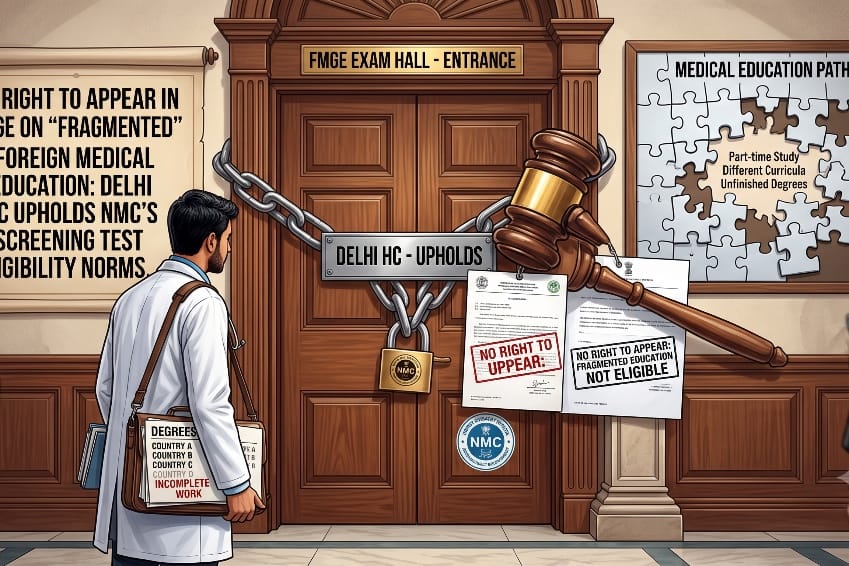
Brij Sharadbhai Bhatt & Ors. v. National Medical Commission & Ors. | High Court of Delhi Division Bench | Decided on: 03.09.2026 The Delhi High Court dismissed a challenge by…