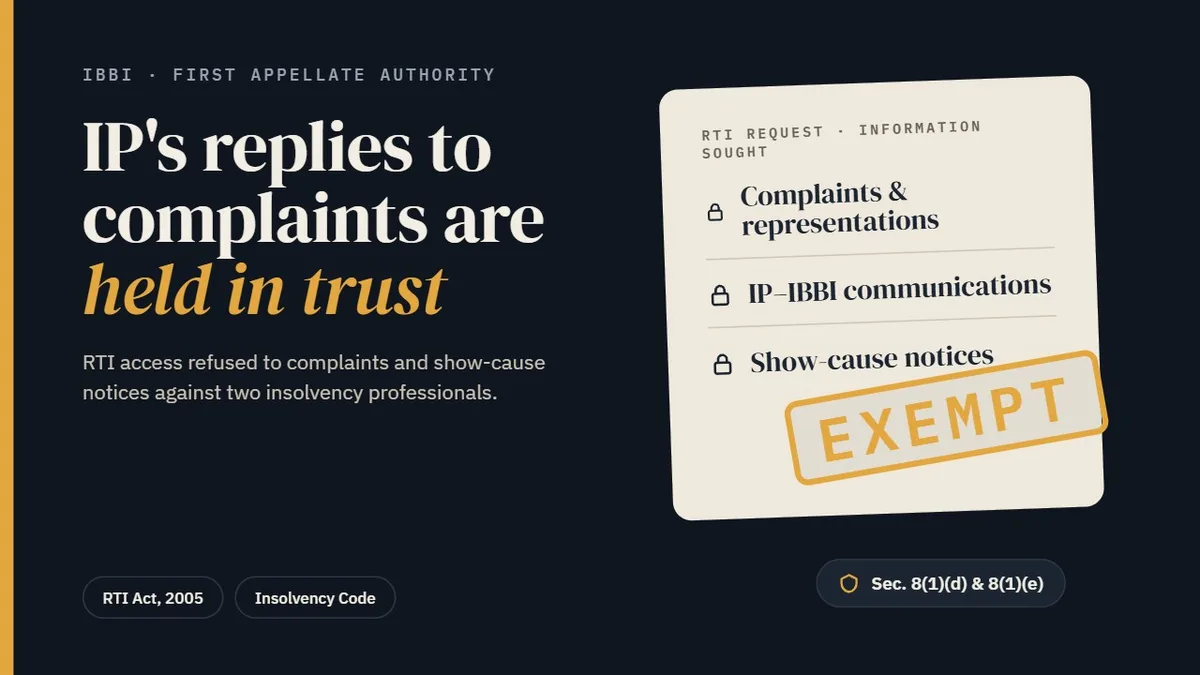
The appellant sought, under the RTI Act, records of complaints and representations received by IBBI, communications between IBBI and the insolvency professionals, and copies of…
Insolvency & Bankruptcy Code
24/11/20264 min read
Update / Judgement Date
30 Sept 2025
Source
WCP News Bulletin
Author
Sakshi Bhardwaj — WCP Legal Desk
Reading Time
3 min read
View Count
1
Headnote:
The Bombay High Court, while hearing an application under Section 11 of the Arbitration and Conciliation Act, 1996, held that disputes arising from Mortgage Deeds containing an arbitration clause must be referred to arbitration, notwithstanding allegations of forgery and fraud. The Court observed that issues relating to arbitrability, including allegations of fraud, can be determined by the arbitral tribunal under Section 16 of the Act. The Court appointed Hon’ble Justice Naresh H. Patil (Former Chief Justice of Bombay High Court) as the Sole Arbitrator.
Background:
Court Observations:
Legal Provisions Concerned:
Case Details:
Case Title: Mangal Credit and Fincorp Ltd. v. Ulka Chandrshekhar Nair
Citation: Arbitration Application (L) No. 29984 of 2023
Coram: Justice Advait M. Sethna
Pronounced On: October 1, 2025
Court: High Court of Judicature at Bombay (Original Side)
Arbitrator Appointed: Hon'ble Justice Naresh H. Patil (Former Chief Justice, Bombay HC)
© 2026 White Collar Professional Technologies Pvt. Ltd. All rights reserved. CIN: U74999MH2024PTC000001
The appellant sought, under the RTI Act, records of complaints and representations received by IBBI, communications between IBBI and the insolvency professionals, and copies of…
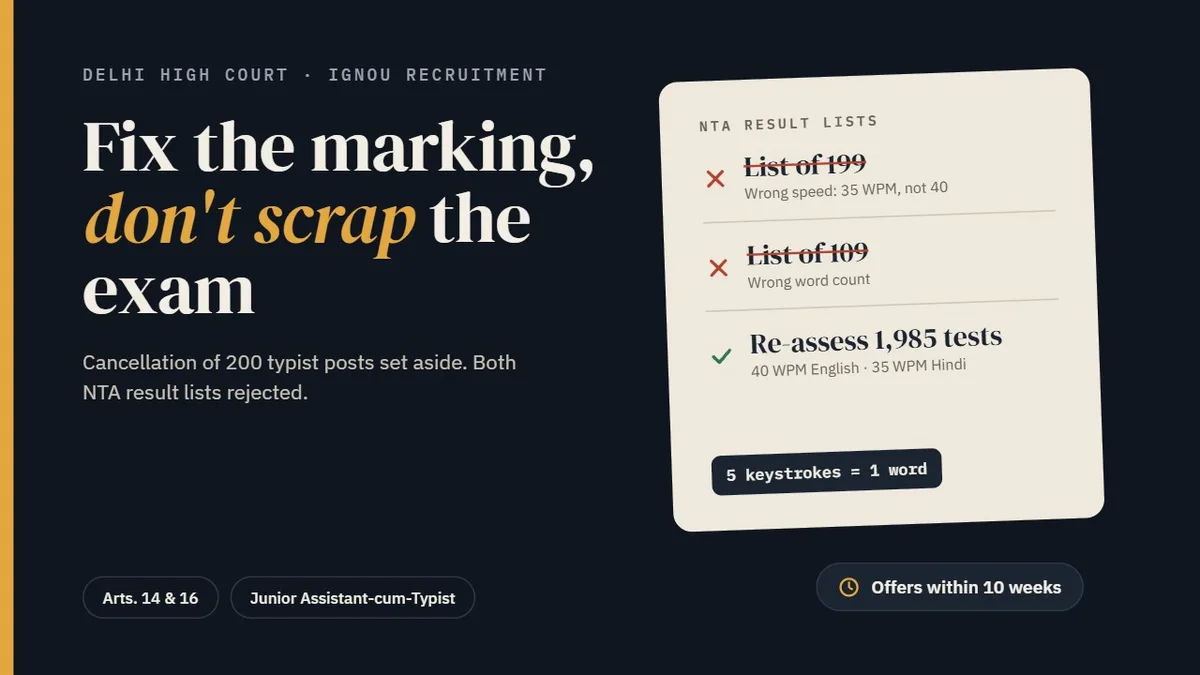
IGNOU entrusted recruitment to 200 Junior Assistant-cum-Typist posts to NTA; after a computer-based test 25,094 candidates and a typing test 1,985 candidates , NTA declared 199…
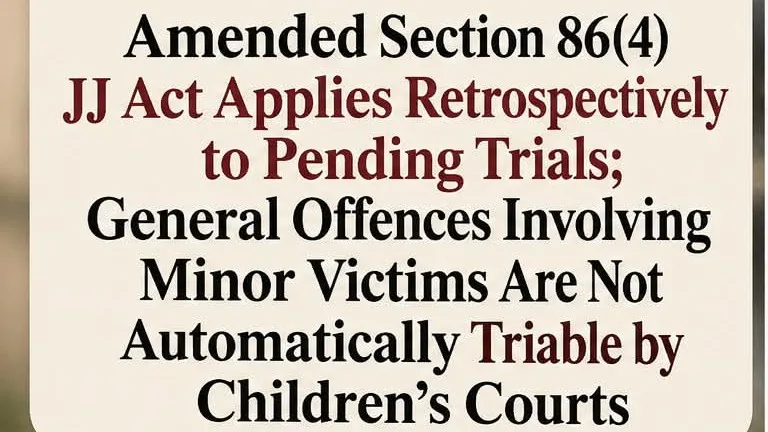
The Delhi High Court considered whether the 2021 amendment inserting Section 86 4 into the Juvenile Justice Care and Protection of Children Act, 2015 applied to trials already…
Sixteen students of Sree Sankaracharya University of Sanskrit, Kalady challenged their suspension and subsequent disciplinary punishments arising out of a campus protest during a…
The Kerala High Court held that the custody requirement in Section 306 4 b of the Code of Criminal Procedure, 1973 CrPC applies to a pardon tendered by a Magistrate under Section…

National Testing Agency had applied an incorrect typing-speed threshold and the assessment required correction, the identified discrepancies did not establish that the…
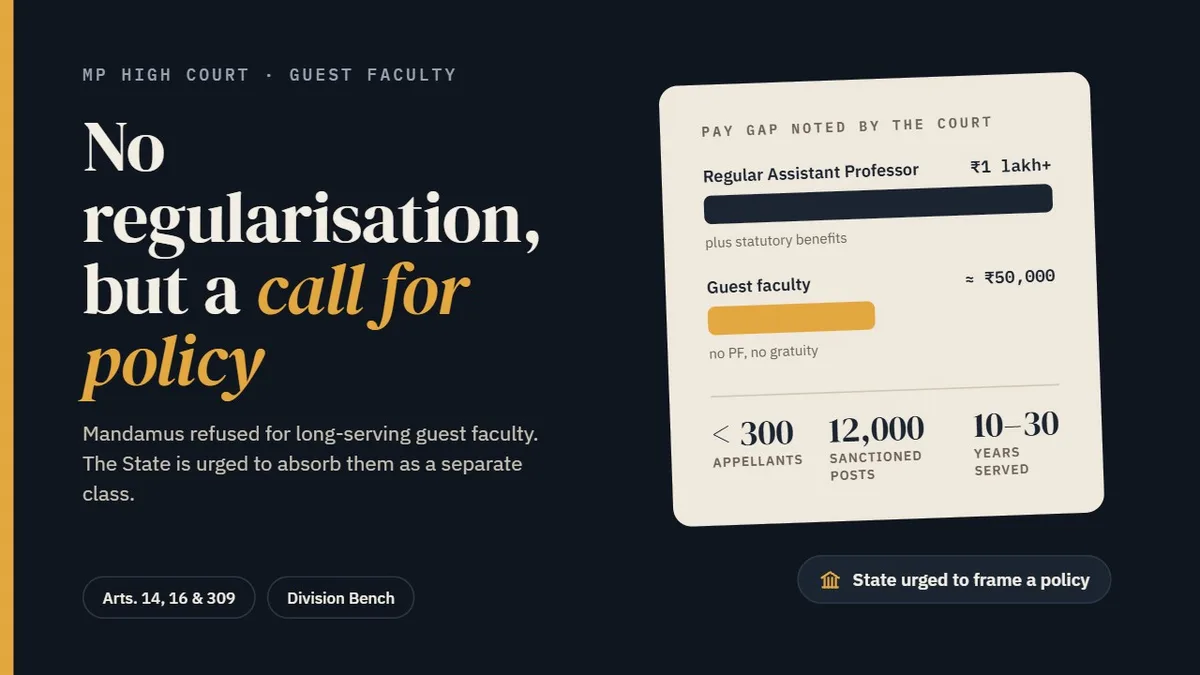
A batch of writ appeals was filed by guest faculty – Assistant Professors, Sports Officers and Librarians engaged after advertisement and selection and serving 10 to 30 years in…
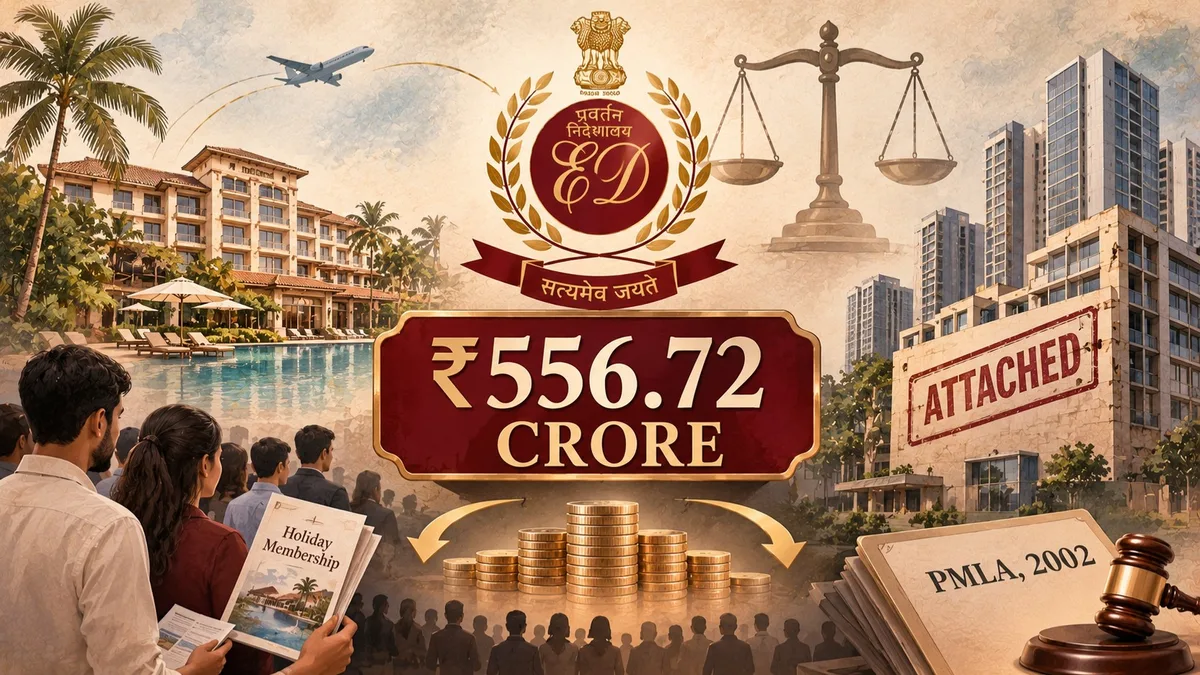
Directorate of Enforcement, Mumbai Zonal Office-I | Draft Press Release | 23 November 2026 The Directorate of Enforcement's draft press release states that its Mumbai Zonal…

The Directorate of Enforcement's draft press release states that its Guwahati Zonal Office-I has provisionally attached movable and immovable properties valued at ₹70.09 lakh in a…

The National Company Law Tribunal, New Delhi Court-IV, approved a resolution plan valued at ₹30.90 crore for Shyam Indofab Private Limited on 8 September 2026. The plan, submitted…