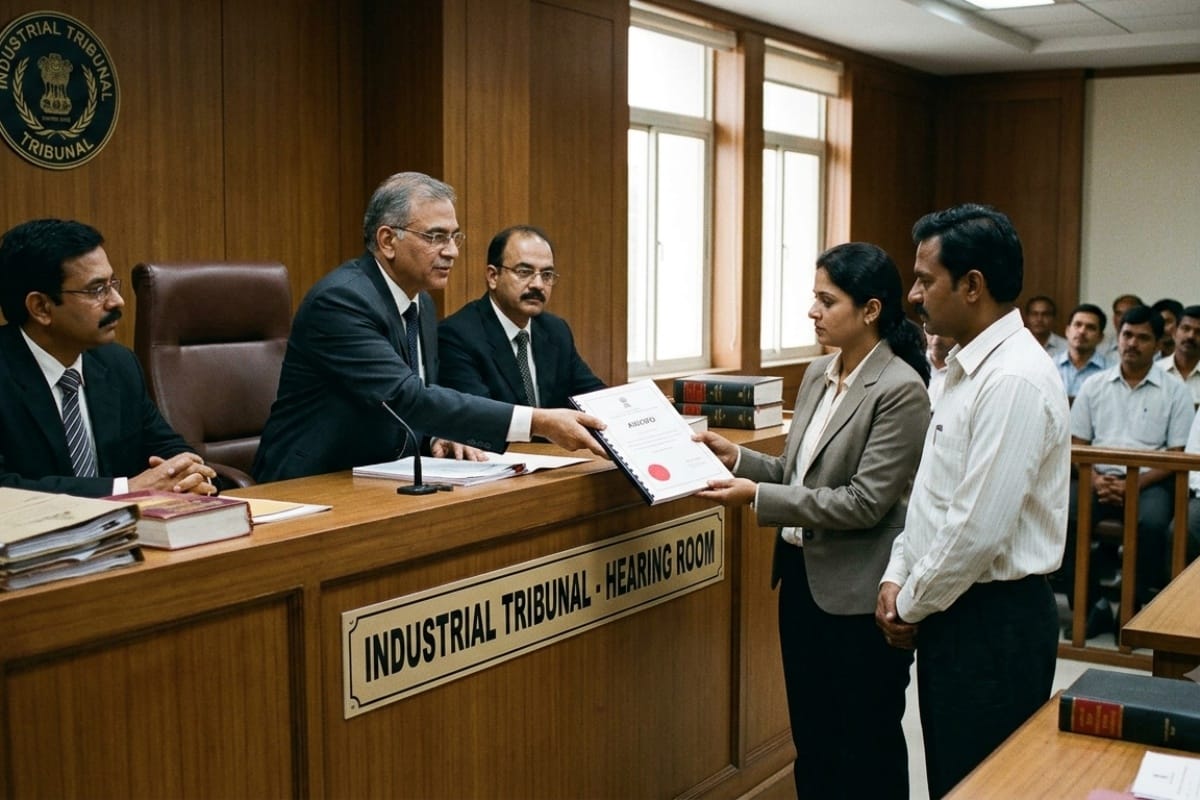
Deciding two connected writ petitions arising from a common Industrial Tribunal Award, the Delhi High Court set aside the Tribunal's direction granting hotel workmen a further…
Labour Laws
06/09/20264 min read
Update / Judgement Date
28 Oct 2025
Source
WCP News Bulletin
Author
Sakshi Bhardwaj — WCP Legal Desk
Reading Time
3 min read
The Delhi High Court upheld the Central Administrative Tribunal’s order directing reconsideration of a disabled candidate’s case for compassionate appointment. The Court held that denial of employment on the ground of “no vacancy” violated the principles of reasonable accommodation and inclusive equality under the Rights of Persons with Disabilities (RPwD) Act, 2016. It reiterated that compassionate appointment must be assessed through a disability-sensitive lens, ensuring fairness to candidates facing intersectional disadvantage due to disability and social background.
Background• The respondent’s father, an MTS employee in Delhi Police, passed away in 2013.
• The respondent, having 75% locomotor disability and belonging to the Scheduled Caste category, applied for compassionate appointment in 2015.
• His application was rejected multiple times by the Screening Committee, citing lack of vacancy and low merit ranking.
• The respondent approached the Central Administrative Tribunal (CAT), which in O.A. No. 773/2020 directed reconsideration. The rejection persisted, leading to further litigation.
• The CAT held that the rejection ignored the RPwD Act’s mandate and ordered reconsideration with due regard to reasonable accommodation.
• The Delhi Police challenged this order before the High Court through the present writ petition.
Court’s Observations• The Court noted that the petitioner’s repeated rejections were mechanical and failed to consider the special protections afforded under the RPwD Act.
• It held that “no vacancy” cannot be used as a blanket justification to deny employment when reasonable accommodation and policy flexibility are available.
• The Court emphasized that Section 3, 20, and 21 of the RPwD Act require the State to ensure equal opportunity and reasonable accommodation for persons with disabilities.
• It further observed that the respondent’s intersectional disadvantage—being both disabled and from the SC category—demanded heightened sensitivity in decision-making.
• The Court cited precedents including Om Rathod v. DGHS (2024) and Re: Recruitment of Visually Impaired in Judicial Services (2025), recognizing the RPwD Act as a “super statute” upholding dignity and inclusivity.
• The rejection, based solely on administrative grounds, was found arbitrary and contrary to constitutional and statutory mandates.
• The High Court upheld the CAT’s order and directed the authorities to reconsider the respondent’s application afresh in light of the RPwD Act.
Legal Provisions Discussed• Sections 3, 20 & 21, Rights of Persons with Disabilities Act, 2016 – Equality, non-discrimination, and duty to provide reasonable accommodation.
• Article 14 & 16, Constitution of India – Equality before law and equality of opportunity in public employment.
• Relevant Supreme Court Precedents:
Citation: 2025:DHC:XXXXXX
Case: Commissioner of Police & Ors. v. Amit Kumar & Ors.
Court: High Court of Delhi at New Delhi
Coram: Hon’ble Mr. Justice Navin Chawla & Hon’ble Ms. Justice Madhu Jain
Date of Decision: 28 October 2025
Writ Petition (Civil): No. 14356 of 2025
Deciding two connected writ petitions arising from a common Industrial Tribunal Award, the Delhi High Court set aside the Tribunal's direction granting hotel workmen a further…
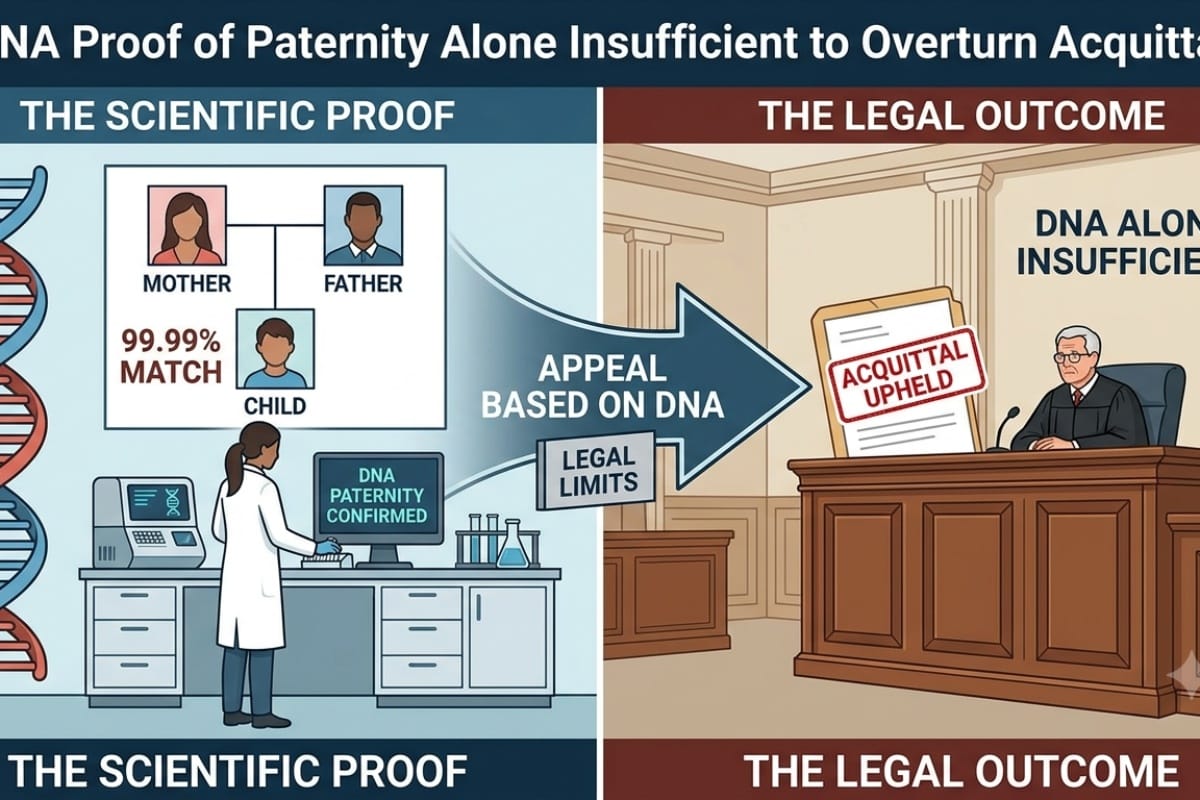
Headnote The Delhi High Court dismissed a prosecutrix's appeal against acquittal of the accused on charges under Sections 328/376 2 n /377/506/509 IPC, despite DNA evidence…
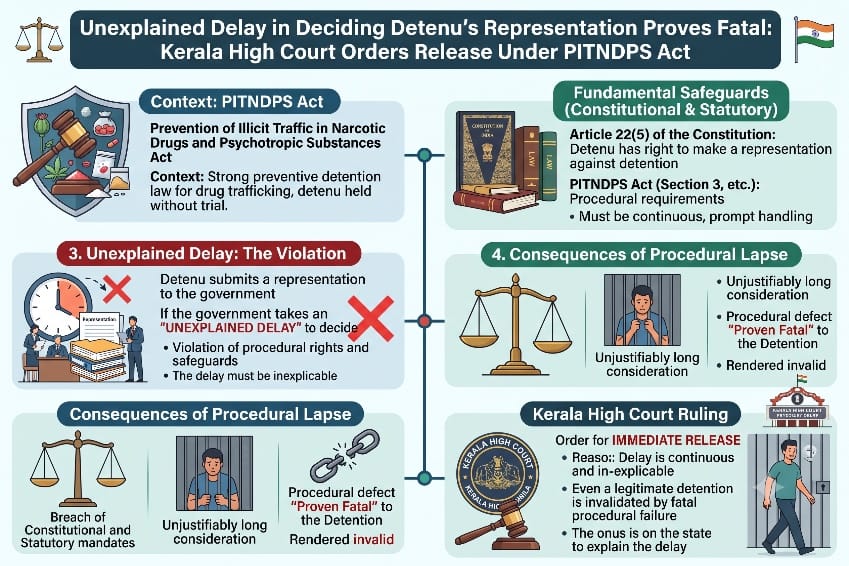
Fathimath Thasneem V.K. v. Union of India and Others | High Court of Kerala at Ernakulam | 3rd September, 2026 A habeas corpus writ petition by the wife of a detenu challenging…
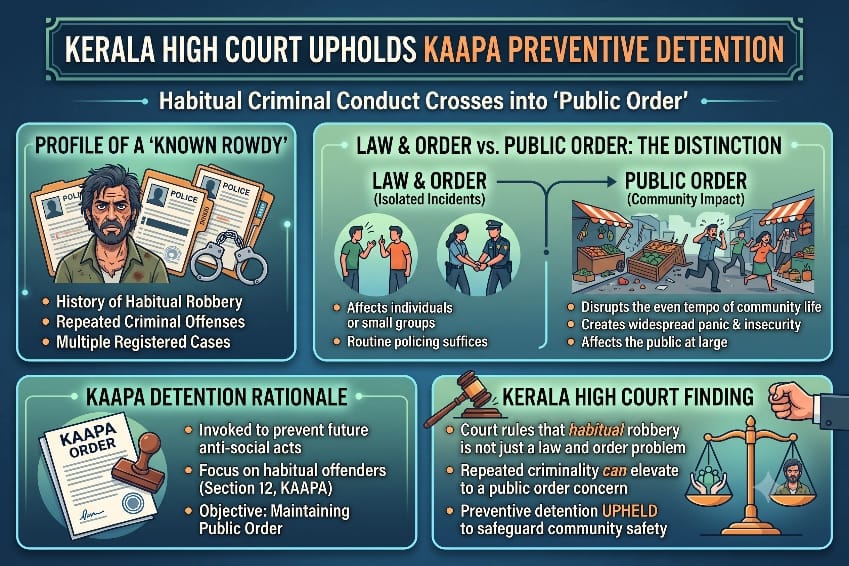
Thasmitha Abukutty v. State of Kerala and Others | High Court of Kerala at Ernakulam | 2nd September, 2026 A writ petition by the wife of a preventive detenu challenging a…
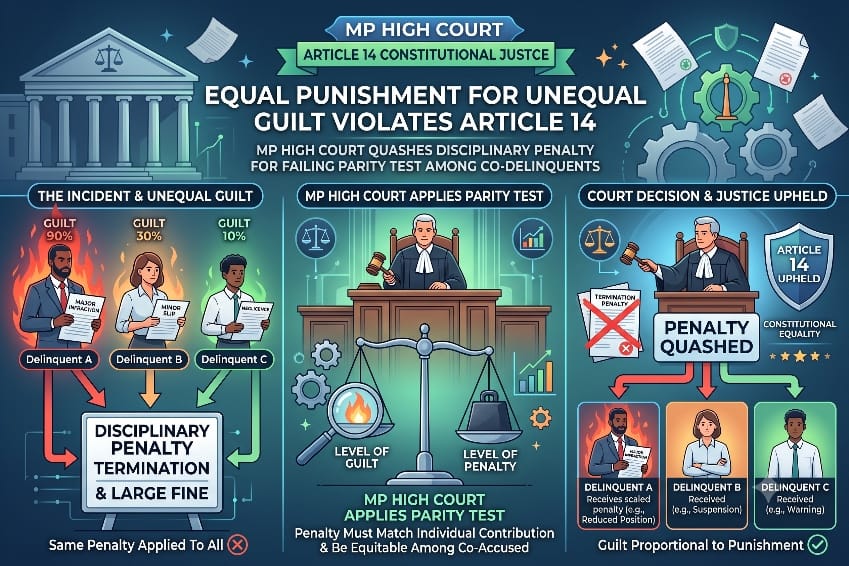
Brahm Kishore Dixit v. The State of Madhya Pradesh and Others | High Court of Madhya Pradesh, Gwalior | 1st September, 2026 A writ petition under Article 226 by a police Assistant…
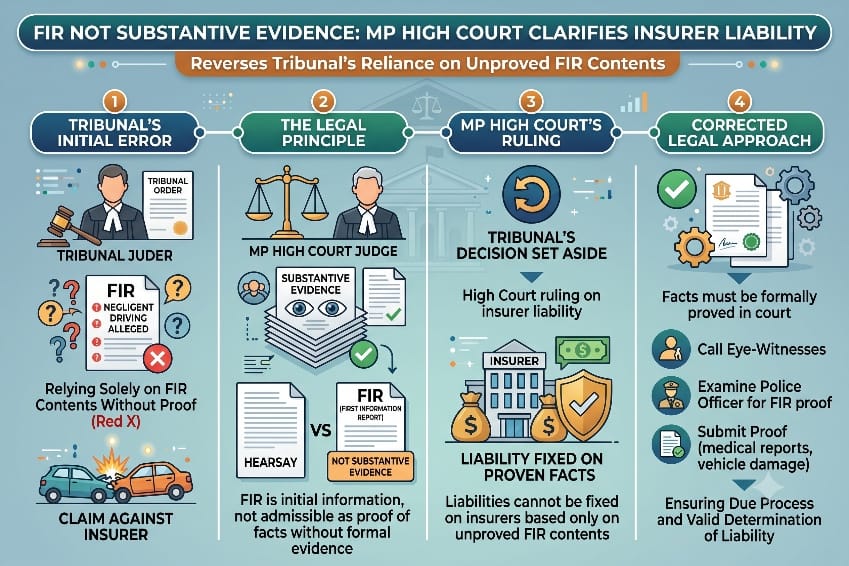
Anil Kumar Patel v. Smt. Munni Bai Barman and Others | High Court of Madhya Pradesh, Jabalpur | 1st September, 2026 A Motor Vehicle Act appeal under Section 173 1 against a Claims…
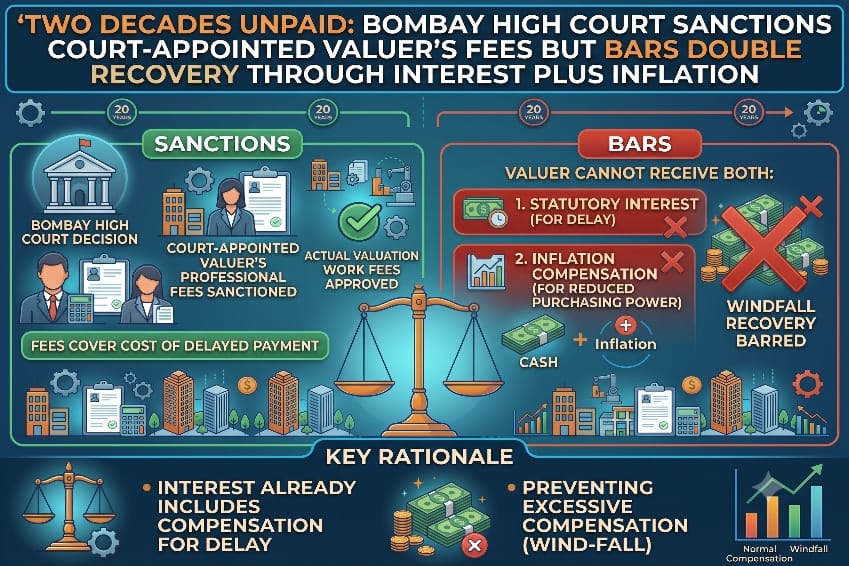
M/s. Kuber Mutual Benefits Ltd. & Ors. v. The State of Maharashtra & Ors. | High Court of Judicature at Bombay Appellate Side | 3rd September, 2026 A Court Receiver's Report…
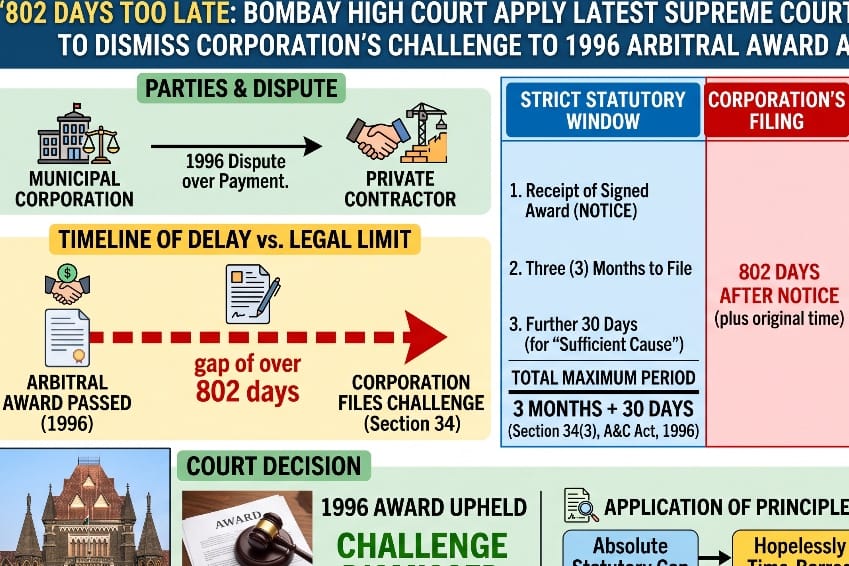
The Municipal Corporation of Greater Bombay v. M/s. Atul Raj Builders Pvt. Ltd. | High Court of Judicature at Bombay Ordinary Original Civil Jurisdiction | 3rd September, 2026 A…
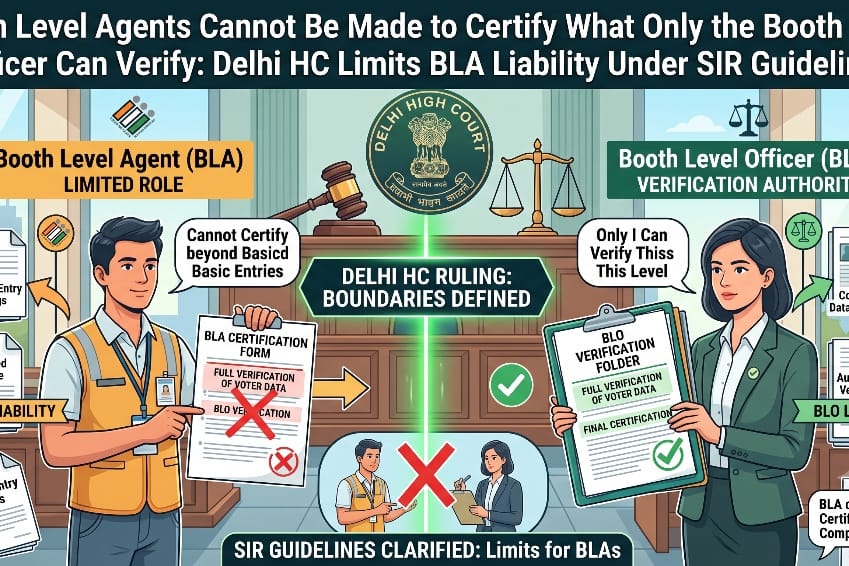
Devender Yadav & Anr. v. Election Commission of India & Anr. | High Court of Delhi Single Judge | Decided on: 03.09.2026 In a challenge to the Election Commission of India's…
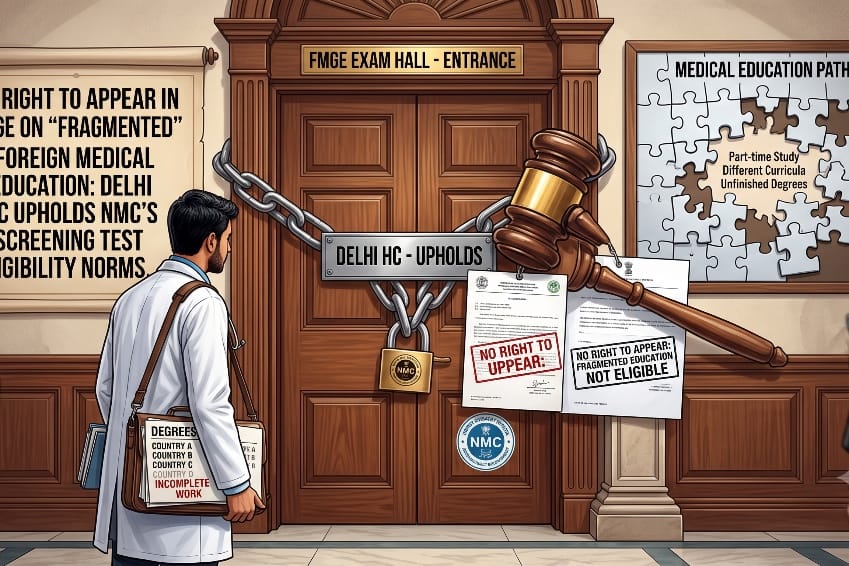
Brij Sharadbhai Bhatt & Ors. v. National Medical Commission & Ors. | High Court of Delhi Division Bench | Decided on: 03.09.2026 The Delhi High Court dismissed a challenge by…