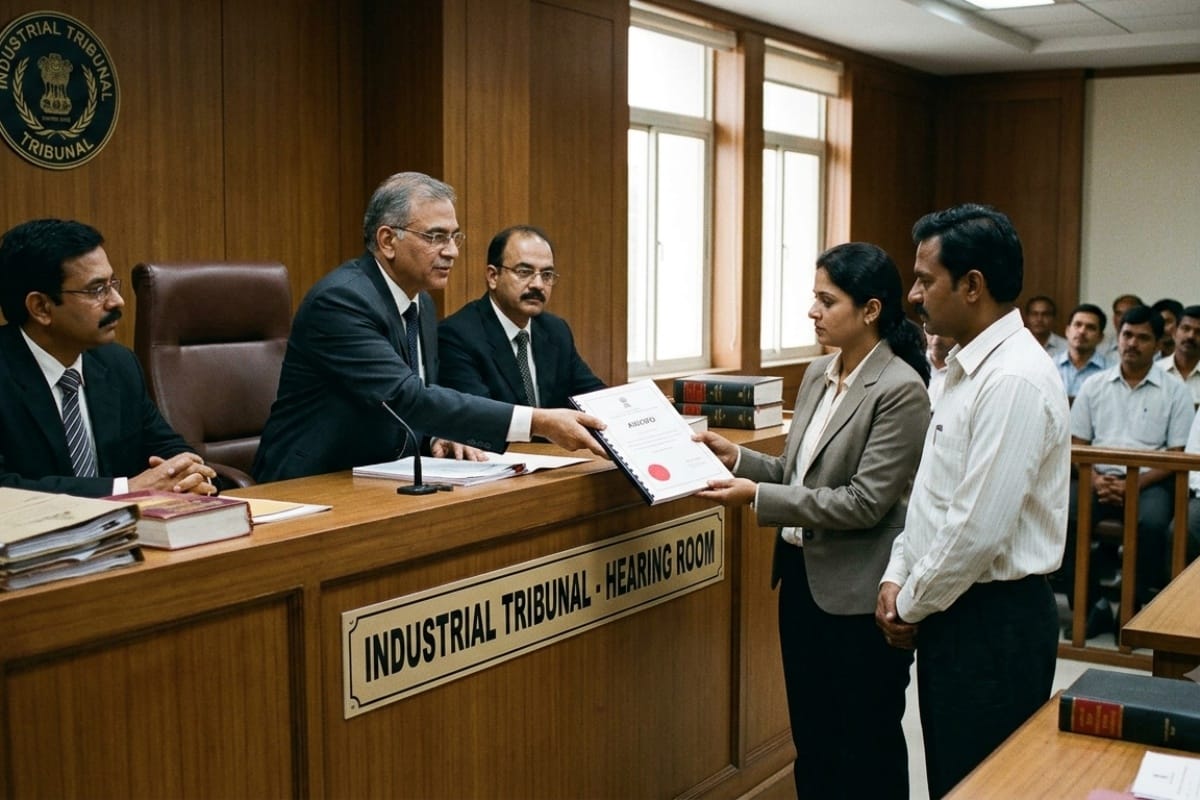
Deciding two connected writ petitions arising from a common Industrial Tribunal Award, the Delhi High Court set aside the Tribunal's direction granting hotel workmen a further…
Labour Laws
06/09/20264 min read
Update / Judgement Date
28 Oct 2025
Source
WCP News Bulletin
Author
Sakshi Bhardwaj — WCP Legal Desk
Reading Time
3 min read
The Delhi High Court held that deletion of a part of the relief from a plaint at the preliminary stage of a partition suit—based solely on a forensic report—is unsustainable. The Court ruled that such an order amounts to partial dismissal of the suit and cannot be passed without allowing parties to lead evidence. The CFSL opinion on signatures is not conclusive and cannot substitute for a full trial. Consequently, the order deleting certain properties from the plaint was set aside.
• The appellant (plaintiff before the Single Judge) filed a partition suit (CS(OS) 610/2023) seeking cancellation of three relinquishment deeds dated 5 May 2022 and partition of her parents’ properties.
• She alleged that her brother (Defendant No.1) obtained her signatures and thumb impressions on blank papers during her visit to India in April 2022 and later fabricated relinquishment deeds falsely showing her presence in Delhi.
• The suit properties included immovable assets located in Delhi and Ghaziabad, claimed to be part of a Joint Hindu Family property.
• The Single Judge relied on the Central Forensic Science Laboratory (CFSL) report confirming authenticity of the plaintiff’s signatures and held that she had approached the Court with unclean hands.
• As a result, the Single Judge deleted properties listed as Serial Nos. 1, 2, and 3 of Schedule-A from the scope of the plaint and vacated the interim injunction granted earlier.
• The plaintiff appealed under FAO(OS) 87/2025, contending that the order effectively dismissed part of her claim without trial.
• The suit was at an early stage; deletion of part of the plaint is equivalent to dismissal and requires strong certainty that the claim has no chance of success.
• The plaintiff’s case raised serious triable issues regarding fraud and impersonation; these could only be determined after evidence.
• The CFSL report was merely an expert opinion and not binding on the Court; it cannot be treated as final proof of genuineness of signatures.
• The Single Judge erred in relying solely on the forensic report to disbelieve the plaintiff’s version without trial.
• The reliance on S.P. Chengalvaraya Naidu v. Jagannath (1994) 1 SCC 1 was misplaced, as that case involved an established fraud on the court—unlike the present matter where fraud is alleged but unproven.
• There exists no procedural provision empowering the Court to delete part of the relief from the plaint in the manner done.
• The appeal was allowed, and the impugned order dated 27.05.2025 was set aside.
• The direction deleting properties at Serial Nos. 1, 2, and 3 of Schedule-A was quashed.
• However, the order vacating the interim stay remained unaffected.
• The Court reiterated that partial rejection or deletion of relief cannot be ordered at a preliminary stage unless the plaint is barred by law or fails to disclose any cause of action.
• Order VII Rule 11, Code of Civil Procedure, 1908 – Rejection of plaint.
• Order VI
Rule 16, Code of Civil Procedure, 1908 – Striking out pleadings.
• Order XXXIX Rules 1 & 2, Code of Civil Procedure, 1908 – Temporary injunctions.
• Section 45, Indian Evidence Act, 1872 – Expert opinion (handwriting/signature).
• Key Case Law:
– S.P. Chengalvaraya Naidu v. Jagannath, (1994) 1 SCC 1.
– T. Arivandandam v. T.V. Satyapal, (1977) 4 SCC 467.
Citation: 2025:DHC:10489
Case: Manuja Sharma v. Rahul Sharma & Anr.
Court: High Court of Delhi at New Delhi
FAO(OS) No.: 87 of 2025 & CM Appl. 47459/2025
Deciding two connected writ petitions arising from a common Industrial Tribunal Award, the Delhi High Court set aside the Tribunal's direction granting hotel workmen a further…
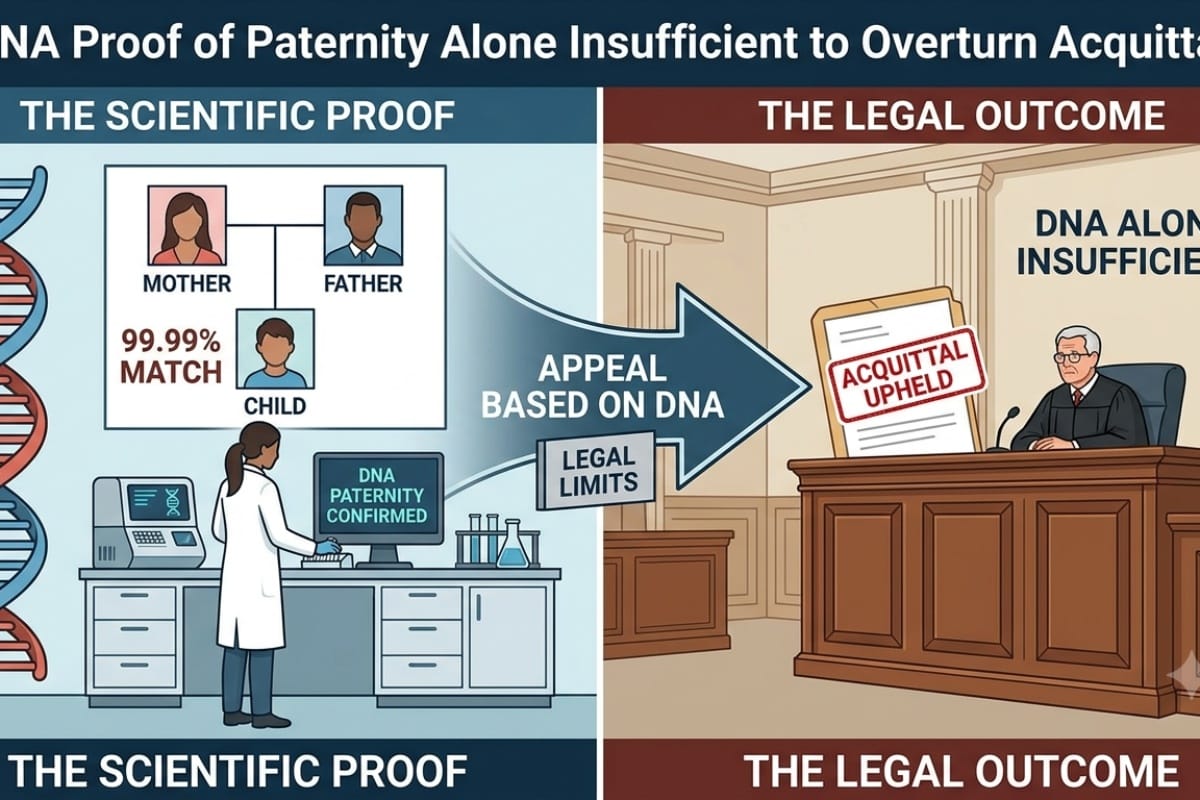
Headnote The Delhi High Court dismissed a prosecutrix's appeal against acquittal of the accused on charges under Sections 328/376 2 n /377/506/509 IPC, despite DNA evidence…
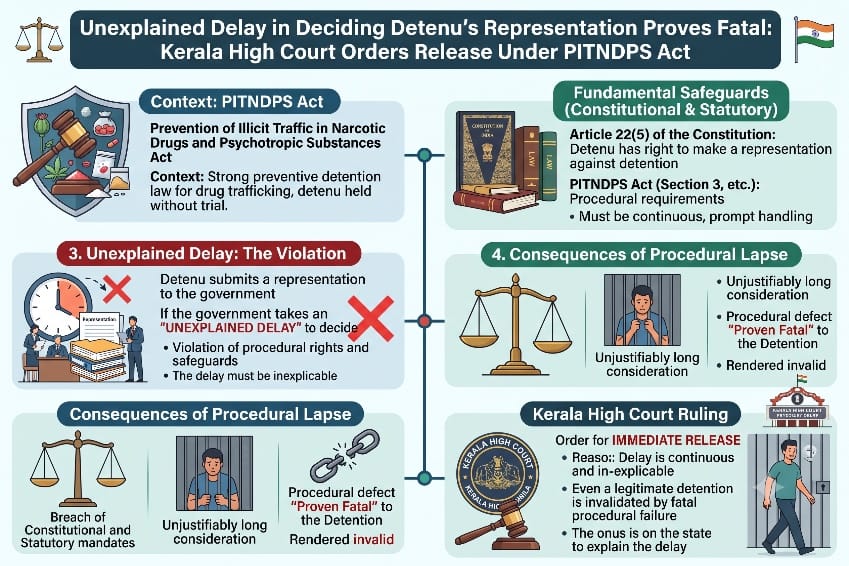
Fathimath Thasneem V.K. v. Union of India and Others | High Court of Kerala at Ernakulam | 3rd September, 2026 A habeas corpus writ petition by the wife of a detenu challenging…
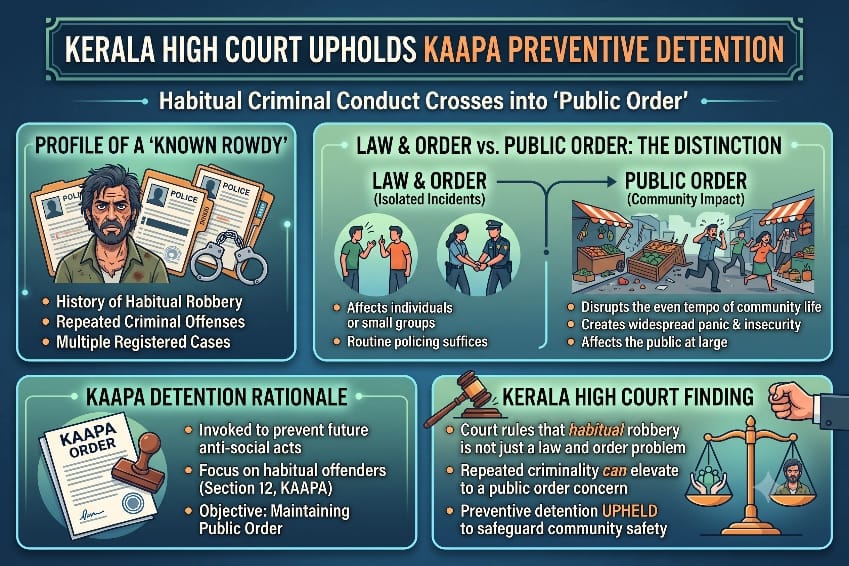
Thasmitha Abukutty v. State of Kerala and Others | High Court of Kerala at Ernakulam | 2nd September, 2026 A writ petition by the wife of a preventive detenu challenging a…
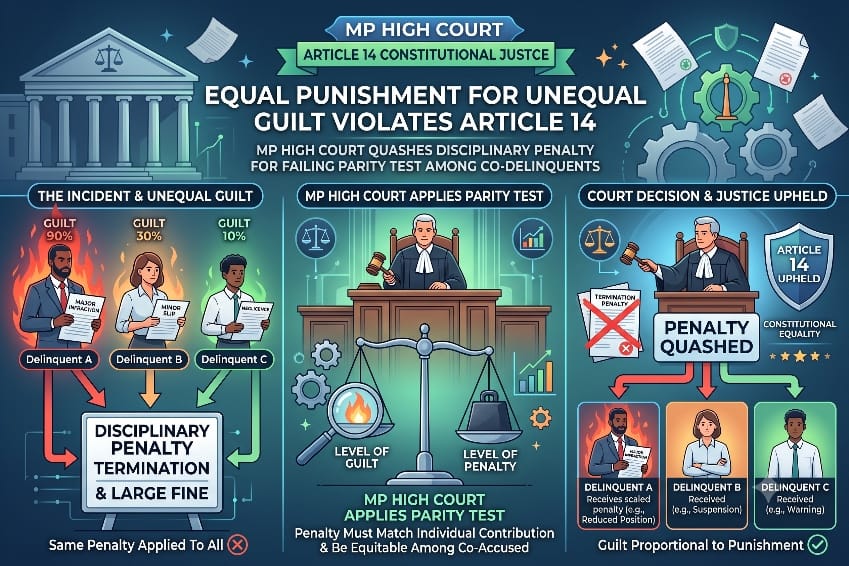
Brahm Kishore Dixit v. The State of Madhya Pradesh and Others | High Court of Madhya Pradesh, Gwalior | 1st September, 2026 A writ petition under Article 226 by a police Assistant…
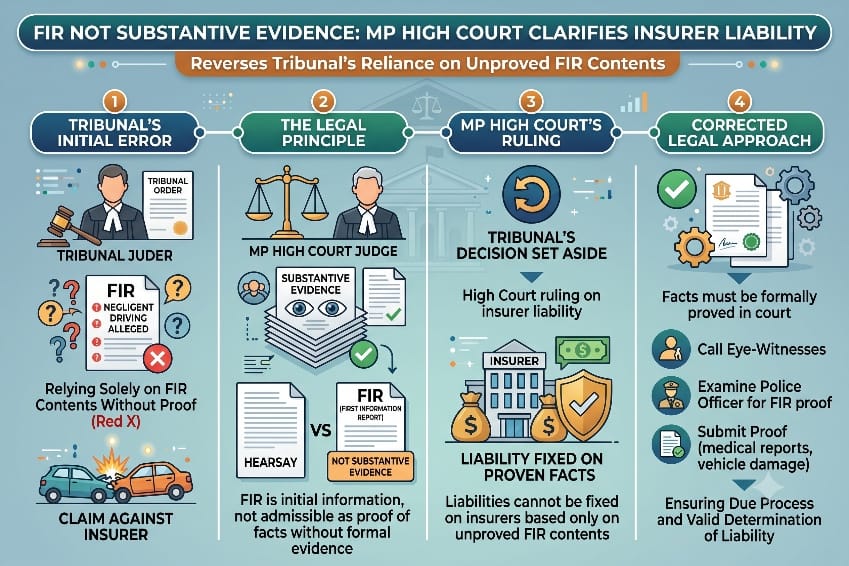
Anil Kumar Patel v. Smt. Munni Bai Barman and Others | High Court of Madhya Pradesh, Jabalpur | 1st September, 2026 A Motor Vehicle Act appeal under Section 173 1 against a Claims…
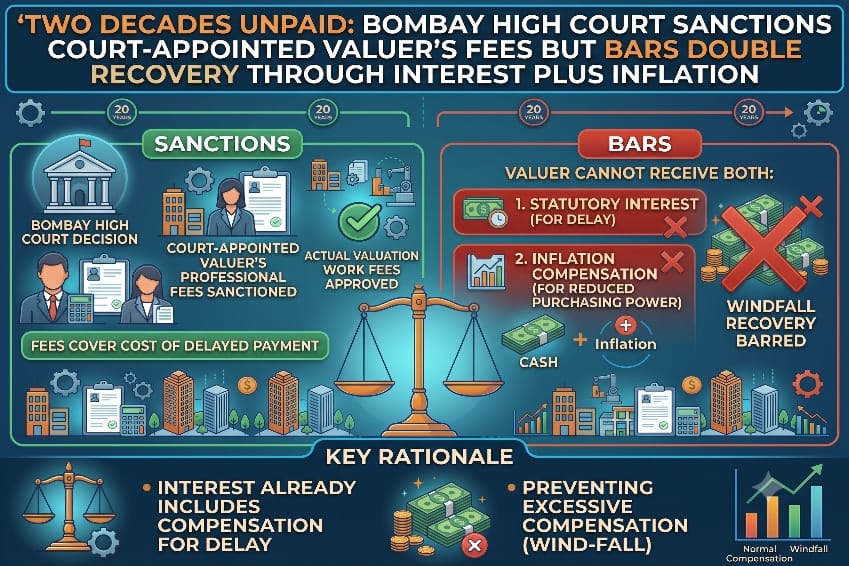
M/s. Kuber Mutual Benefits Ltd. & Ors. v. The State of Maharashtra & Ors. | High Court of Judicature at Bombay Appellate Side | 3rd September, 2026 A Court Receiver's Report…
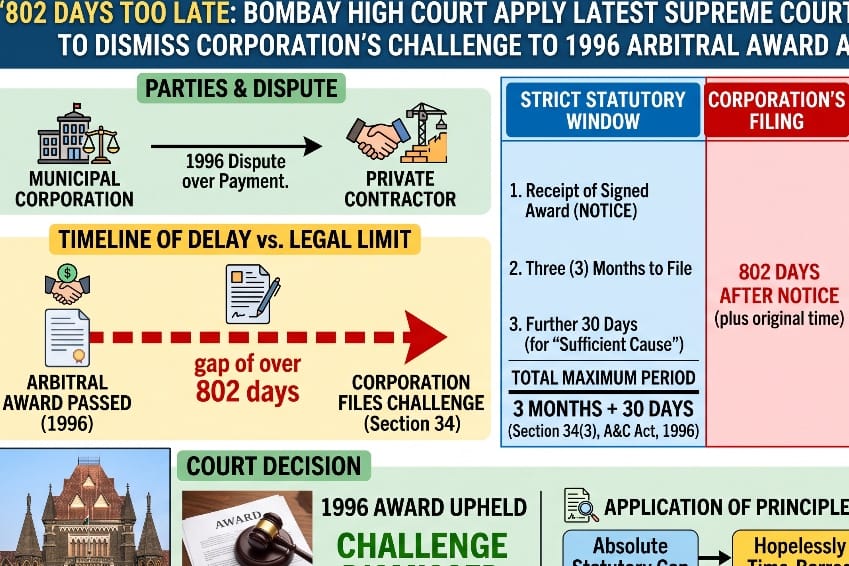
The Municipal Corporation of Greater Bombay v. M/s. Atul Raj Builders Pvt. Ltd. | High Court of Judicature at Bombay Ordinary Original Civil Jurisdiction | 3rd September, 2026 A…
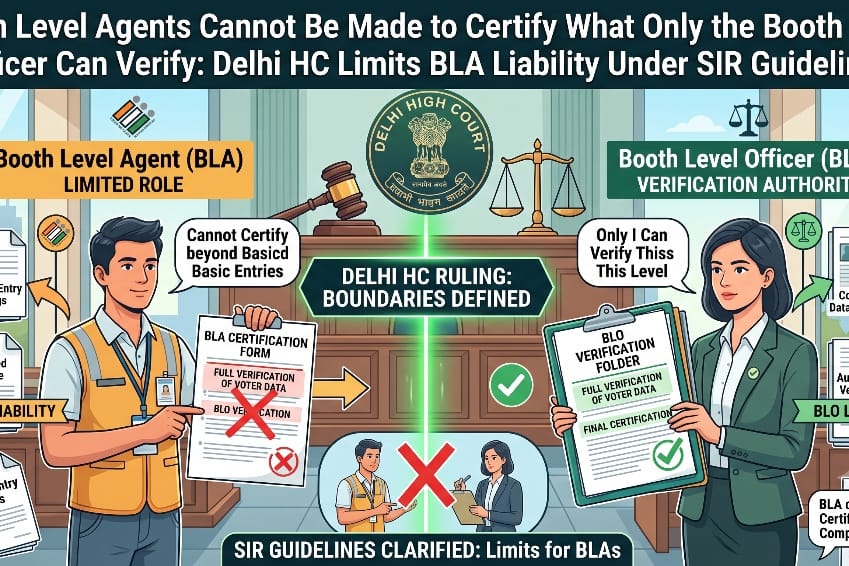
Devender Yadav & Anr. v. Election Commission of India & Anr. | High Court of Delhi Single Judge | Decided on: 03.09.2026 In a challenge to the Election Commission of India's…
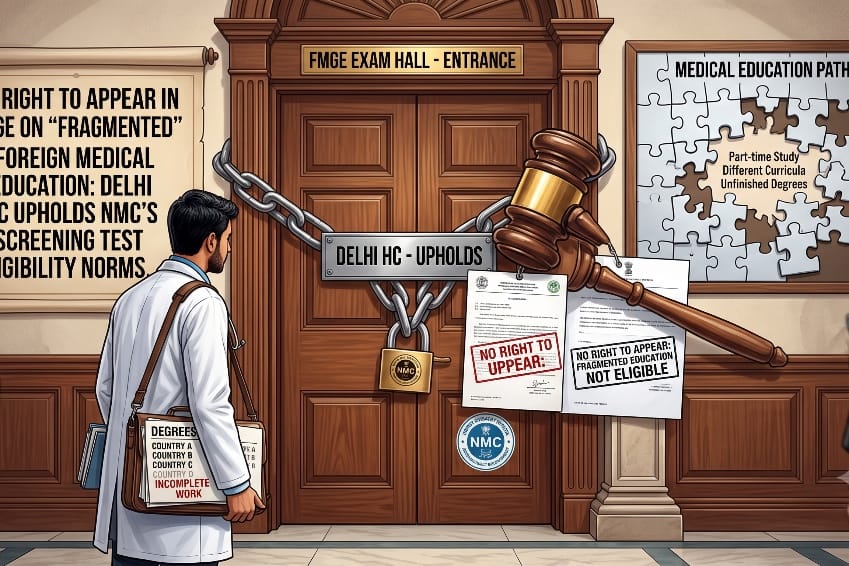
Brij Sharadbhai Bhatt & Ors. v. National Medical Commission & Ors. | High Court of Delhi Division Bench | Decided on: 03.09.2026 The Delhi High Court dismissed a challenge by…