
The Division Bench dismissed the connected writ appeals, while making a limited modification to the Single Judge’s findings concerning the Bar Council of Kerala. In light of…
Civil Law
Update / Judgement Date
12 Nov 2025
Source
WCP News Bulletin
Author
Sakshi Bhardwaj — WCP Legal Desk
Reading Time
3 min read
View Count
1
Headnote:
The Delhi High Court quashed an order passed by the Commissioner for Employees’ Compensation awarding compensation to a workman who was already receiving disability benefits under the Employees’ State Insurance Act, 1948 (ESI Act). The Court held that in view of Section 53 of the ESI Act, once an employee is covered under ESI and is receiving benefits, a parallel claim under the Employees’ Compensation Act, 1923 (EC Act) is barred. Dual recovery for the same injury is impermissible.
Background:
• The respondent-workman, aged 18, was employed at the petitioner’s factory and suffered an accident on 19.04.2016 while operating a moulding machine, resulting in amputation of his left hand below the wrist.
• He filed a claim under the EC Act, 1923 before the Commissioner, who awarded ₹7,64,506/- with 12% interest per annum from 26.09.2016 and also issued a show-cause notice for penalty under Section 4A(3)(b).
• The petitioner-employer did not initially appear before the Commissioner, and the case proceeded ex parte.
• Later, the petitioner challenged the order before the Delhi High Court, arguing that the workman was already covered under the ESI Act and had been receiving permanent disability benefits from the Employees’ State Insurance Corporation (ESIC).
• The ESIC, through its counsel, confirmed that the respondent-workman had been assessed with 60% permanent disability and was being paid a disability benefit of ₹16,020 per day from 16.06.2016, as reflected in its records and ledger sheet.
Court’s Observations:
• The Court noted that Section 53 of the ESI Act clearly bars employees who are covered under the ESI scheme from claiming compensation under the EC Act for the same injury.
• It observed that the workman was already receiving continuous disability benefits from the ESIC, which were legally sanctioned and disbursed.
• Justice Chandrasekharan Sudha held that the Commissioner had no jurisdiction to entertain a claim under the EC Act once ESI coverage was established.
• Since the workman had already received the compensation amount, the Court clarified that the EC award could not stand, as it was contrary to statutory provisions.
Decision:
The Delhi High Court allowed the writ petition and quashed the Commissioner’s order dated 24.10.2017 passed under the Employees’ Compensation Act, 1923. It held that the compensation claim under the EC Act was , as the respondent-workman was already compensated under the ESI scheme. All pending applications were disposed of.
Legal Provisions Discussed:
• Section 53, Employees’ State Insurance Act, 1948 – Bar against receiving benefits under other enactments when covered by ESI.
• Section 4A(3)(b), Employees’ Compensation Act, 1923 – Power to impose penalty for delayed payment of compensation.
• Employees’ Compensation Act, 1923 – Compensation framework for injury or death arising out of employment.
• Article 226, Constitution of India – High Court’s power of judicial review.
Citation: 2025:DEL:1113
Case: Mukesh v. Sachin & Ors.
Court: High Court of Delhi at New Delhi
Coram: Hon’ble Ms. Justice Chandrasekharan Sudha
Date of Decision: 13 November 2025
Writ Petition (C): 6733 of 2018 & CM APPL. 25613/2018
© 2026 White Collar Professional Technologies Pvt. Ltd. All rights reserved. CIN: U74999MH2024PTC000001
The Division Bench dismissed the connected writ appeals, while making a limited modification to the Single Judge’s findings concerning the Bar Council of Kerala. In light of…

The High Court held that the trial court was not justified in directing the parties to undergo fresh DNA testing when the existing expert report had not been rejected for legally…

The High Court held that a subsequently communicated minimum 20% local-content requirement, including an indigenously developed EMS software condition, could not be…
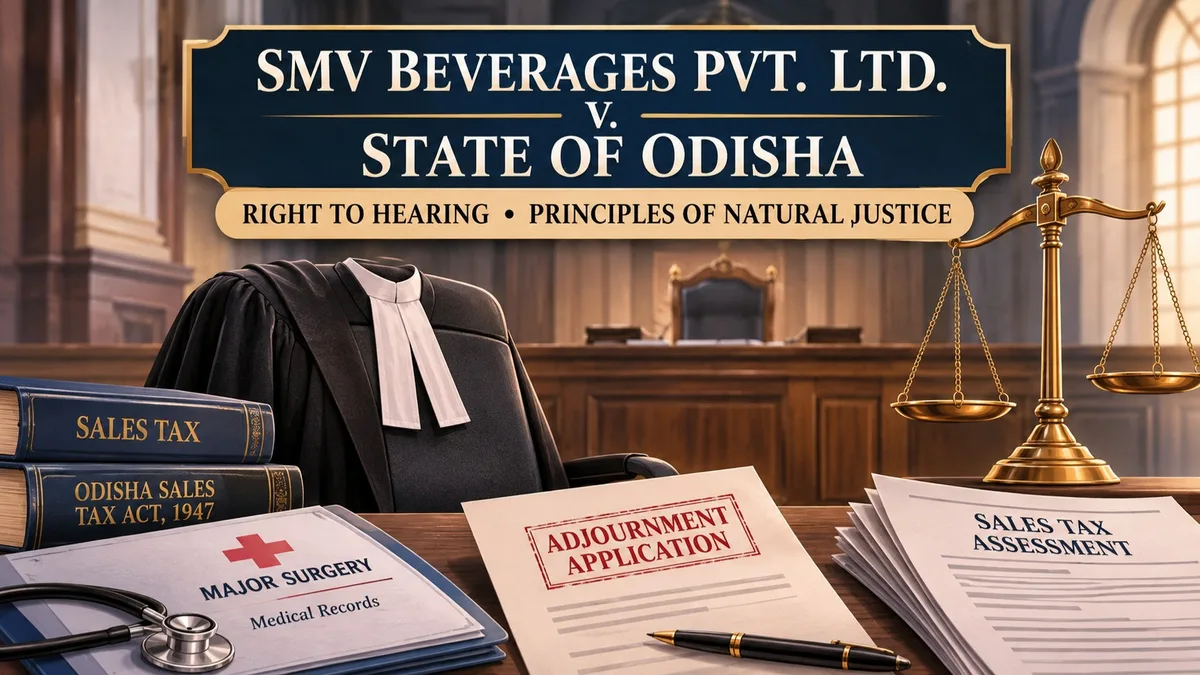
The Division Bench held that the petitioner had been deprived of a reasonable opportunity to present its case before the Commissioner of Sales Tax. An adjournment request must be…

The High Court exercised its inherent jurisdiction to quash a POCSO FIR and the pending trial after obtaining independent reports verifying the parties’ marriage, family…

The Division Bench held that the writ court had exceeded the proper scope of the dispute between the supplier and KSBCL by deciding, in effect, the Revenue’s separate tax…

The High Court considered the petitioners’ request for regular bail in an Enforcement Directorate prosecution alleging money laundering under the Prevention of Money Laundering…

The High Court upheld the appellant’s conviction under Section 18 c of the NDPS Act for possession of opium but reduced the sentence of seven years’ rigorous imprisonment to the…

The High Court dismissed the State’s appeal against acquittal, holding that the trial court’s view was a reasonably possible view on the evidence and that material inconsistencies…
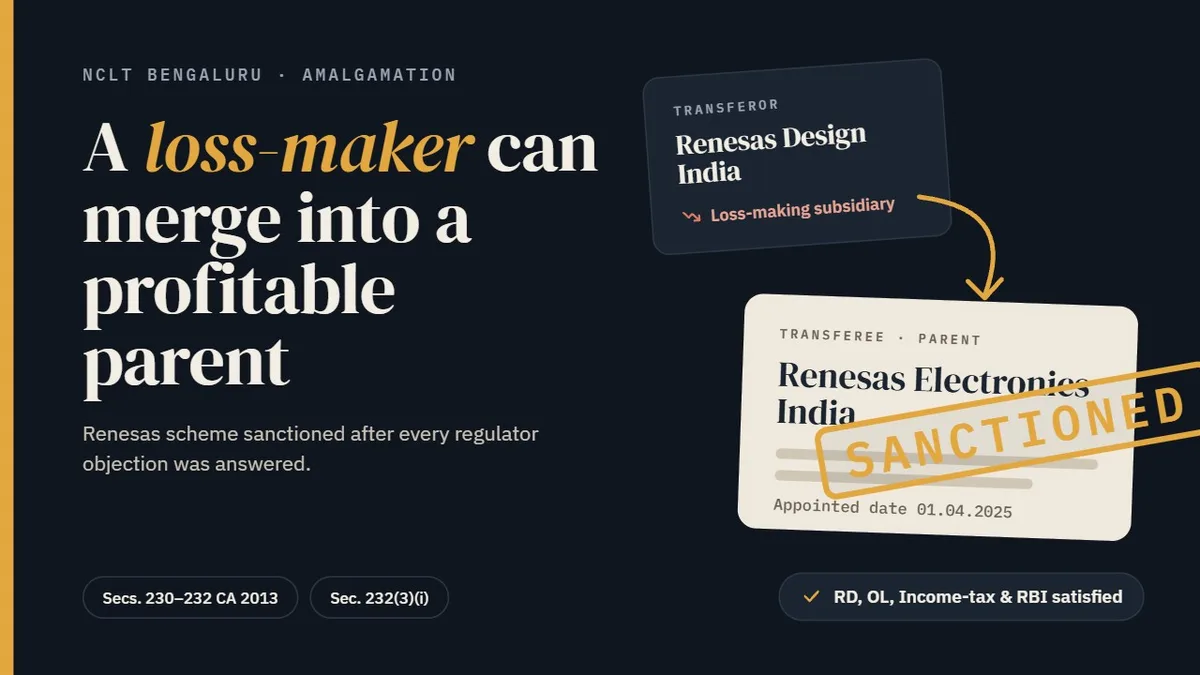
Renesas Design India Pvt. Ltd., a loss-making wholly owned subsidiary engaged in semiconductor design, and its parent Renesas Electronics India Pvt. Ltd. sought sanction of a…