
The Division Bench dismissed the connected writ appeals, while making a limited modification to the Single Judge’s findings concerning the Bar Council of Kerala. In light of…
Civil LawOther Legal Matters
21/11/20265 min read
Update / Judgement Date
02 Nov 2025
Source
WCP News Bulletin
Author
Sakshi Bhardwaj — WCP Legal Desk
Reading Time
4 min read
View Count
1
The Delhi High Court dismissed in limine a Public Interest Litigation (PIL) filed by Infrastructure Watchdog that alleged undervaluation and corruption in One-Time Settlement (OTS) agreements between Asian Hotels (North) Pvt. Ltd. (AHN) and Punjab National Bank (PNB) and Bank of Maharashtra (BOM). The petitioner claimed that undervaluation of the Hyatt Regency Hotel property in Delhi had caused losses to public banks. The Court, however, held that the PIL was speculative, unsupported by credible evidence, and based merely on conjecture and assumptions.
It ruled that courts cannot intervene in purely commercial transactions between private parties or banks acting under their commercial wisdom unless there is strong, prima facie material showing mala fides or corruption. Entertaining such PILs, the Court warned, would seriously harm the banking system, discourage financial institutions from legitimate recoveries, and invite misuse of judicial processes for speculative or publicity-driven motives.
The Court held that the PIL was speculative, unsupported by credible evidence, and aimed at initiating a “roving inquiry” into bona fide commercial decisions of banks. Such attempts, it said, must be “nipped in the bud.”
Held:
Citation: W.P.(C) 4123/2025
Case: Infrastructure Watchdog v. Union of India & Ors.
Court: High Court of Delhi at New Delhi
Coram: Hon’ble Mr. Justice C. Hari Shankar & Hon’ble Mr. Justice Ajay Digpaul
Date of Decision: 3 November 2025
Reserved on: 15 July 2025
© 2026 White Collar Professional Technologies Pvt. Ltd. All rights reserved. CIN: U74999MH2024PTC000001
The Division Bench dismissed the connected writ appeals, while making a limited modification to the Single Judge’s findings concerning the Bar Council of Kerala. In light of…

The High Court held that the trial court was not justified in directing the parties to undergo fresh DNA testing when the existing expert report had not been rejected for legally…

The High Court held that a subsequently communicated minimum 20% local-content requirement, including an indigenously developed EMS software condition, could not be…
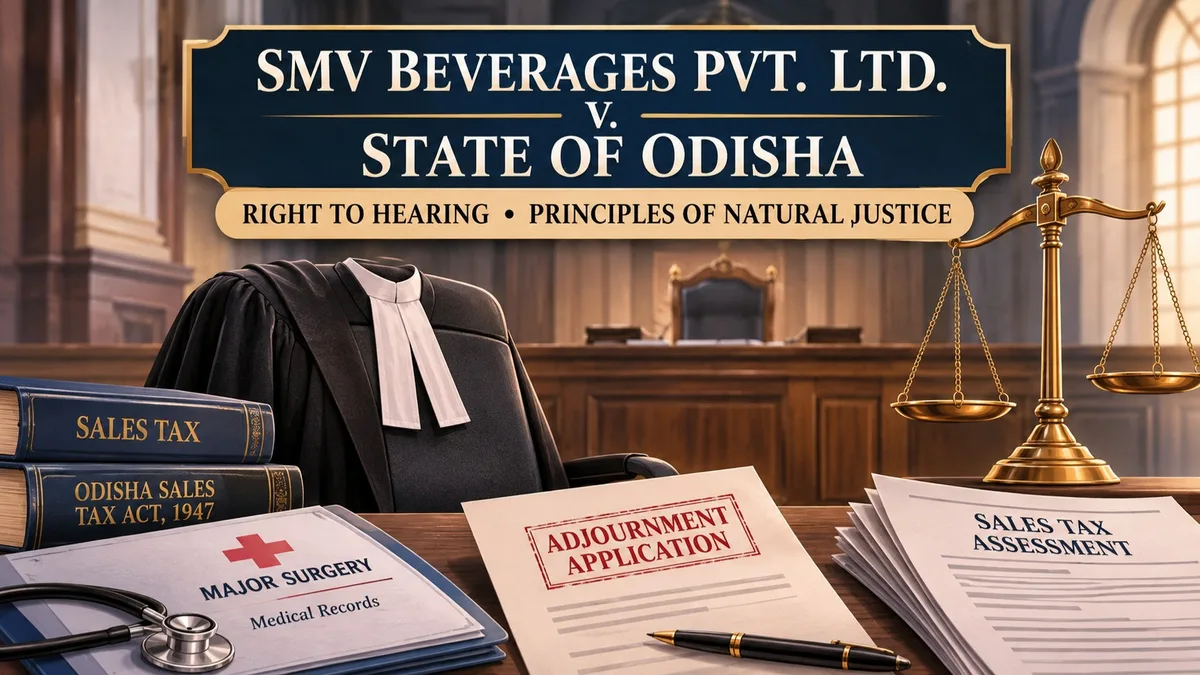
The Division Bench held that the petitioner had been deprived of a reasonable opportunity to present its case before the Commissioner of Sales Tax. An adjournment request must be…

The High Court exercised its inherent jurisdiction to quash a POCSO FIR and the pending trial after obtaining independent reports verifying the parties’ marriage, family…

The Division Bench held that the writ court had exceeded the proper scope of the dispute between the supplier and KSBCL by deciding, in effect, the Revenue’s separate tax…

The High Court considered the petitioners’ request for regular bail in an Enforcement Directorate prosecution alleging money laundering under the Prevention of Money Laundering…

The High Court upheld the appellant’s conviction under Section 18 c of the NDPS Act for possession of opium but reduced the sentence of seven years’ rigorous imprisonment to the…

The High Court dismissed the State’s appeal against acquittal, holding that the trial court’s view was a reasonably possible view on the evidence and that material inconsistencies…
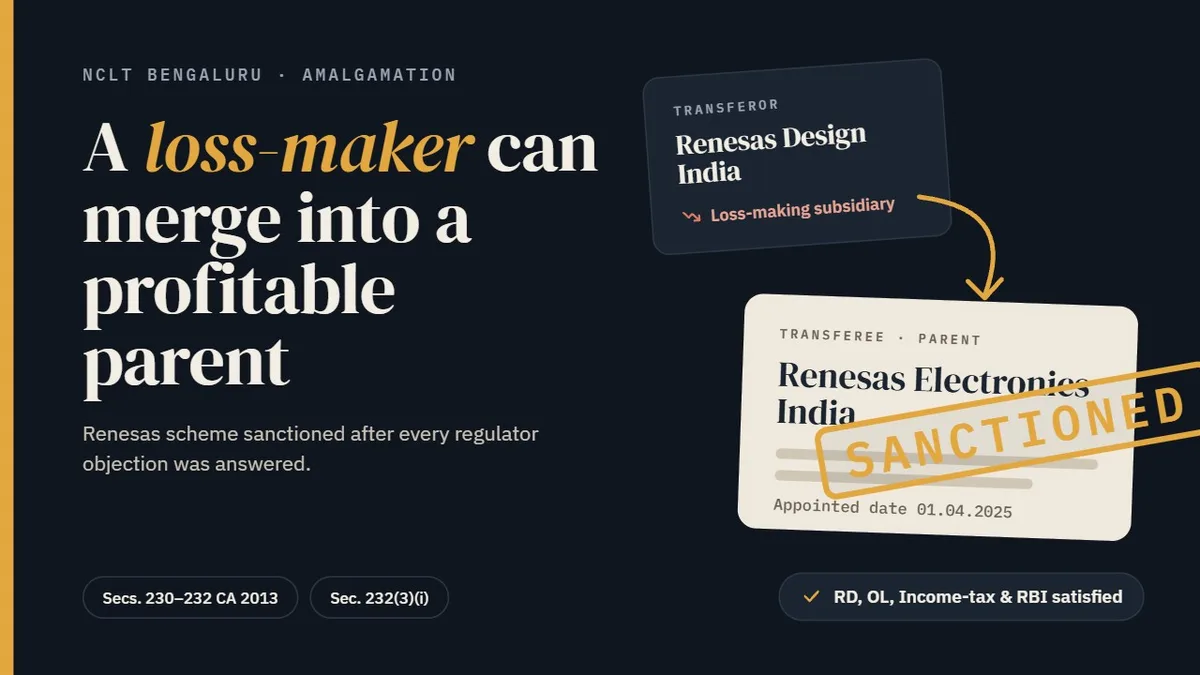
Renesas Design India Pvt. Ltd., a loss-making wholly owned subsidiary engaged in semiconductor design, and its parent Renesas Electronics India Pvt. Ltd. sought sanction of a…