
The Division Bench dismissed the connected writ appeals, while making a limited modification to the Single Judge’s findings concerning the Bar Council of Kerala. In light of…
Civil LawOther Legal Matters
21/11/20265 min read
Update / Judgement Date
11 Nov 2025
Source
WCP News Bulletin
Author
Sakshi Bhardwaj — WCP Legal Desk
Reading Time
4 min read
View Count
1
The Delhi High Court set aside the dismissal of a CRPF constable for consuming liquor on duty, holding the punishment grossly disproportionate and violative of principles of natural justice. The Court found that the disciplinary authority imposed the extreme penalty of dismissal without issuing a notice of proposed punishment or limiting consideration to the charge-sheeted misconduct. While upholding the finding of guilt for liquor consumption, the Court substituted the penalty of dismissal with stoppage of two annual grade increments and ordered reinstatement with 50% back wages.
Procedural Violation:
The Disciplinary Authority failed to issue a notice of proposed penalty, depriving the petitioner of the chance to contest the proportionality of punishment. The Court held this omission a violation of natural justice.
Scope of Charges:
The disciplinary order improperly considered unproven past incidents of misconduct, though the charge-sheet concerned only a single instance of liquor consumption on 21 July 2005. Such reliance on uncharged conduct was arbitrary and impermissible.
Misapplication of Section 11(1) CRPF Act:
The petitioner’s contention that Section 11(1) allows only minor penalties was discussed with reference to Union of India v. Ram Karan (2022) 1 SCC 373. The Court acknowledged that dismissal may be legally permissible but emphasized proportionality.
Proportionality of Punishment:
Even assuming the charge was proved, the Court found the penalty of dismissal “shockingly disproportionate” for a single instance of consuming liquor, particularly since the petitioner had already suffered 20 years of unemployment.
Natural Justice & Fairness:
The disciplinary authority’s reliance on unproven past conduct and lack of show cause notice made the punishment unsustainable.
Judgments Cited:
Citation: 2025:DHC:73291
Case: Ex. Constable (GD) Sarjeet Singh v. Union of India & Ors.
Court: High Court of Delhi at New Delhi
Coram: Justice Dinesh Mehta & Justice Vimal Kumar Yadav
Date of Decision: 12 November 2025
Writ Petition (C): 2400 of 200
© 2026 White Collar Professional Technologies Pvt. Ltd. All rights reserved. CIN: U74999MH2024PTC000001
The Division Bench dismissed the connected writ appeals, while making a limited modification to the Single Judge’s findings concerning the Bar Council of Kerala. In light of…

The High Court held that the trial court was not justified in directing the parties to undergo fresh DNA testing when the existing expert report had not been rejected for legally…

The High Court held that a subsequently communicated minimum 20% local-content requirement, including an indigenously developed EMS software condition, could not be…
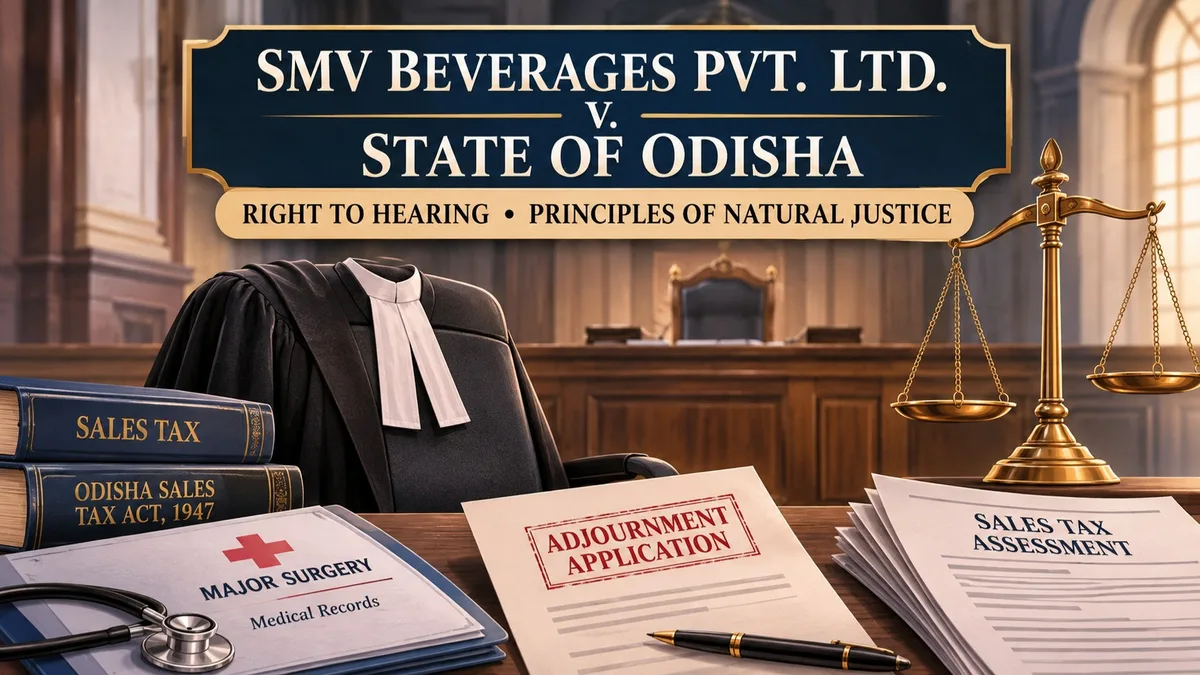
The Division Bench held that the petitioner had been deprived of a reasonable opportunity to present its case before the Commissioner of Sales Tax. An adjournment request must be…

The High Court exercised its inherent jurisdiction to quash a POCSO FIR and the pending trial after obtaining independent reports verifying the parties’ marriage, family…

The Division Bench held that the writ court had exceeded the proper scope of the dispute between the supplier and KSBCL by deciding, in effect, the Revenue’s separate tax…

The High Court considered the petitioners’ request for regular bail in an Enforcement Directorate prosecution alleging money laundering under the Prevention of Money Laundering…

The High Court upheld the appellant’s conviction under Section 18 c of the NDPS Act for possession of opium but reduced the sentence of seven years’ rigorous imprisonment to the…

The High Court dismissed the State’s appeal against acquittal, holding that the trial court’s view was a reasonably possible view on the evidence and that material inconsistencies…
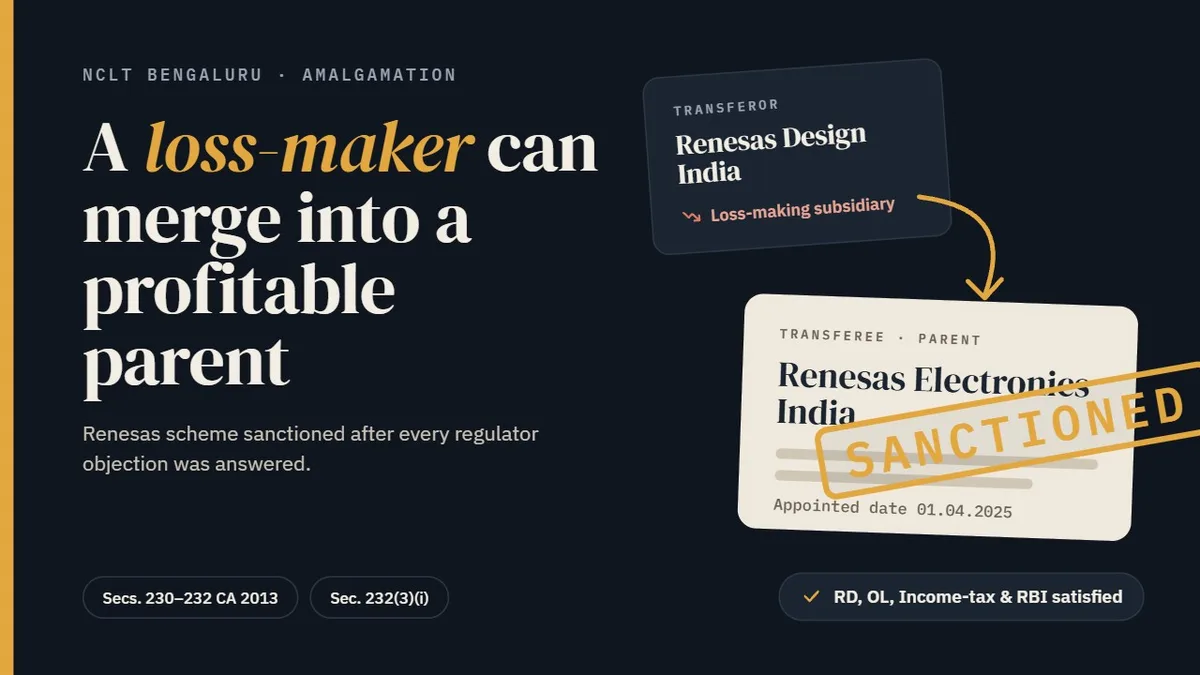
Renesas Design India Pvt. Ltd., a loss-making wholly owned subsidiary engaged in semiconductor design, and its parent Renesas Electronics India Pvt. Ltd. sought sanction of a…