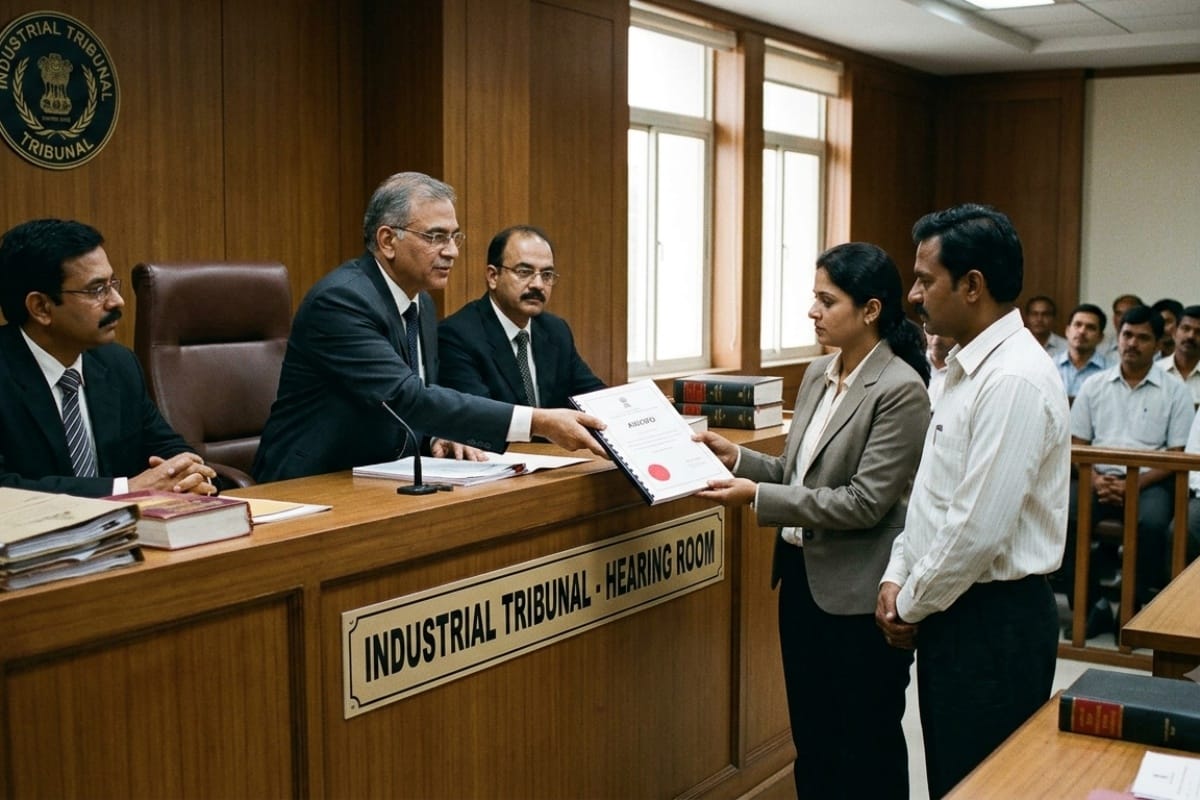
Deciding two connected writ petitions arising from a common Industrial Tribunal Award, the Delhi High Court set aside the Tribunal's direction granting hotel workmen a further…
Labour Laws
06/09/20264 min read
Update / Judgement Date
27 Oct 2025
Source
WCP News Bulletin
Author
Sakshi Bhardwaj — WCP Legal Desk
Reading Time
3 min read
The Delhi High Court upheld the Special Judge’s decision directing separate trials for each of the nine power companies alleged to have benefitted from a single act of underpricing APM gas by GAIL officials. The Court held that while the petitioner (then GM, Pricing, GAIL) was a common link, the transactions with each company were independent, constituting distinct conspiracies. A joint trial was therefore impermissible under Sections 220 and 223 Cr.P.C.
• In 2006, the Ministry of Petroleum & Natural Gas revised the APM gas price from ₹3,200/1000 SCM to ₹3,840/1000 SCM.
• The petitioner, E.V.S. Rao, then General Manager (Pricing) at GAIL, allegedly failed to implement the revised rates, continuing to bill nine power companies at the old price.
• This resulted in an alleged loss of ₹241.95 crore to GAIL and corresponding wrongful gains to the companies.
• The CBI registered FIR (RC-AC-I 2014 A0003) and filed a chargesheet in 2017 for offences under Sections 120B, 420 IPC and Section 13(2) r/w 13(1)(d) of the Prevention of Corruption Act, 1988.
• The Special Judge (Order dated 16.02.2021) directed separate trials for each of the nine companies, holding that the transactions were independent.
• The petitioner sought quashing of this order, claiming the acts arose from one common decision and should be tried together.
• A joint trial is an exception, permissible only when acts form part of the same transaction showing unity of purpose and continuity of action.
• Merely having a common participant (the petitioner) does not establish a single conspiracy. Each transaction must be interlinked by common design.
• The companies acted independently and had no concert or communication among themselves.
• The Court relied on precedents including S. Swaminathan v. State of Madras (1957), Kotteakos v. United States (1946), and M.S. Kochar v. State (1986), which held that multiple conspiracies cannot be clubbed together merely because of one common actor.
• A joint trial in such circumstances would cause confusion, prejudice, and procedural injustice, contrary to fair trial principles under Article 21 of the Constitution.
• The Court held that the Special Judge rightly ordered separate trials as the dealings with each company were distinct transactions.
• There was no single conspiracy or continuous chain linking all companies.
• All petitions were dismissed.
• Sections 220 & 223, Code of Criminal Procedure, 1973 – Joint trial for offences forming the same transaction or committed in the course of the same conspiracy.
• Sections 120B & 420, Indian Penal Code, 1860 – Criminal conspiracy and cheating.
• Section 13(2) r/w 13(1)(d), Prevention of Corruption Act, 1988 – Criminal misconduct by a public servant.
• Article 21, Constitution of India – Right to fair and speedy trial.
Citation: 2025:DEL:84512
Case: Emani Venkata Sarveswara Rao v. Central Bureau of Investigation
Court: High Court of Delhi
Coram: Hon’ble Ms. Justice Neena Bansal Krishna
Deciding two connected writ petitions arising from a common Industrial Tribunal Award, the Delhi High Court set aside the Tribunal's direction granting hotel workmen a further…
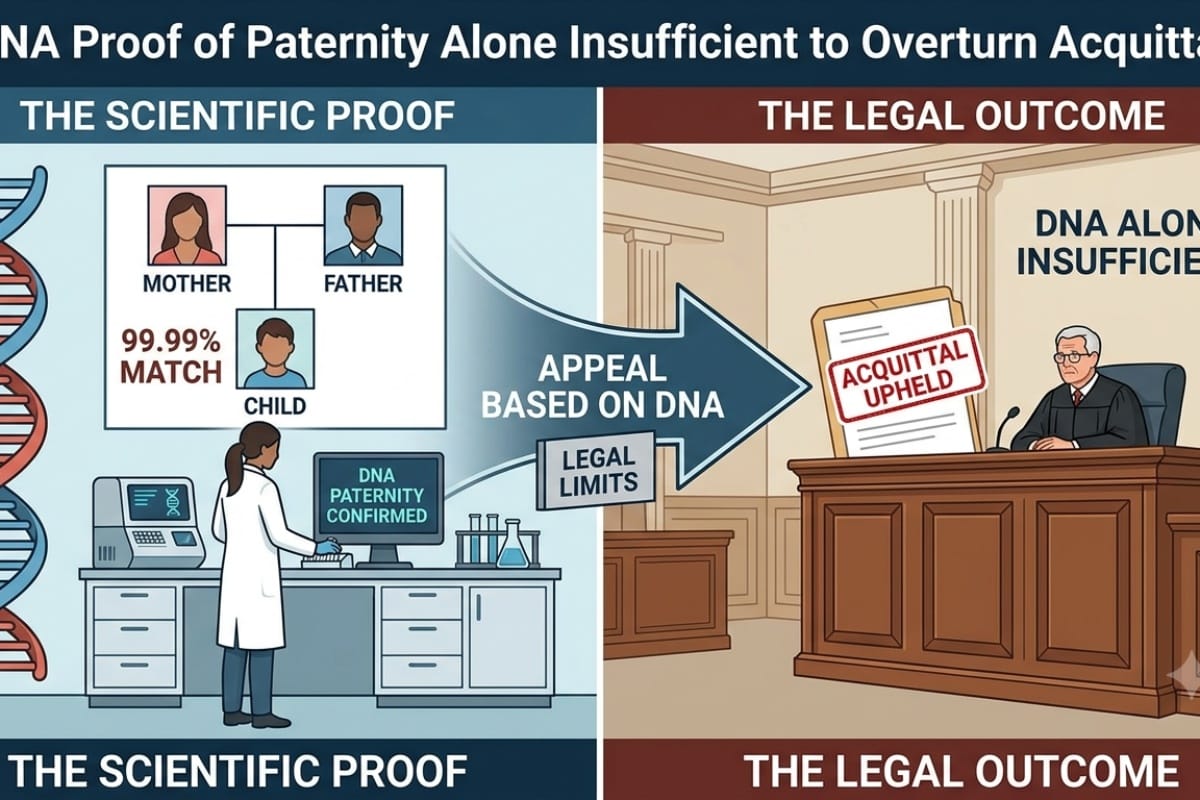
Headnote The Delhi High Court dismissed a prosecutrix's appeal against acquittal of the accused on charges under Sections 328/376 2 n /377/506/509 IPC, despite DNA evidence…
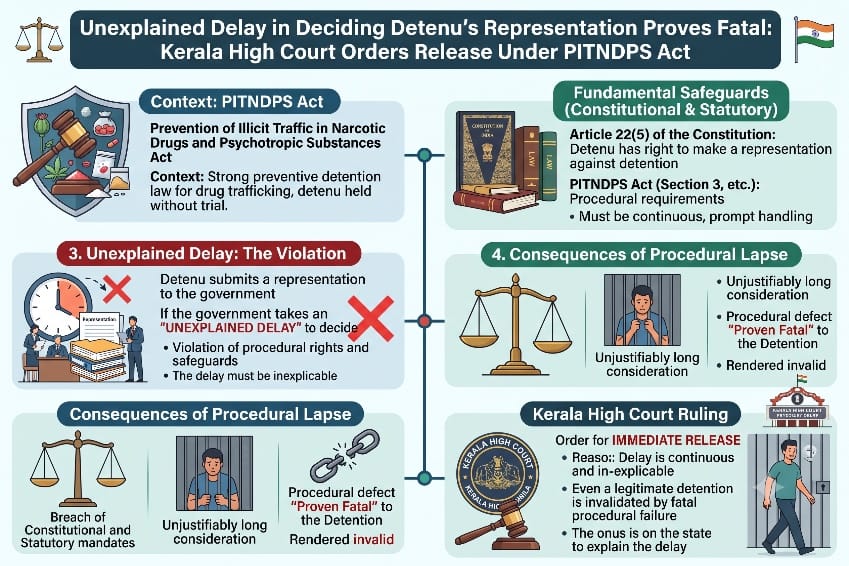
Fathimath Thasneem V.K. v. Union of India and Others | High Court of Kerala at Ernakulam | 3rd September, 2026 A habeas corpus writ petition by the wife of a detenu challenging…
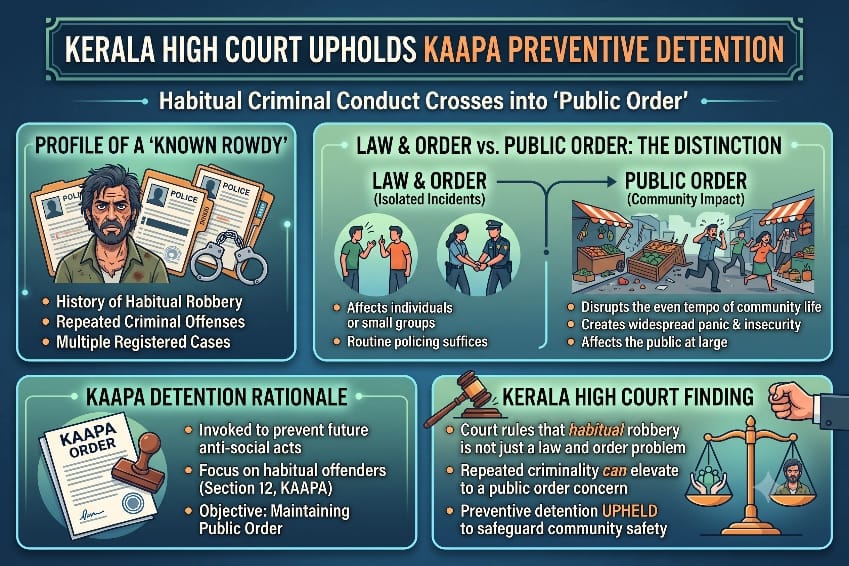
Thasmitha Abukutty v. State of Kerala and Others | High Court of Kerala at Ernakulam | 2nd September, 2026 A writ petition by the wife of a preventive detenu challenging a…
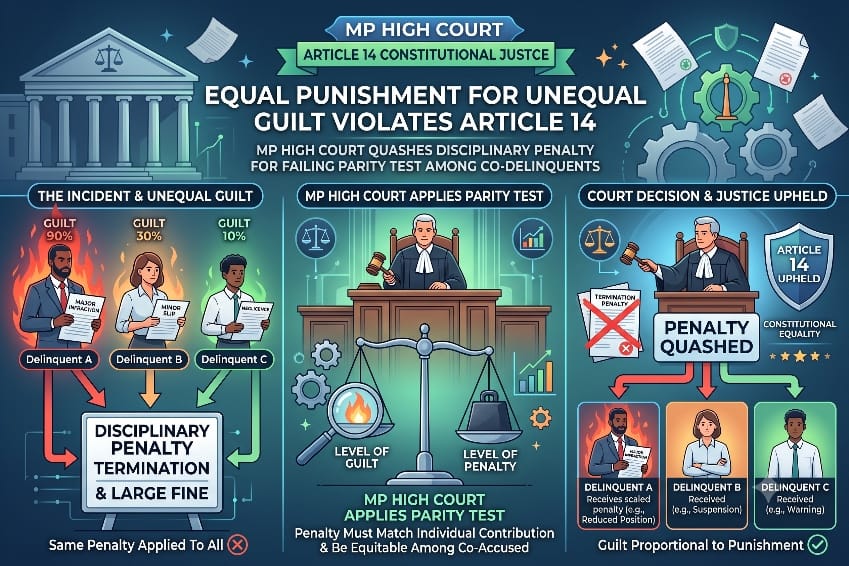
Brahm Kishore Dixit v. The State of Madhya Pradesh and Others | High Court of Madhya Pradesh, Gwalior | 1st September, 2026 A writ petition under Article 226 by a police Assistant…
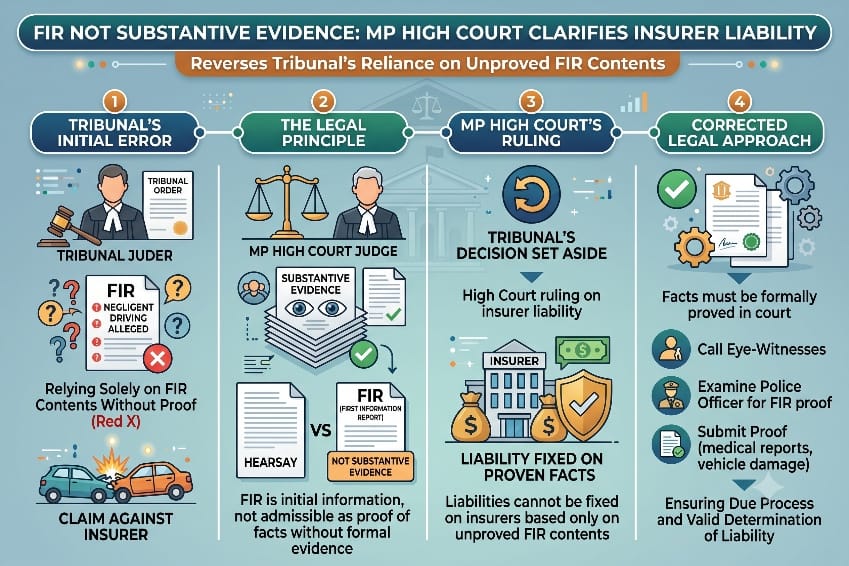
Anil Kumar Patel v. Smt. Munni Bai Barman and Others | High Court of Madhya Pradesh, Jabalpur | 1st September, 2026 A Motor Vehicle Act appeal under Section 173 1 against a Claims…
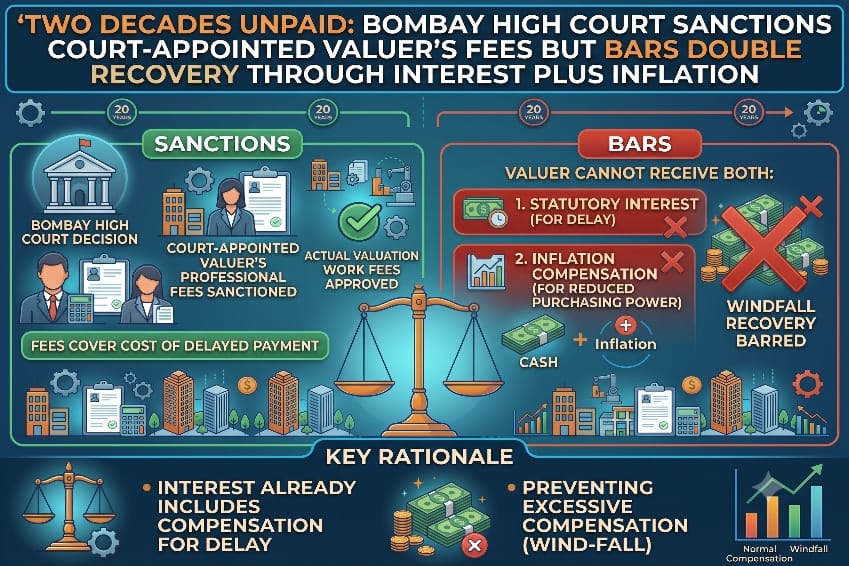
M/s. Kuber Mutual Benefits Ltd. & Ors. v. The State of Maharashtra & Ors. | High Court of Judicature at Bombay Appellate Side | 3rd September, 2026 A Court Receiver's Report…
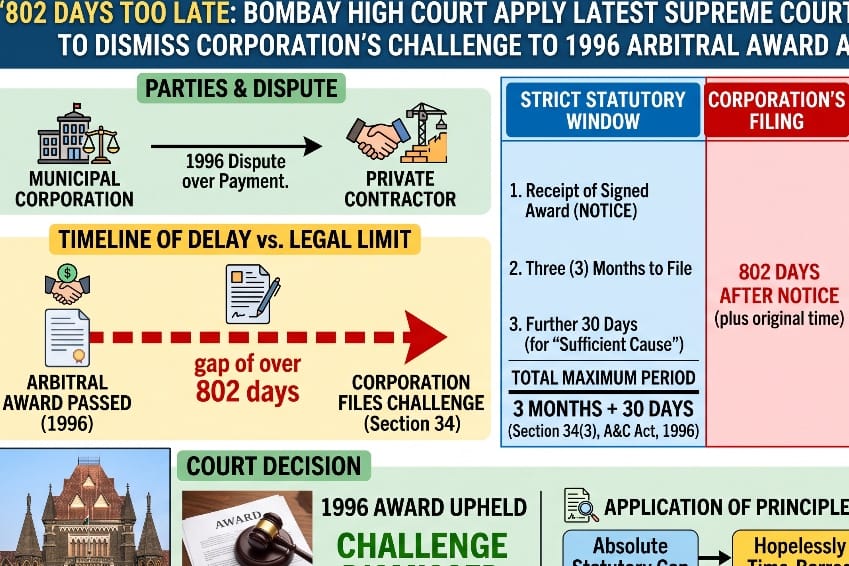
The Municipal Corporation of Greater Bombay v. M/s. Atul Raj Builders Pvt. Ltd. | High Court of Judicature at Bombay Ordinary Original Civil Jurisdiction | 3rd September, 2026 A…
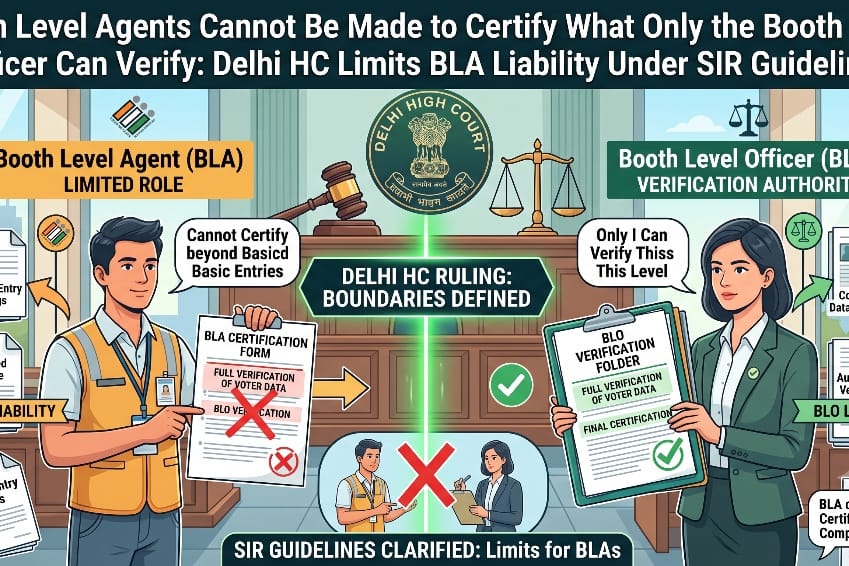
Devender Yadav & Anr. v. Election Commission of India & Anr. | High Court of Delhi Single Judge | Decided on: 03.09.2026 In a challenge to the Election Commission of India's…
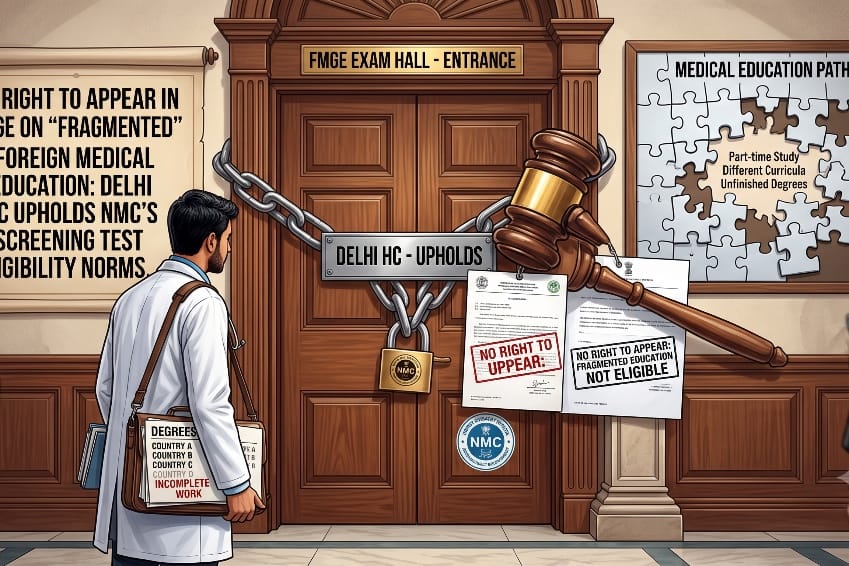
Brij Sharadbhai Bhatt & Ors. v. National Medical Commission & Ors. | High Court of Delhi Division Bench | Decided on: 03.09.2026 The Delhi High Court dismissed a challenge by…