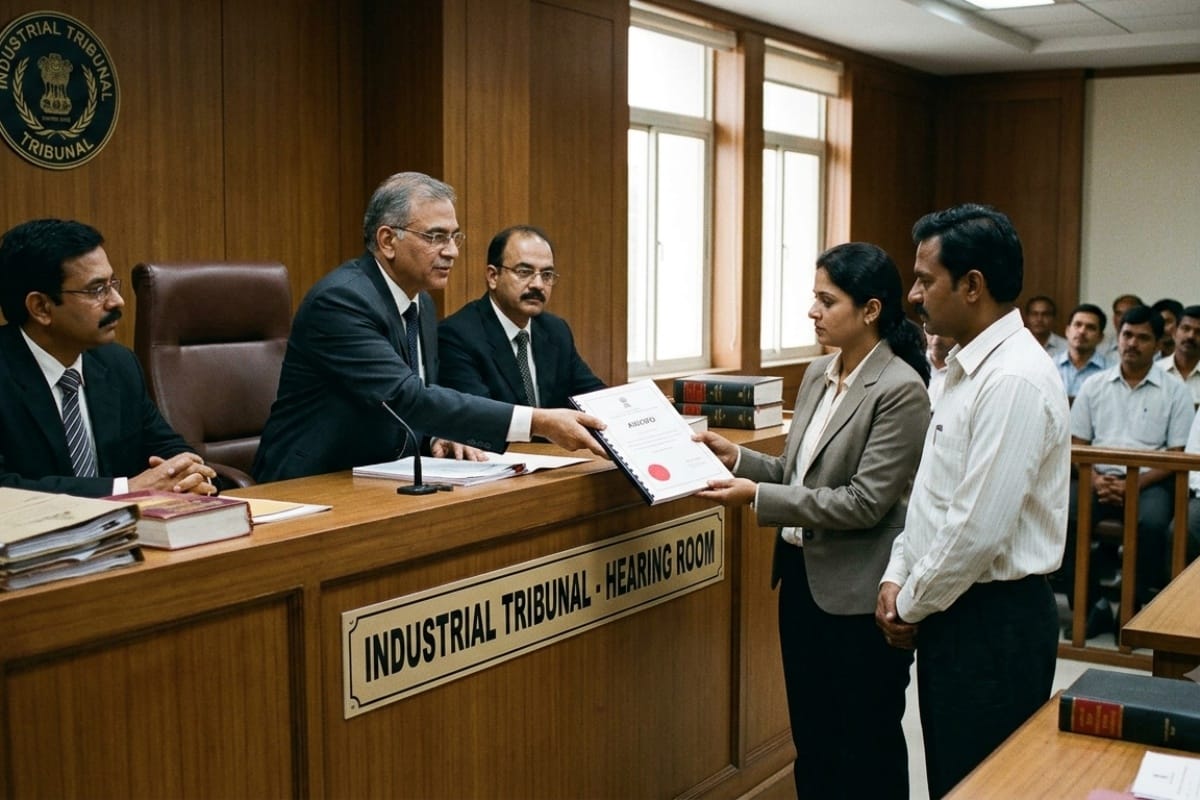
Deciding two connected writ petitions arising from a common Industrial Tribunal Award, the Delhi High Court set aside the Tribunal's direction granting hotel workmen a further…
Labour Laws
06/09/20264 min read
Update / Judgement Date
04 Nov 2025
Source
WCP News Bulletin
Author
Sakshi Bhardwaj — WCP Legal Desk
Reading Time
3 min read
The Delhi High Court set aside the trial court’s order directing the plaintiff to amend the plaint valuation and pay ad valorem court fees based on the market value of the property in a partition suit. The Court held that when the plaintiff is in joint possession of the property, only a fixed court fee is payable under the Court Fees Act, 1870. Since the plaintiff had already paid a higher court fee based on the sale consideration and undertaken to pay any deficit before decree, the trial court’s direction was unsustainable.
• The petitioner, Pranab Thareja, filed a suit for partition and declaration concerning a property purchased jointly with his brother, Pallav Thareja, under a Sale Deed dated 16.08.1994.
• The petitioner claimed that he was in joint possession of the property with the defendant.
• He had paid ad valorem court fees calculated on the sale consideration mentioned in the 1994 deed, which was higher than the fixed court fee applicable for partition suits.
• The trial court, by order dated 24.09.2025, directed the petitioner to amend the suit valuation and pay court fees based on the current market value, failing which the plaint would be rejected.
• The petitioner challenged the order before the Delhi High Court, contending that the trial court erred in its interpretation of the law on valuation and court fees.
• The Court observed that in a partition suit where the plaintiff is in joint possession, the fixed court fee prescribed under the Court Fees Act applies, as there is no question of recovery of possession.
• The trial court erred in directing valuation on the basis of the market value instead of considering the plaintiff’s continuing joint possession.
• The Court noted that the plaintiff had already paid higher-than-required fees and had undertaken to pay any deficit before decree if required by the trial court.
• The Court held that such bona fide conduct and the nature of the relief sought warranted setting aside the impugned order.
• The Delhi High Court set aside the trial court’s order dated 24.09.2025.
• It was held that the fixed court fee is applicable when the plaintiff is in joint possession of the property in a partition suit.
• The petition was allowed, and accompanying applications were disposed of accordingly.
• Court Fees Act, 1870 – Schedule II, Article 17(vi): Fixed court fee in suits for partition where the plaintiff is in joint possession.
• Code of Civil Procedure, 1908 – Order VII Rule 11: Grounds for rejection of plaint for non-payment of proper court fees.
• Article 227, Constitution of India: Supervisory jurisdiction of High Courts.
When the plaintiff in a partition suit continues to be in joint possession of the property, fixed court fees are payable, not ad valorem fees based on market value. The trial court’s order requiring valuation based on market price was set aside as legally untenable.
Citation: 2025:DHC:72894
Case: Pranab Thareja v. Pallav Thareja
Court: High Court of Delhi at New Delhi
Coram: Justice Girish Kathpalia
Date of Decision: 4 November 2025
Case No.: CM(M) 2101/2025, CM APPL. 68699/2025 & 68698/2025
Deciding two connected writ petitions arising from a common Industrial Tribunal Award, the Delhi High Court set aside the Tribunal's direction granting hotel workmen a further…

Headnote The Delhi High Court dismissed a prosecutrix's appeal against acquittal of the accused on charges under Sections 328/376 2 n /377/506/509 IPC, despite DNA evidence…
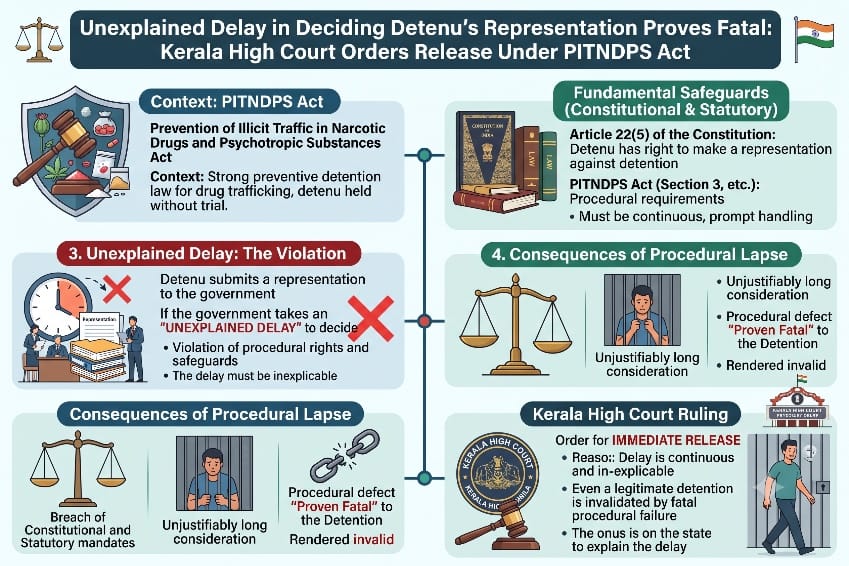
Fathimath Thasneem V.K. v. Union of India and Others | High Court of Kerala at Ernakulam | 3rd September, 2026 A habeas corpus writ petition by the wife of a detenu challenging…

Thasmitha Abukutty v. State of Kerala and Others | High Court of Kerala at Ernakulam | 2nd September, 2026 A writ petition by the wife of a preventive detenu challenging a…
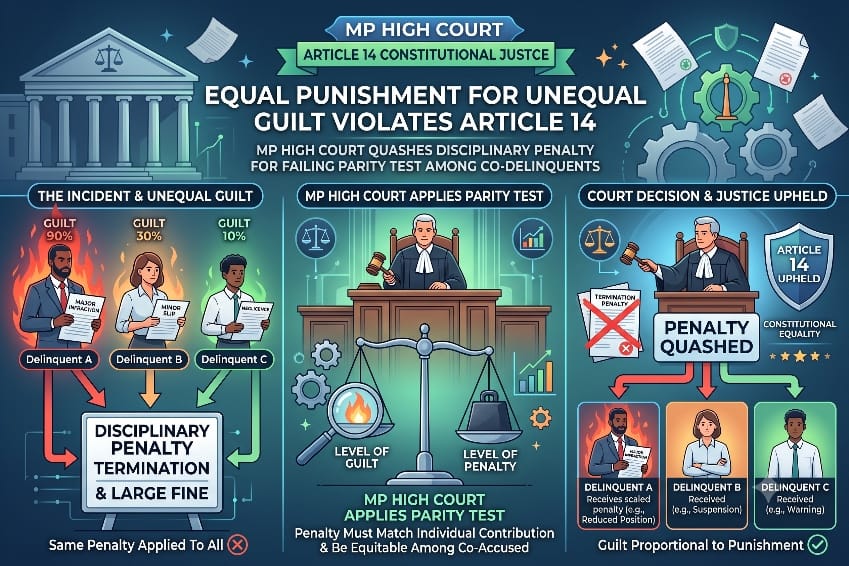
Brahm Kishore Dixit v. The State of Madhya Pradesh and Others | High Court of Madhya Pradesh, Gwalior | 1st September, 2026 A writ petition under Article 226 by a police Assistant…
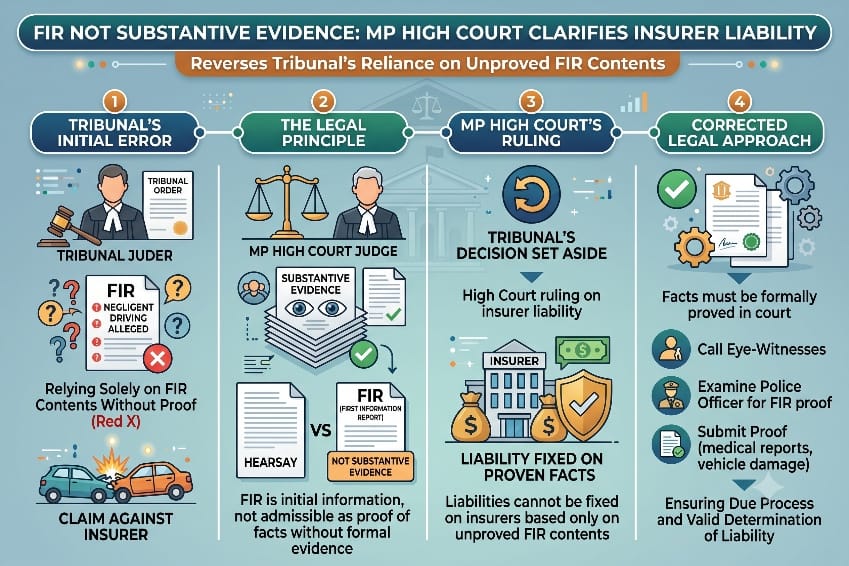
Anil Kumar Patel v. Smt. Munni Bai Barman and Others | High Court of Madhya Pradesh, Jabalpur | 1st September, 2026 A Motor Vehicle Act appeal under Section 173 1 against a Claims…
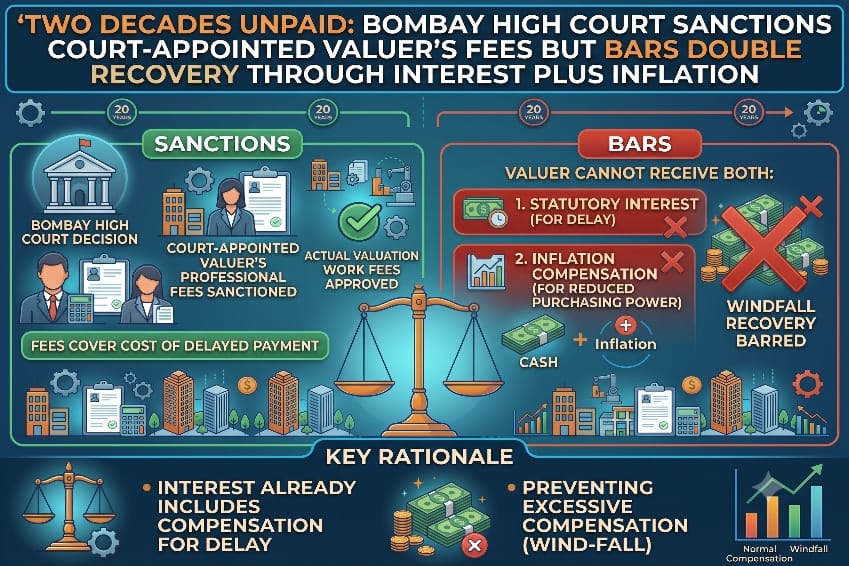
M/s. Kuber Mutual Benefits Ltd. & Ors. v. The State of Maharashtra & Ors. | High Court of Judicature at Bombay Appellate Side | 3rd September, 2026 A Court Receiver's Report…
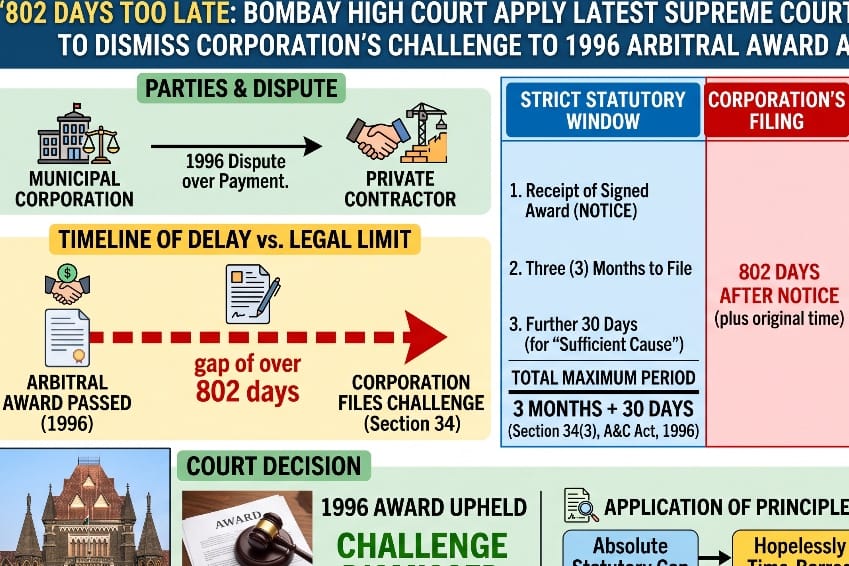
The Municipal Corporation of Greater Bombay v. M/s. Atul Raj Builders Pvt. Ltd. | High Court of Judicature at Bombay Ordinary Original Civil Jurisdiction | 3rd September, 2026 A…

Devender Yadav & Anr. v. Election Commission of India & Anr. | High Court of Delhi Single Judge | Decided on: 03.09.2026 In a challenge to the Election Commission of India's…
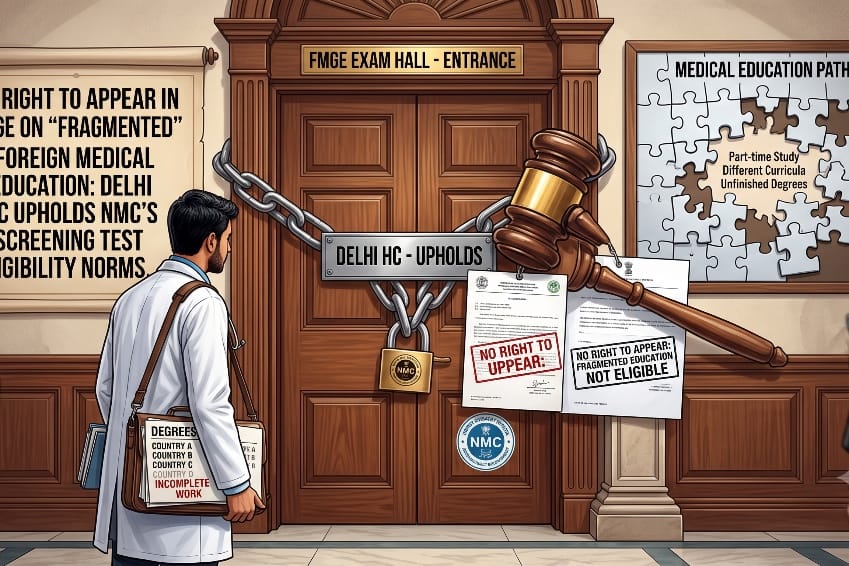
Brij Sharadbhai Bhatt & Ors. v. National Medical Commission & Ors. | High Court of Delhi Division Bench | Decided on: 03.09.2026 The Delhi High Court dismissed a challenge by…