
The Division Bench dismissed the connected writ appeals, while making a limited modification to the Single Judge’s findings concerning the Bar Council of Kerala. In light of…
Civil LawOther Legal Matters
21/11/20265 min read
Update / Judgement Date
02 Nov 2025
Source
WCP News Bulletin
Author
Sakshi Bhardwaj — WCP Legal Desk
Reading Time
3 min read
View Count
1
The Delhi High Court quashed an FIR registered under various provisions of the Bharatiya Nagarik Suraksha Sanhita, 2023 after noting that the dispute between the complainant and the accused had been amicably settled. The Court emphasized that continuation of criminal proceedings in such circumstances would amount to an abuse of process and that the inherent powers of the High Court could be exercised to secure the ends of justice.
The Court quashed FIR No. 469/2024 and all proceedings arising therefrom, subject to the petitioners depositing ₹ 15,000 with the Delhi State Legal Services Authority within one month. The petition and all pending applications were disposed of accordingly.
Citation: 2025:DEL:783
Case: Aman Chopra & Ors. v. State (NCT of Delhi) & Anr.
Court: High Court of Delhi at New Delhi
Coram: Hon’ble Mr. Justice Ravinder Dudeja
Date of Decision: 3 November 2025
Criminal Miscellaneous Case No.: CRL.M.C. 783/2025 & CRL M.A. 3710/2025
© 2026 White Collar Professional Technologies Pvt. Ltd. All rights reserved. CIN: U74999MH2024PTC000001
The Division Bench dismissed the connected writ appeals, while making a limited modification to the Single Judge’s findings concerning the Bar Council of Kerala. In light of…

The High Court held that the trial court was not justified in directing the parties to undergo fresh DNA testing when the existing expert report had not been rejected for legally…

The High Court held that a subsequently communicated minimum 20% local-content requirement, including an indigenously developed EMS software condition, could not be…
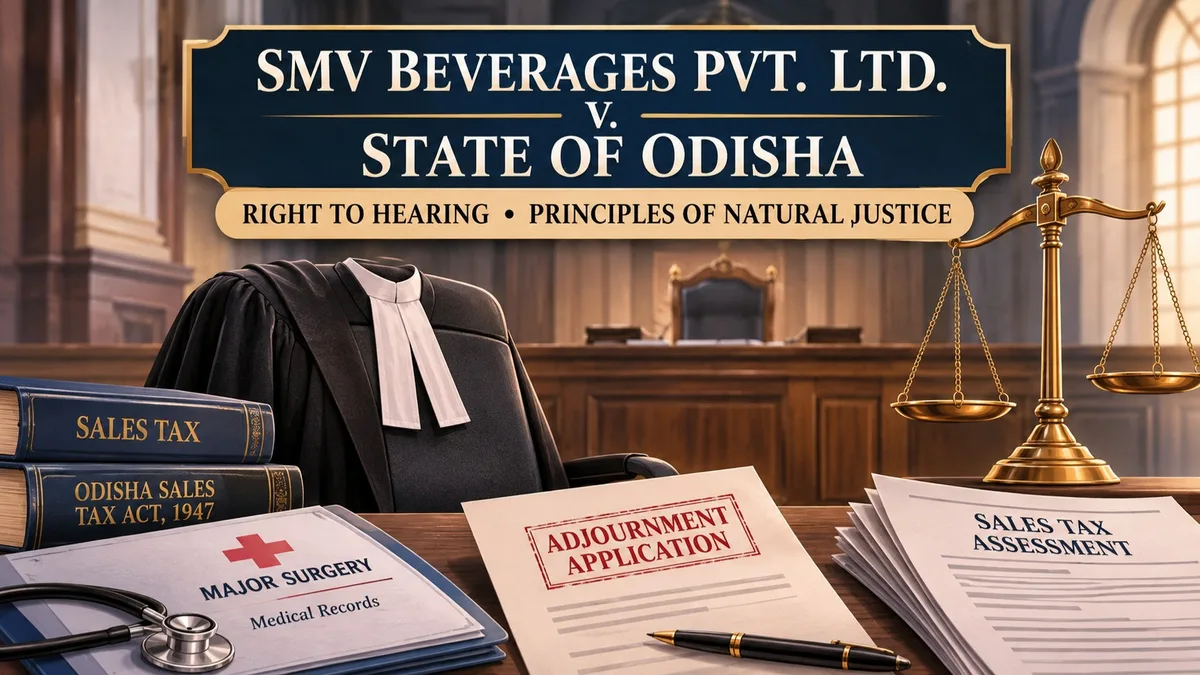
The Division Bench held that the petitioner had been deprived of a reasonable opportunity to present its case before the Commissioner of Sales Tax. An adjournment request must be…

The High Court exercised its inherent jurisdiction to quash a POCSO FIR and the pending trial after obtaining independent reports verifying the parties’ marriage, family…

The Division Bench held that the writ court had exceeded the proper scope of the dispute between the supplier and KSBCL by deciding, in effect, the Revenue’s separate tax…

The High Court considered the petitioners’ request for regular bail in an Enforcement Directorate prosecution alleging money laundering under the Prevention of Money Laundering…

The High Court upheld the appellant’s conviction under Section 18 c of the NDPS Act for possession of opium but reduced the sentence of seven years’ rigorous imprisonment to the…

The High Court dismissed the State’s appeal against acquittal, holding that the trial court’s view was a reasonably possible view on the evidence and that material inconsistencies…
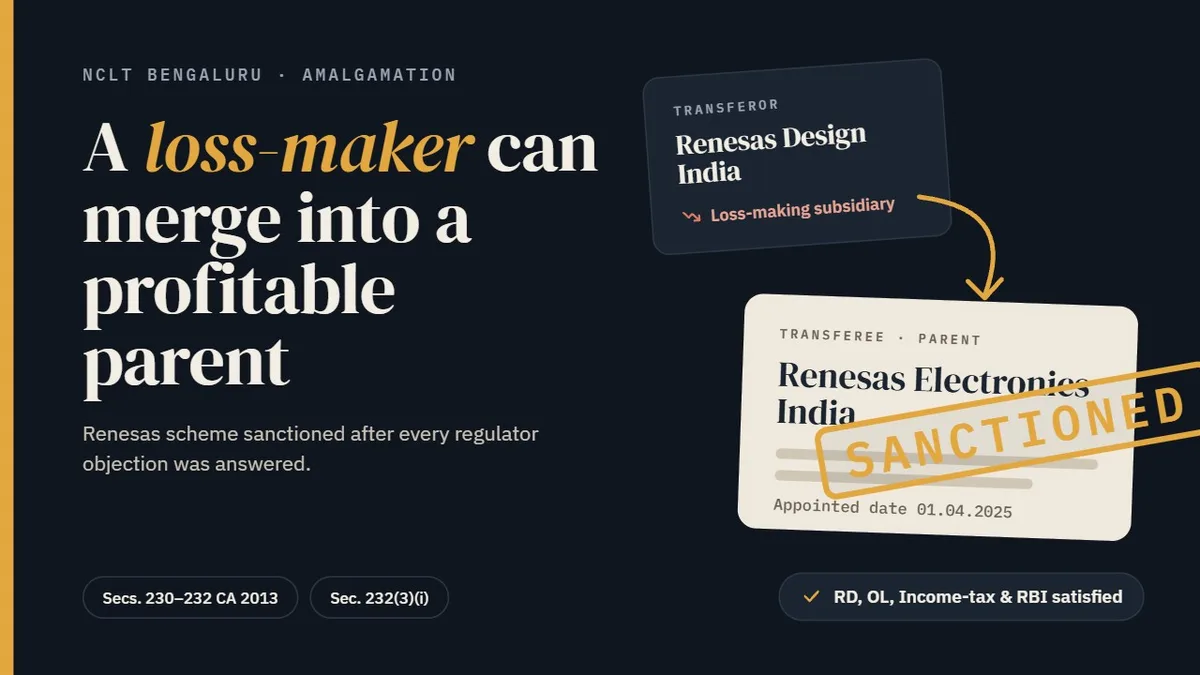
Renesas Design India Pvt. Ltd., a loss-making wholly owned subsidiary engaged in semiconductor design, and its parent Renesas Electronics India Pvt. Ltd. sought sanction of a…