
Deciding two connected writ petitions arising from a common Industrial Tribunal Award, the Delhi High Court set aside the Tribunal's direction granting hotel workmen a further…
Labour Laws
06/09/20264 min read
Update / Judgement Date
21 Dec 2025
Source
WCP News Bulletin
Author
Sakshi Bhardwaj — WCP Legal Desk
Reading Time
2 min read

The Directorate of Enforcement (ED), Bangalore Zonal Office, conducted search operations at 21 locations across Karnataka, Maharashtra, and Delhi under the Prevention of Money-Laundering Act, 2002, in connection with a large-scale organised financial fraud involving cryptocurrency-based investment platforms. The investigation revealed a long-running Ponzi-style scheme using fake crypto investment websites to defraud Indian and foreign investors, with proceeds laundered through crypto wallets, foreign bank accounts, hawala channels, and shell entities.
• ED initiated preliminary investigation based on an FIR and intelligence inputs shared by the Karnataka State Police.
• The allegations pertain to organised financial fraud through cryptocurrency (virtual digital asset) investment platforms operated by the accused persons.
• The accused allegedly targeted Indian citizens as well as foreign nationals, collecting funds in the guise of high-return investments, primarily in cryptocurrency.
• The fraudulent schemes were executed through multiple websites designed and controlled by the accused.
Findings During Search Operations• The accused created fake cryptocurrency investment platforms mimicking legitimate platforms and advertised unrealistic, astronomical returns.
• Gullible investors were targeted using social media platforms such as Facebook, Instagram, WhatsApp, and Telegram, along with referral bonus schemes.
• Photographs of reputed crypto experts and well-known personalities were allegedly used without consent to promote the schemes.
• Early investors were paid limited returns to gain trust and attract further investments, resembling a classic MLM/Ponzi structure.
• Multiple crypto wallets, foreign bank accounts, and shell companies were created to collect and route the Proceeds of Crime (POC).
• Funds were transferred to India through hawala, accommodation entries, and peer-to-peer (P2P) crypto transfers.
• Proceeds of Crime generated since 2015 were either utilised directly in crypto transactions or converted into cash and bank balances via P2P platforms.
• The laundered funds were used to acquire movable and immovable properties in India and abroad.
• Several such properties have been identified during the search proceedings.
• ED also identified crypto wallet addresses used by the accused to receive and further launder the Proceeds of Crime.
• It was revealed that most of the accused maintained undisclosed foreign bank accounts and foreign entities for laundering illicit proceeds.
• Further investigation in the matter is currently under progress.
Deciding two connected writ petitions arising from a common Industrial Tribunal Award, the Delhi High Court set aside the Tribunal's direction granting hotel workmen a further…

Headnote The Delhi High Court dismissed a prosecutrix's appeal against acquittal of the accused on charges under Sections 328/376 2 n /377/506/509 IPC, despite DNA evidence…
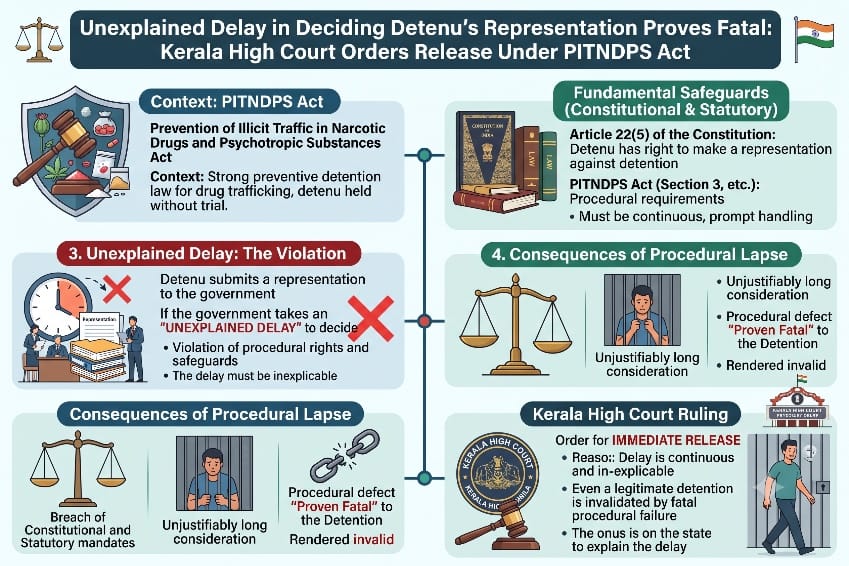
Fathimath Thasneem V.K. v. Union of India and Others | High Court of Kerala at Ernakulam | 3rd September, 2026 A habeas corpus writ petition by the wife of a detenu challenging…
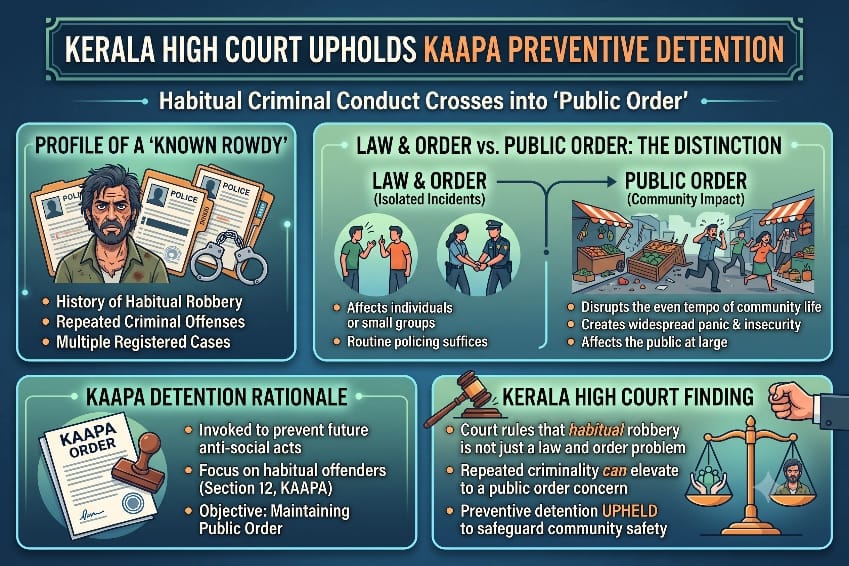
Thasmitha Abukutty v. State of Kerala and Others | High Court of Kerala at Ernakulam | 2nd September, 2026 A writ petition by the wife of a preventive detenu challenging a…
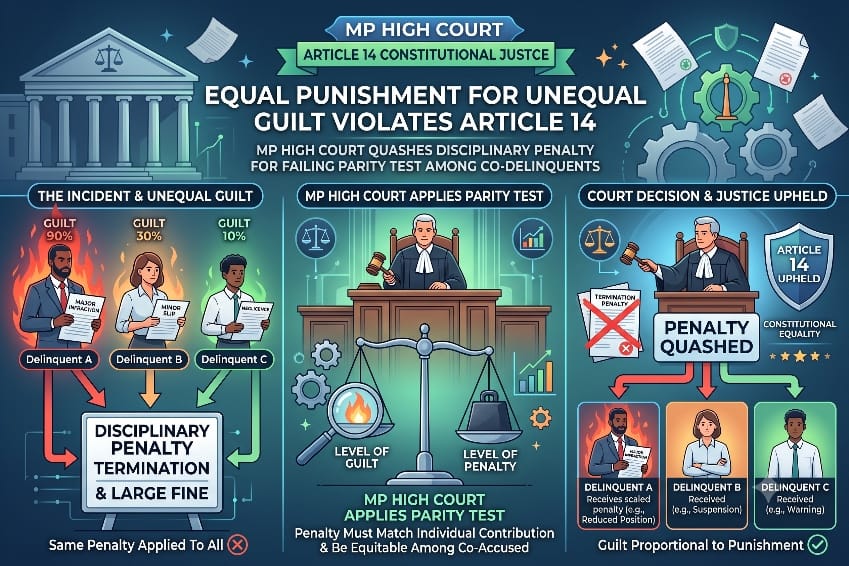
Brahm Kishore Dixit v. The State of Madhya Pradesh and Others | High Court of Madhya Pradesh, Gwalior | 1st September, 2026 A writ petition under Article 226 by a police Assistant…
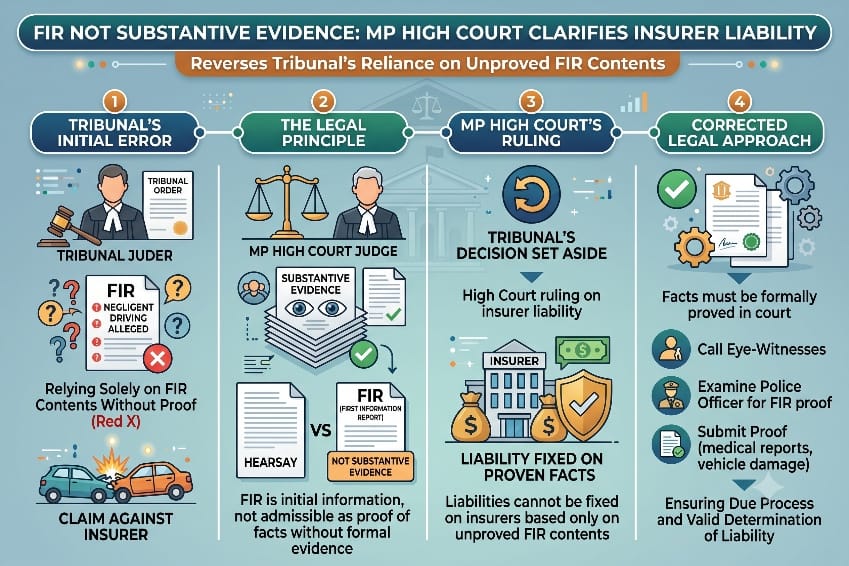
Anil Kumar Patel v. Smt. Munni Bai Barman and Others | High Court of Madhya Pradesh, Jabalpur | 1st September, 2026 A Motor Vehicle Act appeal under Section 173 1 against a Claims…
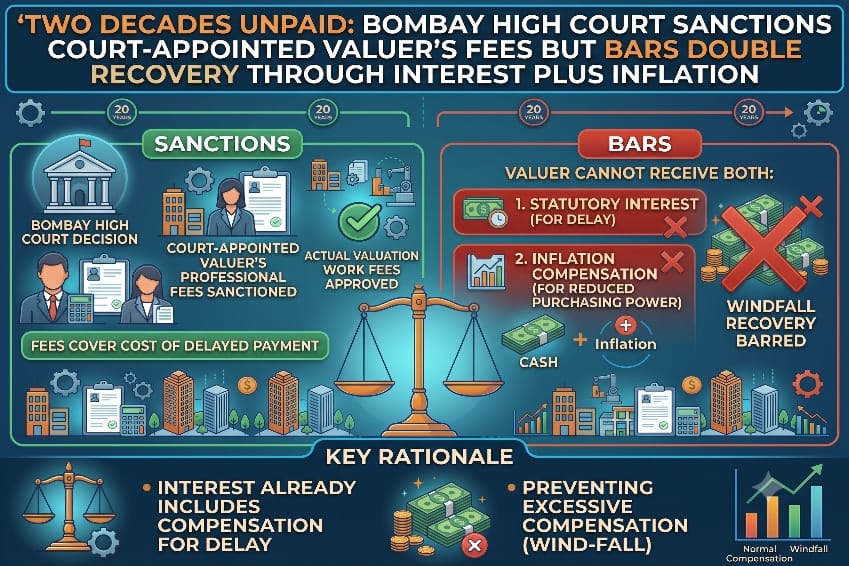
M/s. Kuber Mutual Benefits Ltd. & Ors. v. The State of Maharashtra & Ors. | High Court of Judicature at Bombay Appellate Side | 3rd September, 2026 A Court Receiver's Report…
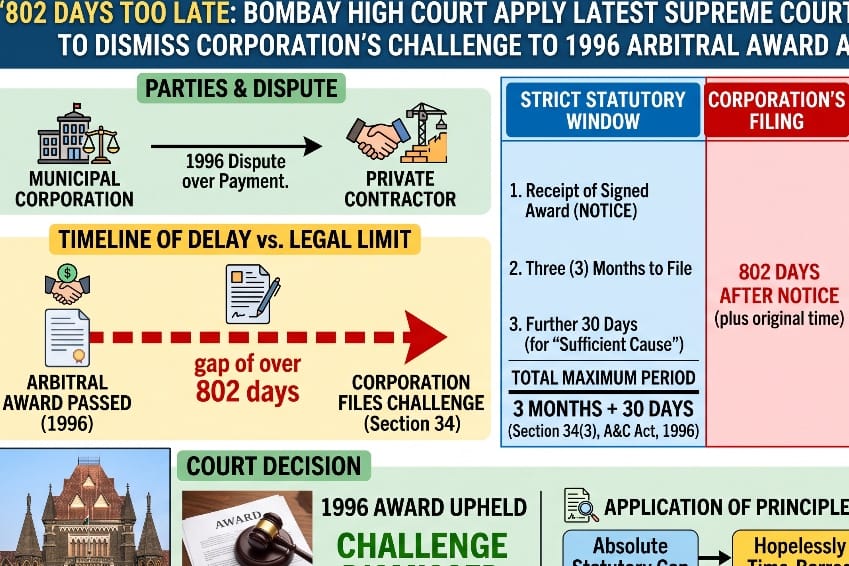
The Municipal Corporation of Greater Bombay v. M/s. Atul Raj Builders Pvt. Ltd. | High Court of Judicature at Bombay Ordinary Original Civil Jurisdiction | 3rd September, 2026 A…

Devender Yadav & Anr. v. Election Commission of India & Anr. | High Court of Delhi Single Judge | Decided on: 03.09.2026 In a challenge to the Election Commission of India's…
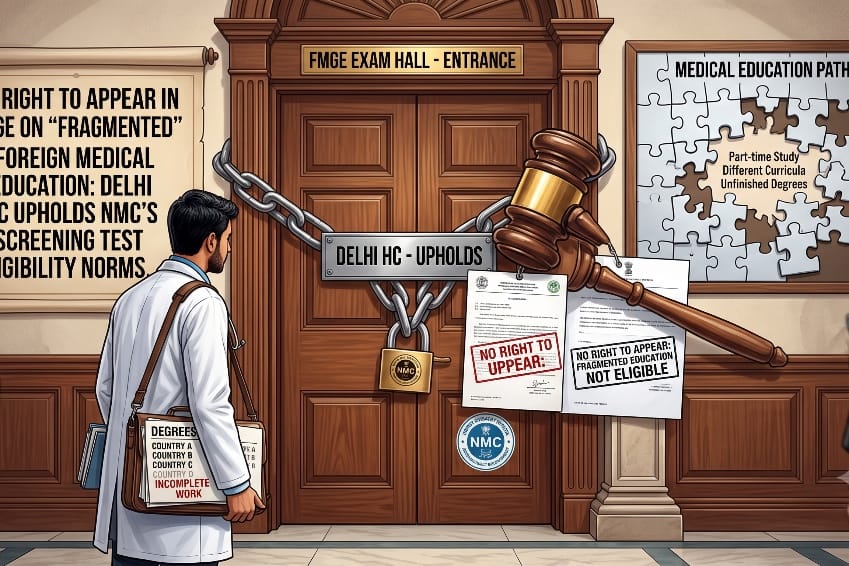
Brij Sharadbhai Bhatt & Ors. v. National Medical Commission & Ors. | High Court of Delhi Division Bench | Decided on: 03.09.2026 The Delhi High Court dismissed a challenge by…