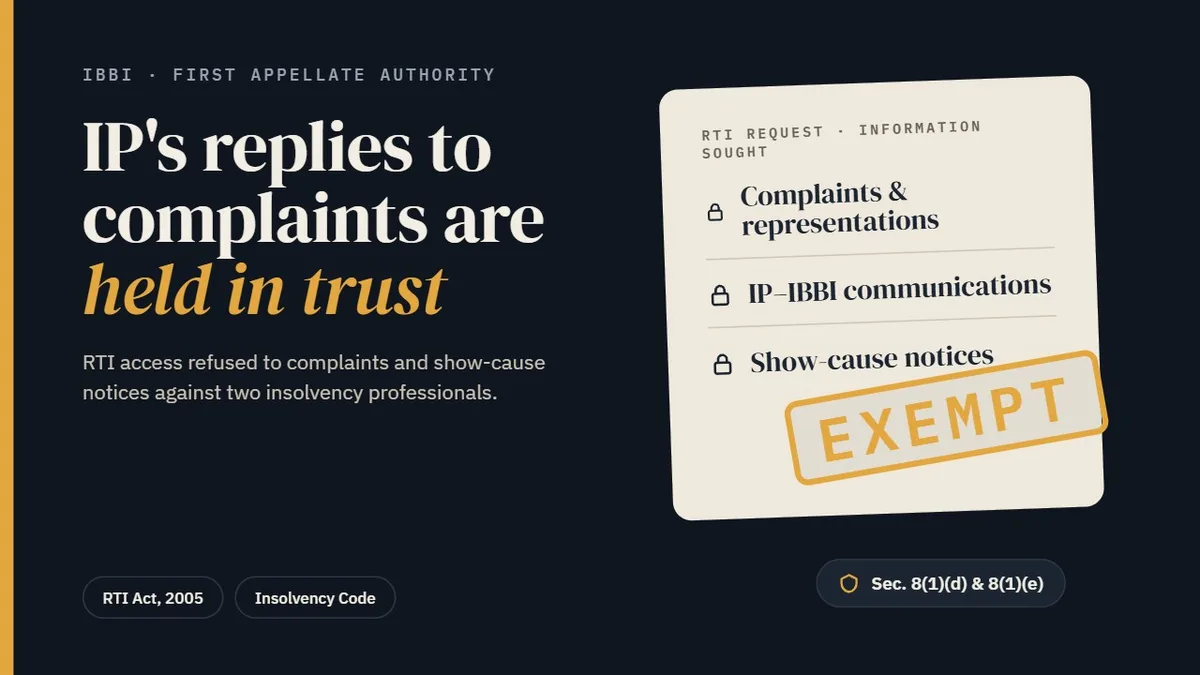
The appellant sought, under the RTI Act, records of complaints and representations received by IBBI, communications between IBBI and the insolvency professionals, and copies of…
Insolvency & Bankruptcy Code
24/11/20264 min read
Update / Judgement Date
18 Sept 2025
Source
Author
Team — WCP Legal Desk
Reading Time
1 min read
View Count
The Supreme Court in M/s. Shiv Steels v. The State of Assam & Ors. declared that in matters of taxation, the “strict letter of the law” must govern the assessment and imposition of taxes, emphasizing that taxing statutes do not permit authorities to impose taxes by analogy or by inference. The Court held that where the statute is explicit, there is no room for inferential extensions in favour of revenue; only where the provisions are satisfied strictly can liability be imposed. Further, the Court observed that limitation periods prescribed by law cannot be circumvented through administrative directions or similar extra-statutory means. In effect, both taxpayers and revenue authorities must adhere closely to what statute mandates — no extended interpretations merely to increase revenue. The ruling underscores judicial insistence on legislative clarity, legal certainty, and protection against arbitrary extensions of taxing powers. It reaffirms that fiscal statutes should be construed narrowly, only allowing what is expressly authorized, not what might be implied. The Supreme Court’s decision will influence assessments, appeals and limit litigation where tax authorities have sought to broaden liability via inference. It also strengthens taxpayer protections, ensuring that only clear legal obligations impose tax.
© 2026 White Collar Professional Technologies Pvt. Ltd. All rights reserved. CIN: U74999MH2024PTC000001
The appellant sought, under the RTI Act, records of complaints and representations received by IBBI, communications between IBBI and the insolvency professionals, and copies of…
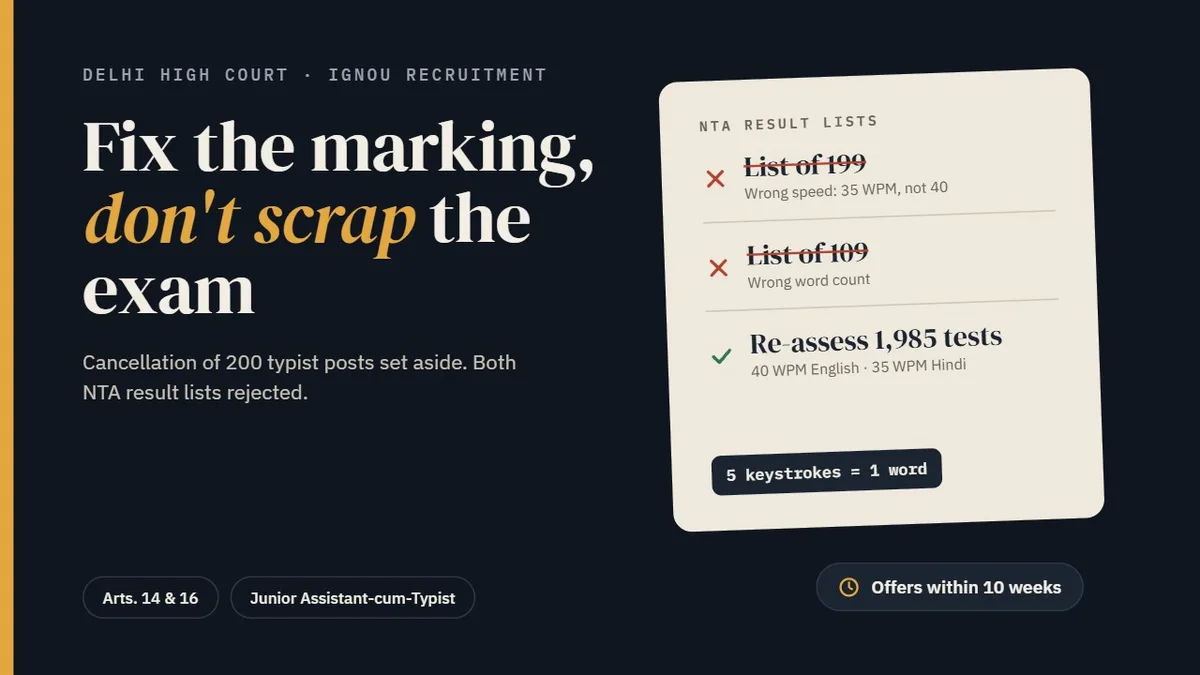
IGNOU entrusted recruitment to 200 Junior Assistant-cum-Typist posts to NTA; after a computer-based test 25,094 candidates and a typing test 1,985 candidates , NTA declared 199…
The Delhi High Court considered whether the 2021 amendment inserting Section 86 4 into the Juvenile Justice Care and Protection of Children Act, 2015 applied to trials already…
Sixteen students of Sree Sankaracharya University of Sanskrit, Kalady challenged their suspension and subsequent disciplinary punishments arising out of a campus protest during a…
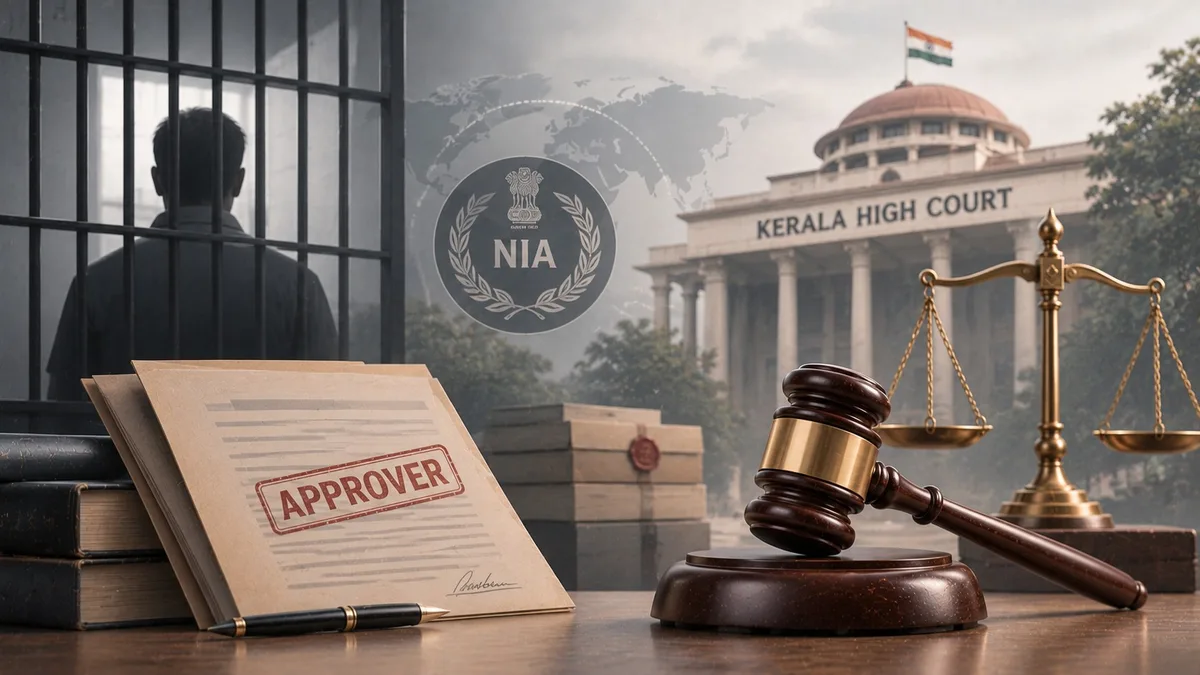
The Kerala High Court held that the custody requirement in Section 306 4 b of the Code of Criminal Procedure, 1973 CrPC applies to a pardon tendered by a Magistrate under Section…

National Testing Agency had applied an incorrect typing-speed threshold and the assessment required correction, the identified discrepancies did not establish that the…
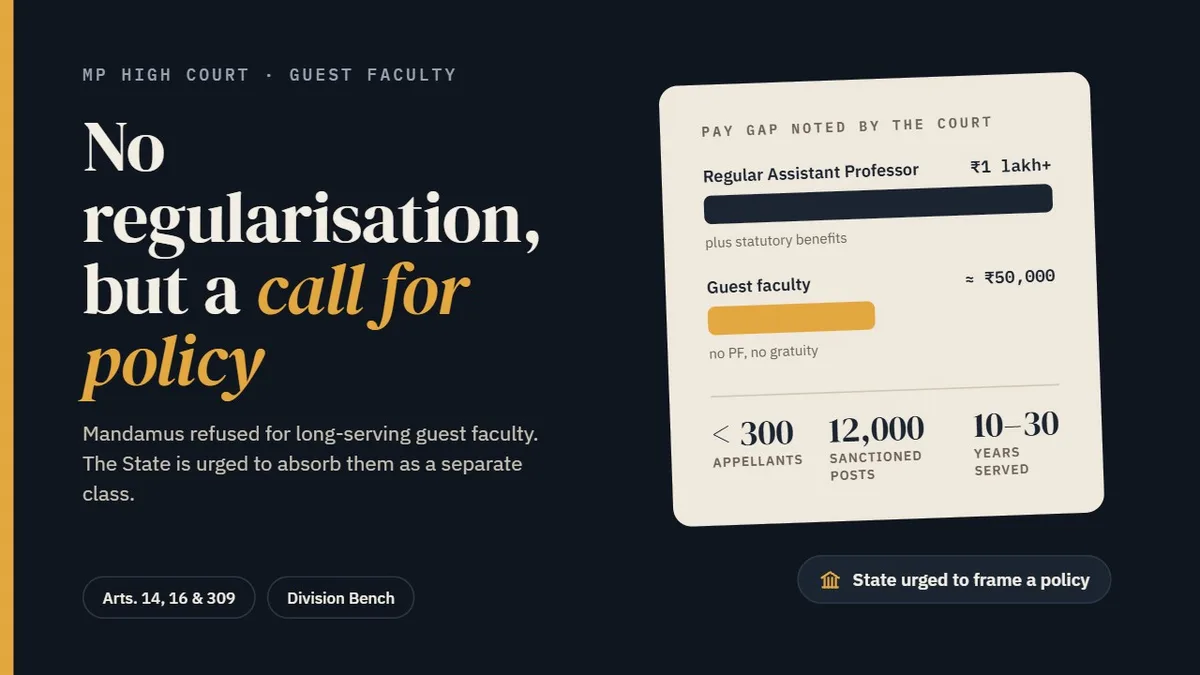
A batch of writ appeals was filed by guest faculty – Assistant Professors, Sports Officers and Librarians engaged after advertisement and selection and serving 10 to 30 years in…
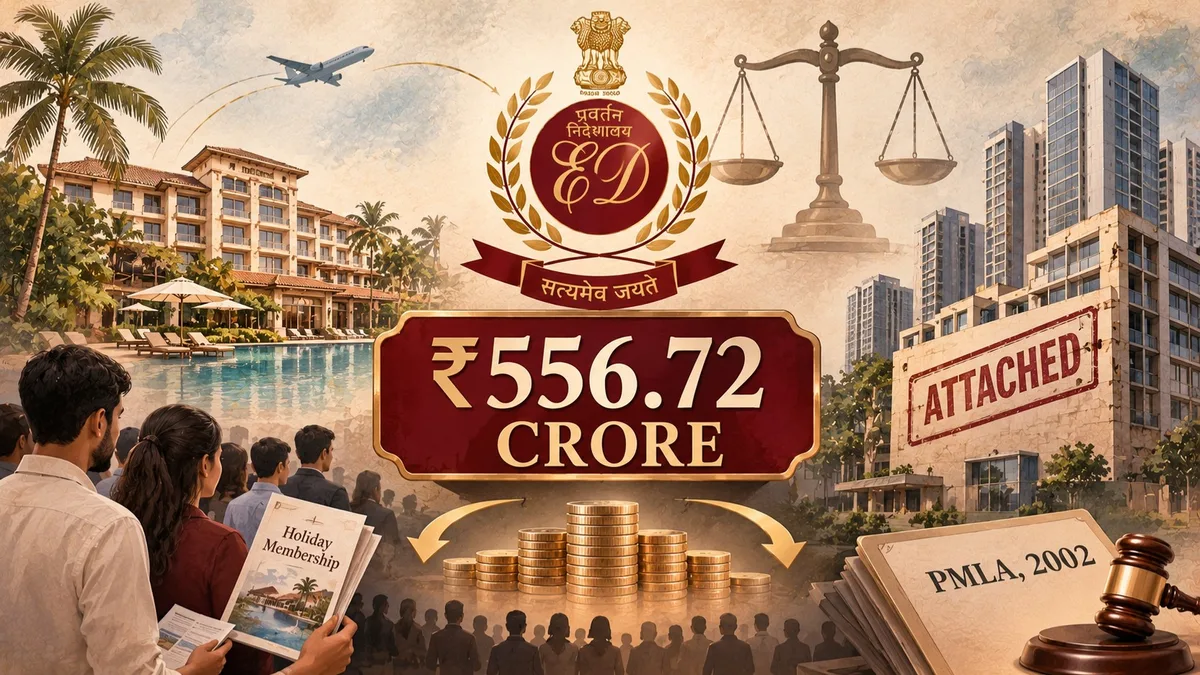
Directorate of Enforcement, Mumbai Zonal Office-I | Draft Press Release | 23 November 2026 The Directorate of Enforcement's draft press release states that its Mumbai Zonal…

The Directorate of Enforcement's draft press release states that its Guwahati Zonal Office-I has provisionally attached movable and immovable properties valued at ₹70.09 lakh in a…
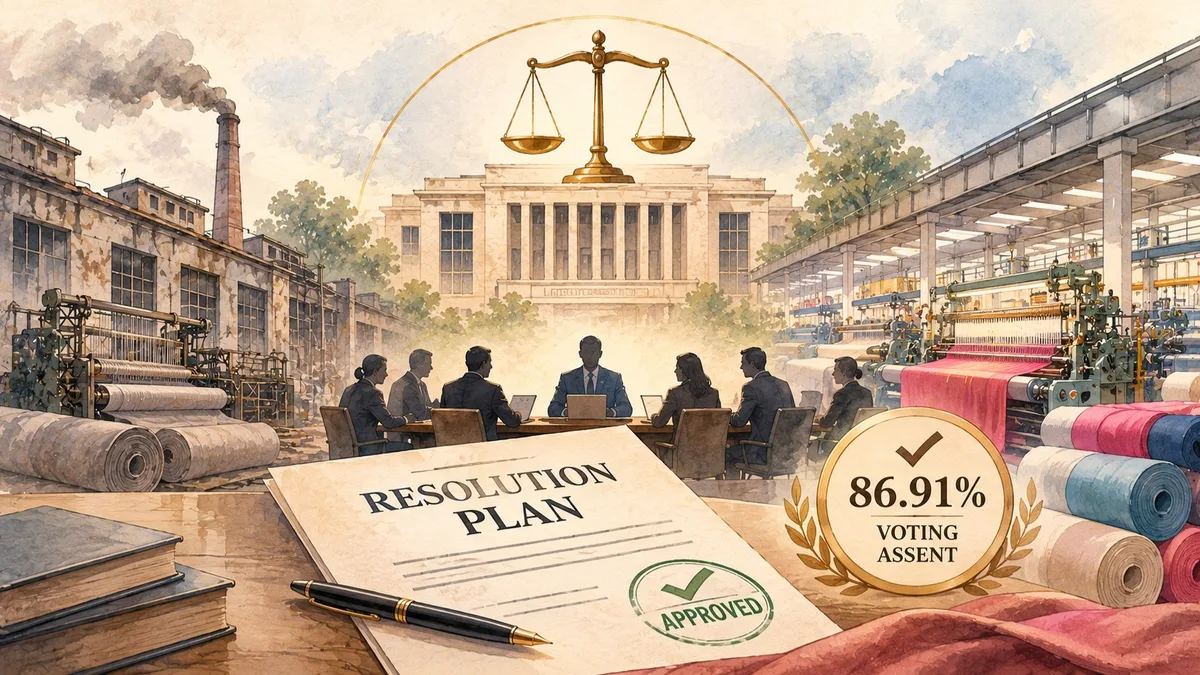
The National Company Law Tribunal, New Delhi Court-IV, approved a resolution plan valued at ₹30.90 crore for Shyam Indofab Private Limited on 8 September 2026. The plan, submitted…