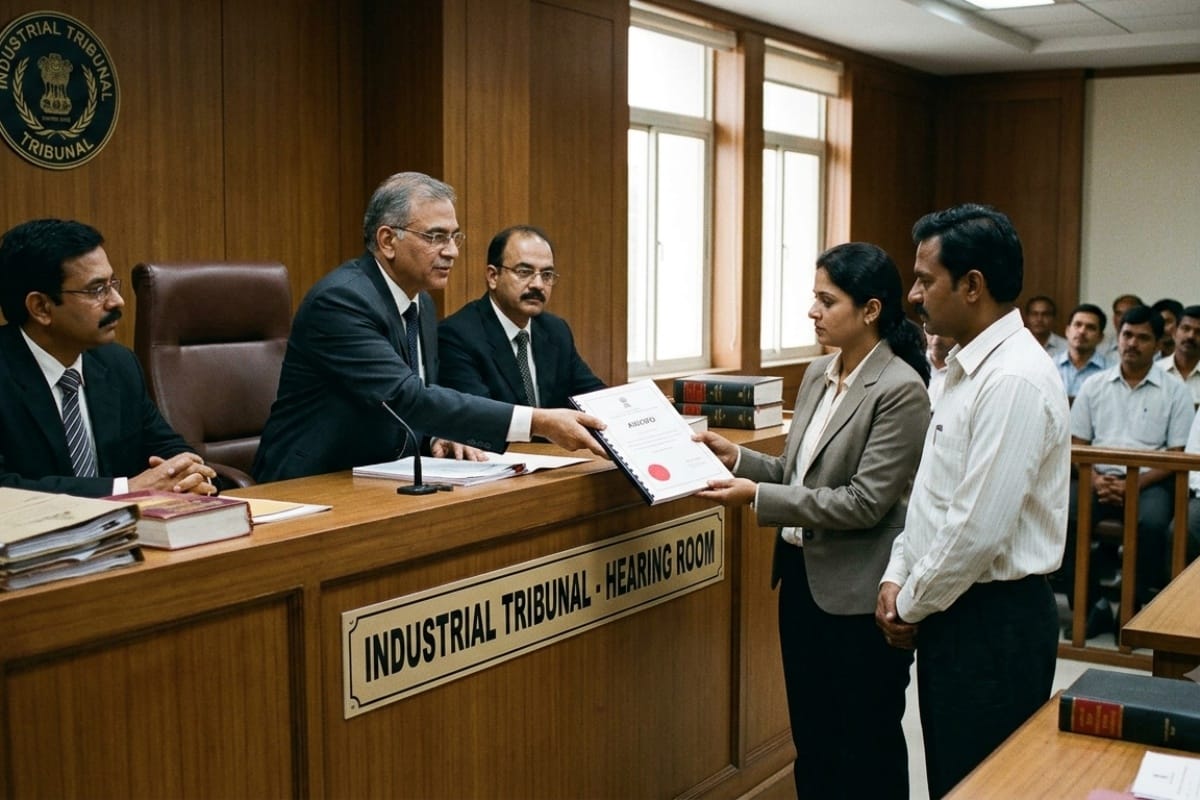
Deciding two connected writ petitions arising from a common Industrial Tribunal Award, the Delhi High Court set aside the Tribunal's direction granting hotel workmen a further…
Labour Laws
06/09/20264 min read
Update / Judgement Date
10 Oct 2025
Source
WCP News Bulletin
Author
Sakshi Bhardwaj — WCP Legal Desk
Reading Time
4 min read

Headnote:
This case concerns a challenge to a preventive detention order passed under Section 3(1) of the Prevention of Illicit Traffic in Narcotic Drugs and Psychotropic Substances Act, 1988 (PITNDPS Act) against the petitioner’s husband, Vinu T.S., while he was already in judicial custody. The petitioner contended that the detention order was issued without proper satisfaction of the conditions necessary to justify detention when the individual is already in custody — specifically, the “triple test” laid down by the Supreme Court in Kamarunnissa v. Union of India (1991). The Kerala High Court examined whether the detaining authority had appropriately applied its mind to the possibility of the detenu’s release on bail and his potential to engage in further prejudicial activities. Relying on precedents including Union of India v. Dimple Happy Dhakad (2019), the Court held that although the order did not expressly record that the detenu was “likely to be released on bail,” the overall satisfaction and reasoning reflected in the order demonstrated compliance with the legal standards. Consequently, the Court upheld the detention order and dismissed the writ petition.
Background:
The petitioner, Anisha Santhosh, filed a writ petition challenging the preventive detention of her husband, Vinu T.S., under the PITNDPS Act. The detention order, dated 28 March 2025 (Ext.P2), was issued by the Additional Chief Secretary (Home Department) following a proposal from the Deputy Commissioner of Police, Kochi City. The order was later confirmed by the Government on 12 June 2025 for one year’s detention. The detenu was accused in Crime No. 2264/2024 of Angamaly Police Station for alleged possession and transport of 321.8 grams of MDMA and 8.4 grams of MDMA pills, offences punishable under Sections 22(c) and 29 of the NDPS Act. At the time the detention proposal was made and the order was passed, he was already in judicial custody.
The petitioner argued that the detention order was arbitrary, issued without proper application of mind, and did not meet the conditions established in Kamarunnissa v. Union of India (1991), which require the authority to be aware of the detenu’s custody, to believe based on reliable materials that there is a real possibility of release on bail, and that on release, the person would likely engage in prejudicial activities. The State contended that all procedural formalities were followed, and the detaining authority had arrived at the required subjective satisfaction after evaluating the materials on record.
Court Opinion / Judgment:
The Court observed that preventive detention, being a severe measure that restricts personal liberty, must be exercised with due care and only when strictly justified. Citing Kamarunnissa v. Union of India (1991), Veeramani v. State of Tamil Nadu (1994), and Union of India v. Paul Manickam (2003), the Bench reaffirmed that a detention order against a person already in judicial custody is valid only when the “triple test” is satisfied:
While noting that the detaining authority did not explicitly record that the detenu was “likely to be released on bail,” the Court referred to the Supreme Court’s decision in Union of India v. Dimple Happy Dhakad (2019), which clarified that such explicit language is not mandatory if the order reflects awareness of custody, antecedents, and a likelihood of future illegal activity. The Kerala High Court found that the detention order demonstrated sufficient application of mind and reflected satisfaction that the detenu, if released, would likely resume drug trafficking.
The Court concluded that the procedural requirements had been met, and the detaining authority had arrived at both subjective and objective satisfaction necessary for a valid preventive detention order. Accordingly, the writ petition was dismissed.
Legal Provisions Concerned:
• Kamarunnissa v. Union of India (1991) 1 SCC 128
• Veeramani v. State of Tamil Nadu (1994) 2 SCC 337
• Union of India v. Paul Manickam (2003) 8 SCC 342
• Union of India v. Dimple Happy Dhakad (2019 KHC 6662)
Case Details:
Case Name: Anisha Santhosh v. State of Kerala & Ors.
Court: High Court of Kerala at Ernakulam
Writ Petition (Criminal) No.: 1291 of 2025
Neutral Citation: 2025:KER:75307
Coram: Dr. Justice A.K. Jayasankaran Nambiar & Justice Jobin Sebastian
Outcome: Writ Petition Dismissed; Detention Order Upheld.
Deciding two connected writ petitions arising from a common Industrial Tribunal Award, the Delhi High Court set aside the Tribunal's direction granting hotel workmen a further…

Headnote The Delhi High Court dismissed a prosecutrix's appeal against acquittal of the accused on charges under Sections 328/376 2 n /377/506/509 IPC, despite DNA evidence…
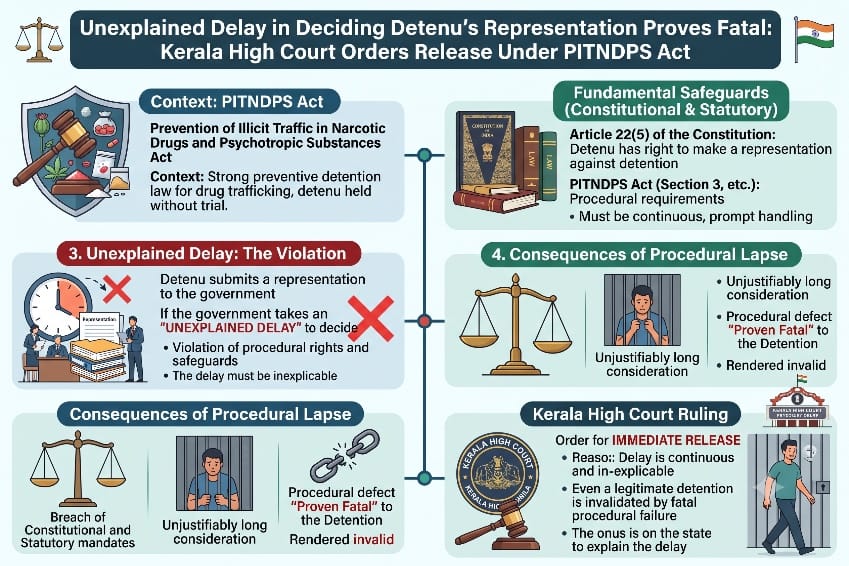
Fathimath Thasneem V.K. v. Union of India and Others | High Court of Kerala at Ernakulam | 3rd September, 2026 A habeas corpus writ petition by the wife of a detenu challenging…
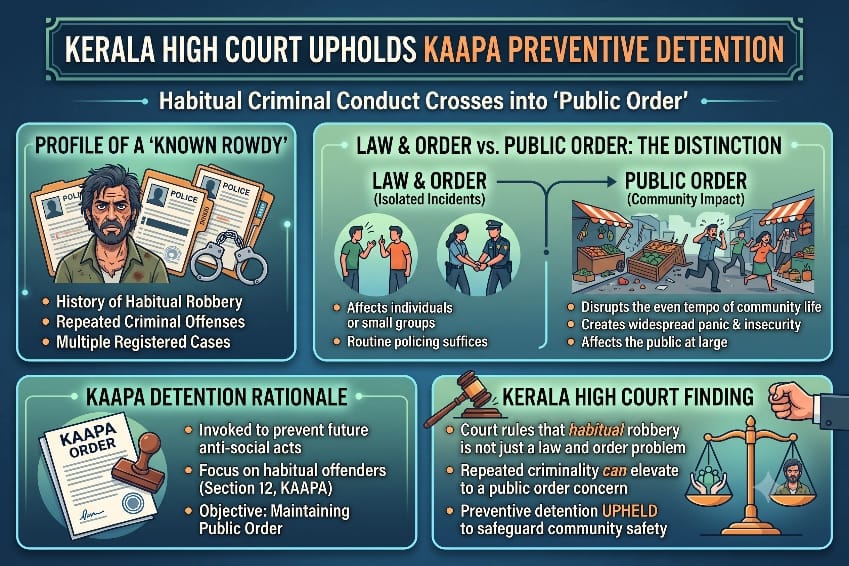
Thasmitha Abukutty v. State of Kerala and Others | High Court of Kerala at Ernakulam | 2nd September, 2026 A writ petition by the wife of a preventive detenu challenging a…
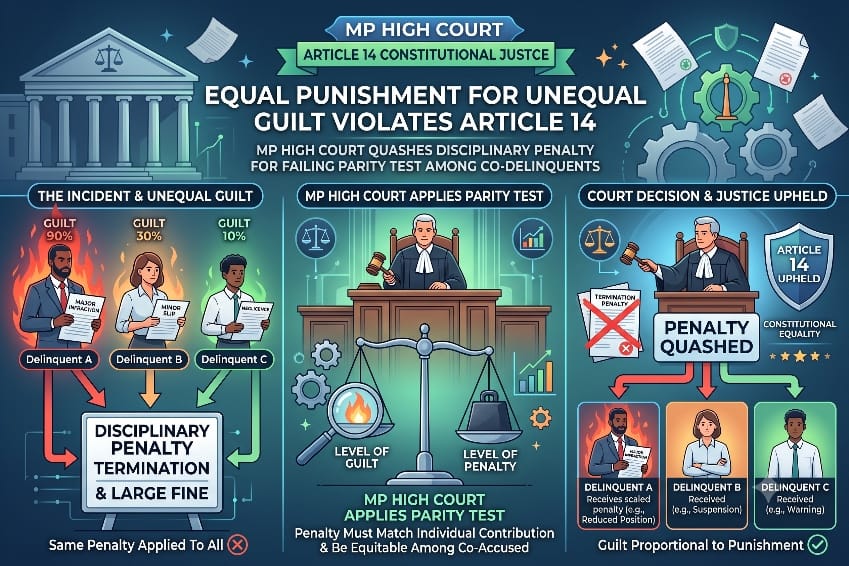
Brahm Kishore Dixit v. The State of Madhya Pradesh and Others | High Court of Madhya Pradesh, Gwalior | 1st September, 2026 A writ petition under Article 226 by a police Assistant…
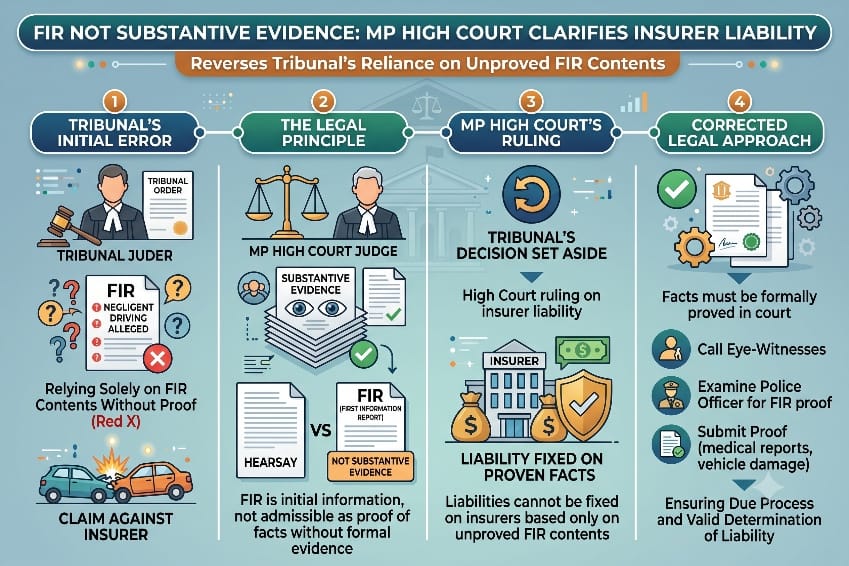
Anil Kumar Patel v. Smt. Munni Bai Barman and Others | High Court of Madhya Pradesh, Jabalpur | 1st September, 2026 A Motor Vehicle Act appeal under Section 173 1 against a Claims…
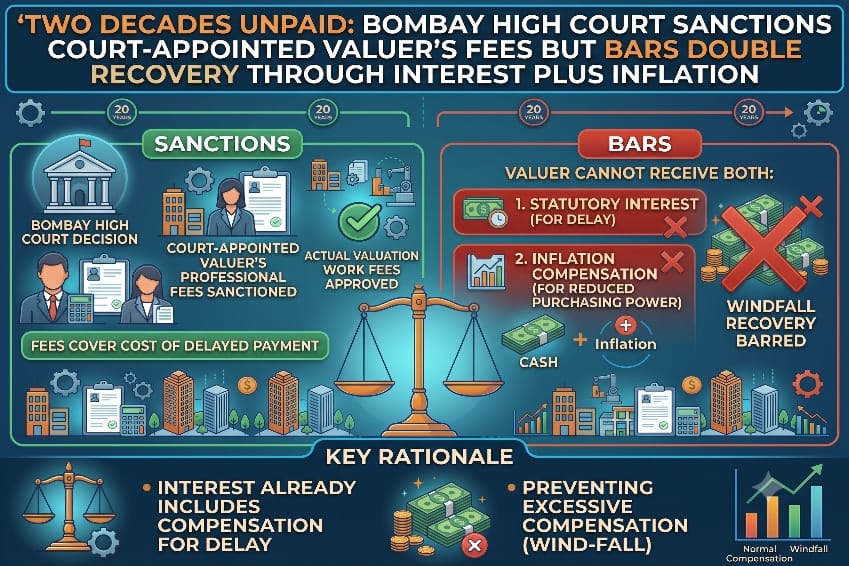
M/s. Kuber Mutual Benefits Ltd. & Ors. v. The State of Maharashtra & Ors. | High Court of Judicature at Bombay Appellate Side | 3rd September, 2026 A Court Receiver's Report…
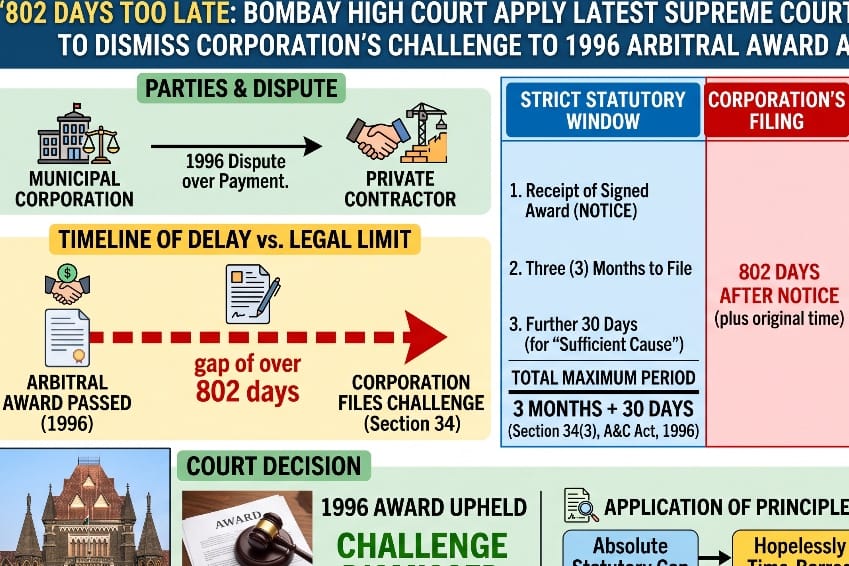
The Municipal Corporation of Greater Bombay v. M/s. Atul Raj Builders Pvt. Ltd. | High Court of Judicature at Bombay Ordinary Original Civil Jurisdiction | 3rd September, 2026 A…
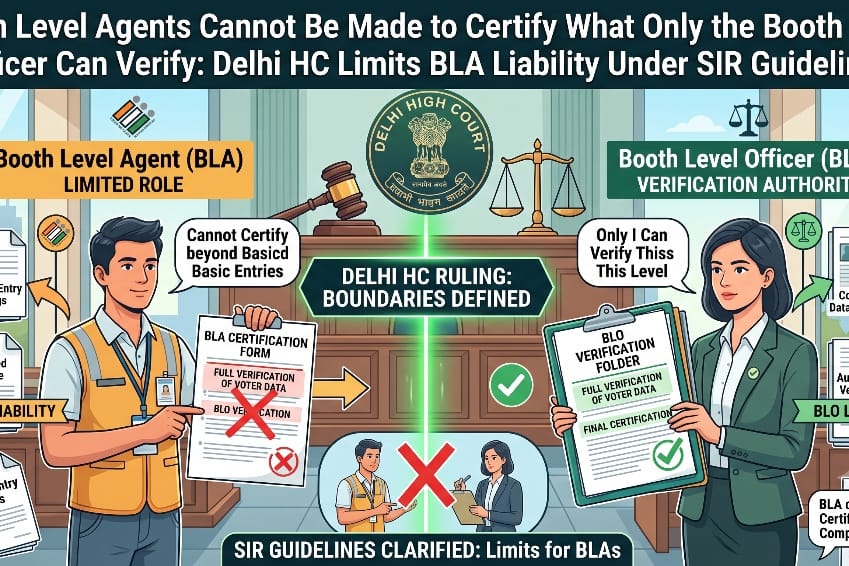
Devender Yadav & Anr. v. Election Commission of India & Anr. | High Court of Delhi Single Judge | Decided on: 03.09.2026 In a challenge to the Election Commission of India's…
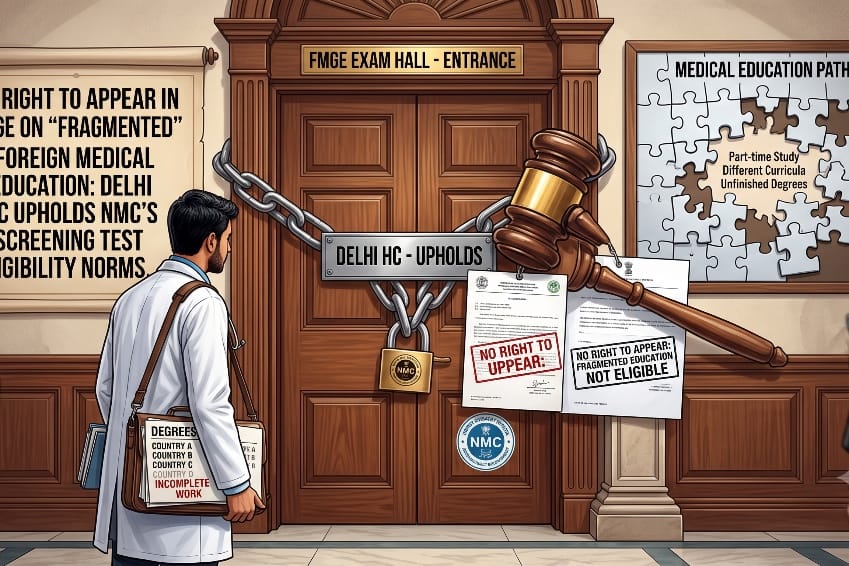
Brij Sharadbhai Bhatt & Ors. v. National Medical Commission & Ors. | High Court of Delhi Division Bench | Decided on: 03.09.2026 The Delhi High Court dismissed a challenge by…