
The Division Bench dismissed the connected writ appeals, while making a limited modification to the Single Judge’s findings concerning the Bar Council of Kerala. In light of…
Civil Law
Update / Judgement Date
07 Nov 2025
Source
WCP News Bulletin
Author
Sakshi Bhardwaj — WCP Legal Desk
Reading Time
3 min read
View Count
1

Headnote:
The Kerala High Court set aside the conviction of the appellant under Section 22(c) of the Narcotic Drugs and Psychotropic Substances Act, 1985 (NDPS Act), holding that an unexplained delay in producing seized contraband before the Magistrate was fatal to the prosecution’s case. The Court emphasized that maintaining the integrity of seized material is fundamental to ensuring the credibility of narcotics prosecutions, and any break in the chain of custody casts serious doubt on the prosecution’s version.
Background:
• The appellant, aged 27, was convicted by the trial court and sentenced to rigorous imprisonment for 13 years and a fine of ₹1,30,000 for possession of 174 ampoules of Lupigesic and 24 unlabelled ampoules allegedly containing Buprenorphine, a psychotropic substance.
• The defence challenged the conviction on multiple grounds, including non-compliance with Sections 42, 50, and 52A of the NDPS Act, lack of independent witnesses, and delay in producing the seized material before the Magistrate.
• It was contended that the seized ampoules were quantified in millilitres rather than grams, and the prosecution failed to prove that the seized quantity amounted to a “commercial quantity.”
• The contraband was seized on 29.03.2013, but was produced before the Magistrate only after several days, without any explanation or evidence of safe custody during that period.
Court’s Observations:
• Sections 42 & 57: The Court found that the officer had complied with procedural requirements by promptly sending reports of seizure and information to superior officers.
• Section 50: It was held that the accused was duly informed of his right to be searched before a Gazetted Officer or Magistrate, satisfying statutory requirements.
• Section 52A: The Court clarified that this provision applies only when samples are drawn for analysis, not when the entire contraband is produced before court.
• Quantity of Substance: The Court observed that though the contraband was measured in millilitres, the chemical examiner’s report established its equivalent in grams, confirming that it constituted a commercial quantity.
• Delay in Production: The Court noted that the seized material reached the court after a considerable and unexplained delay. No evidence was provided regarding the condition or safekeeping of the material in the interim, thereby breaking the chain of custody.
• The unexplained delay and lack of assurance regarding the integrity of the seized substance undermined the prosecution’s case beyond reasonable doubt.
Held:
The High Court set aside the conviction and sentence, holding that the prosecution’s failure to explain the delay in producing the contraband before the Magistrate vitiated the case. The appellant was acquitted, and all consequential orders were quashed.
Legal Provisions Discussed:
• Section 22(c), Narcotic Drugs and Psychotropic Substances Act, 1985 – Punishment for contravention involving psychotropic substances.
• Sections 42, 50, 52A & 57, NDPS Act – Procedural safeguards regarding search, seizure, sampling, and reporting.
• Article 21, Constitution of India – Right to fair procedure and protection of personal liberty.
Citation: 2025:KER:84663
Case: Aneesh v. State of Kerala
Court: High Court of Kerala at Ernakulam
Coram: Justice Bechu Kurian Thomas
Date of Decision: 7 November 2025
Criminal Appeal No.: 1218 of 2015
© 2026 White Collar Professional Technologies Pvt. Ltd. All rights reserved. CIN: U74999MH2024PTC000001
The Division Bench dismissed the connected writ appeals, while making a limited modification to the Single Judge’s findings concerning the Bar Council of Kerala. In light of…

The High Court held that the trial court was not justified in directing the parties to undergo fresh DNA testing when the existing expert report had not been rejected for legally…

The High Court held that a subsequently communicated minimum 20% local-content requirement, including an indigenously developed EMS software condition, could not be…
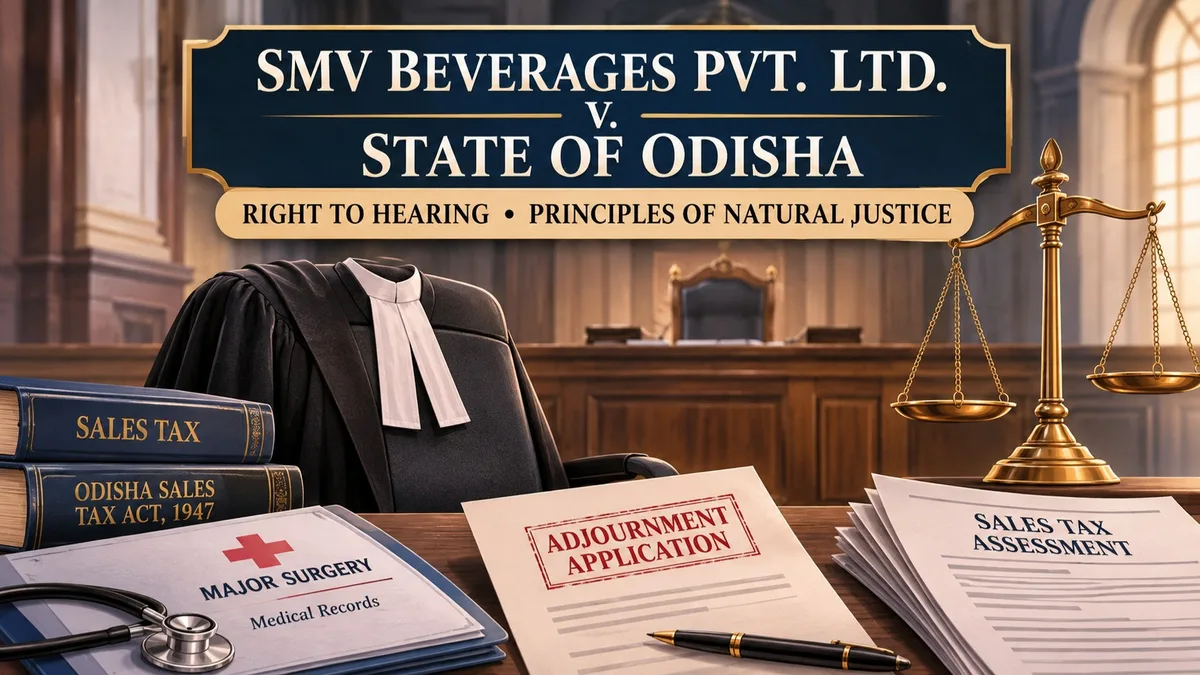
The Division Bench held that the petitioner had been deprived of a reasonable opportunity to present its case before the Commissioner of Sales Tax. An adjournment request must be…

The High Court exercised its inherent jurisdiction to quash a POCSO FIR and the pending trial after obtaining independent reports verifying the parties’ marriage, family…

The Division Bench held that the writ court had exceeded the proper scope of the dispute between the supplier and KSBCL by deciding, in effect, the Revenue’s separate tax…

The High Court considered the petitioners’ request for regular bail in an Enforcement Directorate prosecution alleging money laundering under the Prevention of Money Laundering…

The High Court upheld the appellant’s conviction under Section 18 c of the NDPS Act for possession of opium but reduced the sentence of seven years’ rigorous imprisonment to the…

The High Court dismissed the State’s appeal against acquittal, holding that the trial court’s view was a reasonably possible view on the evidence and that material inconsistencies…

Renesas Design India Pvt. Ltd., a loss-making wholly owned subsidiary engaged in semiconductor design, and its parent Renesas Electronics India Pvt. Ltd. sought sanction of a…