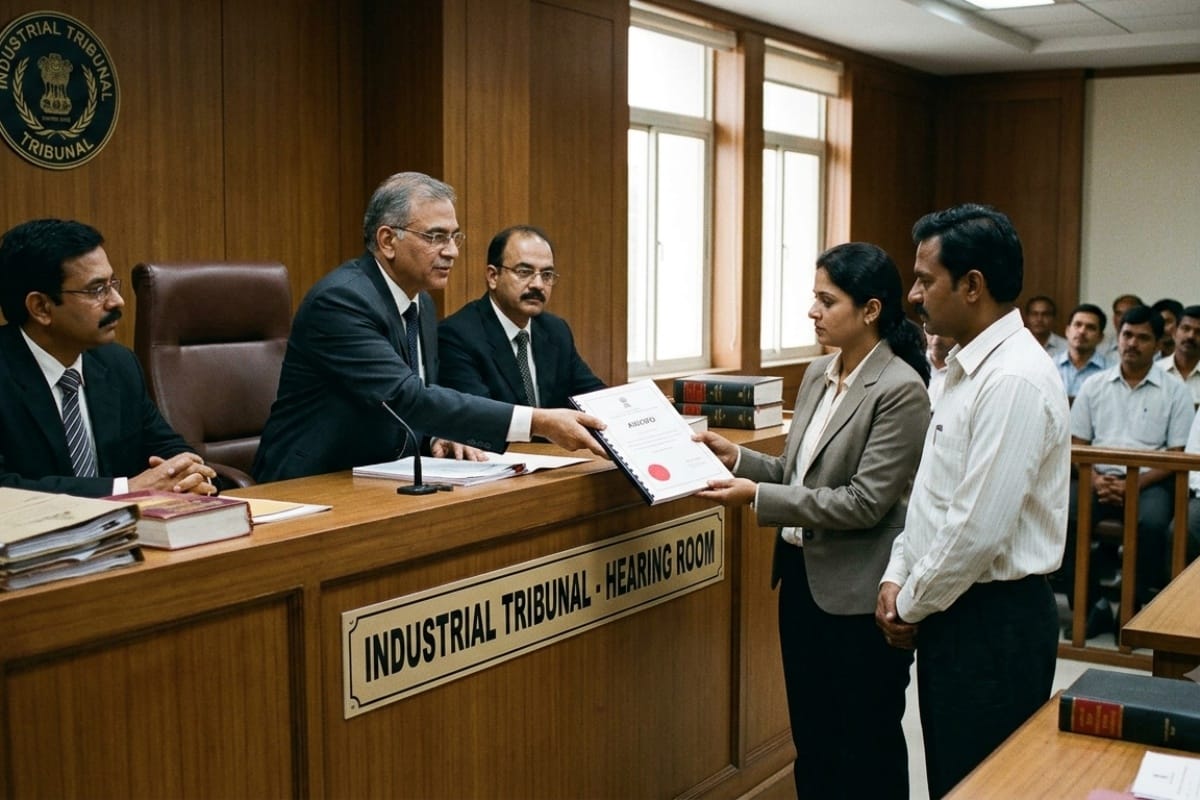
Deciding two connected writ petitions arising from a common Industrial Tribunal Award, the Delhi High Court set aside the Tribunal's direction granting hotel workmen a further…
Labour Laws
06/09/20264 min read
Update / Judgement Date
10 Oct 2025
Source
WCP News Bulletin
Author
Sakshi Bhardwaj — WCP Legal Desk
Reading Time
3 min read

Headnote:
The Kerala High Court dismissed a writ petition filed by Anisha Santhosh challenging the detention of her husband, Vinu T.S., under Section 3(1) of the Prevention of Illicit Traffic in Narcotic Drugs and Psychotropic Substances Act, 1988 (PITNDPS Act). The detenu was ordered to be detained for one year following the Advisory Board’s recommendation, confirmed by the Government. The detenu was in judicial custody for an NDPS case involving possession and transportation of MDMA. The petitioner contended that the detention order was invalid as the detenu was already in custody and that the authority failed to specifically record the possibility of bail. The Court held that preventive detention against a person in custody is valid if the authority is satisfied that there is a real possibility of release on bail and that the detenu would likely indulge in prejudicial activities if released. Observing that the authority had applied proper mind and complied with all procedural formalities, the Court dismissed the petition.
Background:
The petitioner, Anisha Santhosh, filed WP(Crl.) No. 1291 of 2025 under Article 226 of the Constitution, challenging Ext.P2 detention order dated 28.03.2025 issued by the Additional Chief Secretary under Section 3(1) of the PITNDPS Act against her husband, Vinu T.S. The detenu’s last prejudicial activity was registered as Crime No. 2264/2024 at Angamaly Police Station, involving possession and transport of 321.8 grams of MDMA and 8.4 grams of MDMA pills on 18.10.2024. The detenu had been in judicial custody since arrest, and the petitioner argued that the preventive detention order could not be validly passed without satisfying the “triple test” laid down by the Supreme Court in Kamarunnissa v. Union of India (1991), which requires: (i) awareness of custody, (ii) belief in the likelihood of bail, and (iii) probability of indulging in prejudicial activity if released.
Court Opinion / Judgment:
The Court, per Justices A.K. Jayasankaran Nambiar and Jobin Sebastian, held that preventive detention against a person in custody is permissible if the detaining authority applies proper mind and is satisfied based on reliable material that the detenu might be released on bail and likely commit prejudicial acts. The Court noted that the detaining authority had explicitly considered that the detenu was in custody and assessed the likelihood of future drug peddling if released. Although the order did not specifically state “likelihood of release on bail,” the authority’s subjective satisfaction, supported by materials, was adequate. All procedural requirements before and after issuance were followed. Accordingly, the Court dismissed the writ petition, upholding the detention.
Legal Provisions Concerned:
• Prevention of Illicit Traffic in Narcotic Drugs and Psychotropic Substances Act, 1988 — Section 3(1): Preventive detention.
• NDPS Act, 1985 — Sections 22(c) & 29: Possession and transportation of narcotic substances.
• Principles from Kamarunnissa v. Union of India [1991 (1) SCC 128], Veeramani v. State of Tamil Nadu [1994 (2) SCC 337], and Union of India v. Paul Manickam [2003 (8) SCC 342] regarding detention of persons under judicial custody.
Case Details:
• Case Name: Anisha Santhosh v. State of Kerala & Ors.
• Court: High Court of Kerala at Ernakulam
• Case No.: WP(Crl.) No. 1291 of 2025
• Neutral Citation: 2025:KER:75307
• Coram: Dr. Justice A.K. Jayasankaran Nambiar & Justice Jobin Sebastian
• Detention Order: Ext.P2 dated 28.03.2025
• Offences: Sections 22(c) & 29 NDPS Act
• Outcome: Writ Petition Dismissed; Detention Upheld.
Deciding two connected writ petitions arising from a common Industrial Tribunal Award, the Delhi High Court set aside the Tribunal's direction granting hotel workmen a further…
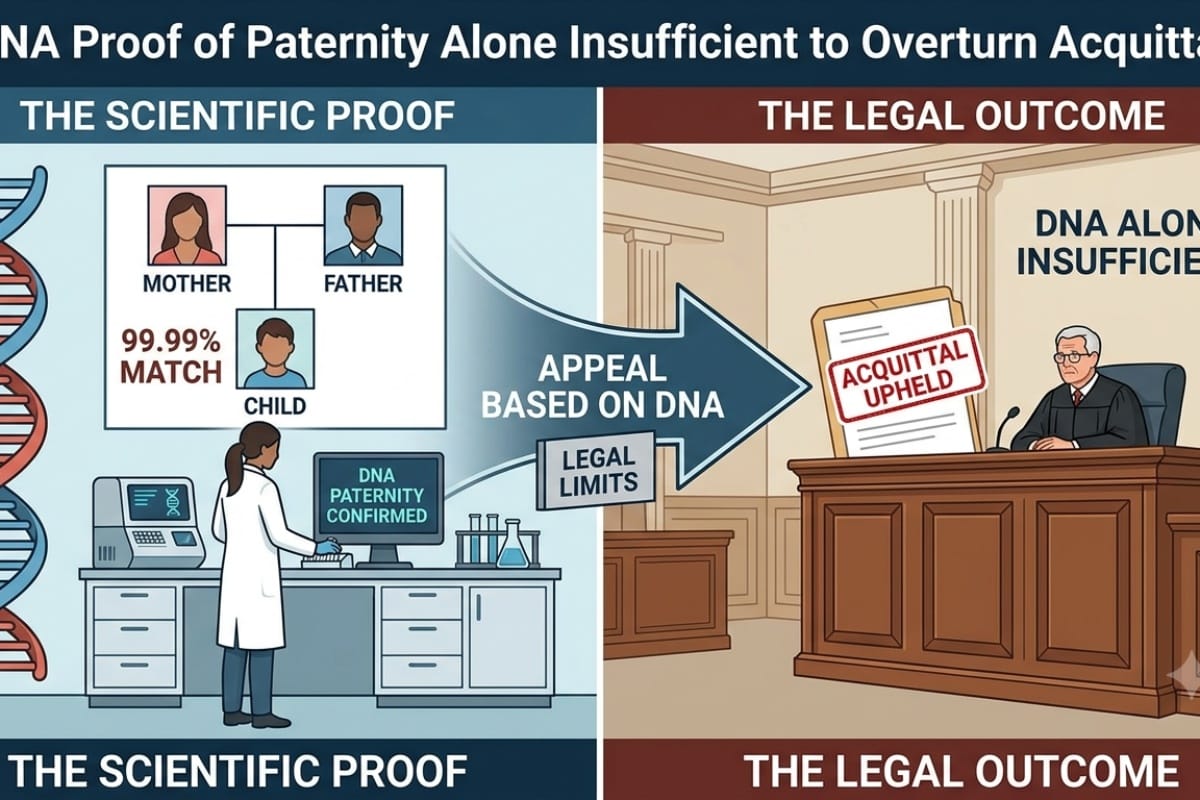
Headnote The Delhi High Court dismissed a prosecutrix's appeal against acquittal of the accused on charges under Sections 328/376 2 n /377/506/509 IPC, despite DNA evidence…
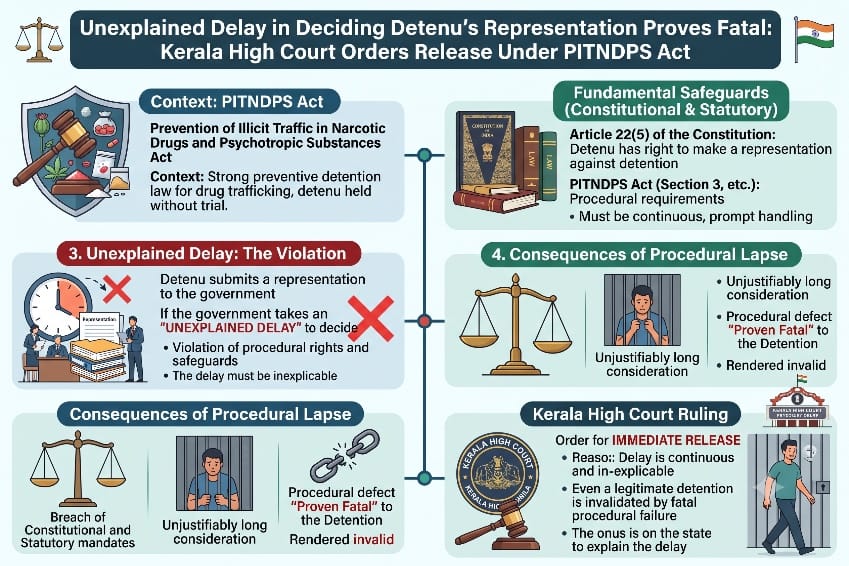
Fathimath Thasneem V.K. v. Union of India and Others | High Court of Kerala at Ernakulam | 3rd September, 2026 A habeas corpus writ petition by the wife of a detenu challenging…
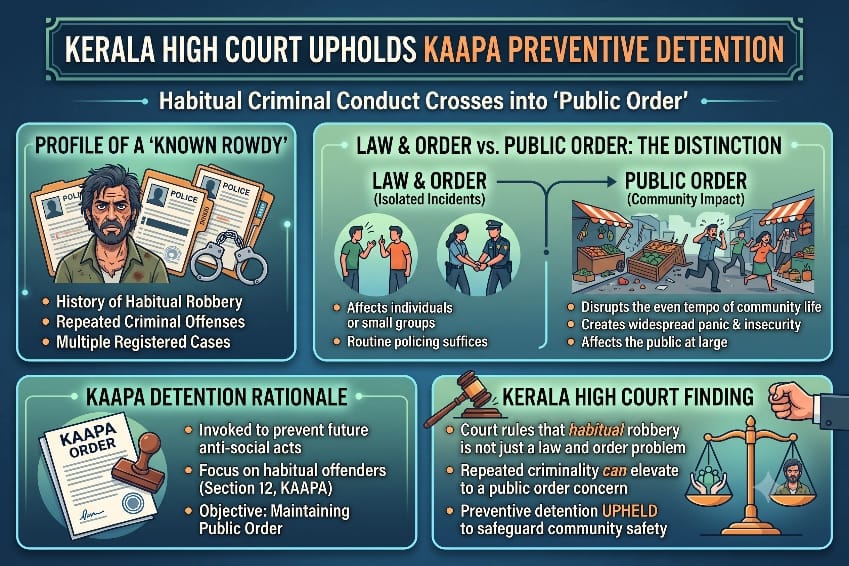
Thasmitha Abukutty v. State of Kerala and Others | High Court of Kerala at Ernakulam | 2nd September, 2026 A writ petition by the wife of a preventive detenu challenging a…
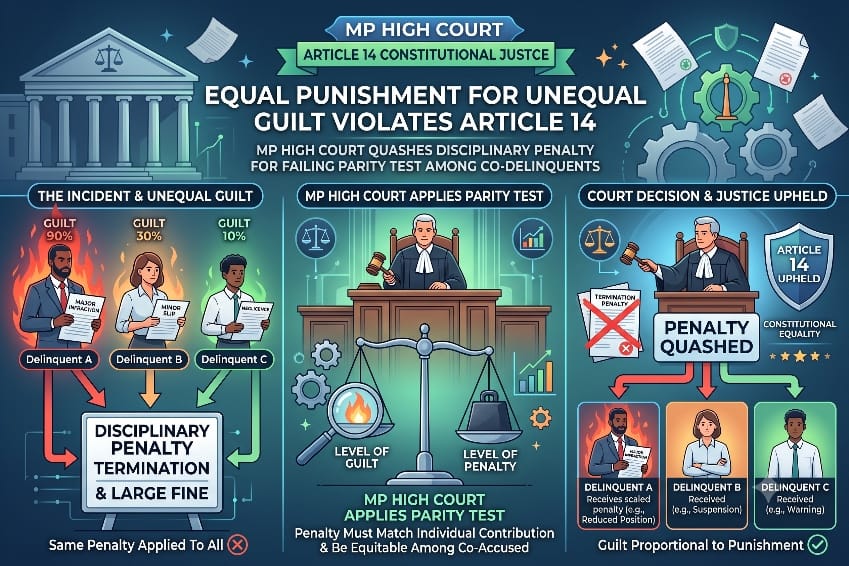
Brahm Kishore Dixit v. The State of Madhya Pradesh and Others | High Court of Madhya Pradesh, Gwalior | 1st September, 2026 A writ petition under Article 226 by a police Assistant…
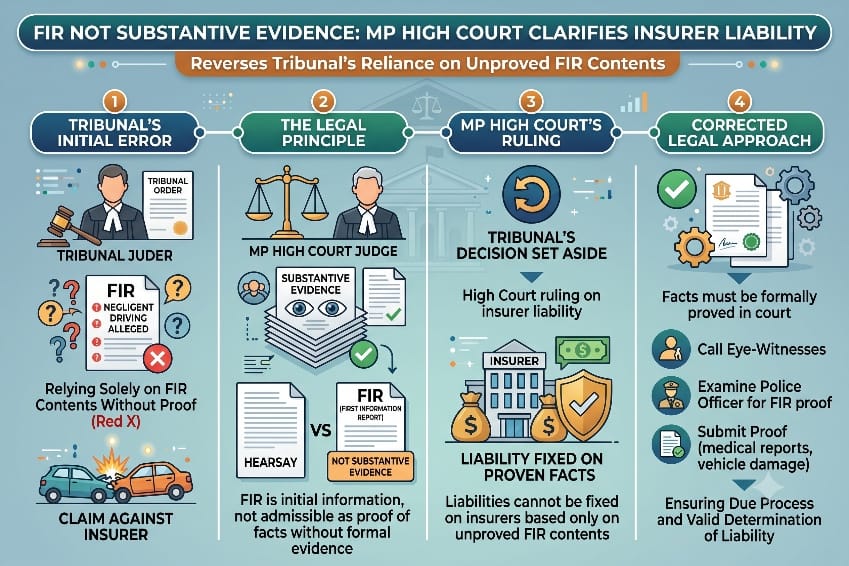
Anil Kumar Patel v. Smt. Munni Bai Barman and Others | High Court of Madhya Pradesh, Jabalpur | 1st September, 2026 A Motor Vehicle Act appeal under Section 173 1 against a Claims…
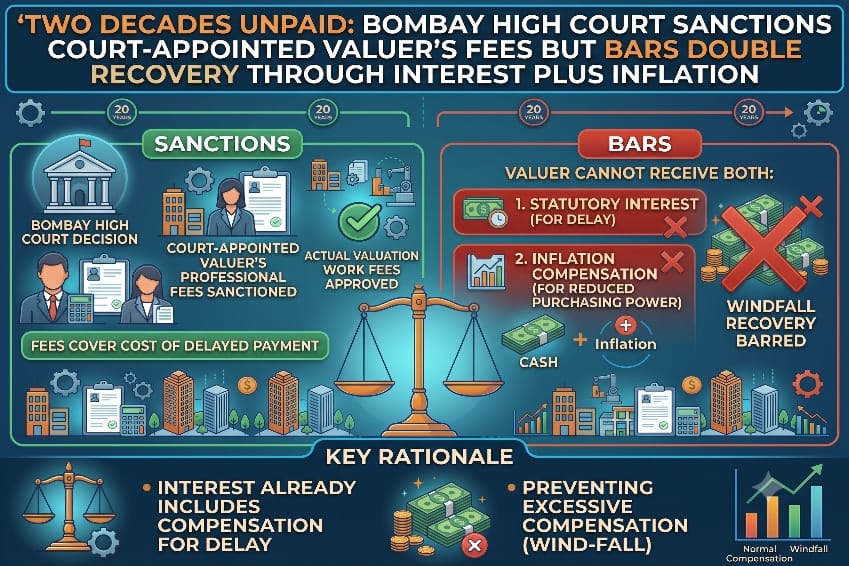
M/s. Kuber Mutual Benefits Ltd. & Ors. v. The State of Maharashtra & Ors. | High Court of Judicature at Bombay Appellate Side | 3rd September, 2026 A Court Receiver's Report…
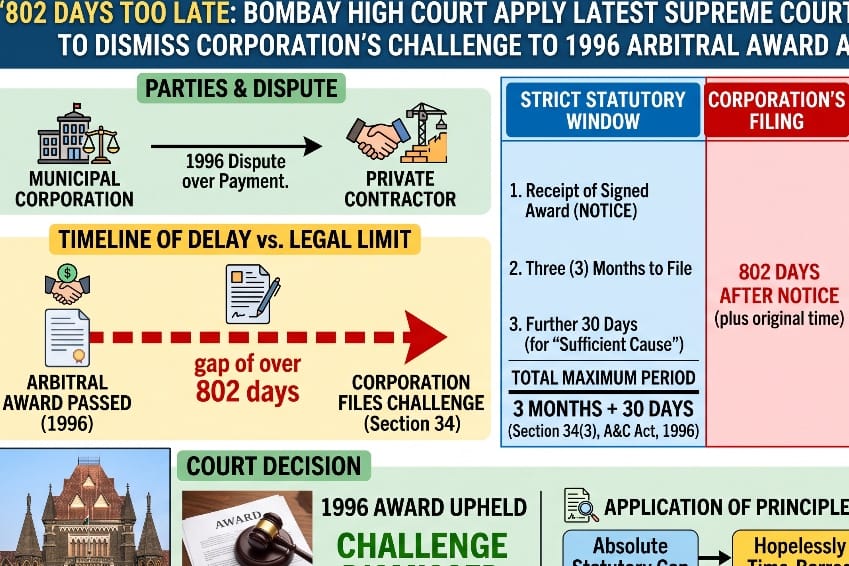
The Municipal Corporation of Greater Bombay v. M/s. Atul Raj Builders Pvt. Ltd. | High Court of Judicature at Bombay Ordinary Original Civil Jurisdiction | 3rd September, 2026 A…
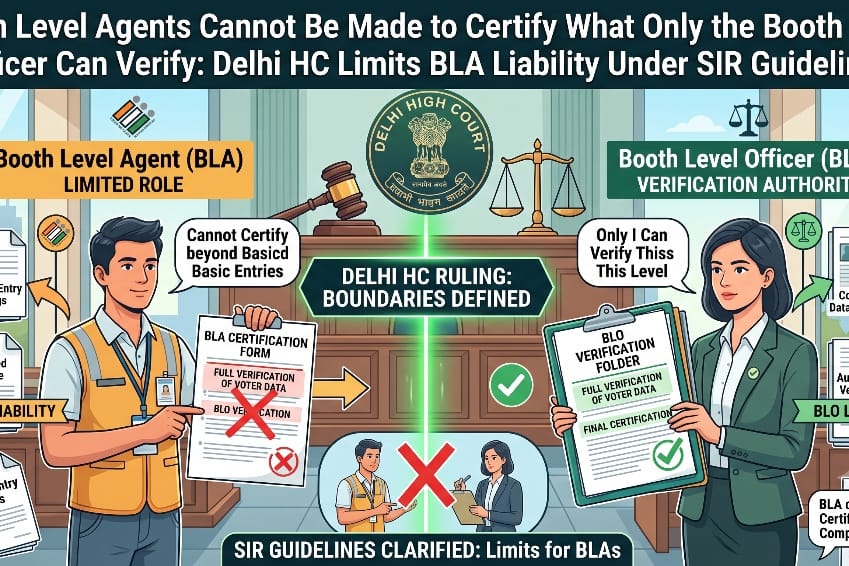
Devender Yadav & Anr. v. Election Commission of India & Anr. | High Court of Delhi Single Judge | Decided on: 03.09.2026 In a challenge to the Election Commission of India's…
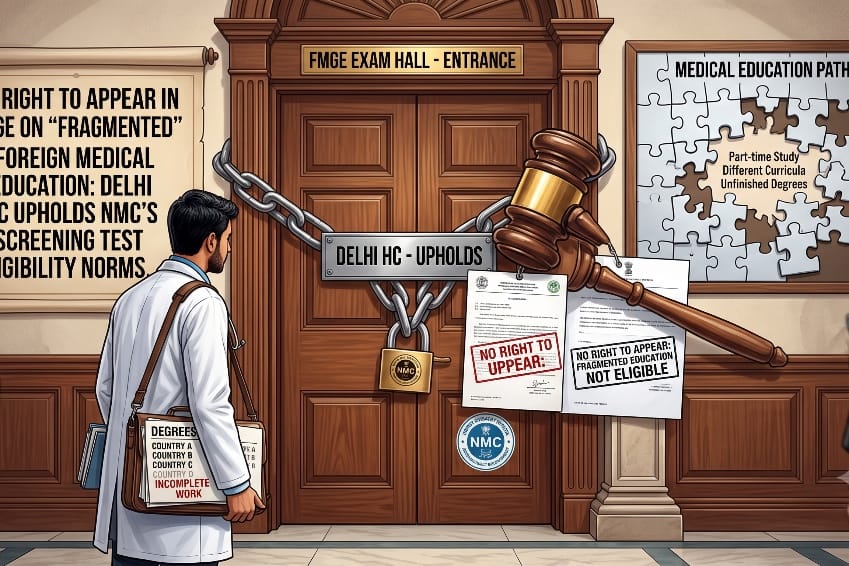
Brij Sharadbhai Bhatt & Ors. v. National Medical Commission & Ors. | High Court of Delhi Division Bench | Decided on: 03.09.2026 The Delhi High Court dismissed a challenge by…