
Deciding two connected writ petitions arising from a common Industrial Tribunal Award, the Delhi High Court set aside the Tribunal's direction granting hotel workmen a further…
Labour Laws
06/09/20264 min read
Update / Judgement Date
21 Nov 2025
Source
WCP News Bulletin
Author
Sakshi Bhardwaj — WCP Legal Desk
Reading Time
3 min read

The Supreme Court examined whether landlords must file a fresh application under Section 12(1) of the Kerala Buildings (Lease and Rent Control) Act, 1965 before the Appellate Rent Control Authority when the tenant appeals against an eviction order passed under Section 12(3). The Court held that while filing such an application is permissible, it is not mandatory in every appeal. The appellate process need not replicate the entire Section 12 procedure again. The High Court’s contrary view was set aside, and the matter was remanded.
• Two commercial shops in Kochi were rented by the respondent–tenant from the appellants–landlords.
• The tenant defaulted on rent from early 2020, leading to eviction petitions under Section 11(2)(b).
• In 2023, a civil suit was decreed in favour of the landlords for arrears.
• The landlords filed applications under Section 12(1), leading the Rent Controller (Sept 2024) to direct the tenant to deposit arrears and continue paying rent.
• The tenant failed to comply, and the Rent Controller passed eviction orders under Section 12(3) on 7 November 2024.
• The tenant filed appeals under Section 18 before the Appellate Authority.
• The Appellate Authority directed the tenant to deposit rent by 15 March 2025; non-compliance led to stopping of appeal proceedings under Section 12(3).
• The High Court (22 May 2025) reversed this, holding that the landlords should have filed a fresh Section 12(1) application in Appeal.
• Section 12(1) requires tenants to clear arrears and continue paying rent to contest eviction or appeals.
• Section 12(3) mandates stopping proceedings and ordering eviction on non-compliance.
• The Appellate Authority’s role is supervisory—repeating the entire Section 12 procedure is unnecessary unless warranted by new circumstances.
• A fresh Section 12(1) application is maintainable in Appeals (i.e., legally allowed).
• But it is not compulsory for landlords to file a new Section 12(1) application in every appeal.
• The Court clarified the Full Bench decision in Zeenath Ibrahim v. Joy Daniel (2024), confirming that it does not require automatic repetition of Section 12 steps.
• Mechanical duplication of Section 12 would burden the system and delay eviction processes contrary to legislative intent.
• Appeals partly allowed.
• High Court’s order is set aside.
• The matter is remanded to the Appellate Authority to proceed in accordance with law, considering:
– whether a Section 12(1) application is filed, and
– whether conditions should be imposed on the tenant under Section 12.
• The Court reiterates that fresh Section 12(1) applications are optional, not mandatory, in appeals against Section 12(3) eviction orders.
• Section 12(1) – Tenant’s obligation to deposit arrears/admitted rent to contest proceedings.
• Section 12(3) – Stopping proceedings and ordering eviction on failure to comply.
• Section 18 – Appellate powers under the Kerala Buildings (Lease & Rent Control) Act, 1965.
• Relevant precedent: Zeenath Ibrahim v. Joy Daniel (Full Bench, Kerala High Court, 2024).
Citation: 2025 INSC 1340
Case: P.U. Sidhiqué & Ors. v. Zakariya
Court: Supreme Court of India – Civil Appellate Jurisdiction
Date of Decision: 21 November 2025
Civil Appeal Nos.: 13901–13902 of 2025
(Arising out of SLP(C) Nos. 22696–22697 of 2025)
Deciding two connected writ petitions arising from a common Industrial Tribunal Award, the Delhi High Court set aside the Tribunal's direction granting hotel workmen a further…

Headnote The Delhi High Court dismissed a prosecutrix's appeal against acquittal of the accused on charges under Sections 328/376 2 n /377/506/509 IPC, despite DNA evidence…
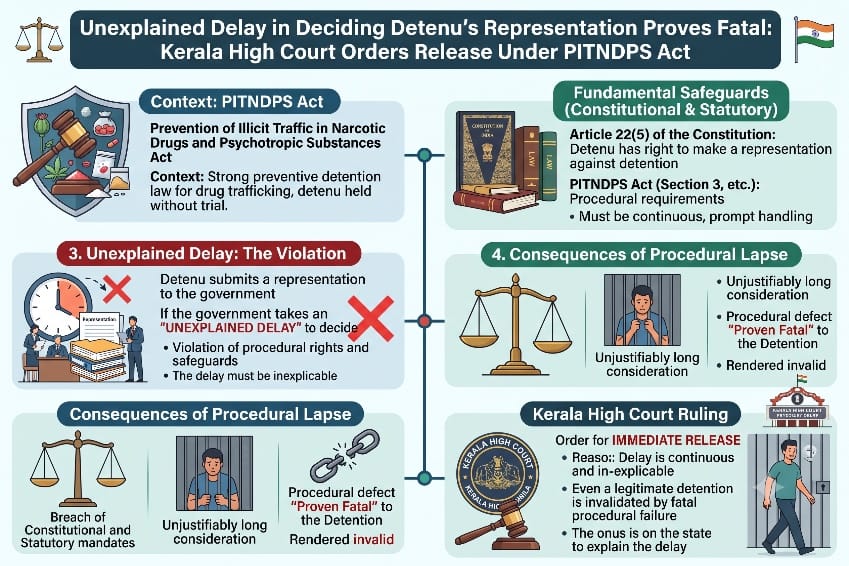
Fathimath Thasneem V.K. v. Union of India and Others | High Court of Kerala at Ernakulam | 3rd September, 2026 A habeas corpus writ petition by the wife of a detenu challenging…
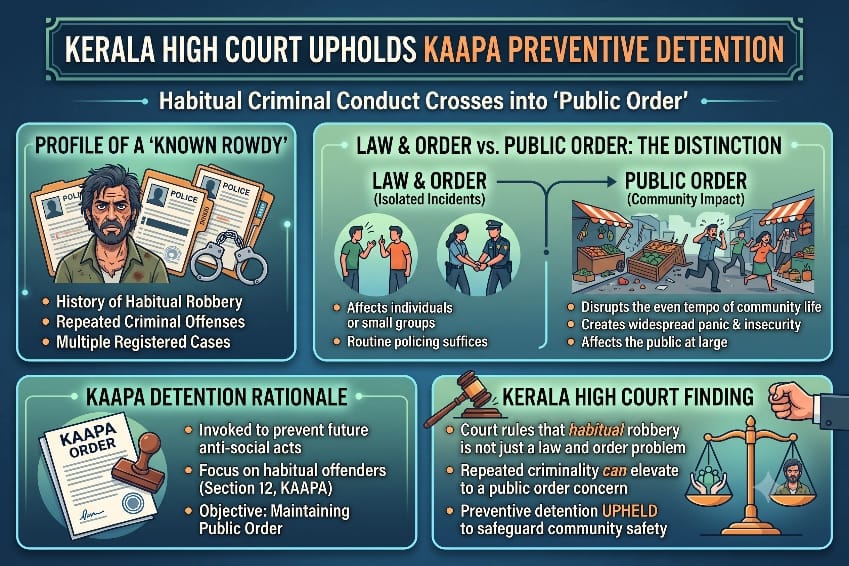
Thasmitha Abukutty v. State of Kerala and Others | High Court of Kerala at Ernakulam | 2nd September, 2026 A writ petition by the wife of a preventive detenu challenging a…
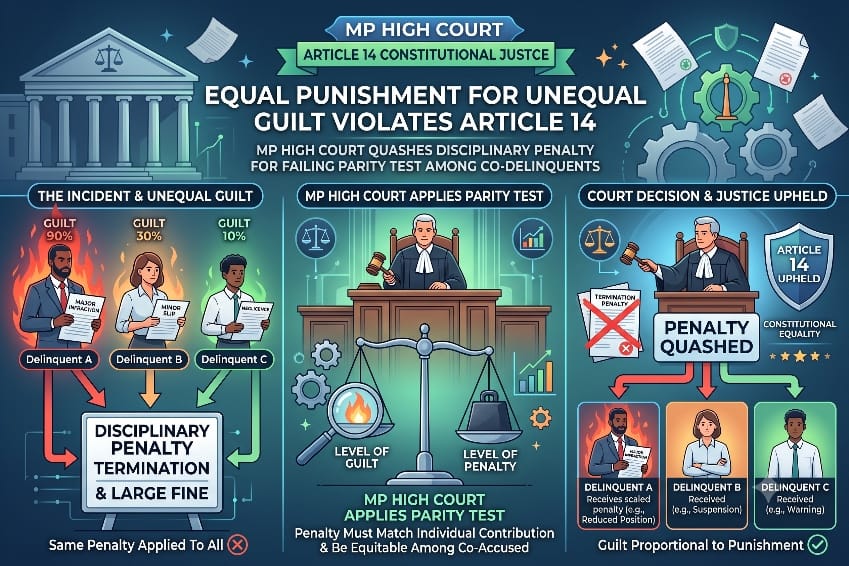
Brahm Kishore Dixit v. The State of Madhya Pradesh and Others | High Court of Madhya Pradesh, Gwalior | 1st September, 2026 A writ petition under Article 226 by a police Assistant…
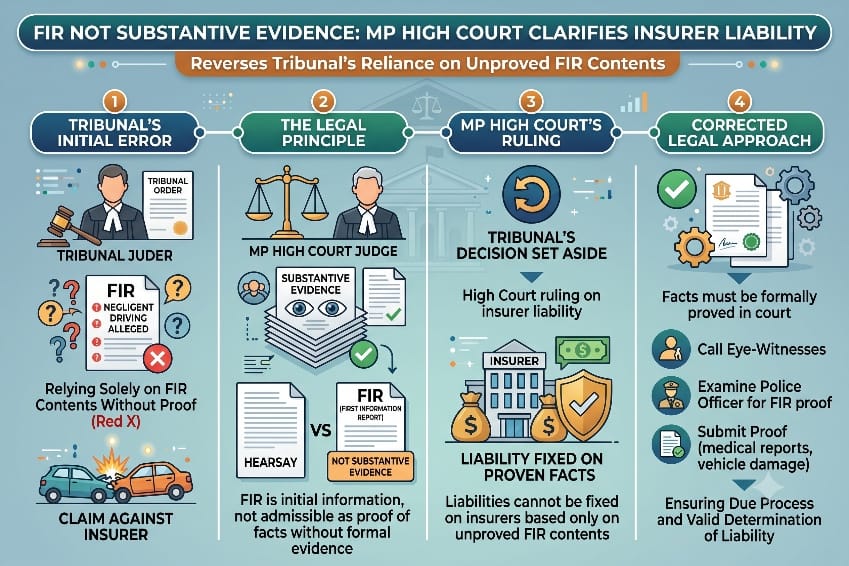
Anil Kumar Patel v. Smt. Munni Bai Barman and Others | High Court of Madhya Pradesh, Jabalpur | 1st September, 2026 A Motor Vehicle Act appeal under Section 173 1 against a Claims…
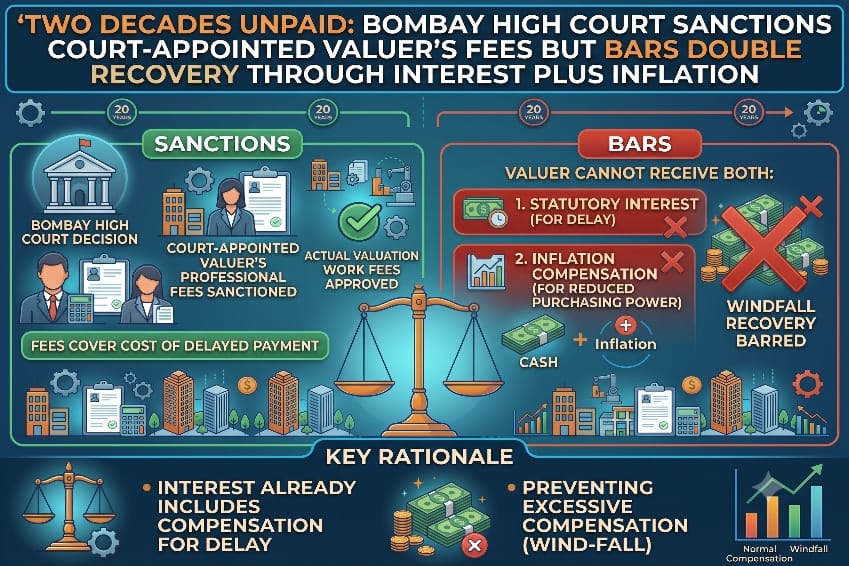
M/s. Kuber Mutual Benefits Ltd. & Ors. v. The State of Maharashtra & Ors. | High Court of Judicature at Bombay Appellate Side | 3rd September, 2026 A Court Receiver's Report…
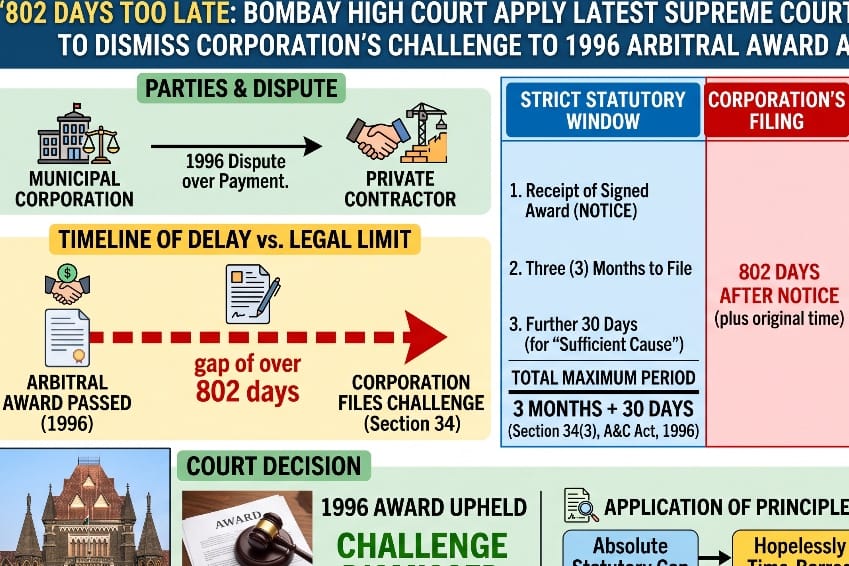
The Municipal Corporation of Greater Bombay v. M/s. Atul Raj Builders Pvt. Ltd. | High Court of Judicature at Bombay Ordinary Original Civil Jurisdiction | 3rd September, 2026 A…

Devender Yadav & Anr. v. Election Commission of India & Anr. | High Court of Delhi Single Judge | Decided on: 03.09.2026 In a challenge to the Election Commission of India's…
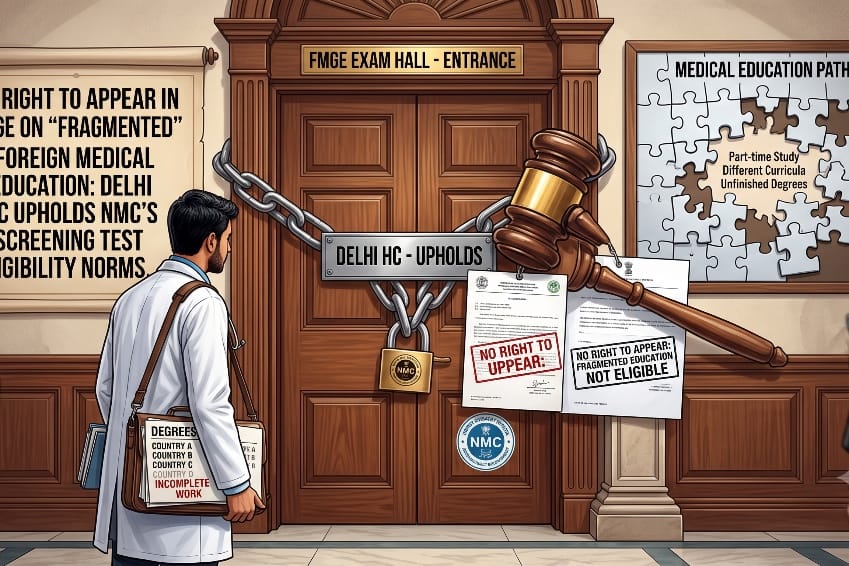
Brij Sharadbhai Bhatt & Ors. v. National Medical Commission & Ors. | High Court of Delhi Division Bench | Decided on: 03.09.2026 The Delhi High Court dismissed a challenge by…