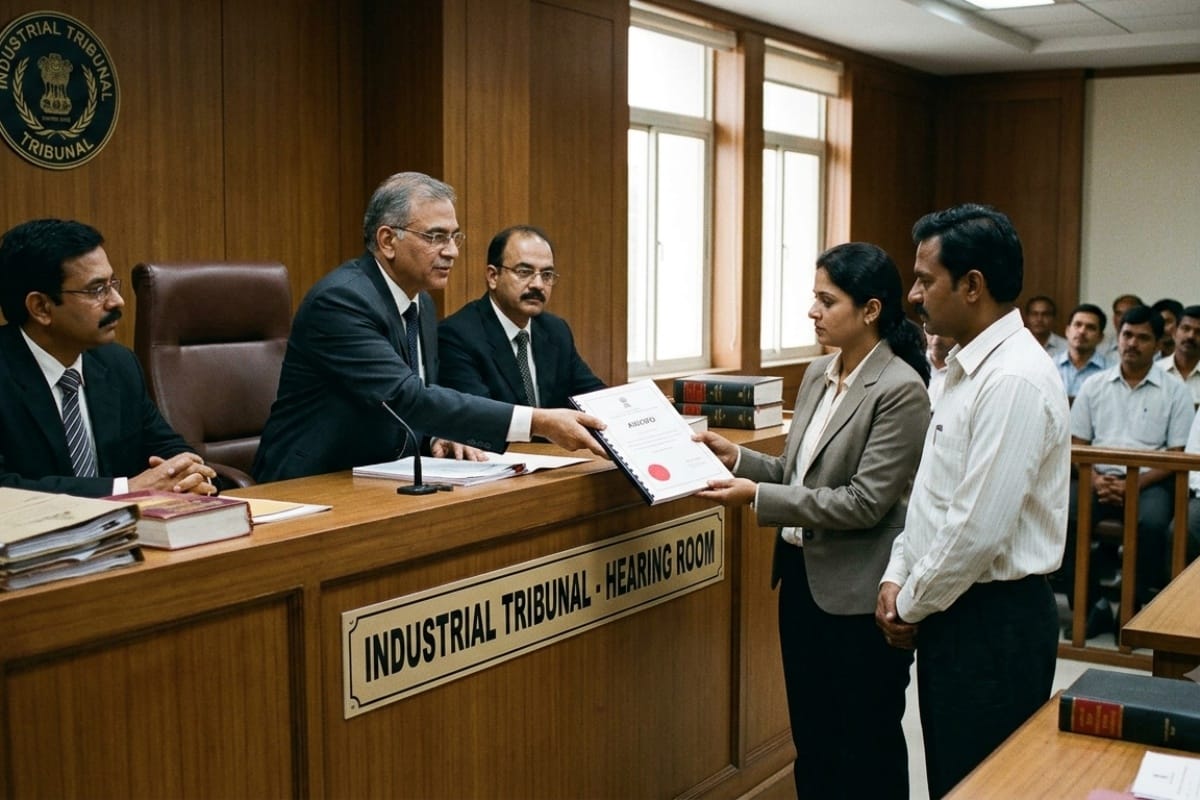
Deciding two connected writ petitions arising from a common Industrial Tribunal Award, the Delhi High Court set aside the Tribunal's direction granting hotel workmen a further…
Labour Laws
06/09/20264 min read
Update / Judgement Date
12 Nov 2025
Source
WCP News Bulletin
Author
Sakshi Bhardwaj — WCP Legal Desk
Reading Time
3 min read
The Supreme Court refused to constitute a Special Investigation Team (SIT) to probe the allegations of stock manipulation and regulatory lapses concerning the Adani Group following the Hindenburg Research report. The Court held that the Securities and Exchange Board of India (SEBI) had conducted substantial investigations in compliance with earlier directions and that no additional judicially monitored investigation was warranted. The Court emphasized maintaining investor confidence through transparency and directed SEBI to complete the remaining investigations and implement recommendations of the Expert Committee chaired by Justice (Retd.) A.M. Sapre.
• The petitioner, Advocate Vishal Tiwari, filed the writ petition seeking a court-monitored probe or an independent SIT investigation into allegations raised by the Hindenburg Research report against the Adani Group, claiming market manipulation and lack of regulatory oversight.
• Earlier, the Supreme Court had directed SEBI to investigate 24 specific issues relating to shareholding patterns, possible violations of securities laws, and the role of foreign portfolio investors.
• An Expert Committee chaired by Justice (Retd.) A.M. Sapre was also constituted to review SEBI’s functioning, identify regulatory gaps, and suggest reforms to enhance investor protection.
• The petitioner contended that SEBI’s delay and alleged inaction warranted judicial intervention through an SIT, while SEBI maintained that most investigations had been completed and that its actions were transparent and within the statutory framework.
• The Court noted that SEBI had completed 22 out of 24 investigations, with two nearing completion, and found no credible material to justify transferring the probe to an external agency or SIT.
• The Bench observed that market stability and investor confidence require a balanced regulatory approach rather than parallel inquiries that could disrupt market integrity.
• The Court acknowledged the findings of the Justice Sapre Committee, appreciating its recommendations for strengthening SEBI’s enforcement capacity and ensuring disclosure transparency.
• It stressed that judicial review cannot substitute for specialized regulatory oversight, and unless mala fide or arbitrariness is shown, the Court must respect the domain expertise of statutory bodies like SEBI.
• The Court directed SEBI to submit a final status report upon completion of the remaining investigations and to ensure time-bound implementation of the Expert Committee’s recommendations.
• Article 32, Constitution of India – Enforcement of fundamental rights through writ jurisdiction.
• Securities and Exchange Board of India Act, 1992 – SEBI’s powers and functions in regulating the securities market.
• Securities Contracts (Regulation) Act, 1956 – Regulation of stock exchanges and listed securities.
• Companies Act, 2013 – Corporate governance and disclosure obligations.
• Doctrine of Judicial Restraint – Courts should defer to specialized regulators in technical matters unless illegality or bad faith is proven.
Citation: 2025:SC:2480:1113
Case: Vishal Tiwari v. Union of India & Ors.
Court: Supreme Court of India
Coram: Chief Justice D.Y. Chandrachud, Justice J.B. Pardiwala & Justice Manoj Misra
Date of Decision: 13 November 2025
Writ Petition (Civil) No.: 2480 of 2022
Deciding two connected writ petitions arising from a common Industrial Tribunal Award, the Delhi High Court set aside the Tribunal's direction granting hotel workmen a further…

Headnote The Delhi High Court dismissed a prosecutrix's appeal against acquittal of the accused on charges under Sections 328/376 2 n /377/506/509 IPC, despite DNA evidence…
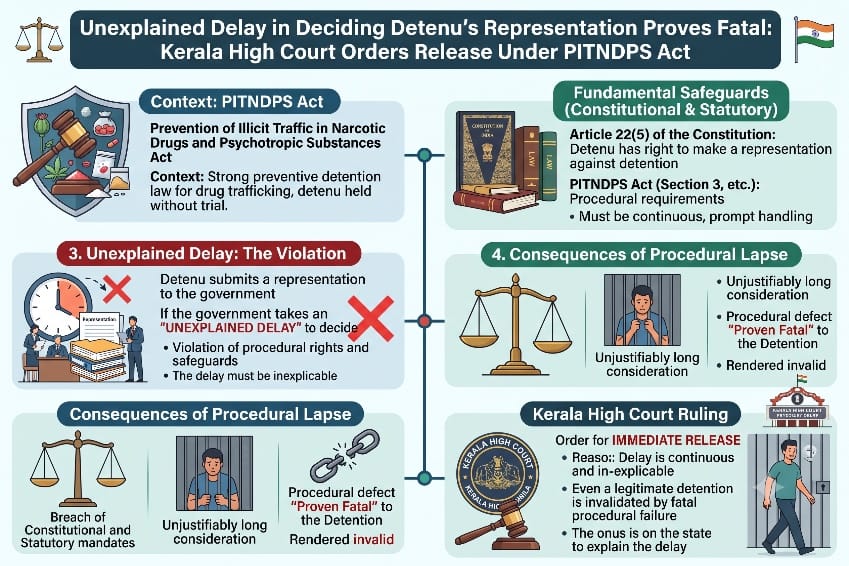
Fathimath Thasneem V.K. v. Union of India and Others | High Court of Kerala at Ernakulam | 3rd September, 2026 A habeas corpus writ petition by the wife of a detenu challenging…
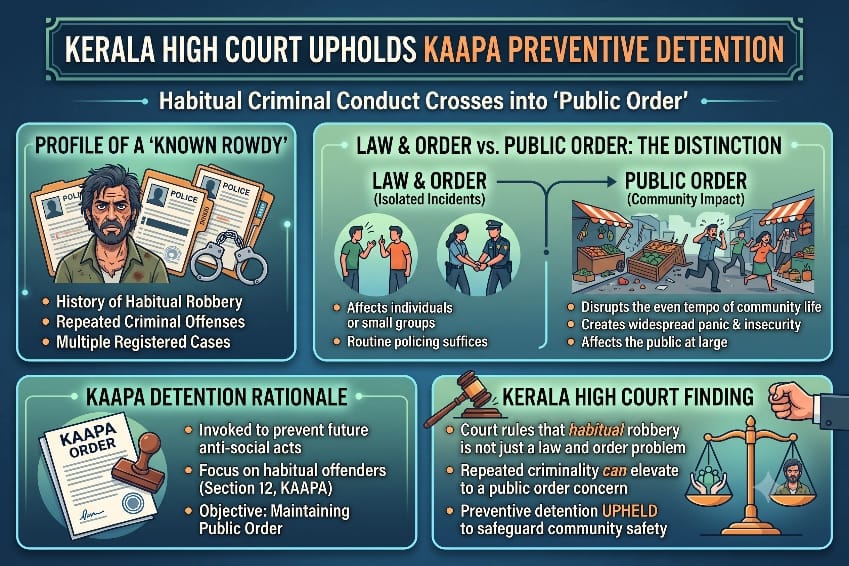
Thasmitha Abukutty v. State of Kerala and Others | High Court of Kerala at Ernakulam | 2nd September, 2026 A writ petition by the wife of a preventive detenu challenging a…
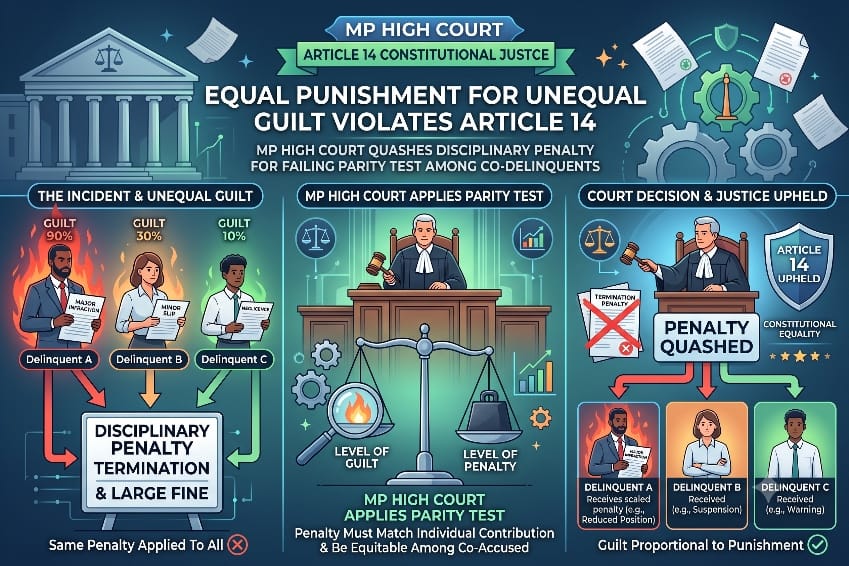
Brahm Kishore Dixit v. The State of Madhya Pradesh and Others | High Court of Madhya Pradesh, Gwalior | 1st September, 2026 A writ petition under Article 226 by a police Assistant…
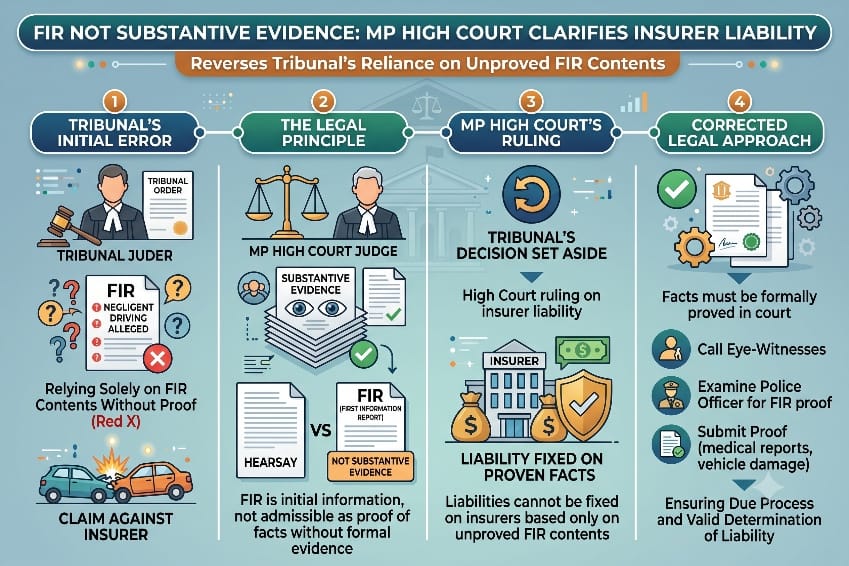
Anil Kumar Patel v. Smt. Munni Bai Barman and Others | High Court of Madhya Pradesh, Jabalpur | 1st September, 2026 A Motor Vehicle Act appeal under Section 173 1 against a Claims…
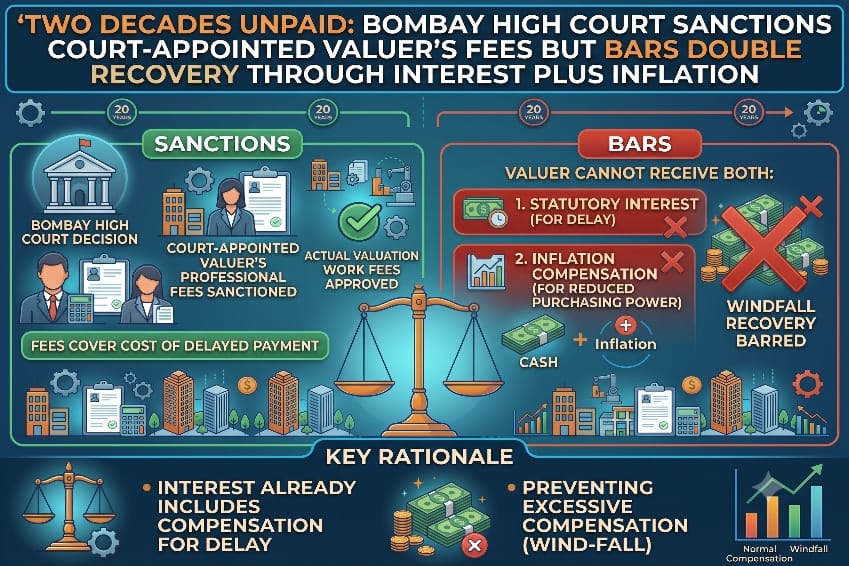
M/s. Kuber Mutual Benefits Ltd. & Ors. v. The State of Maharashtra & Ors. | High Court of Judicature at Bombay Appellate Side | 3rd September, 2026 A Court Receiver's Report…
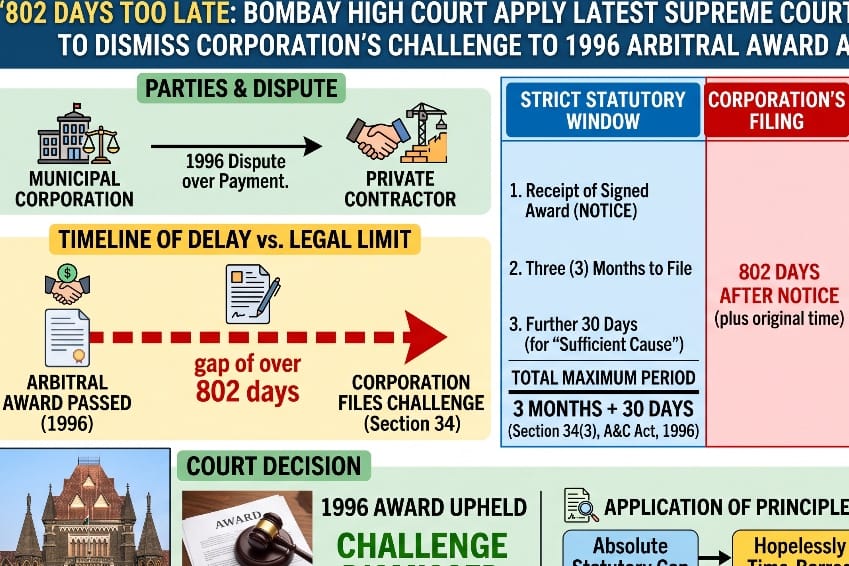
The Municipal Corporation of Greater Bombay v. M/s. Atul Raj Builders Pvt. Ltd. | High Court of Judicature at Bombay Ordinary Original Civil Jurisdiction | 3rd September, 2026 A…
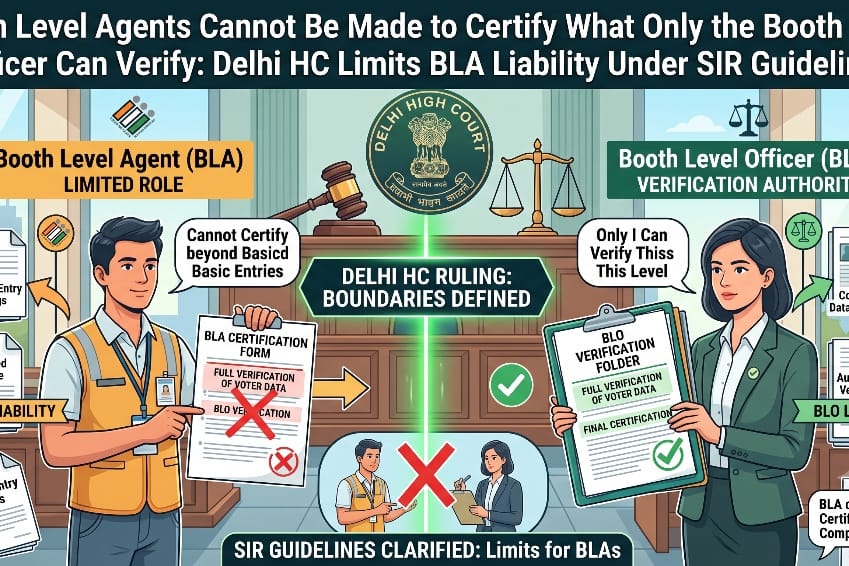
Devender Yadav & Anr. v. Election Commission of India & Anr. | High Court of Delhi Single Judge | Decided on: 03.09.2026 In a challenge to the Election Commission of India's…
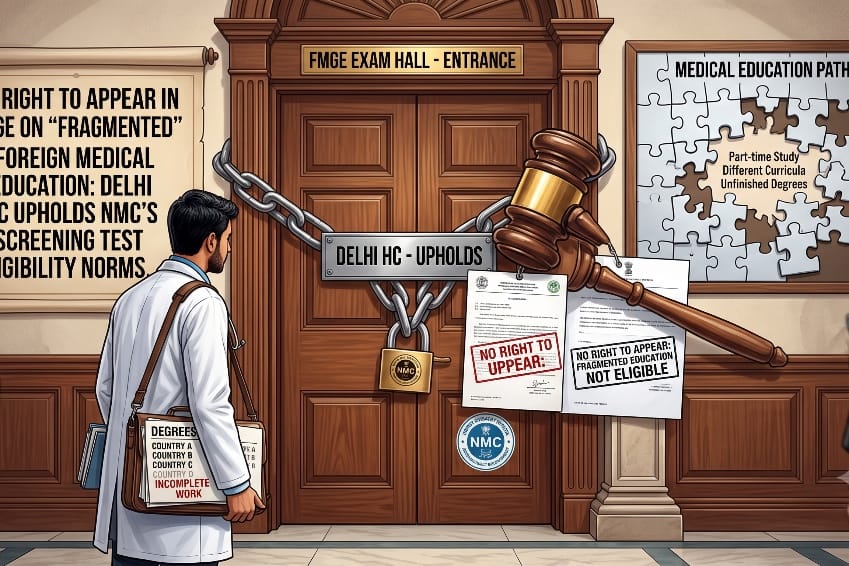
Brij Sharadbhai Bhatt & Ors. v. National Medical Commission & Ors. | High Court of Delhi Division Bench | Decided on: 03.09.2026 The Delhi High Court dismissed a challenge by…