
The Division Bench dismissed the connected writ appeals, while making a limited modification to the Single Judge’s findings concerning the Bar Council of Kerala. In light of…
Civil LawOther Legal Matters
21/11/20265 min read
Update / Judgement Date
30 Oct 2025
Source
WCP News Bulletin
Author
Sakshi Bhardwaj — WCP Legal Desk
Reading Time
3 min read
View Count
2
The Supreme Court, in deciding cross-appeals between the insured (Orion Conmerx Pvt. Ltd.) and the insurer (National Insurance Co. Ltd.), upheld the National Consumer Disputes Redressal Commission’s (NCDRC) findings that the insured was entitled to partial compensation for fire damage. The Court examined the principles governing fire insurance, emphasizing that the cause of the fire is immaterial unless the insured is its instigator. It reaffirmed that the insurer must act in good faith, and surveyor reports cannot be discarded without solid grounds. However, compensation must correspond strictly to the policy terms and proven evidence.
The final surveyor’s conclusion that the fire was not accidental was not conclusive, as it was based on visual assessment and speculative reasoning.
The insured provided credible contemporaneous evidence, including bank audits, architect reports, and chartered accountant valuations, though lacking precision in some parts.
Decision:Legal Provisions Discussed:Key Takeaways:The Supreme Court partly upheld the NCDRC’s order, holding:
Citation: 2025 INSC 1271
Case: Orion Conmerx Pvt. Ltd. v. National Insurance Co. Ltd.
Court: Supreme Court of India
Coram: Justice Manmohan
Date of Decision: 29 October 2025
Civil Appeal Nos.: 3806 of 2020 & 3855 of 2020
© 2026 White Collar Professional Technologies Pvt. Ltd. All rights reserved. CIN: U74999MH2024PTC000001
The Division Bench dismissed the connected writ appeals, while making a limited modification to the Single Judge’s findings concerning the Bar Council of Kerala. In light of…

The High Court held that the trial court was not justified in directing the parties to undergo fresh DNA testing when the existing expert report had not been rejected for legally…

The High Court held that a subsequently communicated minimum 20% local-content requirement, including an indigenously developed EMS software condition, could not be…
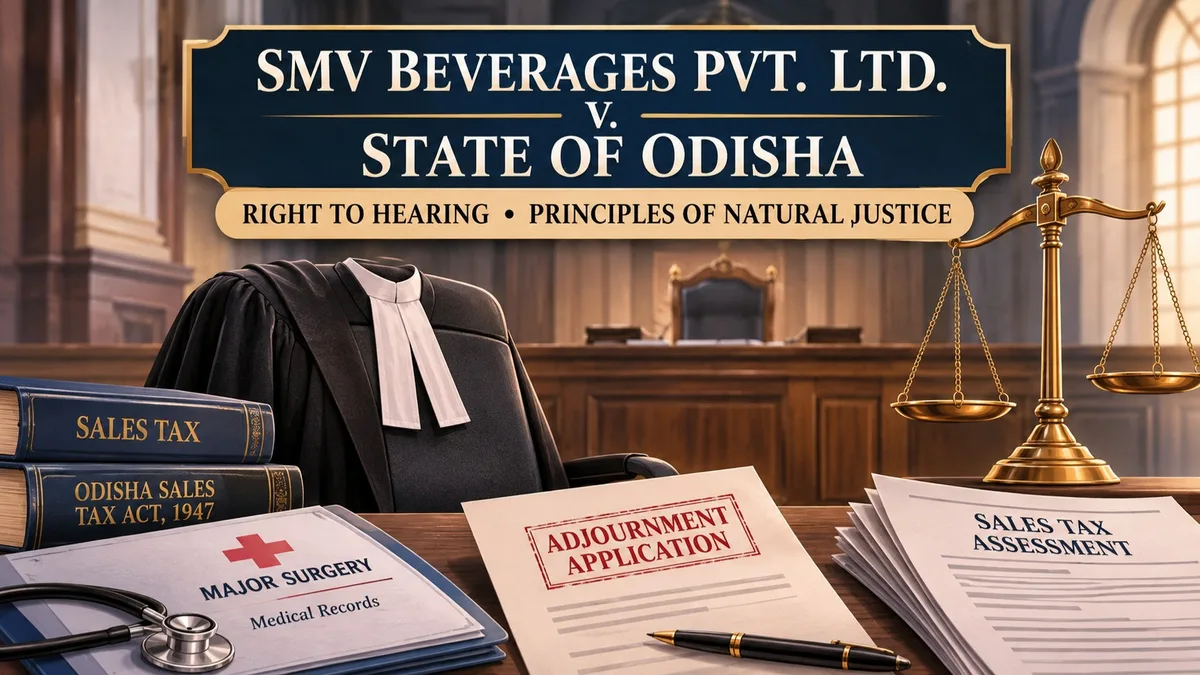
The Division Bench held that the petitioner had been deprived of a reasonable opportunity to present its case before the Commissioner of Sales Tax. An adjournment request must be…

The High Court exercised its inherent jurisdiction to quash a POCSO FIR and the pending trial after obtaining independent reports verifying the parties’ marriage, family…

The Division Bench held that the writ court had exceeded the proper scope of the dispute between the supplier and KSBCL by deciding, in effect, the Revenue’s separate tax…

The High Court considered the petitioners’ request for regular bail in an Enforcement Directorate prosecution alleging money laundering under the Prevention of Money Laundering…

The High Court upheld the appellant’s conviction under Section 18 c of the NDPS Act for possession of opium but reduced the sentence of seven years’ rigorous imprisonment to the…

The High Court dismissed the State’s appeal against acquittal, holding that the trial court’s view was a reasonably possible view on the evidence and that material inconsistencies…
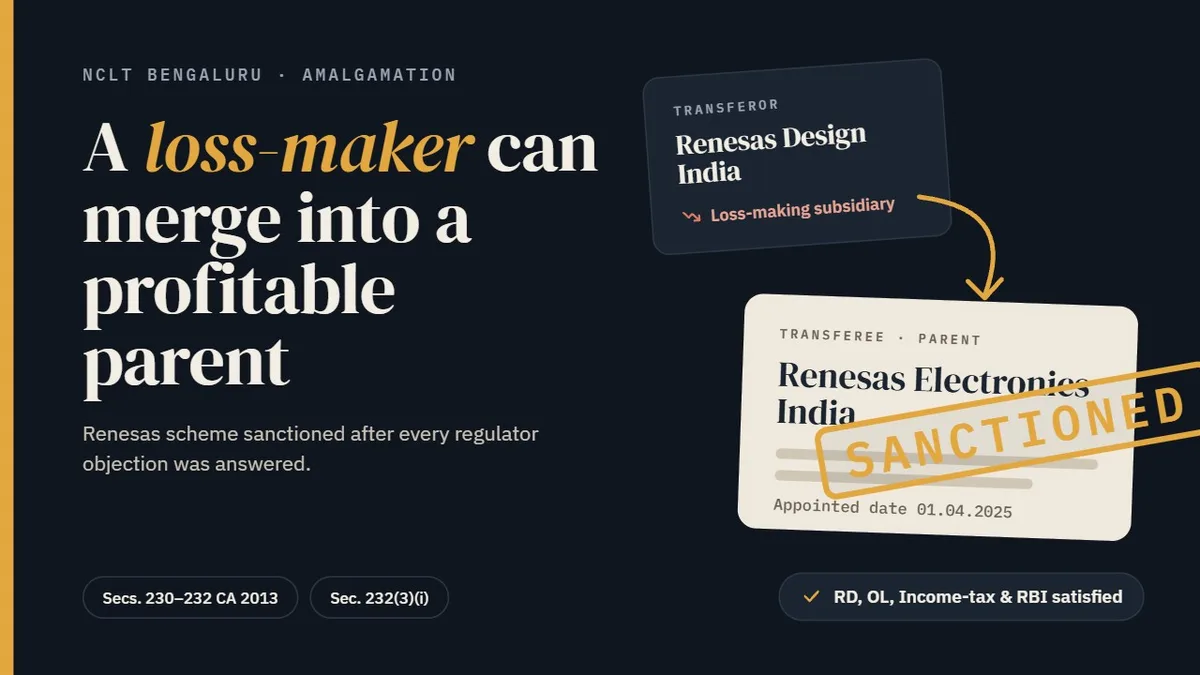
Renesas Design India Pvt. Ltd., a loss-making wholly owned subsidiary engaged in semiconductor design, and its parent Renesas Electronics India Pvt. Ltd. sought sanction of a…