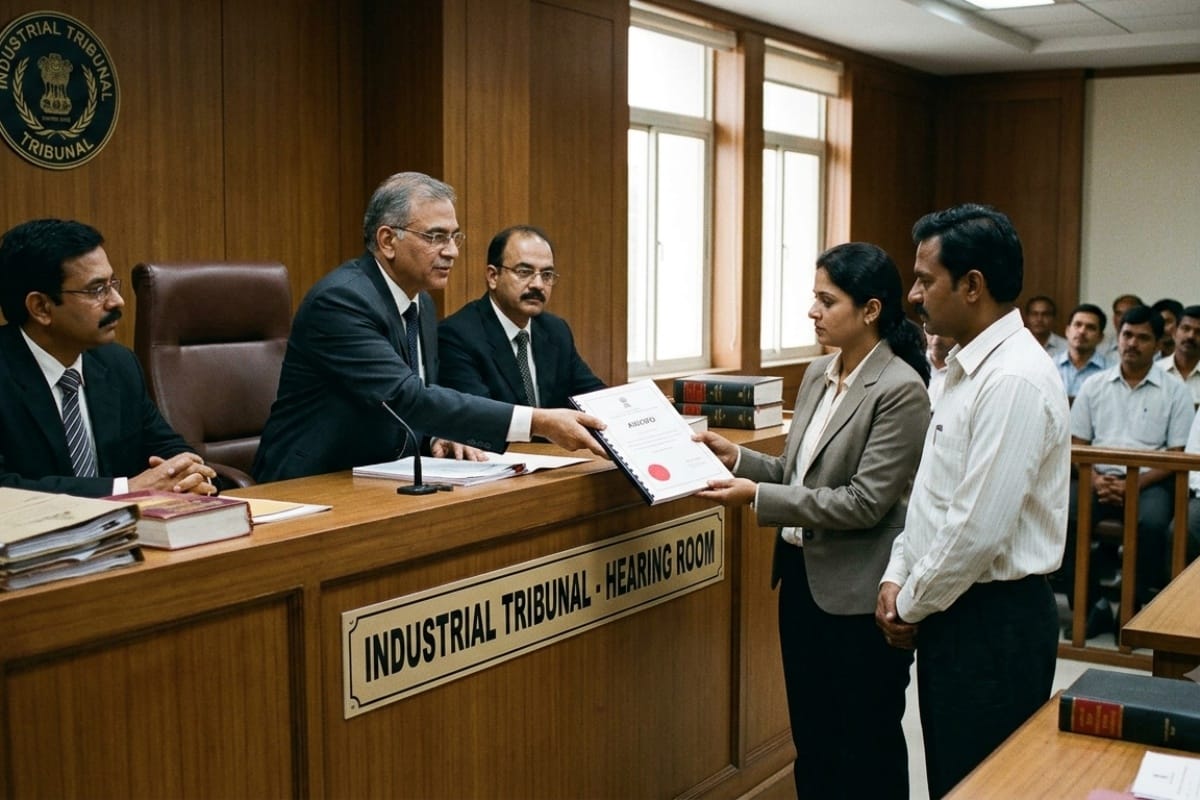
Deciding two connected writ petitions arising from a common Industrial Tribunal Award, the Delhi High Court set aside the Tribunal's direction granting hotel workmen a further…
Labour Laws
06/09/20264 min read
Update / Judgement Date
12 Nov 2025
Source
WCP News Bulletin
Author
Sakshi Bhardwaj — WCP Legal Desk
Reading Time
4 min read
The Supreme Court reaffirmed that the Saranda Forest in Jharkhand, being an ecologically fragile and wildlife-rich area, must be protected from unregulated mining. The Court directed a complete halt on fresh mining leases and renewals within the notified sanctuary and its eco-sensitive zone until a comprehensive ecological carrying-capacity study is completed. It emphasized balancing economic development with environmental sustainability, reiterating that no project can override the constitutional mandate of environmental protection under Article 48-A and Article 51-A(g).
• The matter originated from continuing monitoring proceedings under T.N. Godavarman Thirumulpad v. Union of India (W.P. (C) 202/1995), concerning illegal forest diversion and mining in protected areas.
• The Saranda Wildlife Sanctuary, located in West Singhbhum District, Jharkhand, covers ~820 sq. km and forms a vital elephant corridor and biodiversity hotspot.
• Reports by the Ministry of Environment, Forest and Climate Change (MoEF&CC) and the Wildlife Institute of India (WII) highlighted heavy degradation due to iron-ore mining, loss of canopy, and contamination of streams.
• Petitioners and conservation groups sought immediate intervention, alleging that several leases were granted or extended without wildlife clearance under the Wildlife (Protection) Act, 1972 and Forest (Conservation) Act, 1980.
• The Court noted that forest land cannot be used for mining without prior approval under Section 2 of the Forest (Conservation) Act, 1980, and that such approvals must also satisfy the tests under Section 29 and Section 35 of the Wildlife (Protection) Act, 1972 when the area is part of a sanctuary or its ESZ.
• It reiterated that sustainable development is not an unrestricted license for exploitation, stressing the public trust doctrine and the State’s duty to act as trustee of natural resources.
• The Bench observed that continued mining in Saranda would cause irreversible damage to the elephant corridors, sal forests, and local tribal livelihoods.
• The Court rejected the State’s plea to allow partial mining on “already broken up” areas until the ecological assessment report is finalized.
• Article 48-A & Article 51-A(g), Constitution of India – Duty to protect the environment.
• Forest (Conservation) Act, 1980 – Section 2 (restriction on forest-land diversion).
• Wildlife (Protection) Act, 1972 – Sections 29 & 35 (protection of wildlife sanctuaries).
• Environment (Protection) Act, 1986 – Regulation of industrial projects in ESZs.
• Doctrine of Public Trust – State as custodian of natural resources for the public good.
The judgment underscores the Supreme Court’s continuing environmental oversight in the Godavarman series. It places the Saranda ecosystem under strict judicial protection, restricting industrial activity until the scientific assessment validates its sustainability. The decision serves as a precedent reinforcing that ecological preservation outweighs commercial extraction in ecologically sensitive landscapes.
Citation: 2025:INSC:1311
Case: In Re: Saranda Wildlife Sanctuary
Court: Supreme Court of India
Bench: Chief Justice D.Y. Chandrachud, Justice J.B. Pardiwala & Justice Manoj Misra
Date of Decision: 13 November 2025
Original Application: W.P. (C) No. 2997 of 1995
Deciding two connected writ petitions arising from a common Industrial Tribunal Award, the Delhi High Court set aside the Tribunal's direction granting hotel workmen a further…
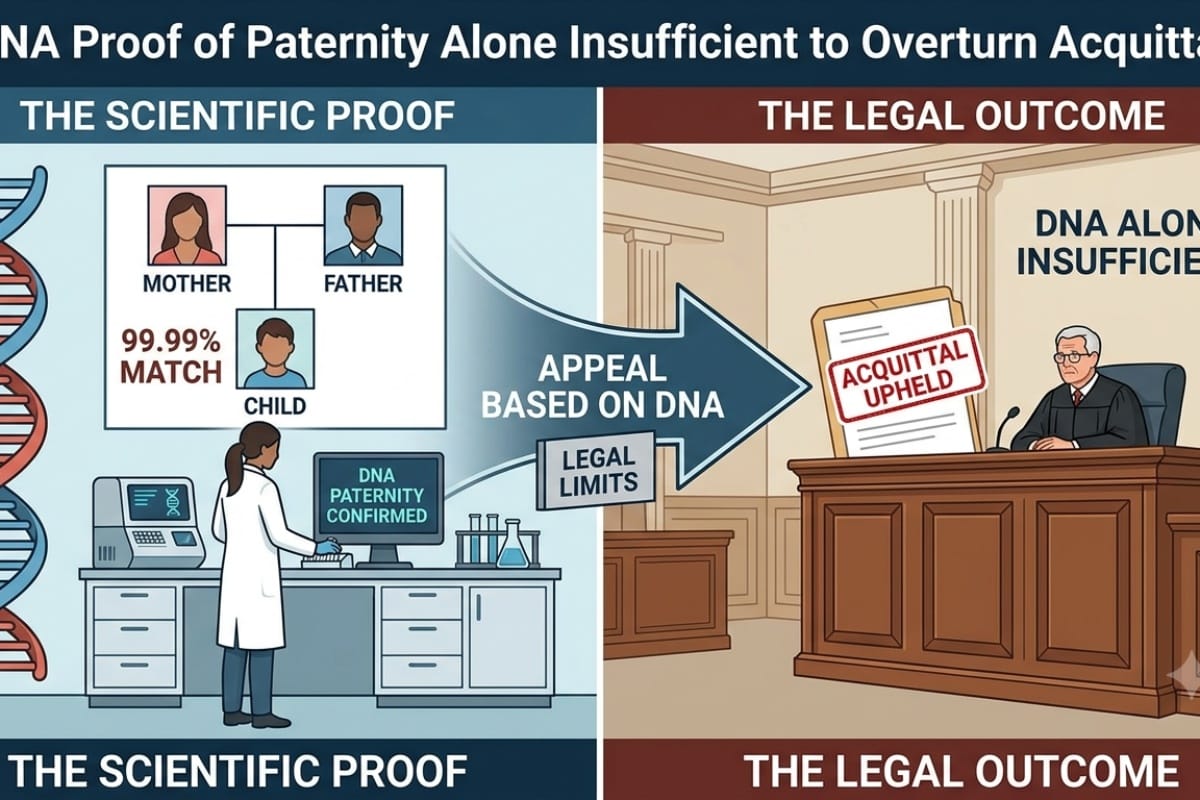
Headnote The Delhi High Court dismissed a prosecutrix's appeal against acquittal of the accused on charges under Sections 328/376 2 n /377/506/509 IPC, despite DNA evidence…
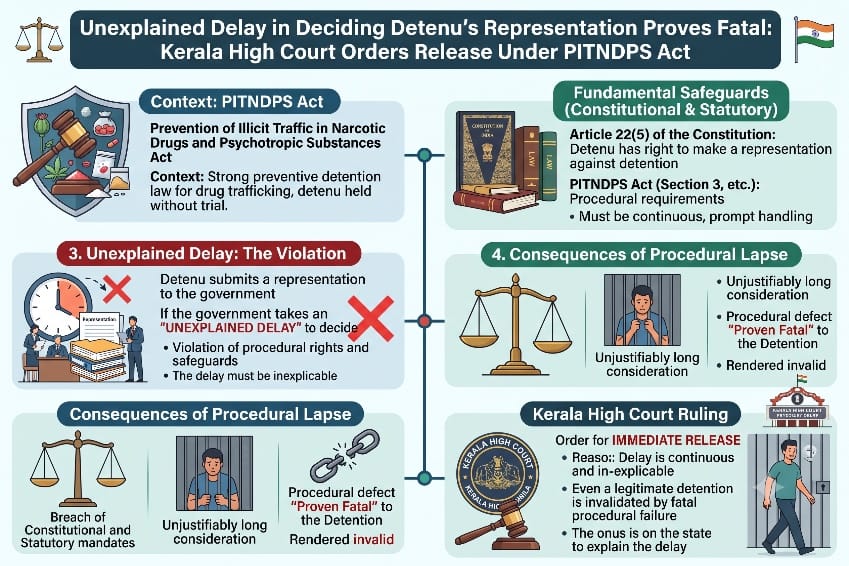
Fathimath Thasneem V.K. v. Union of India and Others | High Court of Kerala at Ernakulam | 3rd September, 2026 A habeas corpus writ petition by the wife of a detenu challenging…
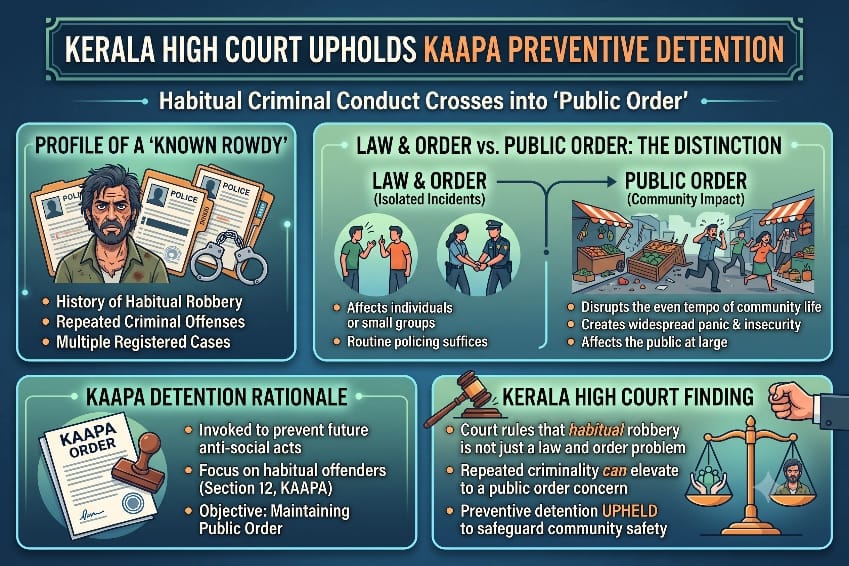
Thasmitha Abukutty v. State of Kerala and Others | High Court of Kerala at Ernakulam | 2nd September, 2026 A writ petition by the wife of a preventive detenu challenging a…
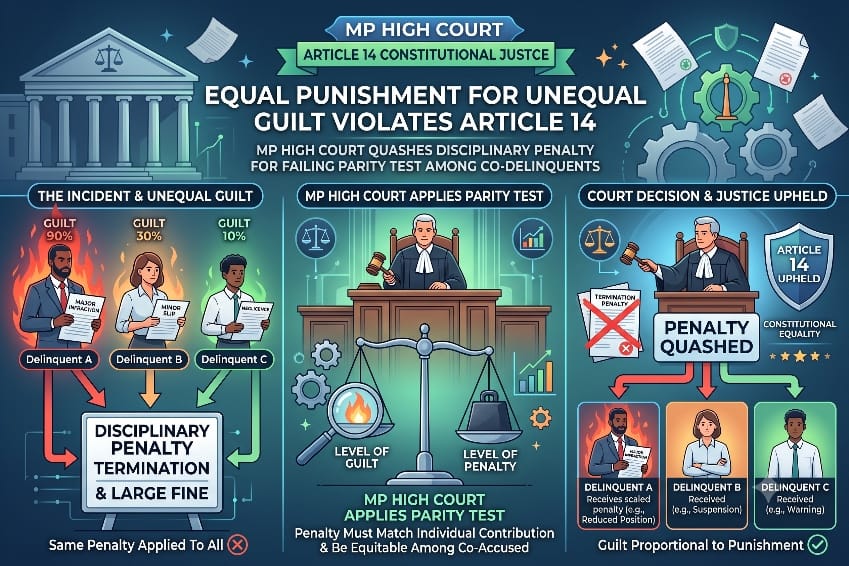
Brahm Kishore Dixit v. The State of Madhya Pradesh and Others | High Court of Madhya Pradesh, Gwalior | 1st September, 2026 A writ petition under Article 226 by a police Assistant…
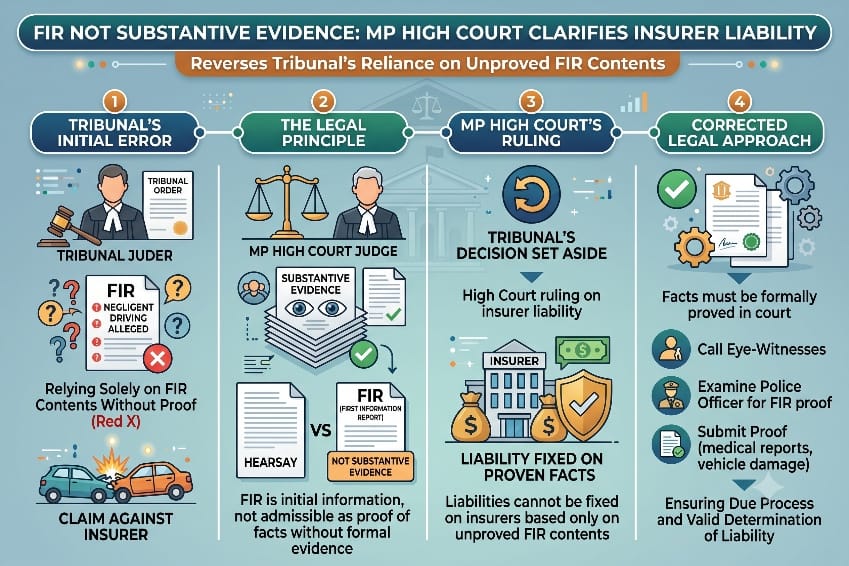
Anil Kumar Patel v. Smt. Munni Bai Barman and Others | High Court of Madhya Pradesh, Jabalpur | 1st September, 2026 A Motor Vehicle Act appeal under Section 173 1 against a Claims…
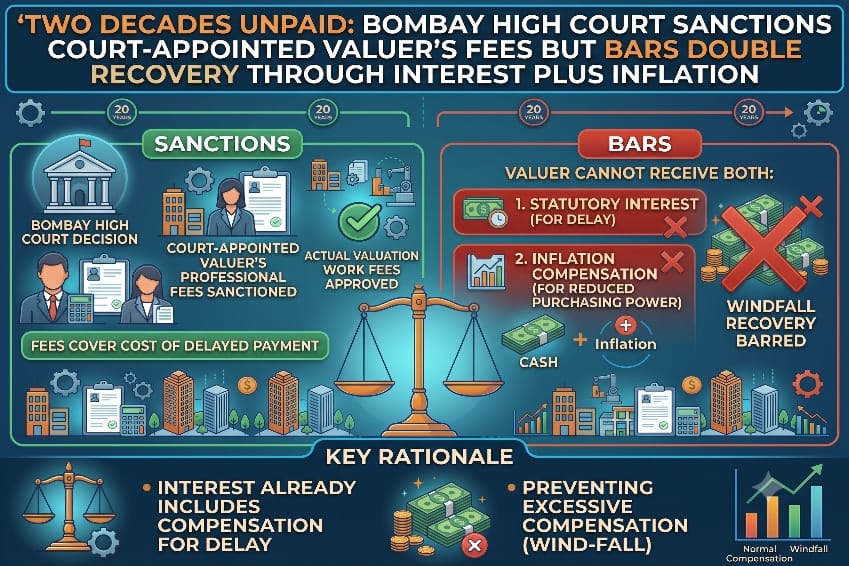
M/s. Kuber Mutual Benefits Ltd. & Ors. v. The State of Maharashtra & Ors. | High Court of Judicature at Bombay Appellate Side | 3rd September, 2026 A Court Receiver's Report…
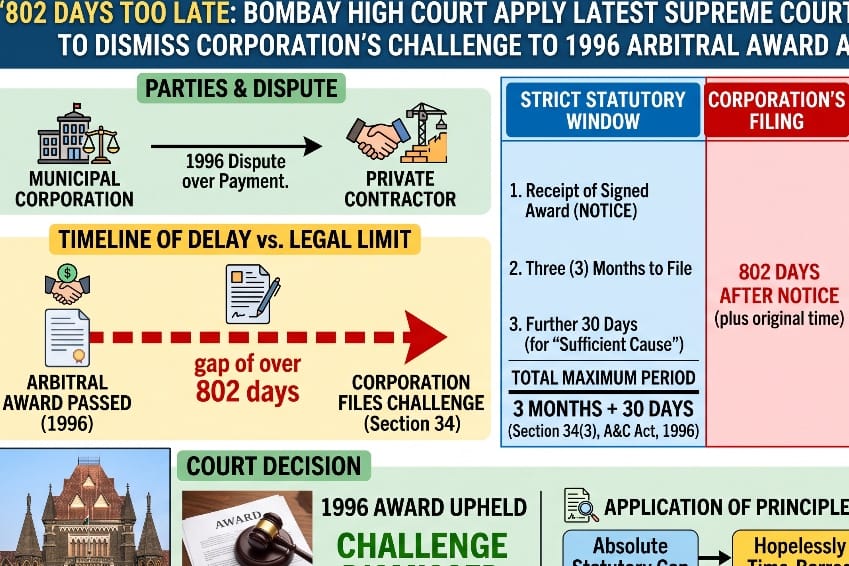
The Municipal Corporation of Greater Bombay v. M/s. Atul Raj Builders Pvt. Ltd. | High Court of Judicature at Bombay Ordinary Original Civil Jurisdiction | 3rd September, 2026 A…

Devender Yadav & Anr. v. Election Commission of India & Anr. | High Court of Delhi Single Judge | Decided on: 03.09.2026 In a challenge to the Election Commission of India's…
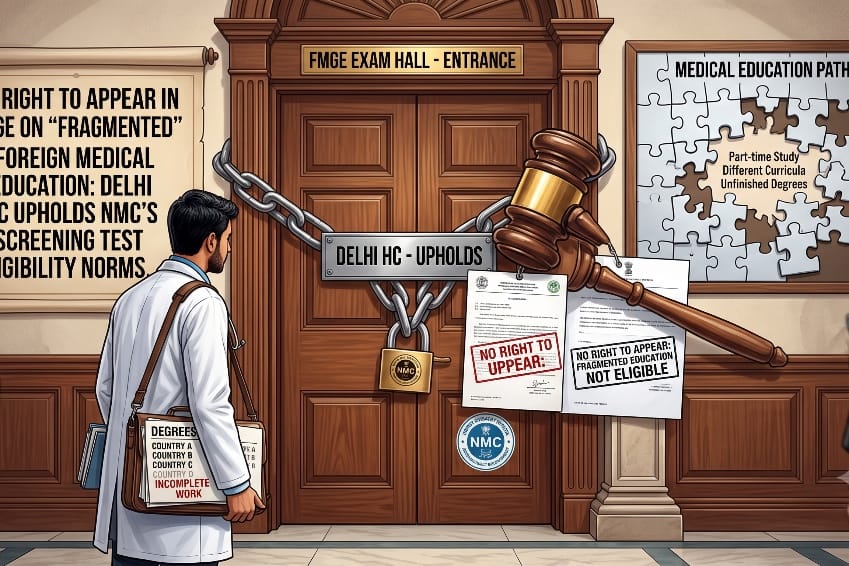
Brij Sharadbhai Bhatt & Ors. v. National Medical Commission & Ors. | High Court of Delhi Division Bench | Decided on: 03.09.2026 The Delhi High Court dismissed a challenge by…