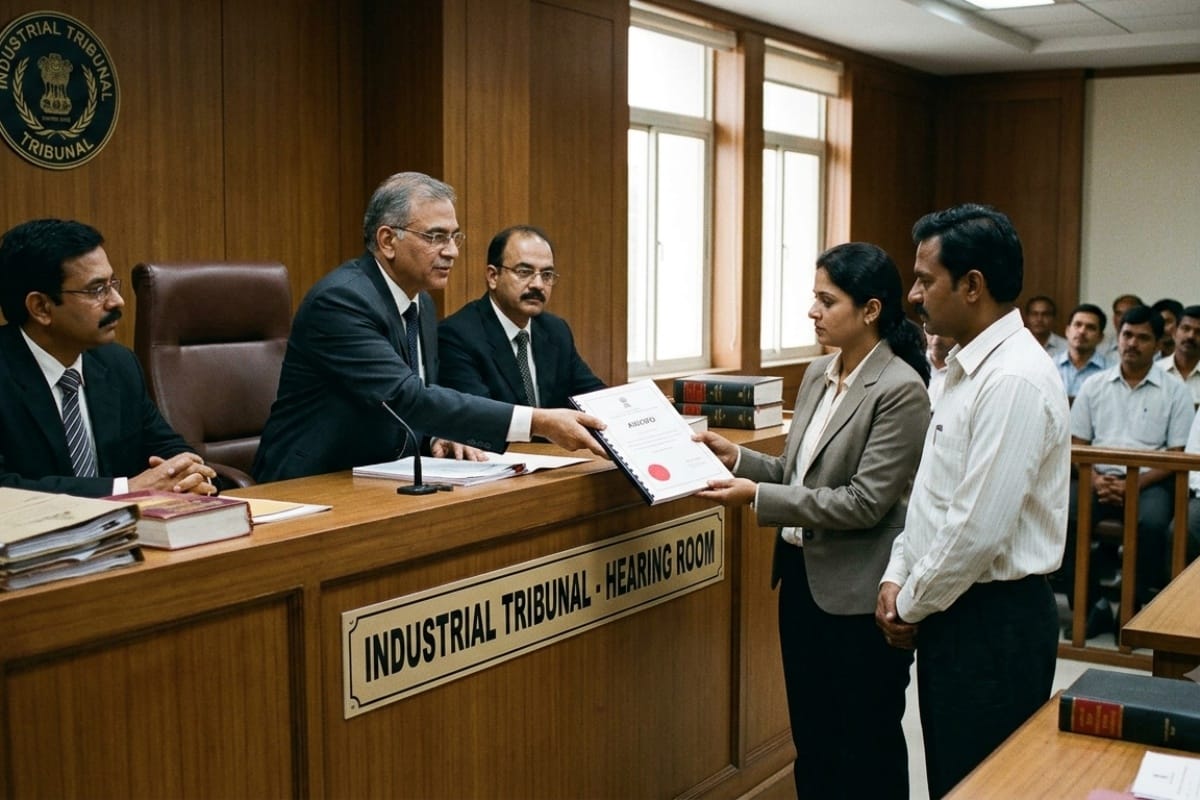
Deciding two connected writ petitions arising from a common Industrial Tribunal Award, the Delhi High Court set aside the Tribunal's direction granting hotel workmen a further…
Labour Laws
06/09/20264 min read
Update / Judgement Date
13 Nov 2025
Source
WCP News Bulletin
Author
Sakshi Bhardwaj — WCP Legal Desk
Reading Time
3 min read
The Supreme Court set aside the conviction of the appellant Govind for murder under Section 302 IPC and Section 25 of the Arms Act, holding that the prosecution failed to prove guilt beyond reasonable doubt. The Court found that the conviction—based solely on the recovery of a pistol and the ballistic report—was unsustainable because the recovery was made from an unlocked box accessible to all family members, eyewitnesses had turned hostile, the disclosure statement did not connect the weapon to the crime, and the prosecution failed to establish motive. The Court ruled that such recovery without exclusive possession, absence of credible eyewitness testimony, and non-compliance with evidentiary standards under Section 27 of the Evidence Act rendered the conviction invalid.
• The appellant Govind was convicted by the Trial Court for the murder of Promila on 12.06.2016 and the High Court upheld the conviction.
• The FIR originally stated that three unknown men in a car shot the deceased; no accused was named at that time.
• Five days later, the complainant (PW-1) gave a supplementary statement naming Sanoj, Amit, and Govind, allegedly based on “his own inquiry.”
• During the trial, both alleged eyewitnesses—PW-1 Pradeep and PW-5 Sandeep—turned hostile and stated that they had not seen the incident.
• The conviction was ultimately based on:
– recovery of one pistol and two live cartridges from Govind’s house, and
– an FSL report linking the recovered weapon to the bullet.
• Hostile witnesses: The Court noted that both main eyewitnesses did not support the prosecution and denied witnessing the murder, severely weakening the entire case.
• Recovery doubtful: The pistol was recovered from an unlocked iron box inside the house, accessible to all family members. No independent witnesses were present at the time of recovery.
• Disclosure inadmissible: The Court held that Govind’s disclosure statement did not specifically state that the recovered pistol was used in the crime, making it insufficient under Section 27 of the Evidence Act.
• Chain of custody: The seized items were deposited in the forensic lab after 19 days, with no explanation of how they were stored or guarded in the meantime.
• Motive unproved: Though the prosecution suggested a property dispute, the Court found no evidence that Govind had any motive, especially when co-accused with stronger motives were acquitted.
• Legal standard: A conviction cannot rest solely on doubtful recovery and an FSL report when all other substantive evidence—eyewitness accounts, motive, independent corroboration—is absent.
Consequently, the Supreme Court quashed the conviction and acquitted Govind.
• Section 302, Indian Penal Code – Punishment for murder.
• Section 25, Arms Act, 1959 – Punishment for possession of illegal weapons.
• Section 27, Indian Evidence Act, 1872 – Admissibility of information given by an accused leading to discovery.
• Article 136, Constitution of India – Supreme Court’s jurisdiction in criminal appeals.
Citation: 2025 INSC 1318
Case: Govind v. State of Haryana
Court: Supreme Court of India
Coram: Justice J.K. Maheshwari
Date of Decision: 14 November 2025
Criminal Appeal No.: 5641 of 2024
Deciding two connected writ petitions arising from a common Industrial Tribunal Award, the Delhi High Court set aside the Tribunal's direction granting hotel workmen a further…
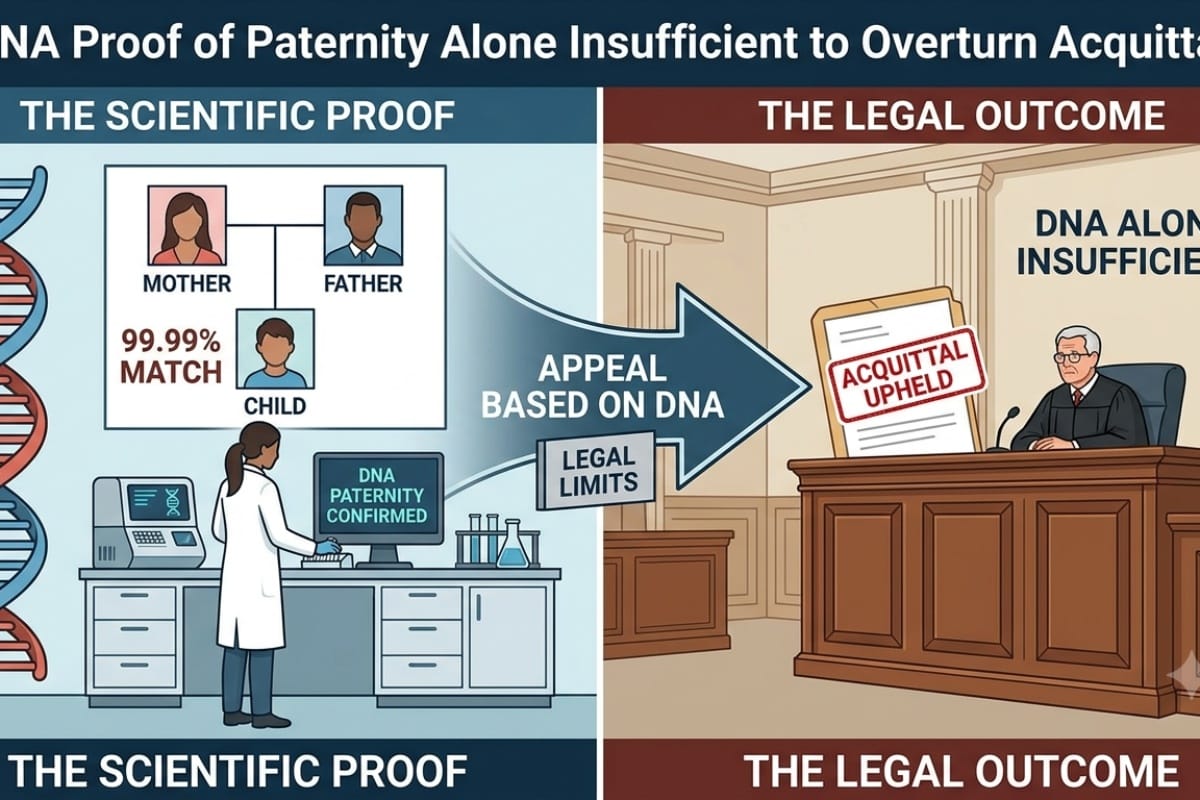
Headnote The Delhi High Court dismissed a prosecutrix's appeal against acquittal of the accused on charges under Sections 328/376 2 n /377/506/509 IPC, despite DNA evidence…
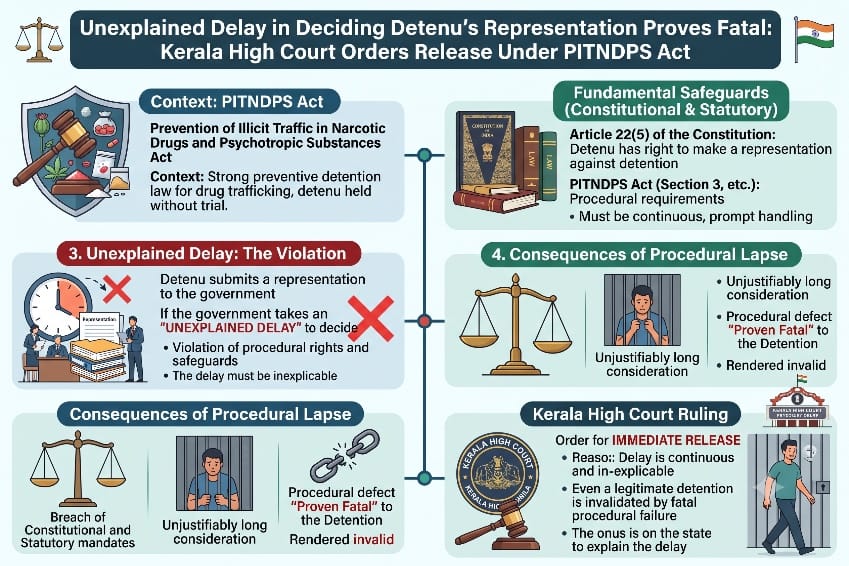
Fathimath Thasneem V.K. v. Union of India and Others | High Court of Kerala at Ernakulam | 3rd September, 2026 A habeas corpus writ petition by the wife of a detenu challenging…
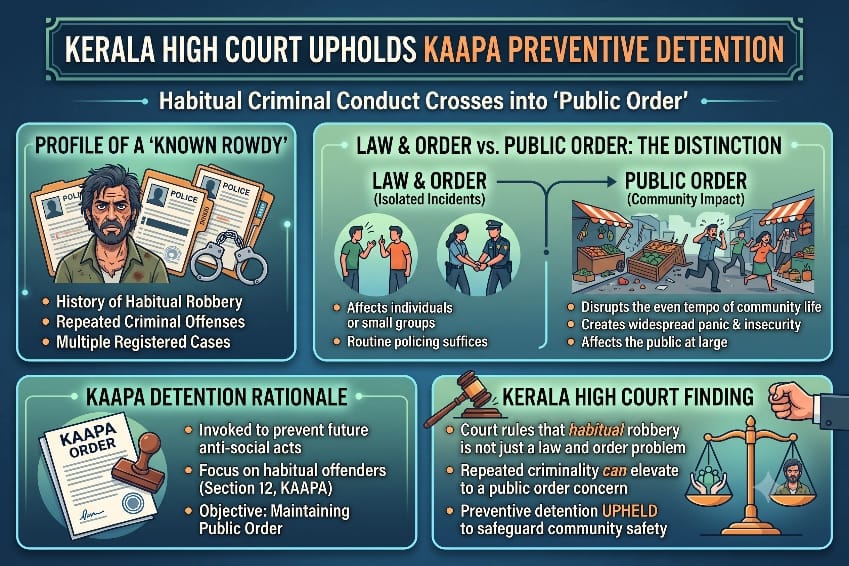
Thasmitha Abukutty v. State of Kerala and Others | High Court of Kerala at Ernakulam | 2nd September, 2026 A writ petition by the wife of a preventive detenu challenging a…
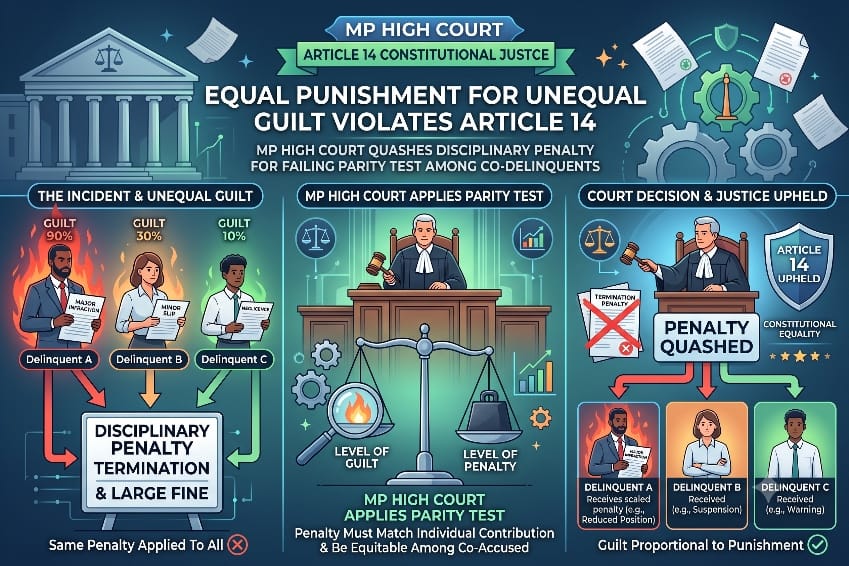
Brahm Kishore Dixit v. The State of Madhya Pradesh and Others | High Court of Madhya Pradesh, Gwalior | 1st September, 2026 A writ petition under Article 226 by a police Assistant…
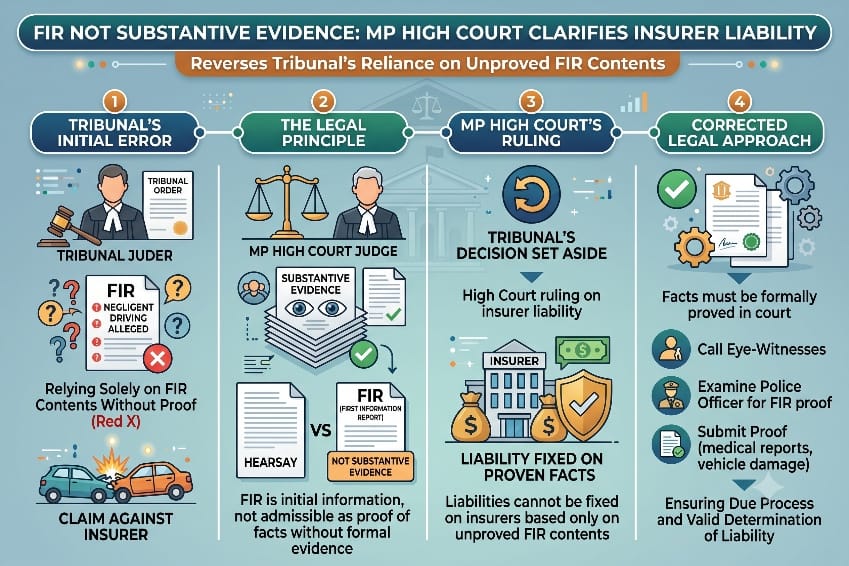
Anil Kumar Patel v. Smt. Munni Bai Barman and Others | High Court of Madhya Pradesh, Jabalpur | 1st September, 2026 A Motor Vehicle Act appeal under Section 173 1 against a Claims…
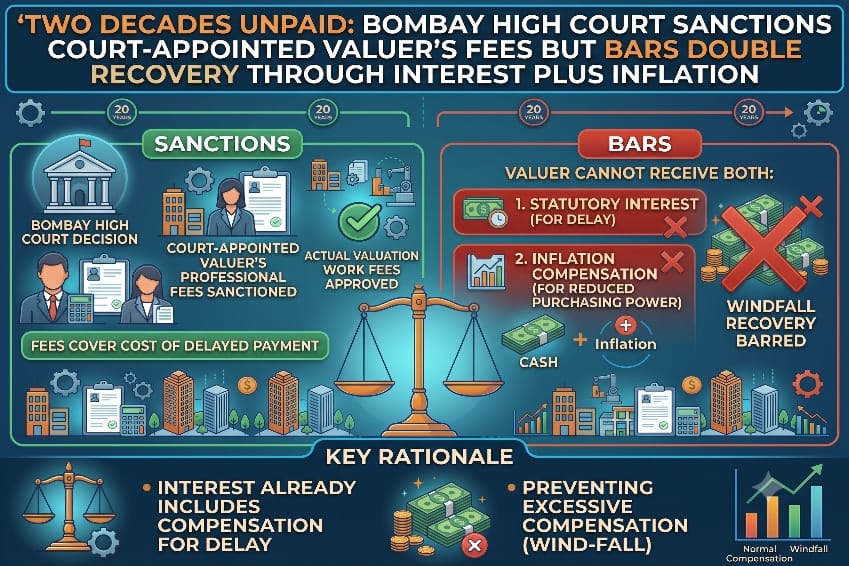
M/s. Kuber Mutual Benefits Ltd. & Ors. v. The State of Maharashtra & Ors. | High Court of Judicature at Bombay Appellate Side | 3rd September, 2026 A Court Receiver's Report…
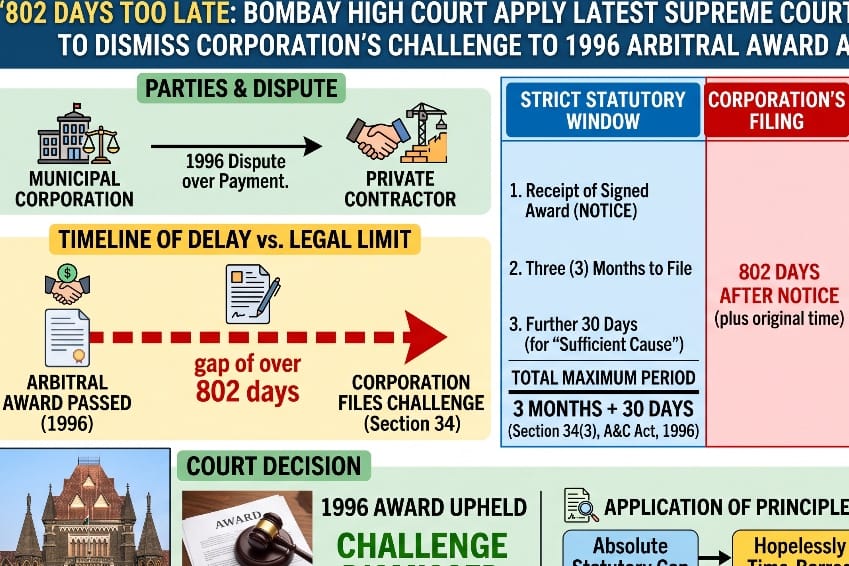
The Municipal Corporation of Greater Bombay v. M/s. Atul Raj Builders Pvt. Ltd. | High Court of Judicature at Bombay Ordinary Original Civil Jurisdiction | 3rd September, 2026 A…
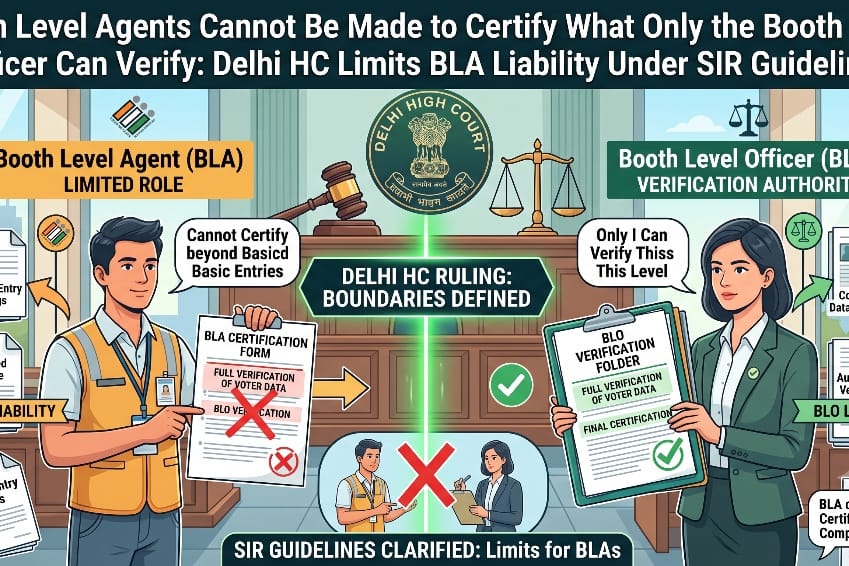
Devender Yadav & Anr. v. Election Commission of India & Anr. | High Court of Delhi Single Judge | Decided on: 03.09.2026 In a challenge to the Election Commission of India's…
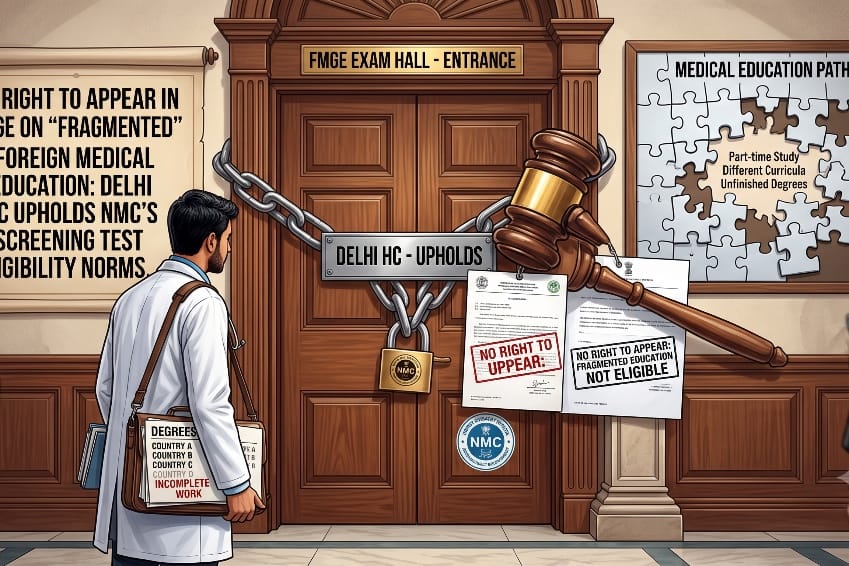
Brij Sharadbhai Bhatt & Ors. v. National Medical Commission & Ors. | High Court of Delhi Division Bench | Decided on: 03.09.2026 The Delhi High Court dismissed a challenge by…