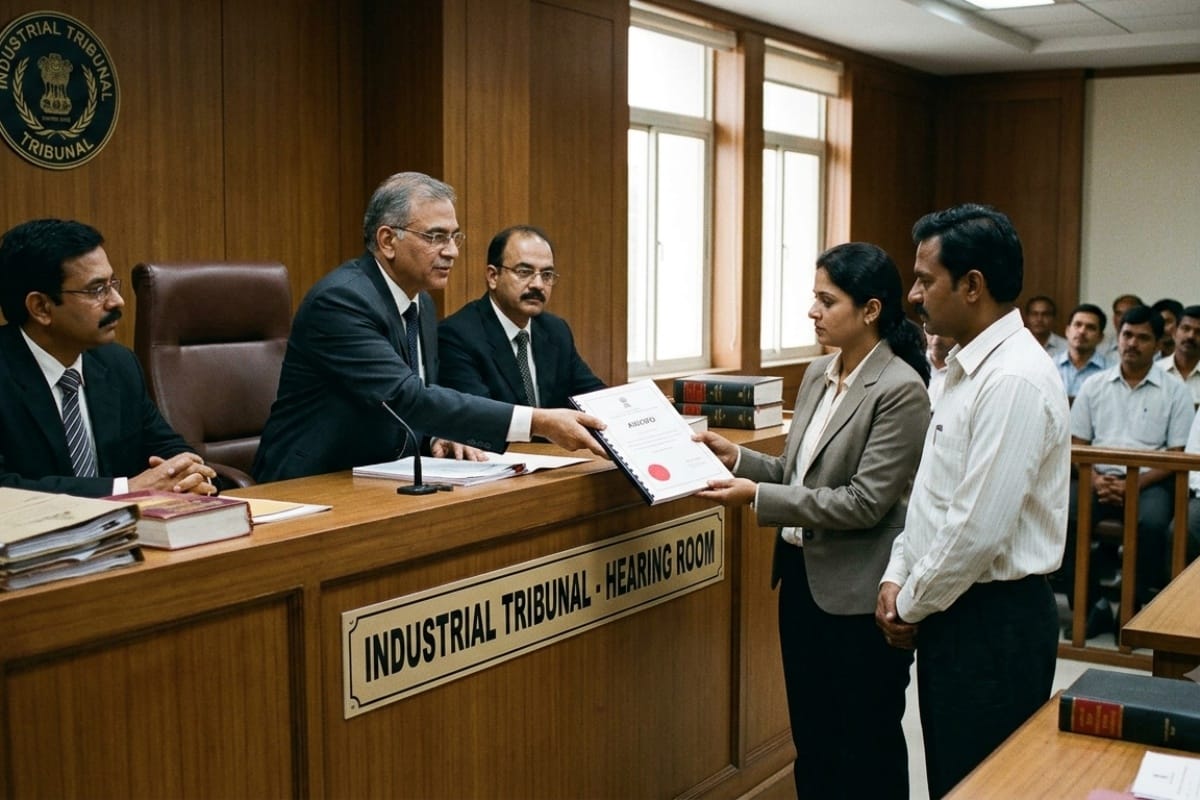
Deciding two connected writ petitions arising from a common Industrial Tribunal Award, the Delhi High Court set aside the Tribunal's direction granting hotel workmen a further…
Labour Laws
06/09/20264 min read
Update / Judgement Date
04 Nov 2025
Source
WCP News Bulletin
Author
Sakshi Bhardwaj — WCP Legal Desk
Reading Time
4 min read
The Supreme Court held that a Magistrate’s order referring a private complaint for police investigation under Section 156(3) of the Code of Criminal Procedure (CrPC) cannot be quashed merely for procedural lapses if such action was taken in good faith. The Court observed that irregularities of this nature are curable under Section 460 CrPC, and the High Court erred in treating the matter as a purely civil dispute when prima facie evidence of forgery and fabrication of documents existed. Accordingly, the Supreme Court set aside the Karnataka High Court’s orders quashing the investigation and restored the Magistrate’s referral for police investigation.
• The appellant, Sadiq B. Hanchinmani, filed a private complaint (PCR No. 1/2018) before JMFC, Belagavi, alleging offences under Sections 120B, 201, 419, 471, 468, and 420 IPC against the respondents concerning a forged Rent Agreement and illegal possession of disputed property.
• The dispute arose after the appellant’s civil suit (O.S. No. 43/2009) challenging a sale deed was dismissed in 2013; however, his appeal (RFA No. 4095/2013) was pending before the Karnataka High Court.
• During the pendency of the appeal, respondents allegedly broke open the locks of the property and fabricated a Rent Agreement dated 20.05.2013 using a fake e-stamp paper, despite a status quo order initially granted by the High Court.
• An inquiry by the Registration Department confirmed the e-stamp paper was counterfeit, and the District Registrar directed that a criminal case be registered.
• The JMFC referred the matter for investigation under Section 156(3) CrPC, leading to registration of Crime No. 12/2018.
• The Karnataka High Court, Dharwad Bench, subsequently quashed the Magistrate’s referral orders in CRLP Nos. 100549/2018 and 100651/2018, holding that the Magistrate had failed to apply judicial mind and that the matter was civil in nature.
• The Supreme Court noted that there was clear prima facie evidence of forgery, as official records confirmed that the e-stamp paper used in the Rent Agreement was fake.
• The Court held that the High Court erred in quashing the investigation at the threshold, ignoring the distinction between civil disputes and criminal acts involving forgery, fabrication, and fraud.
• It reaffirmed that forged documents used to mislead a court or obtain possession of property give rise to a criminal offence independent of any civil proceedings.
• Even if the Magistrate had not meticulously recorded reasons while invoking Section 156(3), such an omission was a procedural irregularity, not an illegality, and is protected under Section 460(e) CrPC when done in good faith.
• The Court relied on the principle from Neeharika Infrastructure Pvt. Ltd. v. State of Maharashtra (2021) 19 SCC 401, that courts should not interfere with investigations unless there is clear abuse of process.
• The Supreme Court set aside the High Court’s quashing orders dated 24.07.2019 and 18.11.2021.
• It restored the Magistrate’s order directing investigation under Section 156(3) CrPC and revived Crime No. 12/2018.
• The Court directed that the police investigation proceed in accordance with law and that no accused be granted blanket immunity merely on the ground of pending civil litigation.
• Section 156(3), Code of Criminal Procedure, 1973 – Power of Magistrate to order police investigation.
• Section 460(e), Code of Criminal Procedure, 1973 – Protection for irregular acts done by a Magistrate in good faith.
• Sections 120B, 201, 419, 420, 468 & 471, Indian Penal Code, 1860 – Criminal conspiracy, forgery, cheating, and use of forged documents.
• Article 136, Constitution of India – Special leave to appeal before the Supreme Court.
The Supreme Court restored the investigation, ruling that procedural irregularities by the Magistrate under Section 156(3) do not vitiate proceedings where prima facie criminality exists. Civil and criminal remedies may coexist when allegations involve deliberate fabrication and fraud.
Citation: 2025 INSC 1282
Case: Sadiq B. Hanchinmani v. State of Karnataka & Ors.
Court: Supreme Court of India
Coram: Hon’ble Mr. Justice Ahsanuddin Amanullah
Date of Decision: 2025
Appeal: Criminal Appeal arising out of SLP (Crl.) No.11336 of 2022 and Diary No.39619 of 2022
Jurisdiction: Criminal Appellate
Deciding two connected writ petitions arising from a common Industrial Tribunal Award, the Delhi High Court set aside the Tribunal's direction granting hotel workmen a further…
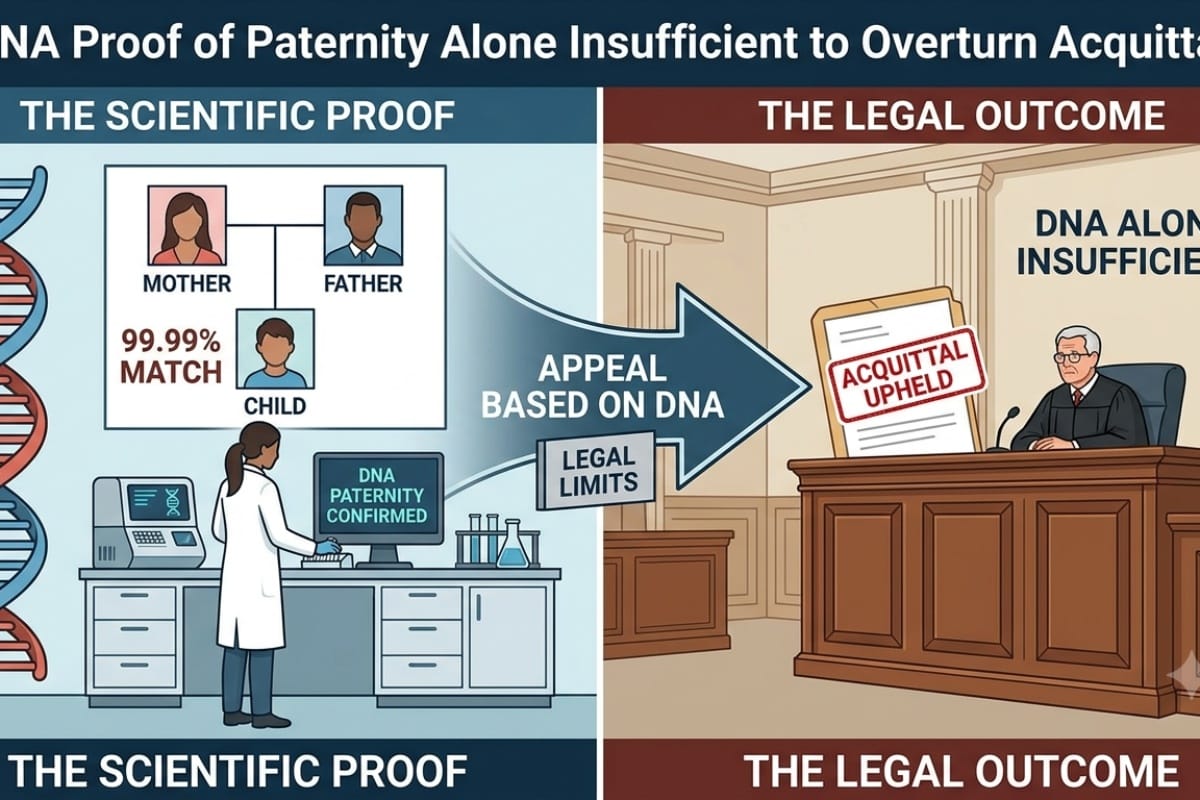
Headnote The Delhi High Court dismissed a prosecutrix's appeal against acquittal of the accused on charges under Sections 328/376 2 n /377/506/509 IPC, despite DNA evidence…
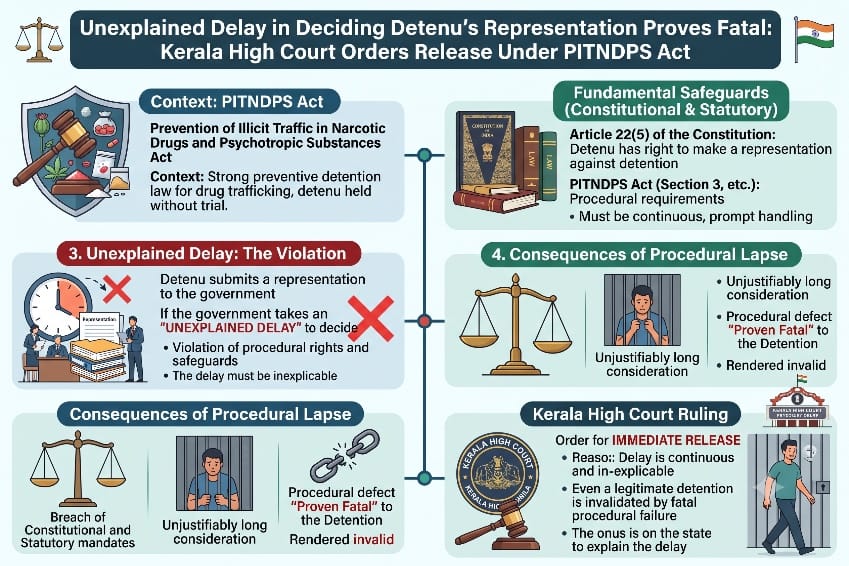
Fathimath Thasneem V.K. v. Union of India and Others | High Court of Kerala at Ernakulam | 3rd September, 2026 A habeas corpus writ petition by the wife of a detenu challenging…
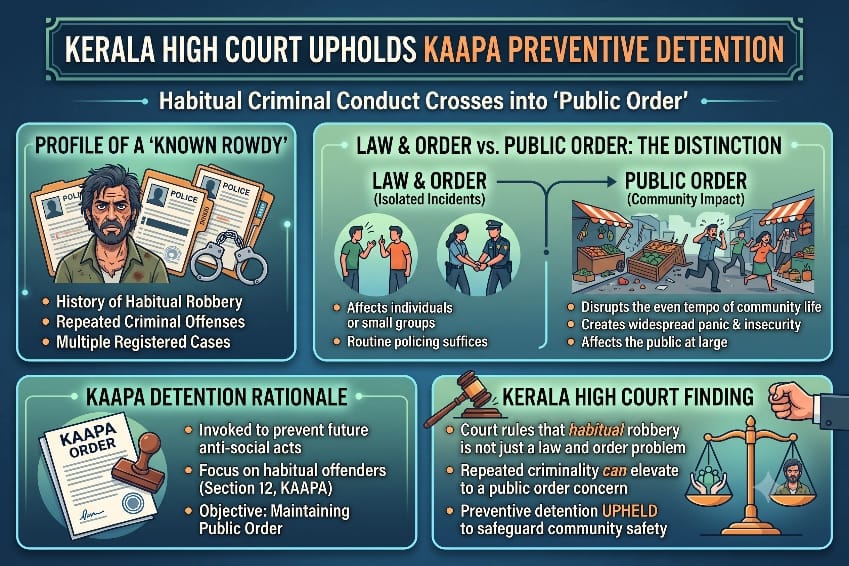
Thasmitha Abukutty v. State of Kerala and Others | High Court of Kerala at Ernakulam | 2nd September, 2026 A writ petition by the wife of a preventive detenu challenging a…
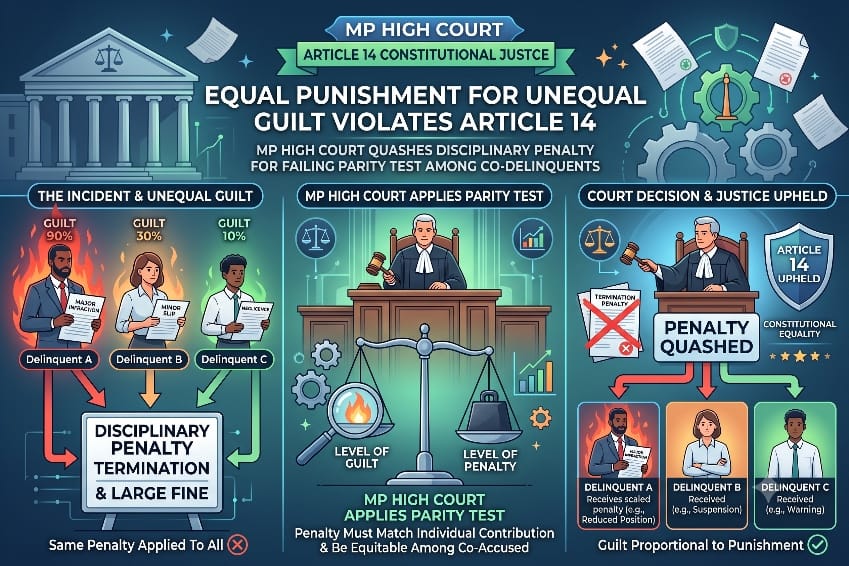
Brahm Kishore Dixit v. The State of Madhya Pradesh and Others | High Court of Madhya Pradesh, Gwalior | 1st September, 2026 A writ petition under Article 226 by a police Assistant…
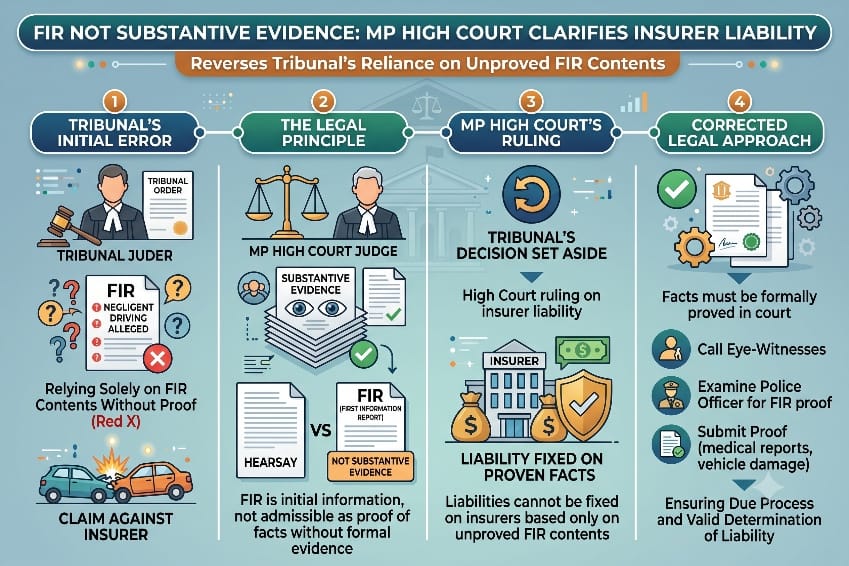
Anil Kumar Patel v. Smt. Munni Bai Barman and Others | High Court of Madhya Pradesh, Jabalpur | 1st September, 2026 A Motor Vehicle Act appeal under Section 173 1 against a Claims…
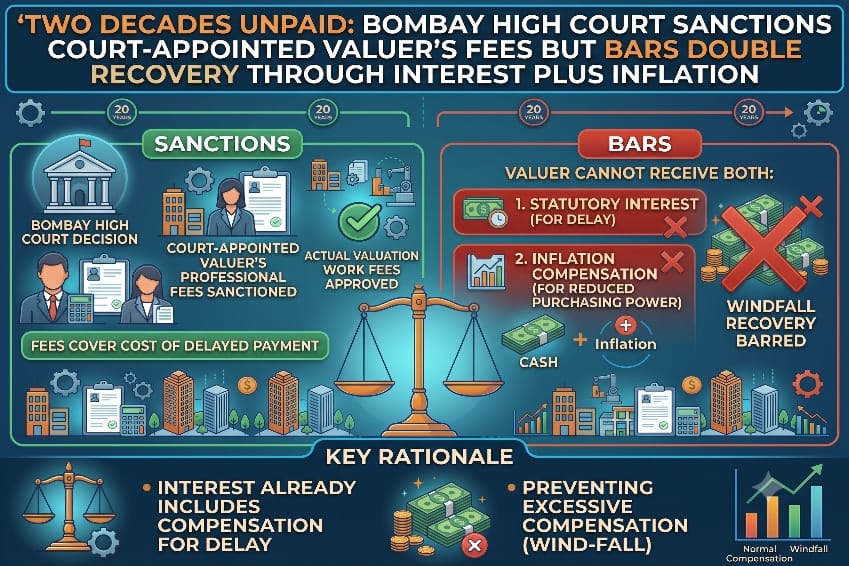
M/s. Kuber Mutual Benefits Ltd. & Ors. v. The State of Maharashtra & Ors. | High Court of Judicature at Bombay Appellate Side | 3rd September, 2026 A Court Receiver's Report…
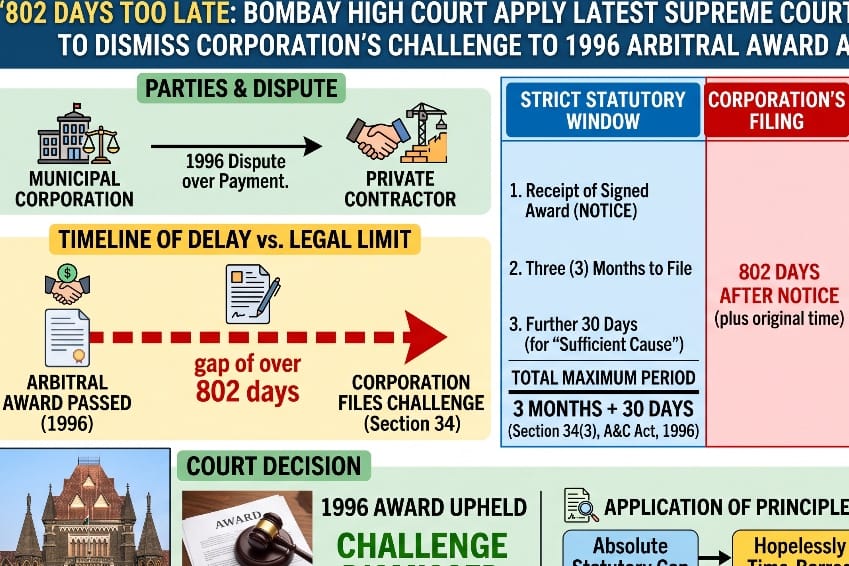
The Municipal Corporation of Greater Bombay v. M/s. Atul Raj Builders Pvt. Ltd. | High Court of Judicature at Bombay Ordinary Original Civil Jurisdiction | 3rd September, 2026 A…
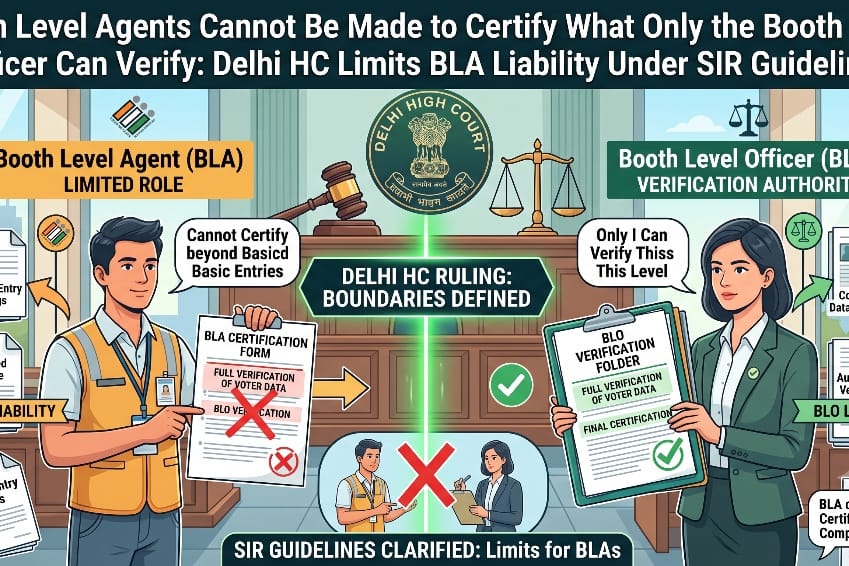
Devender Yadav & Anr. v. Election Commission of India & Anr. | High Court of Delhi Single Judge | Decided on: 03.09.2026 In a challenge to the Election Commission of India's…
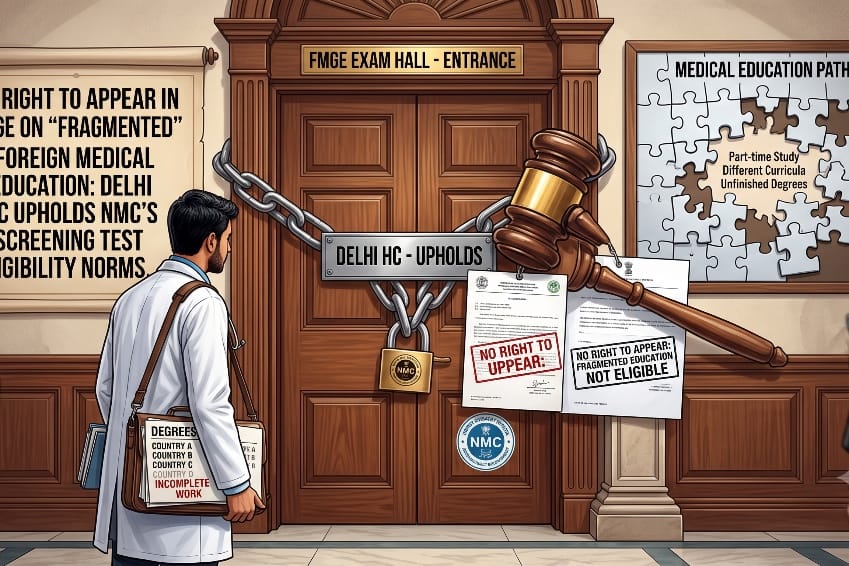
Brij Sharadbhai Bhatt & Ors. v. National Medical Commission & Ors. | High Court of Delhi Division Bench | Decided on: 03.09.2026 The Delhi High Court dismissed a challenge by…