Deciding two connected writ petitions arising from a common Industrial Tribunal Award, the Delhi High Court set aside the Tribunal's direction granting hotel workmen a further…
Labour Laws
06/09/20264 min read
Update / Judgement Date
21 Dec 2025
Source
WCP News Bulletin
Author
Sakshi Bhardwaj — WCP Legal Desk
Reading Time
4 min read
The Supreme Court quashed criminal proceedings under Section 498A of the IPC and Sections 3 and 4 of the Dowry Prohibition Act, holding that vague, omnibus and general allegations arising out of matrimonial discord do not amount to “cruelty” as defined under law. The Court reiterated that ordinary wear and tear of marriage, financial disagreements, or lack of emotional support—without specific instances of harassment or unlawful dowry demand—cannot justify criminal prosecution. The judgment reaffirms the need for courts to prevent misuse of Section 498A IPC as a tool for personal vendetta.
• The complainant-wife and the accused-husband, both software engineers working in the USA, were married on 04.12.2016 at Tirumala and lived together in Michigan, USA.
• A male child was born to the couple on 26.04.2019.
• Due to matrimonial discord, the complainant returned to India with the child on 05.08.2019 and began residing at her parental home in Hyderabad.
• On 11.01.2022, the accused-husband issued a legal notice seeking restitution of conjugal rights and requesting the complainant to return to the USA.
• On 24.01.2022, the complainant lodged a complaint alleging cruelty and dowry harassment.
• FIR No.29 of 2022 dated 27.01.2022 was registered at Saroornagar Women Police Station under Section 498A IPC and Sections 3 and 4 of the Dowry Prohibition Act.
• A chargesheet was filed, leading to Complaint Case No.1067 of 2022 before the Additional Metropolitan Magistrate, Ranga Reddy District.
• The parents-in-law and other relatives (accused Nos.2 to 6) were granted quashing of proceedings by the Telangana High Court on 23.04.2025.
• The husband’s petition for quashing under Section 482 CrPC was dismissed by the High Court on 27.04.2023, prompting the present appeal before the Supreme Court.
• Courts must exercise heightened caution in matrimonial disputes to prevent abuse of the criminal justice system.
• Section 498A IPC criminalises only such conduct that falls squarely within the statutory definition of “cruelty”.
• Allegations reflecting normal wear and tear of marriage cannot be elevated to criminal offences.
• Sending money to parents, maintaining financial control, or asking for expense accounts—even if true—do not amount to cruelty in the absence of grave mental or physical harm.
• Allegations regarding lack of care during pregnancy, postpartum taunts, or emotional insensitivity, though undesirable, do not satisfy the legal threshold of cruelty under Section 498A IPC.
• The FIR contained vague, omnibus and generalized allegations without specifying dates, instances, or acts attributable to the accused-husband.
• Mere assertion of dowry demand without substantiating material does not fulfil the ingredients of Sections 3 and 4 of the Dowry Prohibition Act.
• Criminal law cannot be used as a weapon for settling personal scores or matrimonial grievances.
• The case squarely fell within categories (1) and (7) of State of Haryana v. Bhajan Lal, warranting quashing to prevent abuse of process.
• Reliance was placed on Dara Lakshmi Narayana v. State of Telangana (2025) 3 SCC 735, cautioning against implicating family members on vague allegations in matrimonial disputes.
Decision• The Supreme Court set aside the Telangana High Court order dated 27.04.2023.
• FIR No.29 of 2022 dated 27.01.2022 and Complaint Case No.1067 of 2022 were quashed.
• The appeal was allowed.
• The Court clarified that observations in the judgment shall not affect any pending matrimonial or civil proceedings between the parties.
• Section 498A, Indian Penal Code, 1860 – Cruelty by husband or relatives of husband.
• Sections 3 & 4, Dowry Prohibition Act, 1961 – Penalty for giving, taking or demanding dowry.
• Section 482, Code of Criminal Procedure, 1973 – Inherent powers of High Court.
• Article 226, Constitution of India – Writ jurisdiction (contextual reference).
• State of Haryana v. Bhajan Lal, 1992 Supp (1) SCC 335.
• Dara Lakshmi Narayana v. State of Telangana, (2025) 3 SCC 735.
Deciding two connected writ petitions arising from a common Industrial Tribunal Award, the Delhi High Court set aside the Tribunal's direction granting hotel workmen a further…
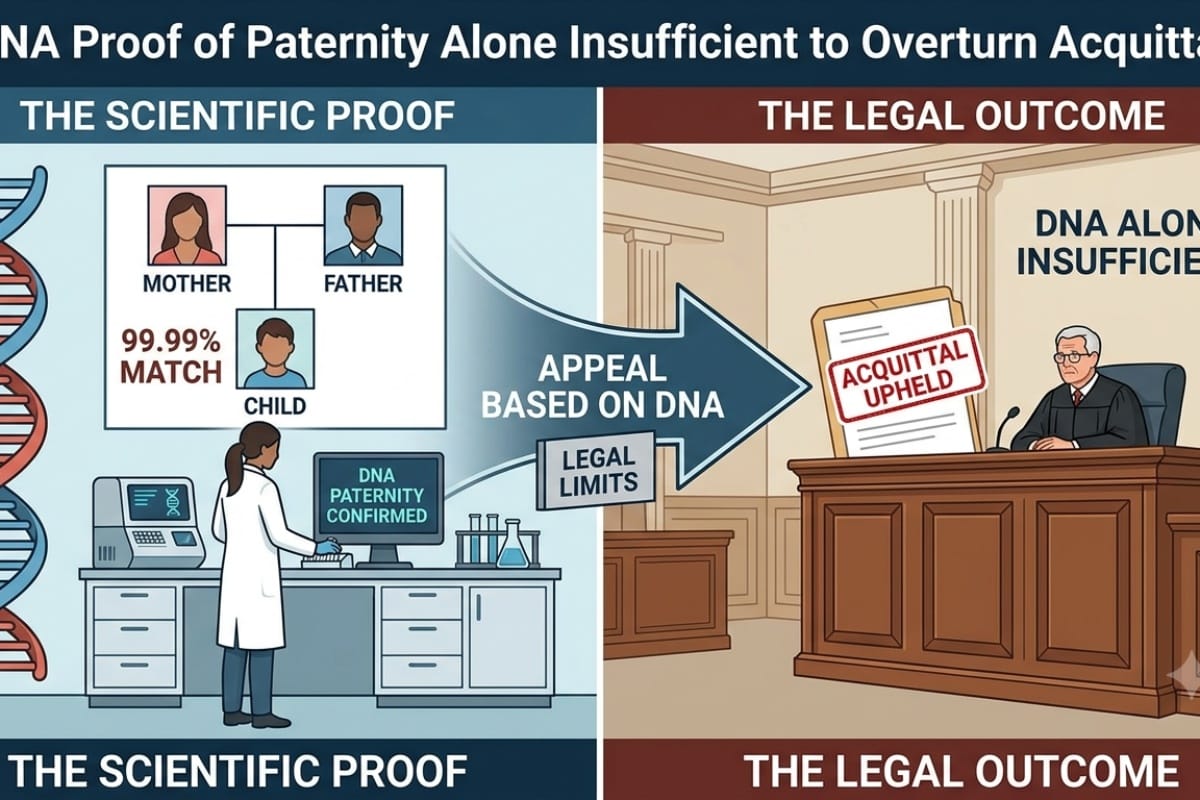
Headnote The Delhi High Court dismissed a prosecutrix's appeal against acquittal of the accused on charges under Sections 328/376 2 n /377/506/509 IPC, despite DNA evidence…
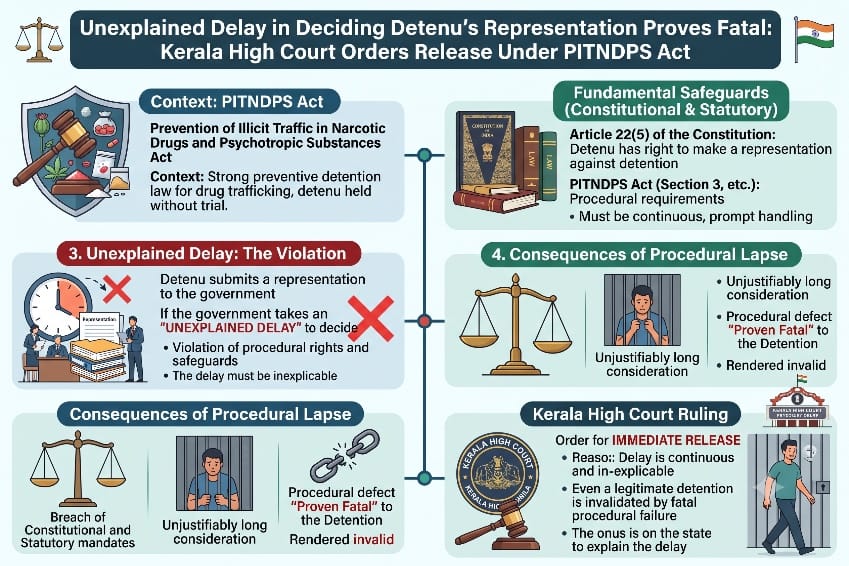
Fathimath Thasneem V.K. v. Union of India and Others | High Court of Kerala at Ernakulam | 3rd September, 2026 A habeas corpus writ petition by the wife of a detenu challenging…
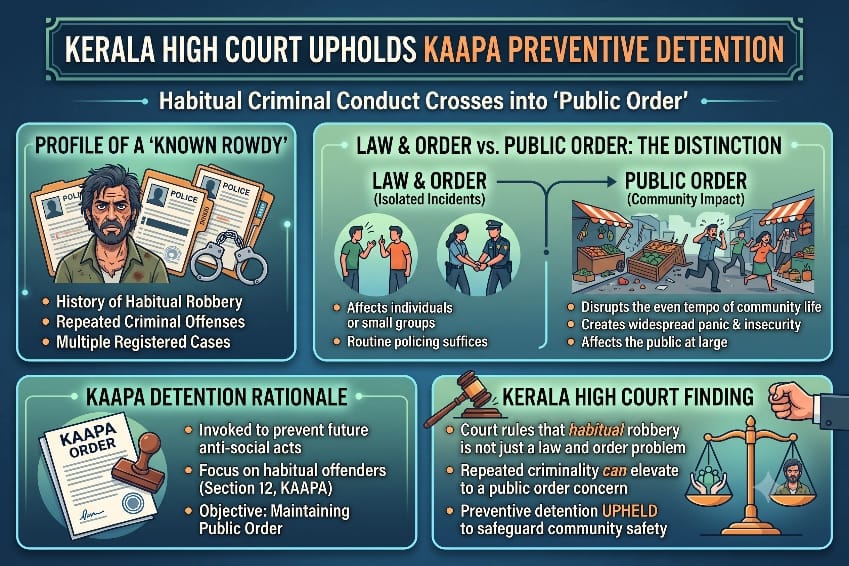
Thasmitha Abukutty v. State of Kerala and Others | High Court of Kerala at Ernakulam | 2nd September, 2026 A writ petition by the wife of a preventive detenu challenging a…
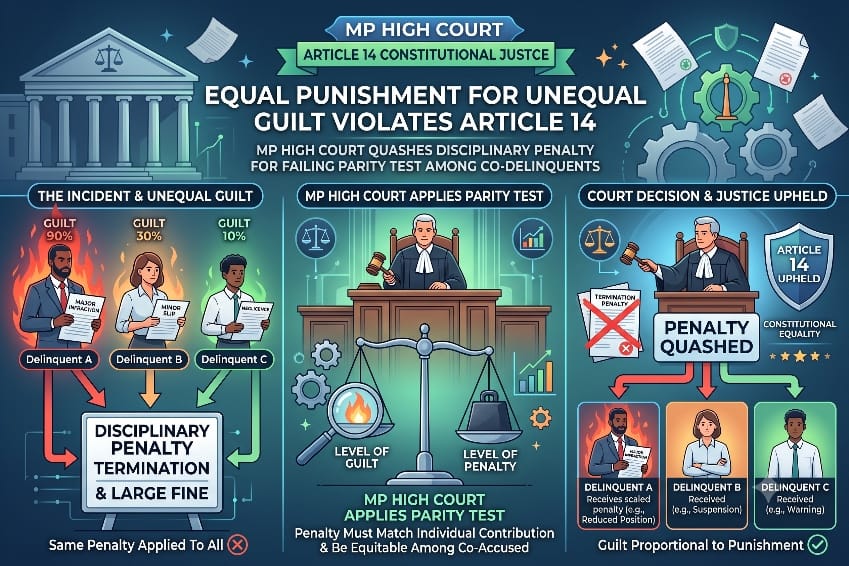
Brahm Kishore Dixit v. The State of Madhya Pradesh and Others | High Court of Madhya Pradesh, Gwalior | 1st September, 2026 A writ petition under Article 226 by a police Assistant…
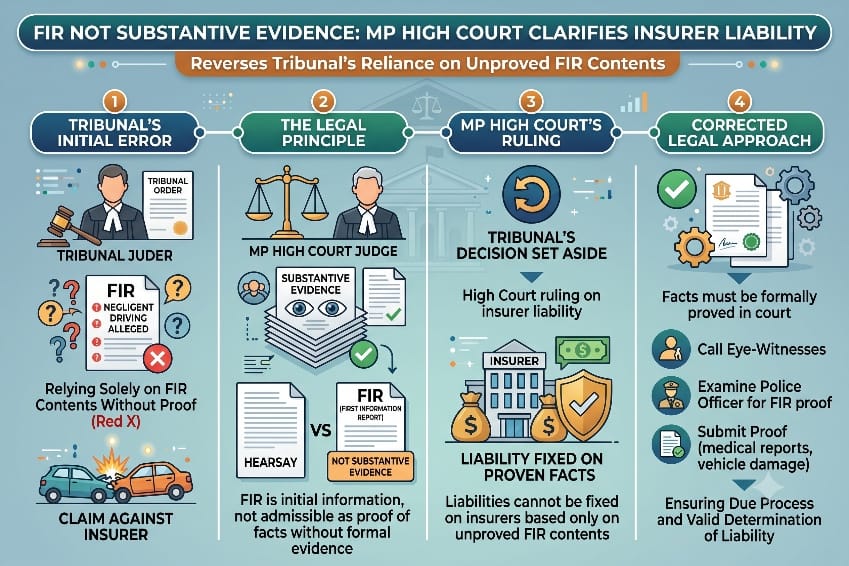
Anil Kumar Patel v. Smt. Munni Bai Barman and Others | High Court of Madhya Pradesh, Jabalpur | 1st September, 2026 A Motor Vehicle Act appeal under Section 173 1 against a Claims…
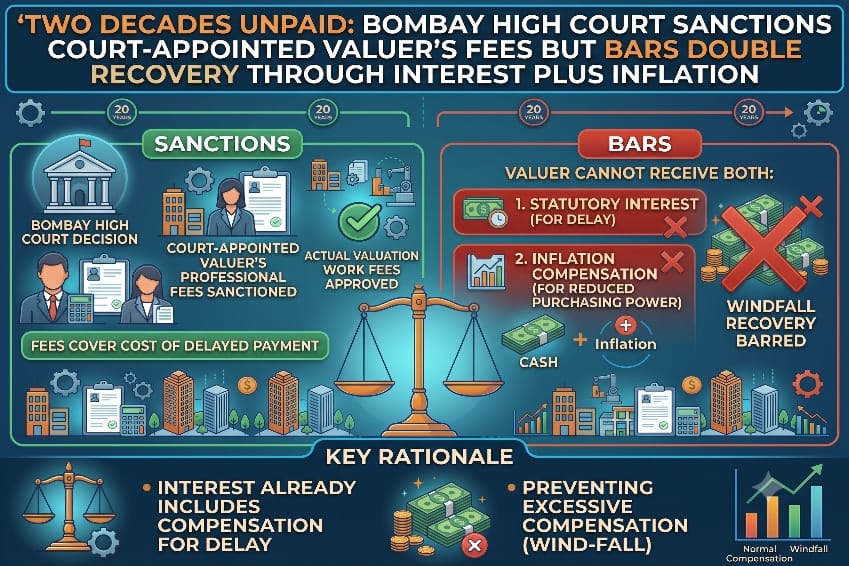
M/s. Kuber Mutual Benefits Ltd. & Ors. v. The State of Maharashtra & Ors. | High Court of Judicature at Bombay Appellate Side | 3rd September, 2026 A Court Receiver's Report…
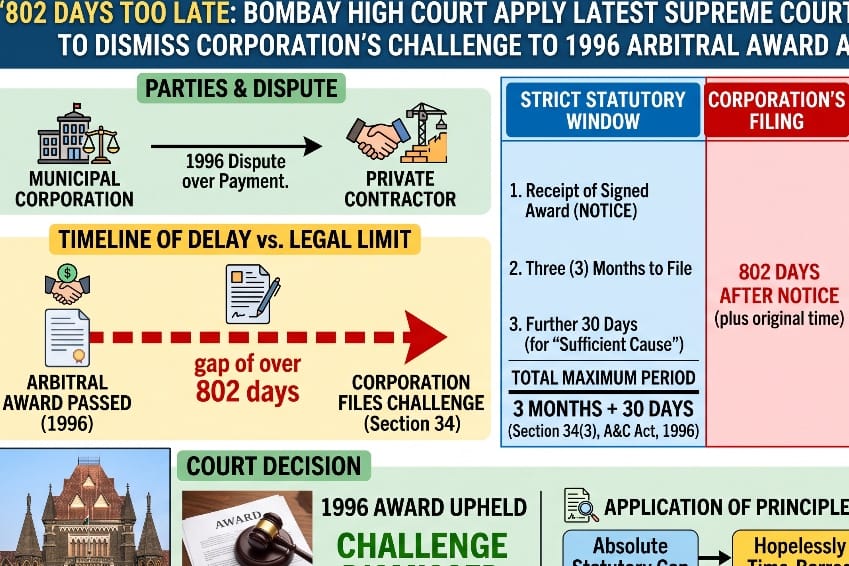
The Municipal Corporation of Greater Bombay v. M/s. Atul Raj Builders Pvt. Ltd. | High Court of Judicature at Bombay Ordinary Original Civil Jurisdiction | 3rd September, 2026 A…
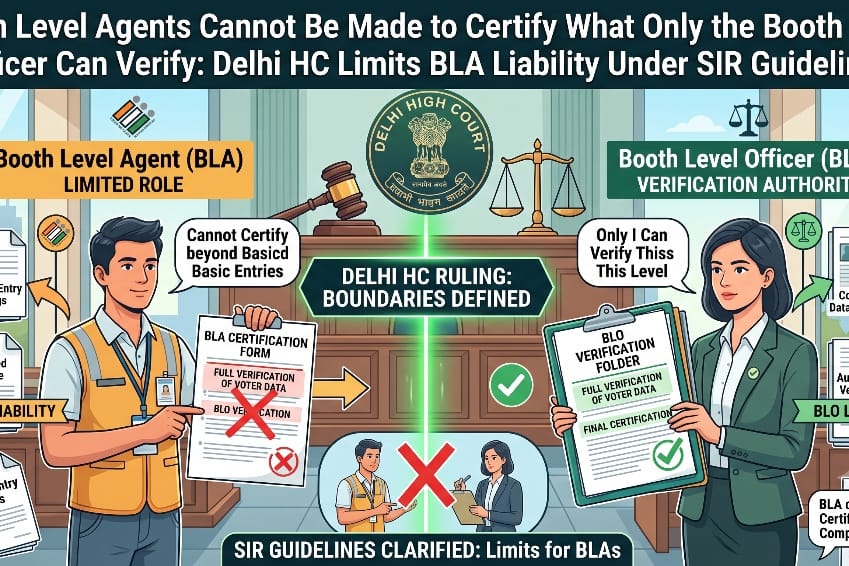
Devender Yadav & Anr. v. Election Commission of India & Anr. | High Court of Delhi Single Judge | Decided on: 03.09.2026 In a challenge to the Election Commission of India's…
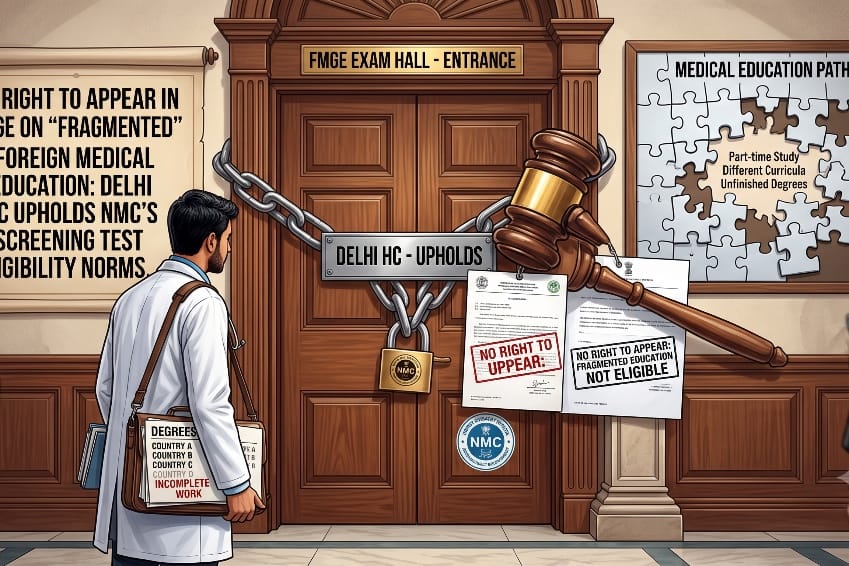
Brij Sharadbhai Bhatt & Ors. v. National Medical Commission & Ors. | High Court of Delhi Division Bench | Decided on: 03.09.2026 The Delhi High Court dismissed a challenge by…