Supreme Court Upholds Conviction in Double Murder Case, Holds Testimony of Wives Who Witnessed Husbands’ Killing Reliable
Court / Authority
Supreme Court of India
Update / Judgement Date
03 Nov 2026
Source
WCP News Bulletin
Author
Dipanshi Bansal — WCP Legal Desk
Reading Time
4 min read
View Count
5
Criminal LawAppeal Against Order
Supreme Court of India · WCP News Bulletin
Key Highlights
The Supreme Court dismissed the appeal and upheld the High Court's reversal of the trial court's acquittal and the convictions under Sections 143, 148, 302, 323, 341 read with Section 149 IPC.
The two widows who witnessed the attacks were found to be natural, credible witnesses. Their evidence was materially supported by medical evidence and the surrounding circumstances.
An appellate court can reappreciate evidence in an appeal against acquittal, but interference is warranted where the acquittal is perverse or legally unsustainable.
Where reliable direct evidence exists, motive becomes less important; here, a prior dispute between the accused side and the deceased party nevertheless supported the prosecution case.
An inquest under Section 174 CrPC has a limited purpose: ascertaining the apparent cause and circumstances of death. The absence of eyewitness names or detailed assault particulars from the inquest report does not by itself discredit eyewitness testimony.
Medical estimates based on stomach contents cannot override clear ocular evidence because digestion varies between individuals and circumstances.
The Court rejected objections based on FIR delay, minor inconsistencies and lack of independent witnesses.
Background
Mallappa and Gulappa were killed during the night of 08–09 September 2001. The prosecution alleged that the killings followed a dispute concerning compensation for a goat injured by a bull. The deceased had supported Nagappa in that dispute, providing the alleged motive.The trial court acquitted the accused, questioning eyewitness credibility, lighting, weapon recovery, FIR delay, the inquest report and medical evidence. The High Court reversed the acquittal, after which the accused approached the Supreme Court.
Key Legal Holdings
Appeal against acquittal: The appellate court has full power to review and reappreciate evidence. However, an acquittal should not be disturbed merely because another view is possible. Here, the trial court's reasoning was found perverse and unsustainable.
Full Judgement / Attachment
Full Judgement
Related witnesses: A witness does not become unreliable merely because the witness is related to the deceased. The Court found the two widows natural and trustworthy.
Scope of inquest: Section 174 CrPC, corresponding to Section 194 BNSS, concerns the apparent cause of death. Details of who committed the assault or who witnessed it are outside the essential scope of an inquest report.
Medical evidence: Digestive-process estimates are not precise enough to displace reliable eyewitness evidence concerning the timing of an occurrence.
FIR delay: Delay must be judged in context. The deaths occurred at night, the family was grieving, transport was limited and the complaint required preparation, so the delay was not considered suspicious.
Who Is Affected
Criminal litigants and defence counsel in appeals against acquittal.
Prosecution agencies and trial courts assessing eyewitness and medical evidence.
Advocates dealing with inquest reports, related witnesses and FIR delay.
Legal researchers studying Section 174 CrPC and Section 194 BNSS.
Compliance / Practical Legal Action Points
Do not treat the absence of an eyewitness's name in an inquest report as conclusive proof that the person was not an eyewitness.
Separate material contradictions from minor discrepancies when assessing witness credibility.
Treat medical estimates based on digestive contents cautiously where they conflict with clear ocular evidence.
Assess related witnesses on credibility rather than relationship alone.
In an appeal against acquittal, identify whether the trial court ignored material evidence or adopted an unreasonable approach.
Analysis & Impact
For Advocates: The judgment is useful in cases where acquittals rest on minor contradictions or technical objections to eyewitness and inquest evidence.
For Trial Courts: It reinforces a holistic assessment of evidence rather than rejecting a prosecution case on peripheral discrepancies.
For Criminal Law Researchers: The decision consolidates principles on appellate review of acquittals, related witnesses, inquest reports and medical timing evidence.
For Prosecution: Reliable direct evidence, when supported by surrounding and medical evidence, can sustain conviction despite defects that do not affect the core case.
References
Arulvelu v. State, (2009) 10 SCC 206.
Radha Mohan Singh v. State of U.P., (2006) 2 SCC 450.
Pedda Narayana v. State of A.P., (1975) 4 SCC 153.
Khujji v. State of M.P., (1991) 3 SCC 627.
Nihal Singh v. State of Punjab, [1964] 4 SCR 5.
Shivaji Sahabrao Bobade v. State of Maharashtra, (1973) 2 SCC 793.
Source & Attribution
Primary Source: Supreme Court of India, Criminal Appeal No. 2102 of 2011, 2026 INSC 1189, judgment dated 03 November 2026.
Disclaimer: This summary is an editorial and research aid based on the judgment and is not a substitute for the complete judgment or legal advice.
Supreme Court Upholds Conviction in Double Murder Case, Holds Testimony of Wives Who Witnessed Husbands’ Killing Reliable — News & Judgements | White Collar Professional
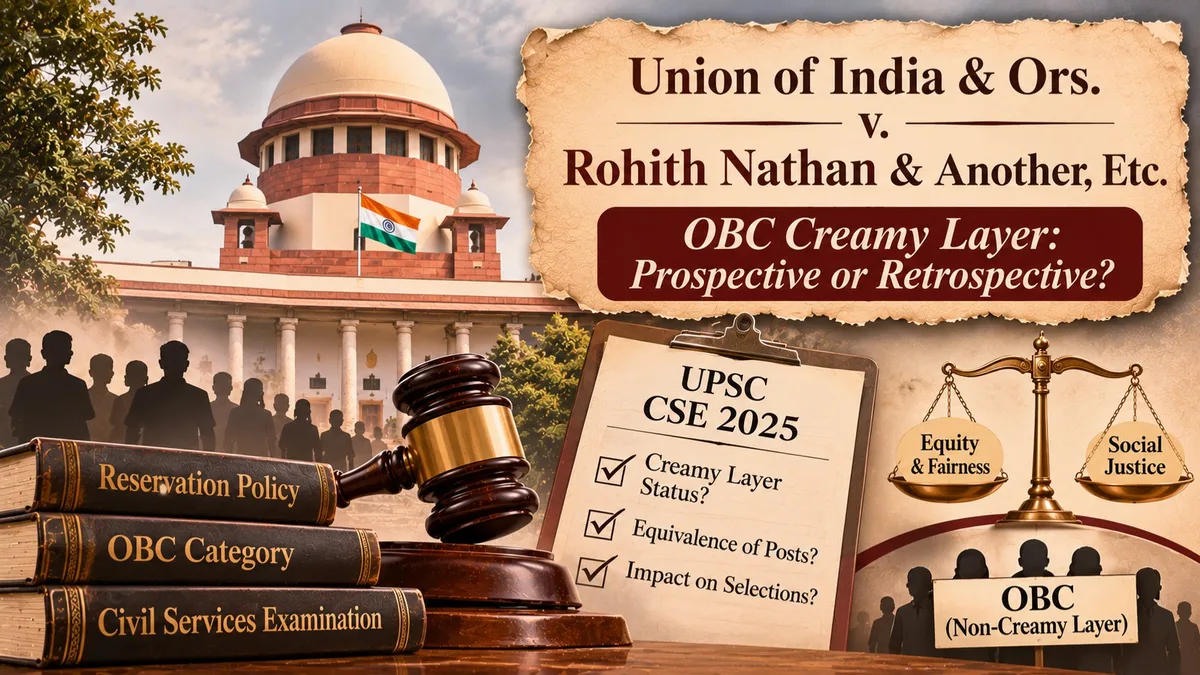
The Supreme Court clarified the temporal operation of its 11 March 2026 judgment on OBC creamy-layer status. It declined to reopen selections, appointments or seniority already…
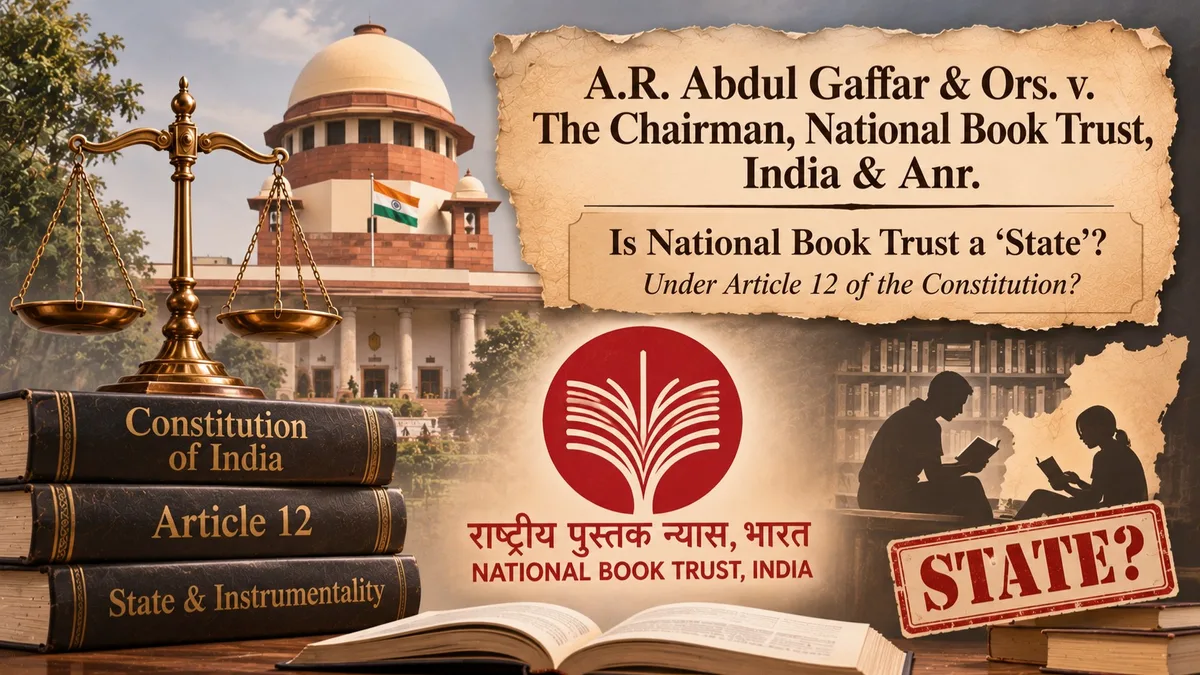
The Supreme Court upheld the Delhi High Court Full Bench decision that the National Book Trust, India is an instrumentality of the State under Article 12 of the Constitution. The…
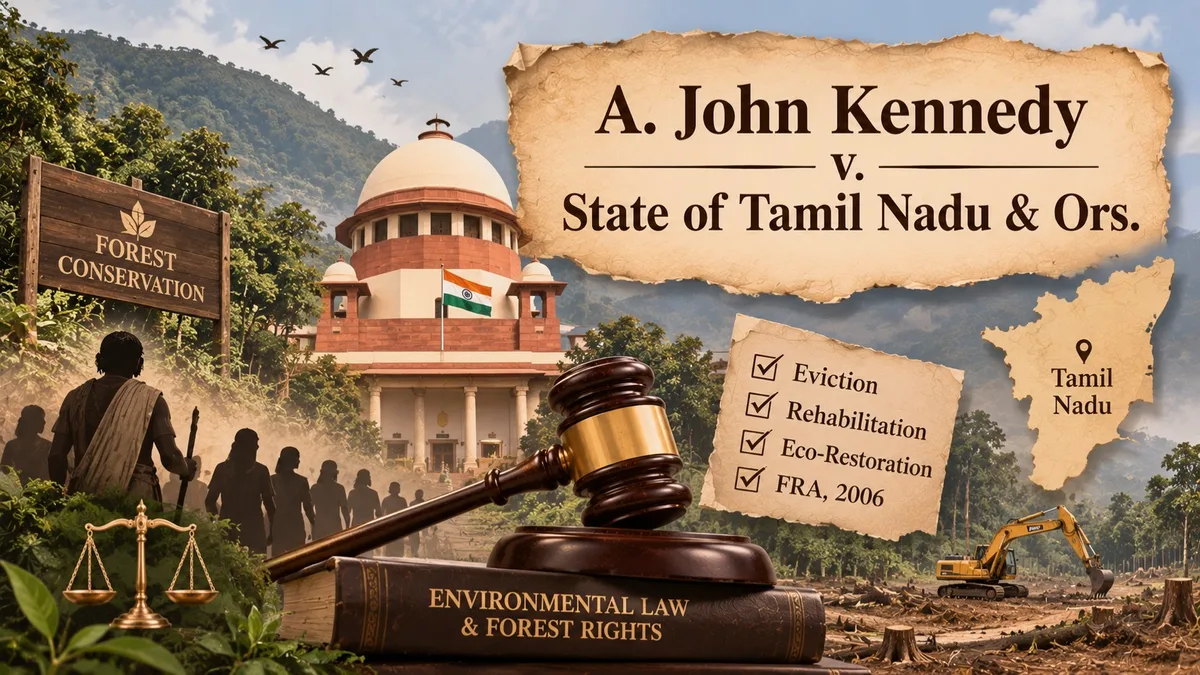
The Supreme Court issued further directions in the continuing proceedings concerning encroachments and ecological restoration in the Agasthyamalai landscape of Tamil Nadu. It…
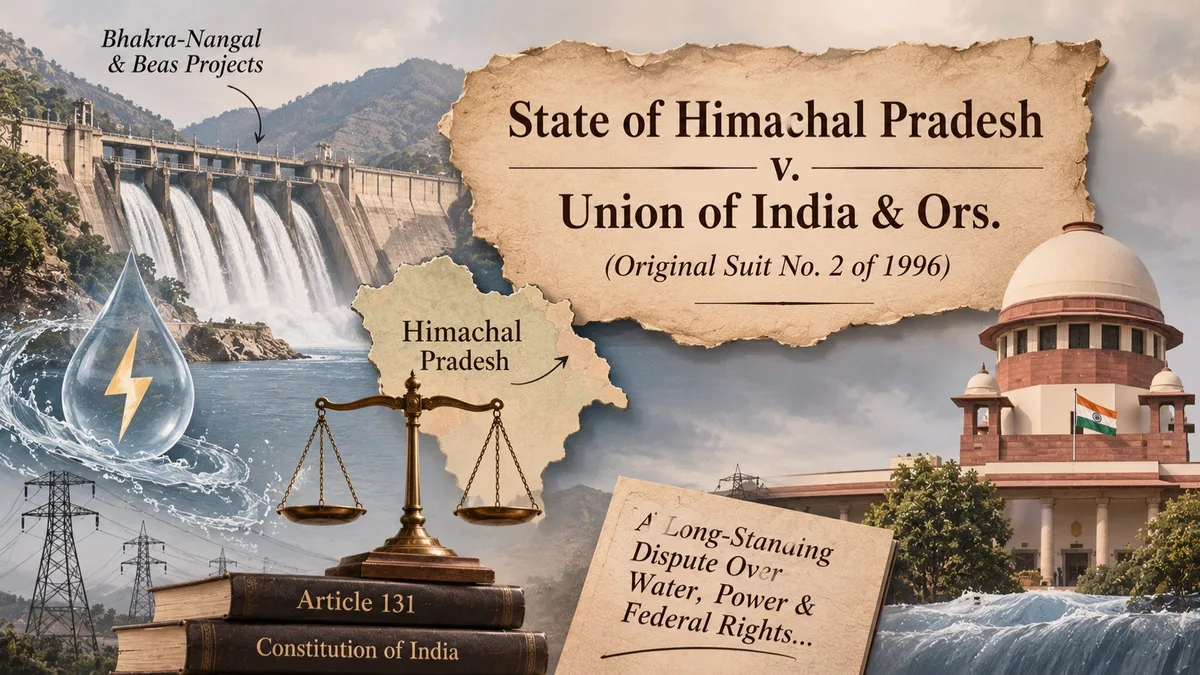
The Supreme Court issued final directions to implement Himachal Pradesh’s entitlement to power from the Bhakra-Nangal and Beas hydro-electric projects. It fixed energy arrears at…
The Securities and Exchange Board of India SEBI has modified the threshold limits for taking unhedged positions in foreign exchange currency derivative contracts involving the…
Registration & Launch of AIF Schemes ● Standardized Private Placement Memorandum PPM : Mandatory adherence to templated disclosures for Category I, II, and III AIFs, ensuring…
The Reserve Bank of India has introduced strict regulatory measures for the foreign exchange market to enhance discipline and risk management. Under the new directions issued via…
The petitioner dental college challenged the Registrar’s order rejecting continuation of its affiliation for the academic year 2026–27. The High Court held that, under the Kerala…
The High Court of Karnataka dismissed the appeal filed by the Karnataka State Road Transport Corporation KSRTC challenging its liability and partly allowed the appeal filed by the…
Civil LawOther Legal Matters
The Supreme Court upheld the compulsory retirement of two Assistant Grade-III employees of the Chhattisgarh Legal Metrology Department. It found that the State had reviewed their…