Deciding two connected writ petitions arising from a common Industrial Tribunal Award, the Delhi High Court set aside the Tribunal's direction granting hotel workmen a further…
Labour Laws
06/09/20264 min read
Update / Judgement Date
13 Oct 2025
Source
WCP News Bulletin
Author
Sakshi Bhardwaj — WCP Legal Desk
Reading Time
4 min read
Headnote:
The Supreme Court of India, in Rahul Agarwal v. The State of West Bengal & Anr., reaffirmed that a Magistrate has the power to direct an individual—whether accused or witness—to provide a voice sample for investigation, even prior to the enactment of Section 349 of the Bhartiya Nagarik Suraksha Sanhita (BNSS), 2023. The Court held that the principle laid down in Ritesh Sinha v. State of Uttar Pradesh (2019) 8 SCC 1 continues to be binding, and the absence of a specific provision in the Code of Criminal Procedure (Cr.P.C.) does not negate such judicial power. It ruled that mere collection of a voice sample does not violate the constitutional safeguard against self-incrimination under Article 20(3). The Supreme Court consequently set aside the Calcutta High Court’s order and restored the Magistrate’s direction allowing the voice sample collection.
Background:
• A young married woman, aged 25, died under suspicious circumstances on 16.02.2021, leading to allegations of harassment and counter-claims of misappropriation between her family and her husband’s relatives.
• A cousin of the husband filed a complaint implicating the deceased’s parents. During investigation, it was alleged that the second respondent (a relative) acted as an agent of the deceased’s father and threatened a witness.
• The Investigating Officer sought permission from the jurisdictional Magistrate to obtain the respondent’s voice sample for comparison and verification.
• The Magistrate allowed the application. However, the Calcutta High Court set aside the order, observing that the issue of voice sampling of witnesses was referred to a larger bench and hence was sub judice.
• The appellant contended before the Supreme Court that the larger bench reference had already been closed on default, making the High Court’s reasoning legally untenable.
Court’s Observations:
• The Supreme Court (Bench comprising Hon’ble Justice K. Vinod Chandran and Hon’ble Chief Justice B.R. Gavai) held that the High Court erred in refusing to follow binding precedent on the ground of a pending reference that was no longer alive.
• The Bench referred to Ritesh Sinha v. State of Uttar Pradesh (2019) 8 SCC 1, which had authoritatively held that Magistrates possess inherent power to direct a person to provide voice samples for investigation even in the absence of express statutory authority.
• The Court also relied on State of Bombay v. Kathi Kalu Oghad AIR 1961 SC 1808, which distinguished between testimonial compulsion and collection of physical or biological evidence such as handwriting, signatures, fingerprints, or voice.
• The Court clarified that providing a voice sample is not self-incriminatory, as it merely furnishes material evidence for comparison and does not amount to “testimony” under Article 20(3).
• The Court observed that whether the Cr.P.C. or BNSS applies, the power to order voice sampling is valid—under Cr.P.C. via judicial interpretation (Ritesh Sinha), and under BNSS explicitly via Section 349.
Legal Provisions:
• Article 20(3), Constitution of India – Protection against self-incrimination.
• Section 349, Bhartiya Nagarik Suraksha Sanhita, 2023 (BNSS) – Statutory recognition of the Magistrate’s power to order voice sample collection.
• Section 311A, Cr.P.C. (as interpreted in Ritesh Sinha, 2019) – Judicially extended power for obtaining specimen voice samples.
• State of Bombay v. Kathi Kalu Oghad, AIR 1961 SC 1808 – Clarification on non-testimonial evidence.
• Ritesh Sinha v. State of Uttar Pradesh, (2019) 8 SCC 1 – Binding precedent enabling Magistrate’s power to direct voice sample collection.
Court’s Directions:
• The Supreme Court set aside the impugned order of the Calcutta High Court.
• The order of the Magistrate directing the second respondent to provide a voice sample was restored.
• The second respondent was directed to act in accordance with the Magistrate’s order.
• The appeal was allowed, with all pending applications disposed of accordingly.
Citation: 2025 INSC 1223
Case: Rahul Agarwal v. The State of West Bengal & Anr.
Court: Supreme Court of India
Coram: Hon’ble Mr. Justice K. Vinod Chandran and Hon’ble Mr. Justice B.R. Gavai (CJI)
Deciding two connected writ petitions arising from a common Industrial Tribunal Award, the Delhi High Court set aside the Tribunal's direction granting hotel workmen a further…
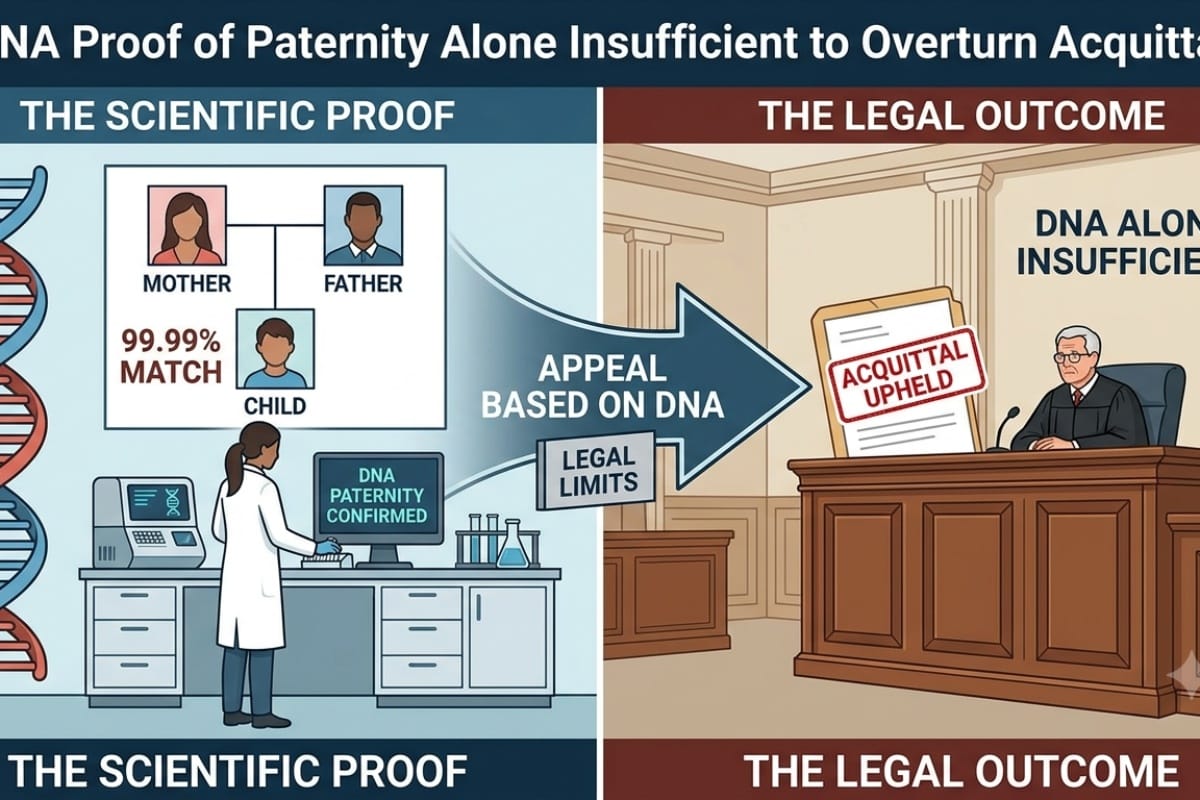
Headnote The Delhi High Court dismissed a prosecutrix's appeal against acquittal of the accused on charges under Sections 328/376 2 n /377/506/509 IPC, despite DNA evidence…
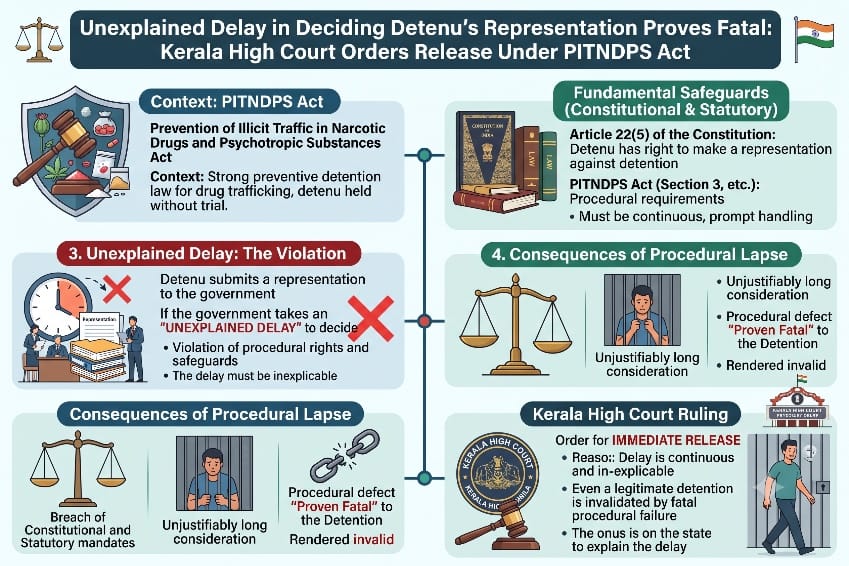
Fathimath Thasneem V.K. v. Union of India and Others | High Court of Kerala at Ernakulam | 3rd September, 2026 A habeas corpus writ petition by the wife of a detenu challenging…
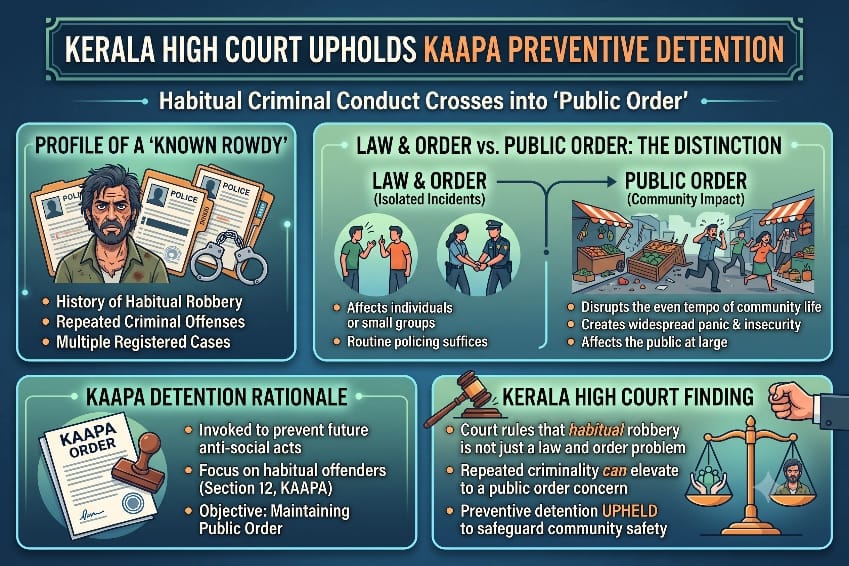
Thasmitha Abukutty v. State of Kerala and Others | High Court of Kerala at Ernakulam | 2nd September, 2026 A writ petition by the wife of a preventive detenu challenging a…
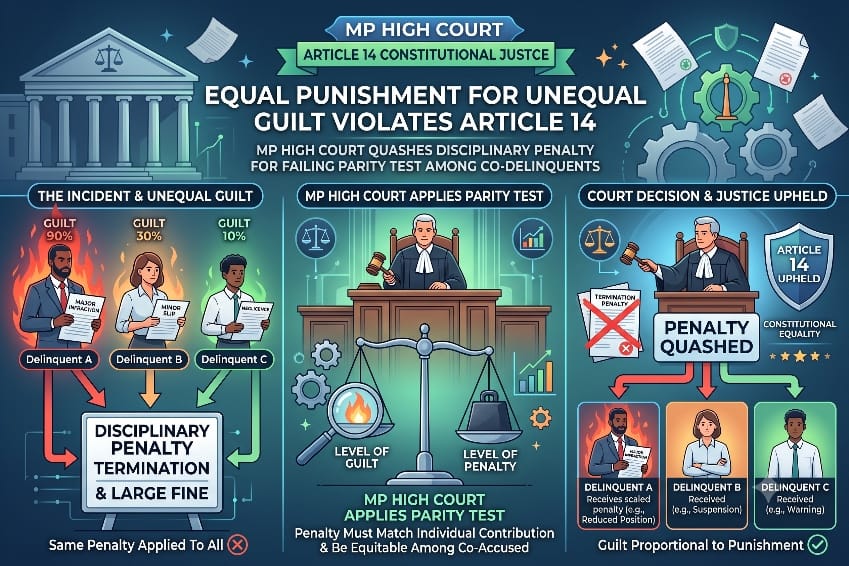
Brahm Kishore Dixit v. The State of Madhya Pradesh and Others | High Court of Madhya Pradesh, Gwalior | 1st September, 2026 A writ petition under Article 226 by a police Assistant…
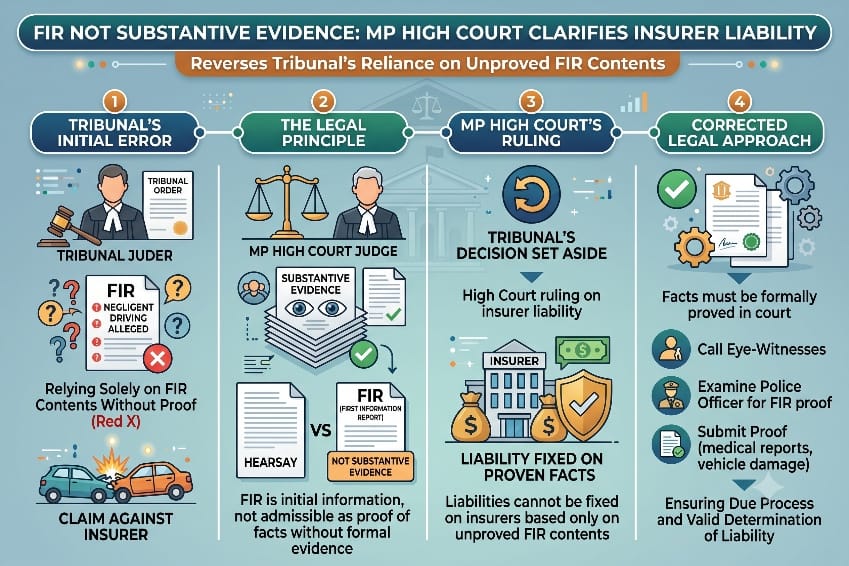
Anil Kumar Patel v. Smt. Munni Bai Barman and Others | High Court of Madhya Pradesh, Jabalpur | 1st September, 2026 A Motor Vehicle Act appeal under Section 173 1 against a Claims…
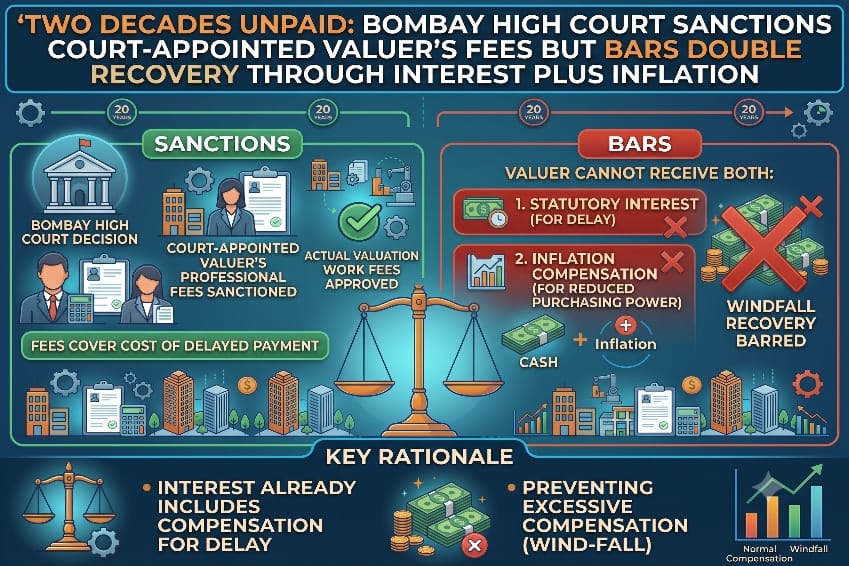
M/s. Kuber Mutual Benefits Ltd. & Ors. v. The State of Maharashtra & Ors. | High Court of Judicature at Bombay Appellate Side | 3rd September, 2026 A Court Receiver's Report…
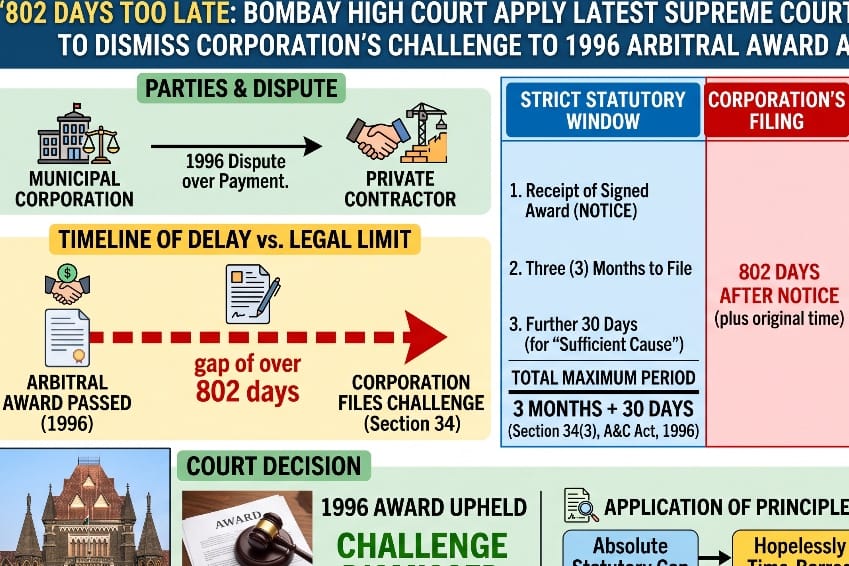
The Municipal Corporation of Greater Bombay v. M/s. Atul Raj Builders Pvt. Ltd. | High Court of Judicature at Bombay Ordinary Original Civil Jurisdiction | 3rd September, 2026 A…
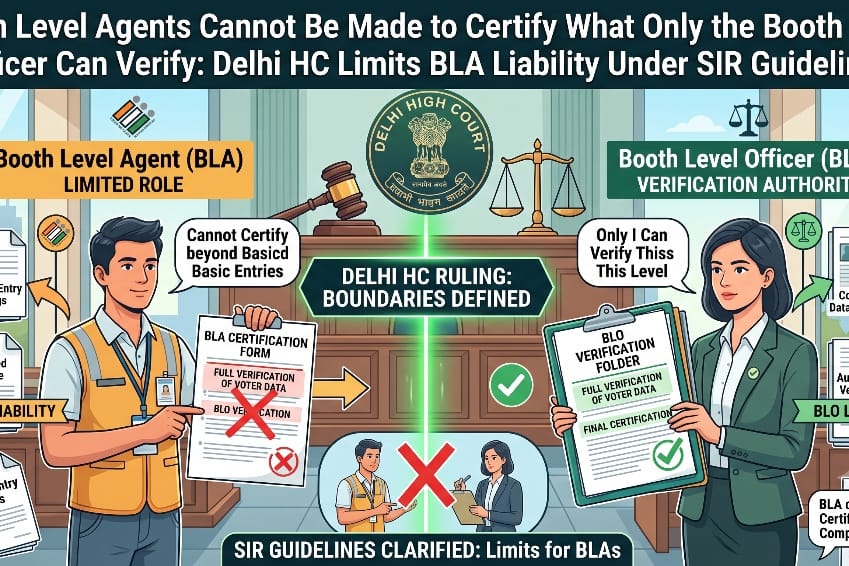
Devender Yadav & Anr. v. Election Commission of India & Anr. | High Court of Delhi Single Judge | Decided on: 03.09.2026 In a challenge to the Election Commission of India's…
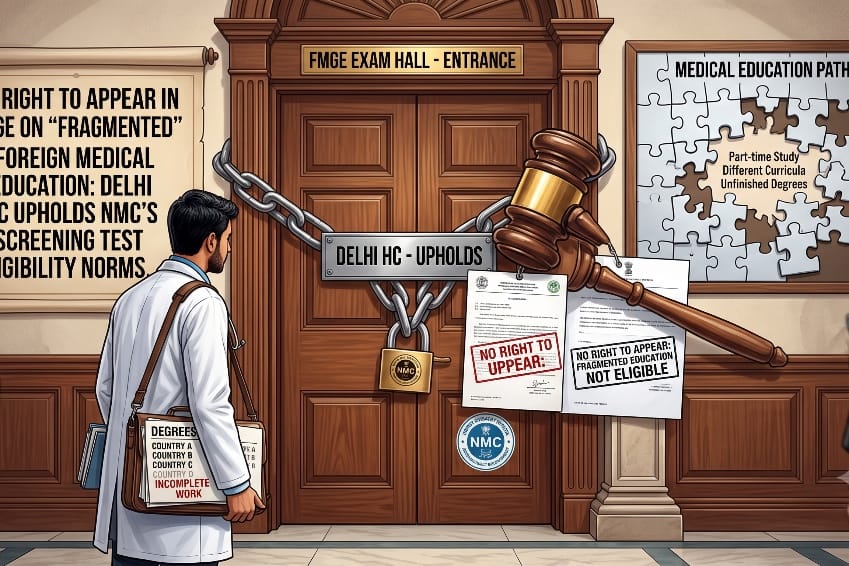
Brij Sharadbhai Bhatt & Ors. v. National Medical Commission & Ors. | High Court of Delhi Division Bench | Decided on: 03.09.2026 The Delhi High Court dismissed a challenge by…