Delhi High Court Quashes Look Out Circulars After CBI Investigation and Filing of Chargesheet
Court / Authority
Delhi High Court
Update / Judgement Date
23 Nov 2026
Date of Publication
25 Nov 2026
Case No.
Case Number W.P.(C) 14700/2025 & CM APPL. 60304/2025; W.P.(C) 14705/2025 & CM APPL. 60375/2025
Source
WCP News Bulletin
Author
Soumya Gupta — WCP Legal Desk
Reading Time
5 min read
View Count
Background / Synopsis :
● Vikram Nath was a director of M/s Logix City Developers Pvt. Ltd.; Shakti Nath, his father, was a promoter of the Logix Group.
● The CBI issued LOCs in connection with FIR No. RC2192025E0004 dated 17 March 2025 and FIR Nos. RC2192025E0018, RC2192025E0017 and RC2192025E0016 dated 28 July 2025, registered at Police Station EO-I, New Delhi.
● The first FIR followed an Allahabad High Court order dated 24 February 2025, based on CAG observations concerning NOIDA Sports City project allotments. The later FIRs followed Supreme Court directions dated 29 April 2025 for a wider CBI enquiry and 22 July 2025 to register regular cases.
● The petitioners sought quashing of the LOCs and permission to travel abroad. During the petitions, they had travelled abroad on multiple occasions with court or Trial Court permission and had not misused that liberty.
● The CBI stated that the investigation was complete and the chargesheet had been filed. The petitioners had not been arrested, and the CBI did not allege non-cooperation.
Issues For Consideration :
● Whether the LOCs issued against the petitioners could be continued after completion of the CBI investigation and filing of the chargesheet.
● Whether the petitioners’ right to travel abroad and personal liberty under Article 21 required the LOCs to be quashed, and what safeguards could be imposed.
Submissions Of Parties :
Petitioners:
● They had ceased to be associated with the management of M/s Logix City Developers Pvt. Ltd. before registration of the FIRs and were arrayed as accused because of their past association with the Logix Group.
● The LOCs had been issued mechanically, without furnishing copies to them. They had cooperated with the investigation and had submitted a written undertaking dated 14 August 2025 to continue cooperating.
● They had not been declared absconders or proclaimed offenders.
Respondents / CBI:
● The CBI pointed out that the investigation stood completed and the chargesheet had been filed. It did not assert that the petitioners had failed to cooperate or that they had been arrested.
● No further substantive counter-submission by the CBI was recorded in the order.
Court's Observations & Analysis :
Re: Continuation of the LOCs after completion of investigation
● The investigation had concluded and the chargesheet had been filed; therefore, keeping the LOCs open would serve no useful purpose.
● The petitioners had travelled abroad on multiple occasions with prior judicial permission and had not misused the liberty. The orders permitting travel had not been challenged.
● In the circumstances, there was no continuing live link justifying the LOCs, and the petitioners could not be treated as flight risks merely on that basis.
Held: The LOCs had served their purpose and their continued operation was not justified. (Paras 8–9)
Re: LOCs as a restraint on personal liberty
● An LOC is a coercive measure and cannot be issued or continued as a matter of routine merely because a person is facing trial.
● The issuance and continued operation of an LOC must be justified by circumstances warranting restraint on the right to travel abroad, which forms an integral facet of personal liberty under Article 21.
● The Trial Court remained seized of the criminal proceedings and retained authority to regulate or restrict foreign travel in accordance with law.
Held: The petitions were allowed and the LOCs were quashed, subject to safeguards and the Trial Court’s continuing powers. (Paras 10–15)
Notable Observations: “an LOC is a coercive measure” (Para 10).
Decision & Directions :
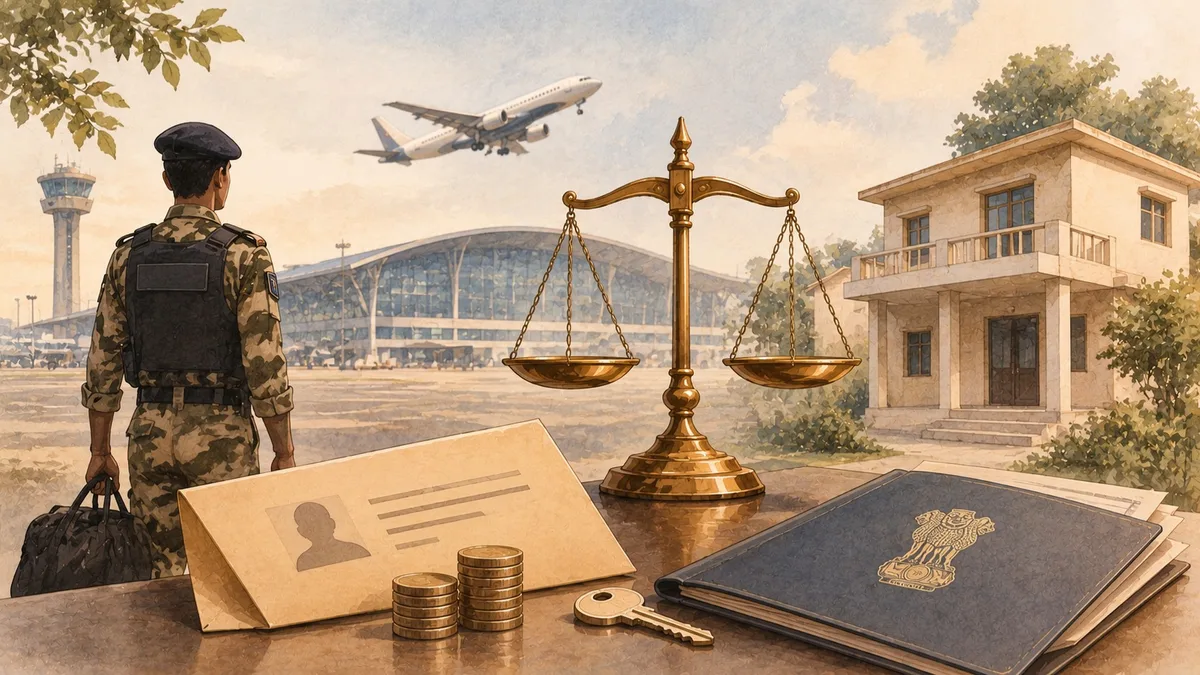
● The petitions were allowed and the LOCs issued against both petitioners were quashed.
● Before leaving India, the petitioners must inform Respondent No. 3 of their complete travel itinerary, including flight details, duration of visit, intended destinations, overseas address and a working telephone contact number.
● The petitioners must inform Respondent No. 1 of their return within 72 hours of returning to India.
● The petitioners must provide Respondent No. 3 with valid email addresses for service of summons and other communications. Such service will be treated as valid, and the email accounts must not be closed or deleted.
● The petitioners must fully cooperate with the investigation and join it whenever required by Respondent No. 3.
● Quashing of the LOCs does not affect the pending criminal proceedings or the Trial Court’s power to regulate or restrict the petitioners’ travel. The petitioners must comply with directions imposed by the Trial Court from time to time.
● Pending applications were also disposed of. A copy of the order was directed to be communicated to the Bureau of Immigration for necessary compliance.
Full Judgement / Attachment
Full Judgement
Frequently asked questions about Delhi High Court
- Where does the Delhi High Court sit and which areas does it cover?
- The Delhi High Court sits in New Delhi. It has jurisdiction over the National Capital Territory of Delhi. It was established on 31 October 1966 and is a leading forum for commercial, intellectual property, tax and arbitration matters.
- How do I check Delhi High Court case status and judgements?
- The official website, delhihighcourt.nic.in, provides case status, cause lists, e-filing and judgements searchable by party, judge or date. Orders are also mirrored on the eCourts Judgments portal (judgments.ecourts.gov.in).
- What are the Delhi High Court's Commercial and IP Divisions?
- Delhi High Court has original civil jurisdiction, so high-value suits in Delhi are filed directly before it. Its Commercial Division hears commercial disputes, and its Intellectual Property Division, set up in 2021 after the IPAB was abolished, hears patent, trademark and copyright cases. It is also a major forum for tax appeals from the ITAT Delhi Benches and for arbitration petitions.
- What is an LPA in the Delhi High Court?
- A Letters Patent Appeal (LPA) under Clause 10 of the Letters Patent lets a party challenge certain single-judge orders, typically in writ matters, before a Division Bench. In commercial cases, appeals lie under Section 13 of the Commercial Courts Act instead. Final judgements can be challenged by a Special Leave Petition under Article 136, ordinarily within 90 days.
- How can White Collar Professional help with a Delhi High Court matter?
- Post your requirement on White Collar Professional to receive proposals from verified Advocates, Chartered Accountants and Company Secretaries, compare them, and pay securely through the platform. This page also tracks the latest Delhi High Court judgements and legal updates as they are reported.