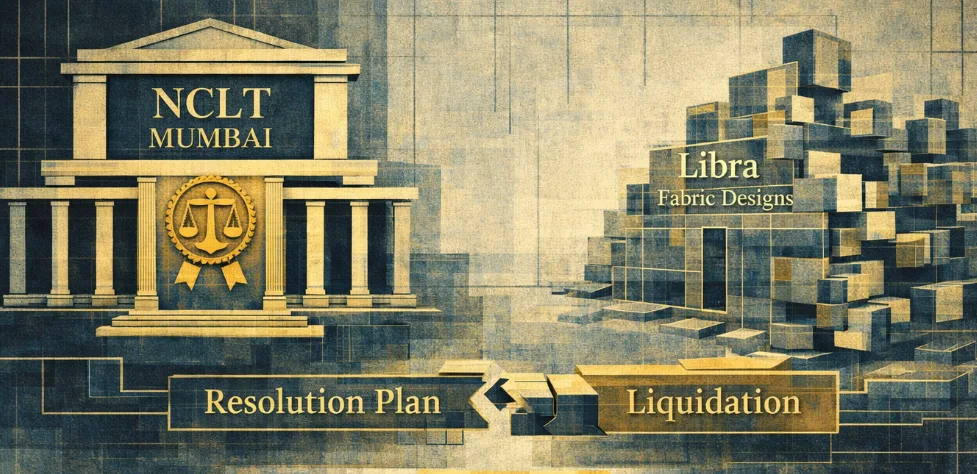
NCLT Mumbai refuses to extend personal insolvency resolution process beyond statutory moratorium
Court / Authority
NCLT & NCLAT
Update / Judgement Date
28 Jun 2026
Source
WCP News Bulletin
Author
Manas Yadav — WCP Legal Desk
Reading Time
2 min read
View Count
Background
Tribunal holds that IBC does not permit extension of 180-day moratorium in personal guarantor insolvency; six SBI-linked applications disposed of The Mumbai Bench (Court V) of the National Company Law Tribunal has declined to grant any extension of time in multiple personal insolvency resolution processes (PIRP) initiated by State Bank of India against personal guarantors, holding that the Insolvency and Bankruptcy Code, 2016 does not empower the Tribunal to extend the statutory moratorium prescribed under Section 101. A Division Bench comprising Judicial Member Mohan Prasad Tiwari and Technical Member Charanjeet Singh Gulati passed a common order on January 28, 2026, disposing of six interlocutory applications filed by the Resolution Professional seeking condonation of delay and extension of the PIRP period by 201 days. The applications arose out of insolvency proceedings initiated under Section 95 of the Code against various personal guarantors of corporate debtors, where repayment plans had been approved by creditors but could not be placed for final consideration within the statutory timelines. The Resolution Professional contended that delays were caused due to prolonged negotiations, late receipt of valuation and PDA reports, and procedural impediments, and that refusal to extend time would defeat the objective of the Code.
Finding and Order
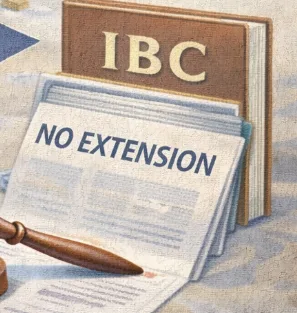
Rejecting these submissions, the Tribunal held that Section 101 of the Code clearly stipulates that the moratorium in a personal insolvency process ceases automatically on completion of 180 days from the date of admission or upon passing of an order on the repayment plan under Section 114, whichever is earlier. The Bench observed that neither the Code nor the IBBI (Insolvency Resolution Process for Personal Guarantors to Corporate Debtors) Regulations, 2019 provide any mechanism for extending this period. Relying on the NCLAT’s decision in Anil Kumar v. Mukund Choudhary, the Tribunal reiterated that the moratorium timeline under Section 101 is mandatory and inviolable, and any extension would run contrary to the legislative scheme governing personal insolvency. The Bench further distinguished the personal insolvency framework from the corporate insolvency regime, noting that unlike CIRP, the Code does not contemplate continuation or extension of PIRP beyond the moratorium period. Accordingly, the Tribunal dismissed all six applications, holding that it lacked jurisdiction to grant the extensions sought, and directed the Resolution Professional to act strictly in accordance with the statutory framework.
Full Judgement / Attachment
Full Judgement
Frequently asked questions about NCLT & NCLAT
- What are the NCLT and NCLAT?
- The National Company Law Tribunal (NCLT) and the National Company Law Appellate Tribunal (NCLAT) were constituted on 1 June 2016 under the Companies Act, 2013. The NCLT sits in benches across India, and the NCLAT hears appeals from it, with its principal bench in New Delhi and a bench in Chennai.
- What cases does the NCLT hear?
- The NCLT is the Adjudicating Authority for corporate insolvency under the IBC. It also hears company law matters, including oppression and mismanagement petitions, schemes of merger and demerger, reduction of capital, and class action suits.
- What is the time limit to appeal an NCLT order to the NCLAT?
- Under the Companies Act, the appeal is due within 45 days, extendable by up to 45 days. Under the IBC, it is due within 30 days, extendable by up to 15 days. These outer limits are strictly applied.
- How can I check NCLT case status or orders?
- Case status, cause lists and orders are available on the NCLT website (nclt.gov.in) and the NCLAT website (nclat.nic.in), searchable by case number, party name or bench.
- How can White Collar Professional help with a NCLT or NCLAT matter?
- Post your requirement on White Collar Professional to receive proposals from verified Company Secretaries, Insolvency Professionals and Advocates, compare them, and pay securely through the platform. This page also tracks the latest NCLT or NCLAT NCLT and NCLAT judgements as they are reported.