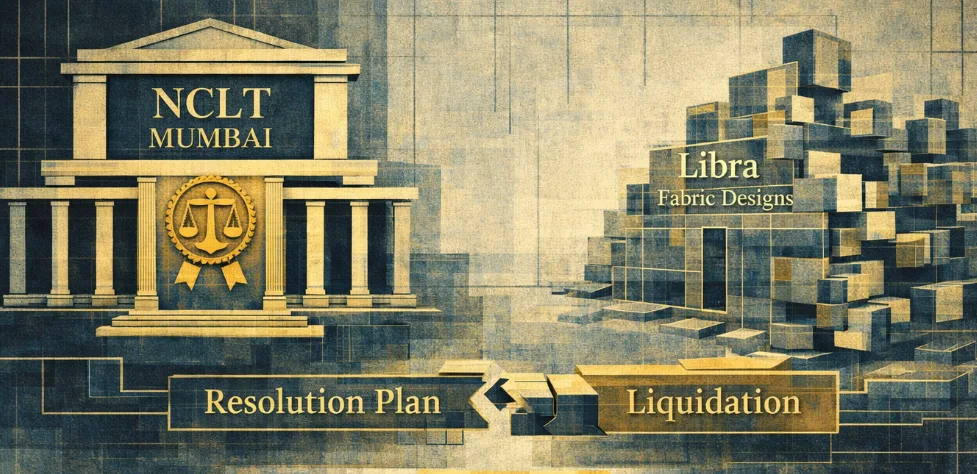
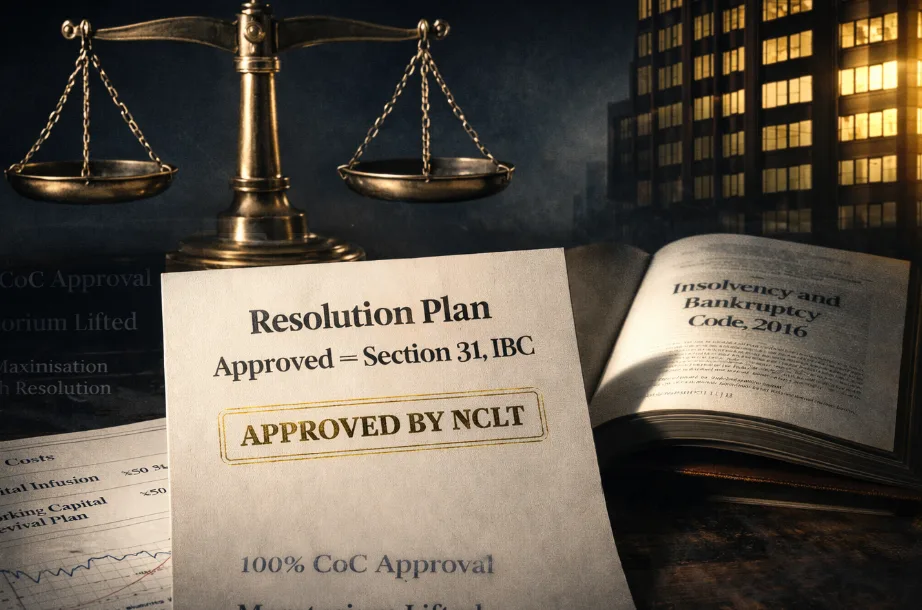
NCLT Mumbai rejects homebuyer claims in E-Commerce Magnum CIRP, holds third-party payments do not create ‘financial debt’
Court / Authority
NCLT & NCLAT
Update / Judgement Date
28 Jun 2026
Source
WCP News Bulletin
Author
Manas Yadav — WCP Legal Desk
Reading Time
2 min read
View Count
Background
Allotment letters without disbursement or RERA registration insufficient to confer creditor status, Tribunal rules; The Mumbai Bench-II of the National Company Law Tribunal has dismissed a batch of six interlocutory applications filed by alleged homebuyers in the corporate insolvency resolution process (CIRP) of E‑Commerce Magnum Solution Limited, holding that the applicants failed to establish themselves as financial creditors or allottees under the Insolvency and Bankruptcy Code, 2016.
The applications were filed under Section 60(5) of the Code seeking directions to the Resolution Professional to admit their claims and restrain the Committee of Creditors from voting on any resolution plan. The CIRP had been initiated on a petition filed by J.C. Flowers Asset Reconstruction Private Limited. The applicants claimed allotment of apartments in a proposed real estate project named “Marquis” and asserted that ₹48 lakh per applicant had been paid towards booking of flats. However, it was an admitted position that the alleged payments were made by a third party and not by the applicants themselves.
Findings and Order
Rejecting the claims, the Bench comprising Judicial Member Ashish Kalia and Technical Member Sanjiv Dutt held that disbursement is a sine qua non for a financial debt under Section 5(8) of the Code. In the absence of any payment by the applicants to the corporate debtor, the essential ingredient of a financial debt was not satisfied. Mere issuance of an allotment letter, without corresponding disbursement, could not create creditor rights. The Tribunal further observed that the so-called allotment letters reflected an investment arrangement rather than a genuine homebuyer transaction. No specific flats were identified, no agreements for sale were executed, and the project itself was not registered under RERA making any alleged allotment legally untenable. Relying on Supreme Court precedents including Pioneer Urban, Anuj Jain and Phoenix ARC, the Bench reiterated that the real nature of the transaction must be examined and that protections available to homebuyers under the Code apply only where funds are actually raised from them with the commercial effect of borrowing. Holding that the Resolution Professional had acted within his statutory duty of claim verification, the Tribunal dismissed all six applications as devoid of merit.
Full Judgement / Attachment
Full Judgement
Frequently asked questions about NCLT & NCLAT
- What are the NCLT and NCLAT?
- The National Company Law Tribunal (NCLT) and the National Company Law Appellate Tribunal (NCLAT) were constituted on 1 June 2016 under the Companies Act, 2013. The NCLT sits in benches across India, and the NCLAT hears appeals from it, with its principal bench in New Delhi and a bench in Chennai.
- What cases does the NCLT hear?
- The NCLT is the Adjudicating Authority for corporate insolvency under the IBC. It also hears company law matters, including oppression and mismanagement petitions, schemes of merger and demerger, reduction of capital, and class action suits.
- What is the time limit to appeal an NCLT order to the NCLAT?
- Under the Companies Act, the appeal is due within 45 days, extendable by up to 45 days. Under the IBC, it is due within 30 days, extendable by up to 15 days. These outer limits are strictly applied.
- How can I check NCLT case status or orders?
- Case status, cause lists and orders are available on the NCLT website (nclt.gov.in) and the NCLAT website (nclat.nic.in), searchable by case number, party name or bench.
- How can White Collar Professional help with a NCLT or NCLAT matter?
- Post your requirement on White Collar Professional to receive proposals from verified Company Secretaries, Insolvency Professionals and Advocates, compare them, and pay securely through the platform. This page also tracks the latest NCLT or NCLAT NCLT and NCLAT judgements as they are reported.