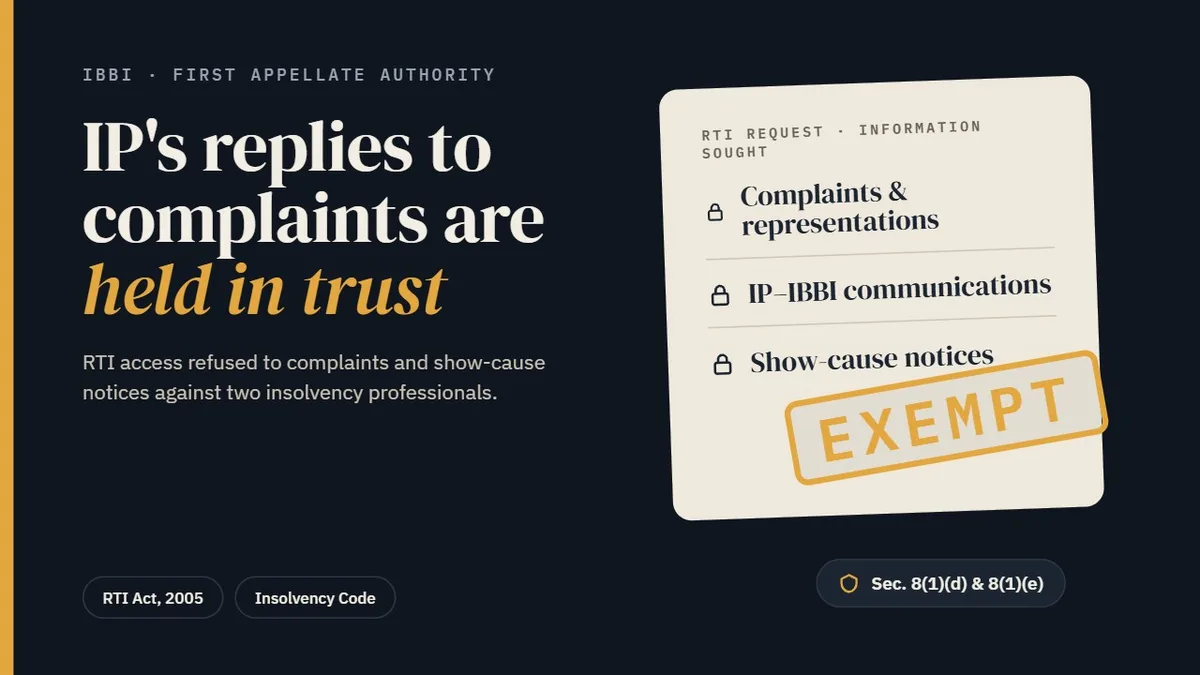
The appellant sought, under the RTI Act, records of complaints and representations received by IBBI, communications between IBBI and the insolvency professionals, and copies of…
Insolvency & Bankruptcy Code
24/11/20264 min read
In its decision on September 15, 2025, the Supreme Court addressed challenges to Section 3D of the Waqf (Amendment) Act, 2025, which bars the declaration of ASI-protected monuments or protected areas as waqf properties. Petitioners argued that this provision limits the rights of Muslims to practice their religion at sites historically recognized as waqf. Yet, the Court refused to stay this section, reasoning that protection and preservation of historic monuments under the Ancient Monuments and Archaeological Sites and Remains Act (AMASR) must be prioritized over proprietary interests in waqf. The bench, headed by Chief Justice BR Gavai and Justice AG Masih, elaborated that under Section 5(6) of the AMASR Act, citizens may continue customary religious practices even in protected monuments. Thus, there is no blanket prohibition of religious observances; only the designation or notification of waqf property is void if it conflicts with protected monument status. The reasoning suggests that the legislative intent is to ensure unfettered access to ASI officials for preservation activities, eliminating legal complexities that previously arose when Mutawallis hindered such access. The Court found the petitioners’ concerns about religious deprivation unfounded since the continuation of religious practices is still recognized by law, provided they do not interfere with monument conservation. The decision also links with other related Supreme Court orders addressing the waqf amendment, notably the abolition of 'waqf by user' and interim stays on other disputed provisions. In sum, the Supreme Court’s approach balances religious rights with the imperative of preserving India’s heritage, clarifying the scope and limits of waqf in relation to national monuments.
© 2026 White Collar Professional Technologies Pvt. Ltd. All rights reserved. CIN: U74999MH2024PTC000001
The appellant sought, under the RTI Act, records of complaints and representations received by IBBI, communications between IBBI and the insolvency professionals, and copies of…
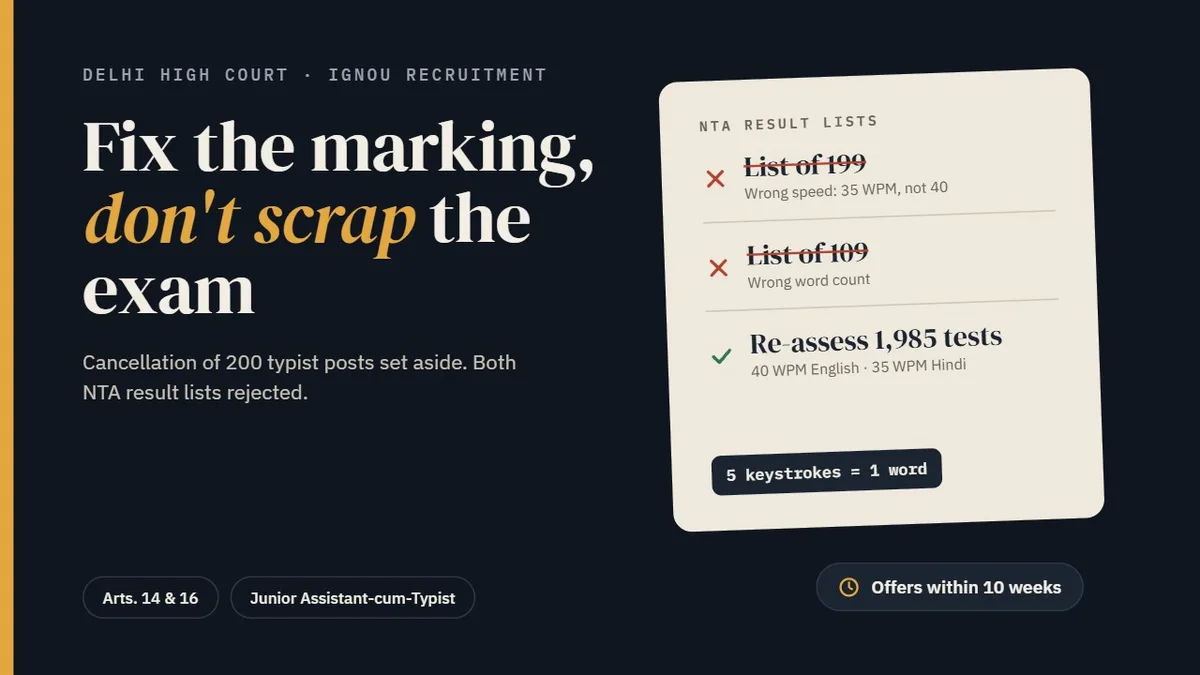
IGNOU entrusted recruitment to 200 Junior Assistant-cum-Typist posts to NTA; after a computer-based test 25,094 candidates and a typing test 1,985 candidates , NTA declared 199…
The Delhi High Court considered whether the 2021 amendment inserting Section 86 4 into the Juvenile Justice Care and Protection of Children Act, 2015 applied to trials already…
Sixteen students of Sree Sankaracharya University of Sanskrit, Kalady challenged their suspension and subsequent disciplinary punishments arising out of a campus protest during a…

The Kerala High Court held that the custody requirement in Section 306 4 b of the Code of Criminal Procedure, 1973 CrPC applies to a pardon tendered by a Magistrate under Section…

National Testing Agency had applied an incorrect typing-speed threshold and the assessment required correction, the identified discrepancies did not establish that the…
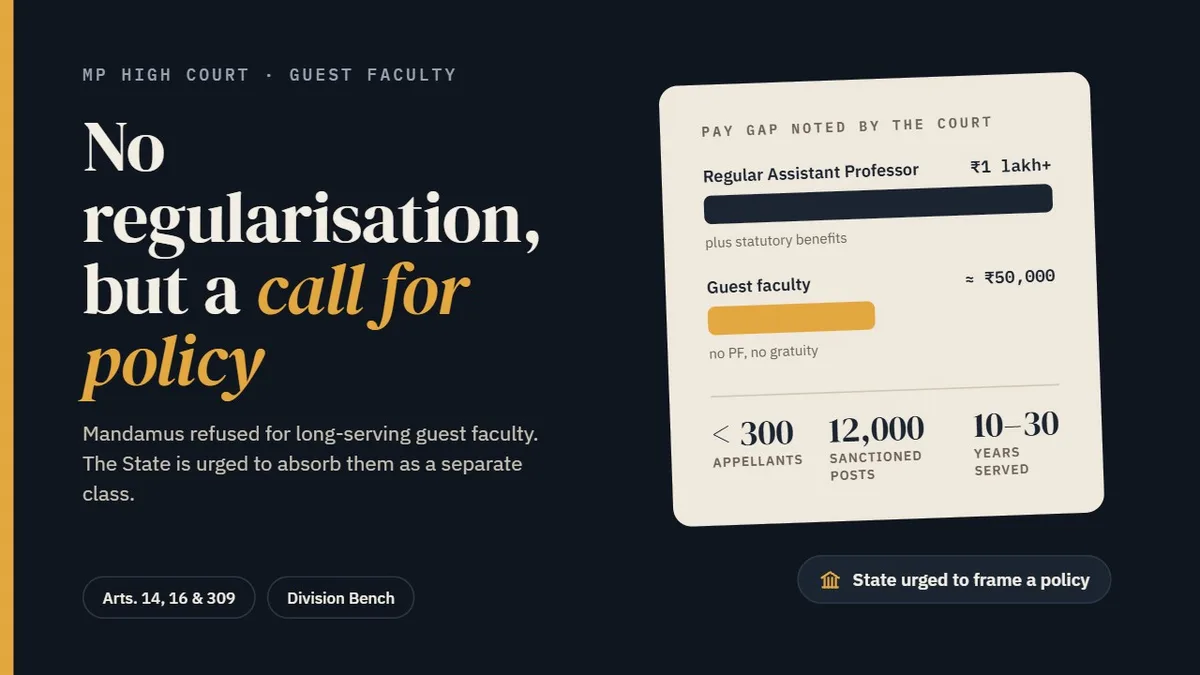
A batch of writ appeals was filed by guest faculty – Assistant Professors, Sports Officers and Librarians engaged after advertisement and selection and serving 10 to 30 years in…

Directorate of Enforcement, Mumbai Zonal Office-I | Draft Press Release | 23 November 2026 The Directorate of Enforcement's draft press release states that its Mumbai Zonal…

The Directorate of Enforcement's draft press release states that its Guwahati Zonal Office-I has provisionally attached movable and immovable properties valued at ₹70.09 lakh in a…

The National Company Law Tribunal, New Delhi Court-IV, approved a resolution plan valued at ₹30.90 crore for Shyam Indofab Private Limited on 8 September 2026. The plan, submitted…