
Deciding two connected writ petitions arising from a common Industrial Tribunal Award, the Delhi High Court set aside the Tribunal's direction granting hotel workmen a further…
Labour Laws
06/09/20264 min read
Update / Judgement Date
04 Nov 2025
Source
WCP News Bulletin
Author
Sakshi Bhardwaj — WCP Legal Desk
Reading Time
3 min read

Headnote:
The Financial Action Task Force (FATF) released its new publication titled “Asset Recovery Guidance and Best Practices”, introducing a comprehensive global framework to strengthen asset recovery measures against financial crimes. The guidance, representing one of the most significant FATF reforms in three decades, incorporates major contributions from India through the Directorate of Enforcement (ED). It outlines new standards for identifying, tracing, freezing, managing, confiscating, and returning criminal assets, emphasizing cross-border cooperation and victim restitution. India’s legal and operational models under the Prevention of Money Laundering Act, 2002 and the Fugitive Economic Offenders Act, 2018 are cited as exemplary international practices.
Background:
• The FATF’s new guidance aims to make asset recovery a policy and operational priority for all jurisdictions, establishing updated best practices for global enforcement agencies.
• India played an active role in developing the revised FATF standards and this guidance document, with ED officers participating in technical discussions, drafting, and negotiations over the past two years.
• The publication includes several Indian case studies showcasing effective asset recovery through inter-agency cooperation, with one case leading to the restoration of assets worth ₹60 billion to victims of investment fraud, and another involving confiscation of ₹17.77 billion in assets transferred abroad.
• The FATF’s framework expands the scope of asset recovery, introducing measures like non-conviction-based confiscation, extended confiscation, and unexplained wealth orders. These tools enable recovery even when prosecution is impractical or where illicit wealth cannot be lawfully justified.
Key Highlights and Observations:
• The guidance prioritizes early provisional measures such as ex-parte freezing powers and interim management to prevent asset dissipation.
• It stresses the need for swift and informal international cooperation through mechanisms like the Asset Recovery Inter-Agency Networks (ARINs), enhancing mutual assistance and coordination.
• India’s legislative and enforcement experience significantly shaped the guidance, particularly in value-based confiscation, provisional attachment, and coordination across agencies.
• The Fugitive Economic Offenders Act, 2018 is cited as a model legal framework applying the doctrine of fugitive disentitlement.
• The document underscores transparency, accountability, and victim-centered asset return to ensure public trust and legitimacy.
• India’s advocacy also ensured inclusion of challenges faced by developing nations in cross-border asset recovery and the need for flexible, responsive cooperation mechanisms.
Significance:
• The release of “Asset Recovery Guidance and Best Practices” marks a major milestone in global financial crime enforcement.
• It strengthens the global effort to deprive criminals of illicit gains and reaffirms India’s growing leadership in shaping international anti-money laundering standards.
• The inclusion of Indian examples in the FATF publication underscores the credibility and operational excellence of India’s Directorate of Enforcement.
• The guidance will serve as a crucial resource for nations seeking to modernize asset recovery systems, with India continuing to play a pivotal role in its global implementation.
Legal and Policy Frameworks Referenced:
• Prevention of Money Laundering Act, 2002 (PMLA) – Governing attachment, confiscation, and prosecution of proceeds of crime.
• Fugitive Economic Offenders Act, 2018 (FEOA) – Providing for confiscation of property of absconding economic offenders.
• FATF Recommendations (Revised 2025) – Strengthened global standards on confiscation and international cooperation for asset recovery.
Deciding two connected writ petitions arising from a common Industrial Tribunal Award, the Delhi High Court set aside the Tribunal's direction granting hotel workmen a further…

Headnote The Delhi High Court dismissed a prosecutrix's appeal against acquittal of the accused on charges under Sections 328/376 2 n /377/506/509 IPC, despite DNA evidence…
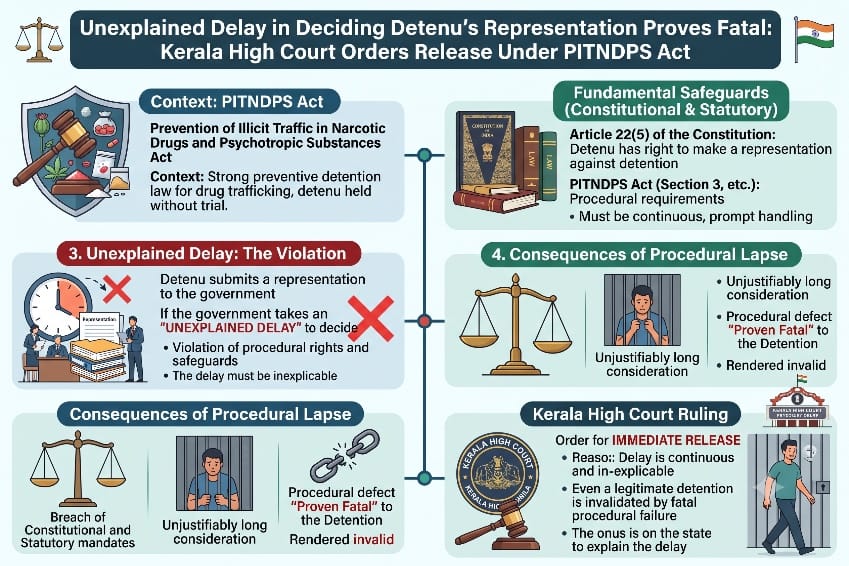
Fathimath Thasneem V.K. v. Union of India and Others | High Court of Kerala at Ernakulam | 3rd September, 2026 A habeas corpus writ petition by the wife of a detenu challenging…

Thasmitha Abukutty v. State of Kerala and Others | High Court of Kerala at Ernakulam | 2nd September, 2026 A writ petition by the wife of a preventive detenu challenging a…
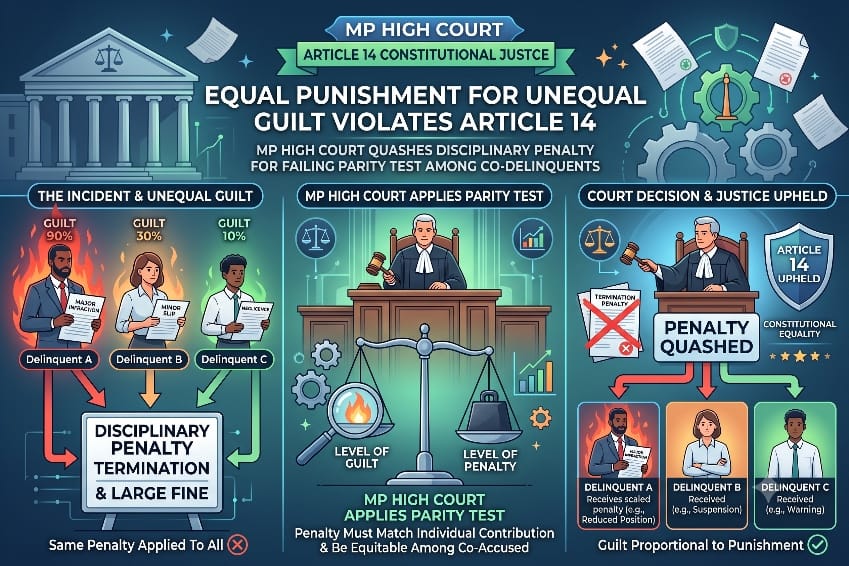
Brahm Kishore Dixit v. The State of Madhya Pradesh and Others | High Court of Madhya Pradesh, Gwalior | 1st September, 2026 A writ petition under Article 226 by a police Assistant…
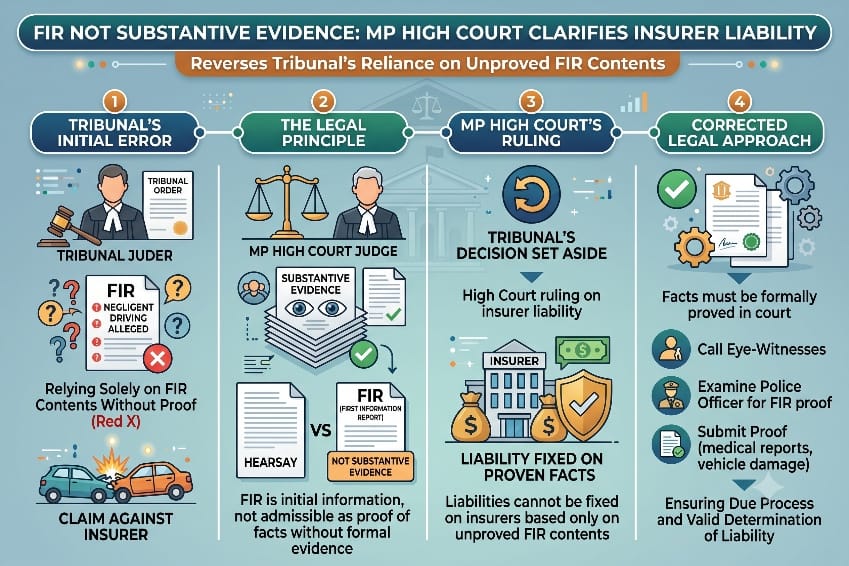
Anil Kumar Patel v. Smt. Munni Bai Barman and Others | High Court of Madhya Pradesh, Jabalpur | 1st September, 2026 A Motor Vehicle Act appeal under Section 173 1 against a Claims…
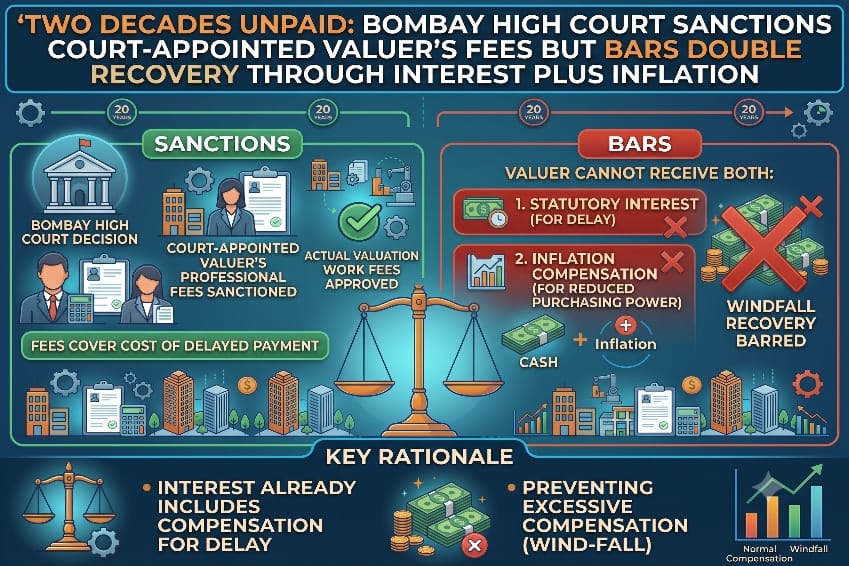
M/s. Kuber Mutual Benefits Ltd. & Ors. v. The State of Maharashtra & Ors. | High Court of Judicature at Bombay Appellate Side | 3rd September, 2026 A Court Receiver's Report…

The Municipal Corporation of Greater Bombay v. M/s. Atul Raj Builders Pvt. Ltd. | High Court of Judicature at Bombay Ordinary Original Civil Jurisdiction | 3rd September, 2026 A…

Devender Yadav & Anr. v. Election Commission of India & Anr. | High Court of Delhi Single Judge | Decided on: 03.09.2026 In a challenge to the Election Commission of India's…

Brij Sharadbhai Bhatt & Ors. v. National Medical Commission & Ors. | High Court of Delhi Division Bench | Decided on: 03.09.2026 The Delhi High Court dismissed a challenge by…