The Supreme Court clarified the temporal operation of its 11 March 2026 judgment on OBC creamy-layer status. It declined to reopen selections, appointments or seniority already…
Civil Law
Court / Authority
Gujarat High Court
Update / Judgement Date
29 Oct 2026
Date of Publication
02 Nov 2026
Case No.
R/CR.MA/17281/2024 in F/CRIMINAL APPEAL/20658/2024
Source
WCP News Bulletin
Author
Soumya Gupta — WCP Legal Desk
Reading Time
3 min read
View Count
5

● Kashish, a proprietary firm, filed a complaint through its power of attorney holder, Anil Haresh Jaisinghani, alleging that western outfits worth Rs. 5,69,024/- had been supplied to the accused on credit through seven invoices between 1 August 2018 and 28 September 2018.
● According to the complainant’s submissions, two HDFC Bank cheques dated 14 August 2019 and 19 August 2019, for Rs. 2,50,000/- and Rs. 3,00,000/- respectively, were returned unpaid with the endorsement “insufficient funds”. A statutory demand notice was issued on 11 September 2019.
● The Chief Judicial Magistrate, in Criminal Case No. 32103/2019, convicted respondent no. 3 under Section 138 NI Act on 19 September 2022, sentenced the respondent to one year’s simple imprisonment and directed payment of Rs. 5,50,000/- to the complainant under Section 357 CrPC, with three months’ further simple imprisonment in default.
● In Criminal Appeal No. 359/2022, the 10th Additional Sessions Judge, Vadodara, set aside the conviction and acquitted the accused on 16 December 2023.
● The original complainant approached the Gujarat High Court seeking leave to appeal against the acquittal. The High Court granted leave by the present oral order dated 29 October 2026.
Issues For Consideration :
● Whether the original complainant’s challenge to the Sessions Court’s acquittal in the Section 138 NI Act case deserved consideration so as to grant leave to appeal.
Submissions Of Parties :
Applicant / Original Complainant:
● The complainant submitted that the power of attorney holder was aware of the facts and competent to depose, that goods worth Rs. 5,69,024/- had been supplied through seven invoices, and that the cheques were issued towards a legally enforceable debt.
● It was argued that the accused had not successfully rebutted the complainant’s evidence and that the Sessions Court had failed to appreciate the evidence in its proper perspective. The complainant sought leave to appeal on the merits.
Respondents / State:
● The State and the contesting respondents submitted that the Sessions Court had considered the documents and evidence and had passed the acquittal order in accordance with settled principles of law. They opposed grant of leave to appeal.
Court's Observations & Analysis :
Re: Whether leave to appeal should be granted
● The High Court considered the submissions made on behalf of the applicant, the State and the contesting respondents, along with both the earlier judgments and orders.
Full Judgement / Attachment
Full Judgement
● It noted that the same set of evidence had been appreciated differently by the two courts and considered that the issue required consideration.
● In view of the peculiar facts and circumstances, the Court held that the application deserved to be considered and granted leave to appeal. (Paras 6–7)
Notable Observations: None.
Decision & Directions :
● The application for leave to appeal was granted and disposed of accordingly.
● The Rule was made absolute.
● The order granted leave to appeal; it did not decide the merits of the proposed appeal or set aside the acquittal at this stage.
● No separate directions or order as to costs were recorded.
Legal Provisions Discussed & Precedents Cited :
● Negotiable Instruments Act, 1881 – Section 138: Offence of dishonour of cheque for insufficiency of funds; the underlying complaint and conviction concerned this provision.
● Negotiable Instruments Act, 1881 – Section 142: Provision under which the complainant stated that the complaint had been filed.
● Code of Criminal Procedure, 1973 – Section 357: Invoked by the trial court while directing payment of Rs. 5,50,000/- to the complainant.
● Precedents Cited: None discussed.
© 2026 White Collar Professional Technologies Pvt. Ltd. All rights reserved. CIN: U74999MH2024PTC000001
The Supreme Court clarified the temporal operation of its 11 March 2026 judgment on OBC creamy-layer status. It declined to reopen selections, appointments or seniority already…
The Supreme Court upheld the Delhi High Court Full Bench decision that the National Book Trust, India is an instrumentality of the State under Article 12 of the Constitution. The…
The Supreme Court issued further directions in the continuing proceedings concerning encroachments and ecological restoration in the Agasthyamalai landscape of Tamil Nadu. It…
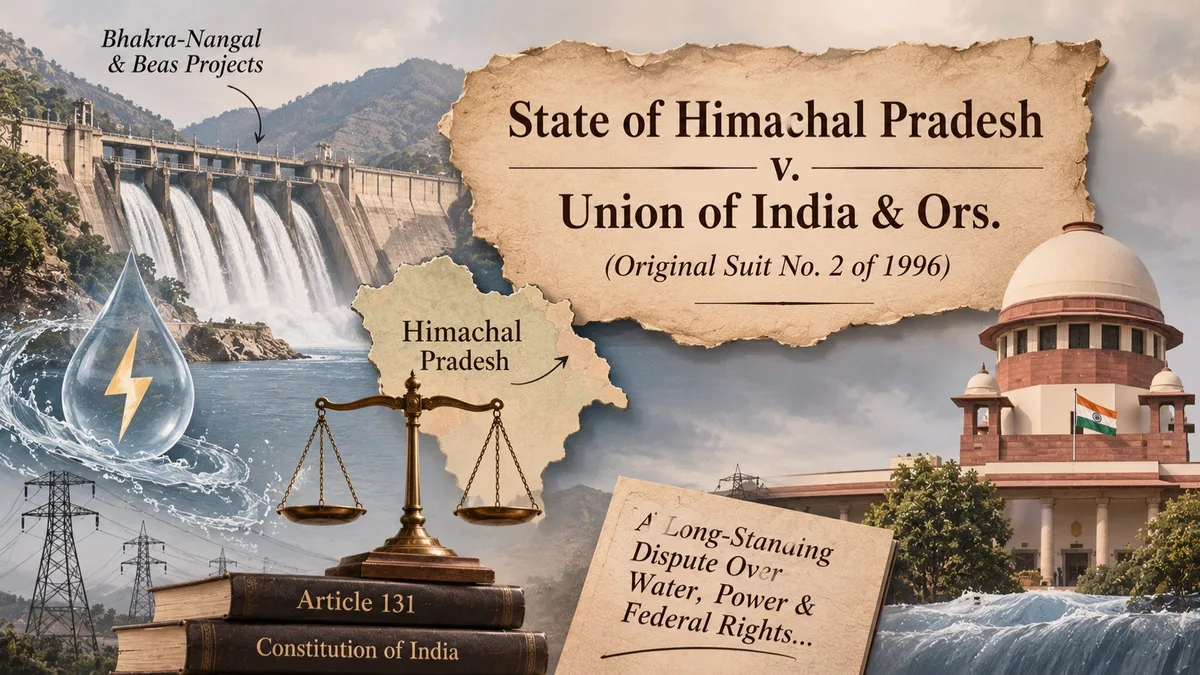
The Supreme Court issued final directions to implement Himachal Pradesh’s entitlement to power from the Bhakra-Nangal and Beas hydro-electric projects. It fixed energy arrears at…
The Securities and Exchange Board of India SEBI has modified the threshold limits for taking unhedged positions in foreign exchange currency derivative contracts involving the…
Registration & Launch of AIF Schemes ● Standardized Private Placement Memorandum PPM : Mandatory adherence to templated disclosures for Category I, II, and III AIFs, ensuring…
The Reserve Bank of India has introduced strict regulatory measures for the foreign exchange market to enhance discipline and risk management. Under the new directions issued via…
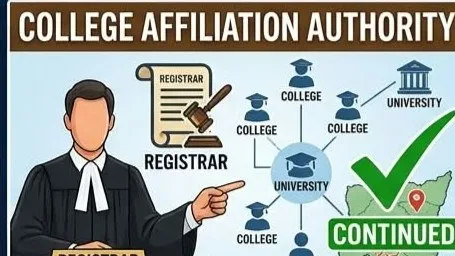
The petitioner dental college challenged the Registrar’s order rejecting continuation of its affiliation for the academic year 2026–27. The High Court held that, under the Kerala…
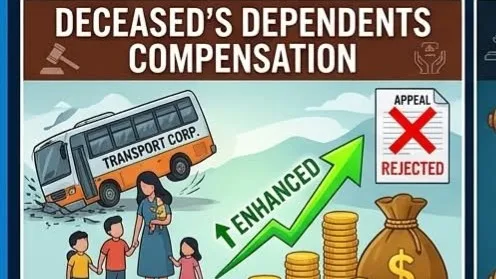
The High Court of Karnataka dismissed the appeal filed by the Karnataka State Road Transport Corporation KSRTC challenging its liability and partly allowed the appeal filed by the…
The Supreme Court upheld the compulsory retirement of two Assistant Grade-III employees of the Chhattisgarh Legal Metrology Department. It found that the State had reviewed their…