
The Division Bench dismissed the connected writ appeals, while making a limited modification to the Single Judge’s findings concerning the Bar Council of Kerala. In light of…
Civil Law
Court / Authority
Supreme Court of India
Update / Judgement Date
17 Nov 2026
Source
WCP News Bulletin
Author
Dipanshi Bansal — WCP Legal Desk
Reading Time
2 min read
View Count
2

The appellant, a public servant, had been convicted under Sections 7 and 13(1)(d), punishable under Section 13(2), of the Prevention of Corruption Act, 1988, on allegations that he demanded and accepted a bribe of ₹1,000 to forward two recovery cheques to the Labour Department. The prosecution relied substantially on recovery of tainted currency notes and positive hand/pocket wash results. The Supreme Court examined whether the essential element of demand and conscious acceptance had been proved.
Key Legal Issues
Whether recovery of tainted currency and positive chemical wash results, without reliable proof of demand and conscious acceptance, could sustain a corruption conviction; and whether the official record supported the prosecution’s allegation that the public servant had withheld the cheques to extract a bribe.
Analysis and Findings
The Court reiterated that mere recovery of tainted money is not enough where the prosecution fails to establish the demand for illegal gratification. Contemporaneous official records showed that the two cheques had already been dispatched by the appellant’s office on 28 December 2002 and were received by the Labour Department on 1 January 2003. The complainant collected them on 7 January 2003. Therefore, no related official work remained pending with the appellant on the alleged date of demand, 6 January 2003. This materially undermined the prosecution version. The appellant’s explanation that the complainant had attempted to thrust the money into his coat pocket while expressing gratitude was considered plausible. The defence needed to establish its version only on a preponderance of probabilities to rebut the statutory presumption under Section 20; the prosecution, by contrast, had to prove guilt beyond reasonable doubt.
Final Outcome
The appeal was allowed. The Supreme Court set aside the High Court and Special Judge judgments, acquitted Har Parsad Gaur of the charges under the Prevention of Corruption Act, and directed that his bail bonds stand discharged.
Relevant Law and Precedents
Full Judgement / Attachment
Full Judgement
Sections 7, 13(1)(d), 13(2) and 20 of the Prevention of Corruption Act, 1988. The decision underscores that demand and conscious acceptance are foundational elements of a bribery prosecution. Section 20’s presumption cannot be invoked unless the foundational facts are established; the accused may rebut the presumption on a preponderance of probabilities.
This summary is based on the uploaded judgment/order. It is an editorial summary and should be read with the original source for the complete record and operative directions.
© 2026 White Collar Professional Technologies Pvt. Ltd. All rights reserved. CIN: U74999MH2024PTC000001
The Division Bench dismissed the connected writ appeals, while making a limited modification to the Single Judge’s findings concerning the Bar Council of Kerala. In light of…

The High Court held that the trial court was not justified in directing the parties to undergo fresh DNA testing when the existing expert report had not been rejected for legally…

The High Court held that a subsequently communicated minimum 20% local-content requirement, including an indigenously developed EMS software condition, could not be…
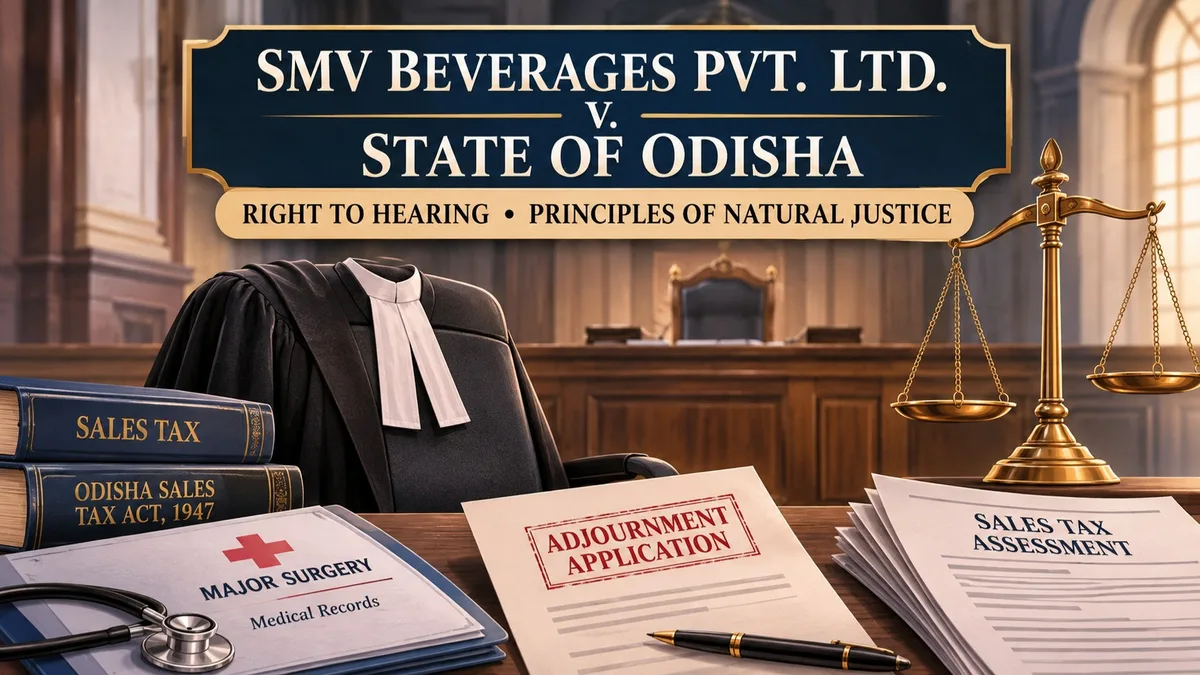
The Division Bench held that the petitioner had been deprived of a reasonable opportunity to present its case before the Commissioner of Sales Tax. An adjournment request must be…

The High Court exercised its inherent jurisdiction to quash a POCSO FIR and the pending trial after obtaining independent reports verifying the parties’ marriage, family…

The Division Bench held that the writ court had exceeded the proper scope of the dispute between the supplier and KSBCL by deciding, in effect, the Revenue’s separate tax…

The High Court considered the petitioners’ request for regular bail in an Enforcement Directorate prosecution alleging money laundering under the Prevention of Money Laundering…

The High Court upheld the appellant’s conviction under Section 18 c of the NDPS Act for possession of opium but reduced the sentence of seven years’ rigorous imprisonment to the…

The High Court dismissed the State’s appeal against acquittal, holding that the trial court’s view was a reasonably possible view on the evidence and that material inconsistencies…
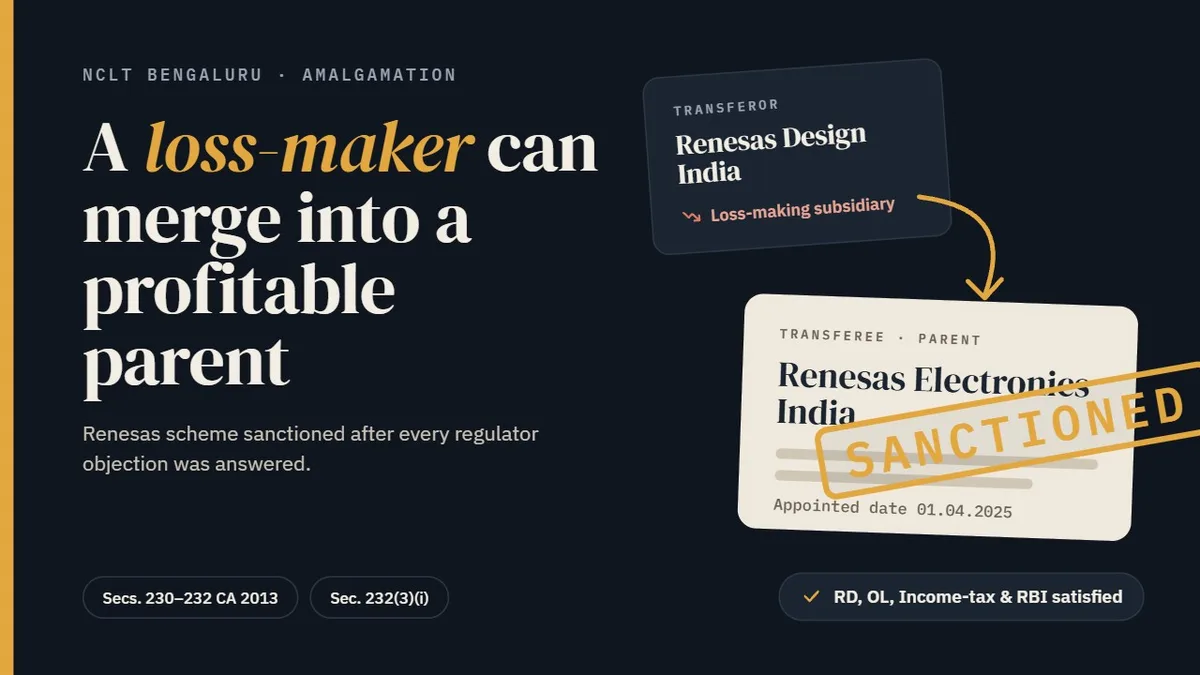
Renesas Design India Pvt. Ltd., a loss-making wholly owned subsidiary engaged in semiconductor design, and its parent Renesas Electronics India Pvt. Ltd. sought sanction of a…