The Supreme Court clarified the temporal operation of its 11 March 2026 judgment on OBC creamy-layer status. It declined to reopen selections, appointments or seniority already…
Civil Law
Court / Authority
Bombay High Court
Update / Judgement Date
30 Oct 2026
Date of Publication
02 Nov 2026
Case No.
Arbitration Petition No. 380 of 2020
Source
WCP News Bulletin
Author
Pranjal Jha — WCP Legal Desk
Reading Time
8 min read
View Count
7
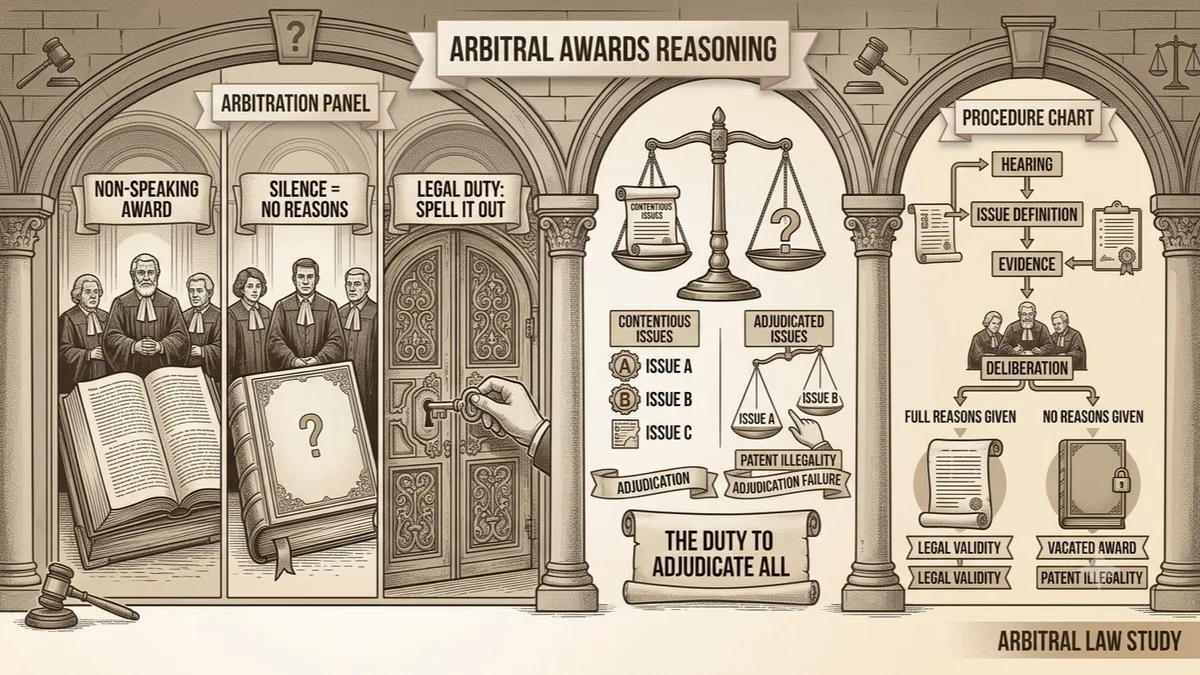
This judgment concerns the challenge to an arbitral award arising from a dispute between a stockbroker, 5 Paisa Capital Limited, and its client, Ankit Agarwal. A technical glitch in the broker’s online trading system allegedly resulted in excess margin being reflected in the client’s account. The parties disagreed over who was responsible for the resulting trading losses.
The Bombay High Court ultimately set aside the arbitral awards, not because it independently decided who was responsible for the losses, but because the arbitral tribunals had failed to give reasoned findings on the central issues in dispute.
Facts of the case
The dispute escalated when the broker squared off the Respondent's positions under its Risk Policy because his margin cover had fallen below the prescribed threshold. A debit balance remained outstanding even after the square-off.
The broker claimed that the Respondent owed it approximately ₹6.53 lakh, whereas the Respondent filed a counterclaim for approximately ₹15 lakh in alleged trading losses, along with ₹1.62 lakh towards 1,260 bonus shares of Adani Gas Ltd.
Procedural history
The dispute went through the following stages:
Full Judgement / Attachment
Full Judgement
Main issues before the High Court
The central question was whether the arbitral awards could stand when the tribunals had not properly adjudicated the parties' competing claims.
The Court identified eight unresolved issues in paragraph 20 of the judgment:
Important: The High Court did not decide these questions on their merits. It examined whether the arbitral tribunals had actually adjudicated them.
Arguments of the parties
Petitioner's arguments (5 Paisa Capital Limited)
The broker argued that:
Respondent's arguments (Ankit Agarwal)
The Respondent argued that:
Court's analysis and reasoning
The Court began by reiterating that Section 34 does not permit a general appeal against an arbitral award. Judicial interference is limited to the grounds specified in the Act.
However, the Court found a fundamental defect in the appellate arbitral award.
A. Reproduction of submissions is not adjudication
The Appellate Arbitral Tribunal had reproduced the parties' submissions and then concluded that both parties had a responsibility to report abnormalities in the trading system.
It did not explain:
The Court held that merely reproducing submissions cannot amount to adjudication. An arbitral tribunal must actually decide the rival contentions and record its findings.
B. The eight material issues remained unanswered
C. The Court cannot supply missing findings
D. Patent illegality under Section 34(2A)
Important judgments relied upon
Case Legal principle applied
Final decision
The Bombay High Court allowed the Section 34 petition and set aside the appellate arbitral award, which had upheld the original award.
The Court also directed that:
Importantly, the Court did not decide whether the broker or the client was ultimately responsible for the trading losses. That dispute remained open for fresh arbitration.
Ratio decidendi
An arbitral award may be set aside under Section 34(2A) of the Arbitration and Conciliation Act, 1996, where the tribunal fails to record findings on material and contentious issues that go to the root of the dispute. Merely reproducing the submissions of the parties and stating a conclusion without adjudicating their rival contentions does not constitute a reasoned award. A court exercising jurisdiction under Section 34 cannot independently supply findings that the arbitral tribunal has failed to make.
© 2026 White Collar Professional Technologies Pvt. Ltd. All rights reserved. CIN: U74999MH2024PTC000001
The Supreme Court clarified the temporal operation of its 11 March 2026 judgment on OBC creamy-layer status. It declined to reopen selections, appointments or seniority already…
The Supreme Court upheld the Delhi High Court Full Bench decision that the National Book Trust, India is an instrumentality of the State under Article 12 of the Constitution. The…
The Supreme Court issued further directions in the continuing proceedings concerning encroachments and ecological restoration in the Agasthyamalai landscape of Tamil Nadu. It…
The Supreme Court issued final directions to implement Himachal Pradesh’s entitlement to power from the Bhakra-Nangal and Beas hydro-electric projects. It fixed energy arrears at…

The Securities and Exchange Board of India SEBI has modified the threshold limits for taking unhedged positions in foreign exchange currency derivative contracts involving the…

Registration & Launch of AIF Schemes ● Standardized Private Placement Memorandum PPM : Mandatory adherence to templated disclosures for Category I, II, and III AIFs, ensuring…

The Reserve Bank of India has introduced strict regulatory measures for the foreign exchange market to enhance discipline and risk management. Under the new directions issued via…

The petitioner dental college challenged the Registrar’s order rejecting continuation of its affiliation for the academic year 2026–27. The High Court held that, under the Kerala…

The High Court of Karnataka dismissed the appeal filed by the Karnataka State Road Transport Corporation KSRTC challenging its liability and partly allowed the appeal filed by the…
The Supreme Court upheld the compulsory retirement of two Assistant Grade-III employees of the Chhattisgarh Legal Metrology Department. It found that the State had reviewed their…