
The appellant sought, under the RTI Act, records of complaints and representations received by IBBI, communications between IBBI and the insolvency professionals, and copies of…
Insolvency & Bankruptcy Code
24/11/20264 min read
Update / Judgement Date
08 Sept 2025
Source
Author
Team — WCP Legal Desk
Reading Time
2 min read
View Count
1
The Punjab and Haryana High Court issued stern warnings to municipal authorities over their negligence in leaving manholes uncovered in the Naya Gaon area, which posed serious threats to public safety, especially to pedestrians and children. Taking suo motu cognizance following multiple complaints and media reports, the Court highlighted that open manholes reflect gross dereliction of duty and disregard for citizens’ right to life under Article 21. The bench criticized the civic bodies for failing to carry out basic maintenance responsibilities despite receiving adequate funds and resources for urban management. It stressed that such negligence often results in tragic accidents, for which authorities can be held personally liable. The Court directed the municipal authority to immediately cover all open manholes, prepare a detailed status report on inspection and repair works, and establish a mechanism for regular monitoring to prevent recurrence. The ruling also touched on broader themes of urban governance, accountability, and citizen safety, asserting that civic bodies cannot function with impunity when their inaction endangers lives. By imposing strict deadlines and warning of contempt action in case of non-compliance, the Court reinforced that public safety is a non-negotiable responsibility of local administrations. The judgment is significant in pushing municipal bodies toward greater transparency and proactive maintenance, while also setting a precedent for courts to step in where administrative inertia jeopardizes public welfare. It underscores that governance failures in urban infrastructure can attract judicial intervention, ensuring that the fundamental rights of residents are safeguarded against preventable hazards.
© 2026 White Collar Professional Technologies Pvt. Ltd. All rights reserved. CIN: U74999MH2024PTC000001
The appellant sought, under the RTI Act, records of complaints and representations received by IBBI, communications between IBBI and the insolvency professionals, and copies of…

IGNOU entrusted recruitment to 200 Junior Assistant-cum-Typist posts to NTA; after a computer-based test 25,094 candidates and a typing test 1,985 candidates , NTA declared 199…
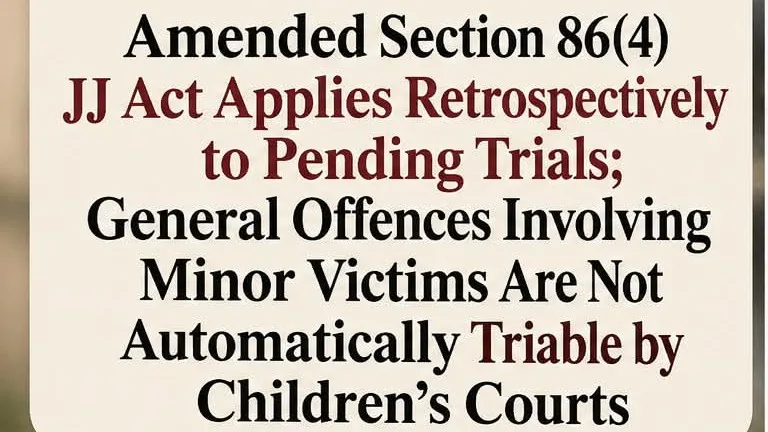
The Delhi High Court considered whether the 2021 amendment inserting Section 86 4 into the Juvenile Justice Care and Protection of Children Act, 2015 applied to trials already…
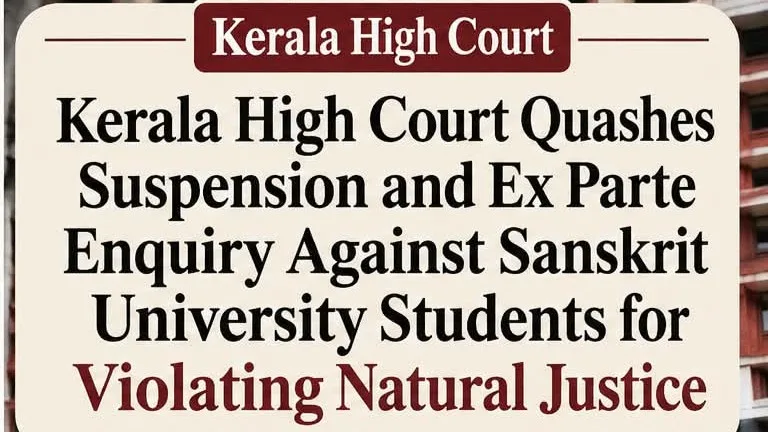
Sixteen students of Sree Sankaracharya University of Sanskrit, Kalady challenged their suspension and subsequent disciplinary punishments arising out of a campus protest during a…

The Kerala High Court held that the custody requirement in Section 306 4 b of the Code of Criminal Procedure, 1973 CrPC applies to a pardon tendered by a Magistrate under Section…

National Testing Agency had applied an incorrect typing-speed threshold and the assessment required correction, the identified discrepancies did not establish that the…
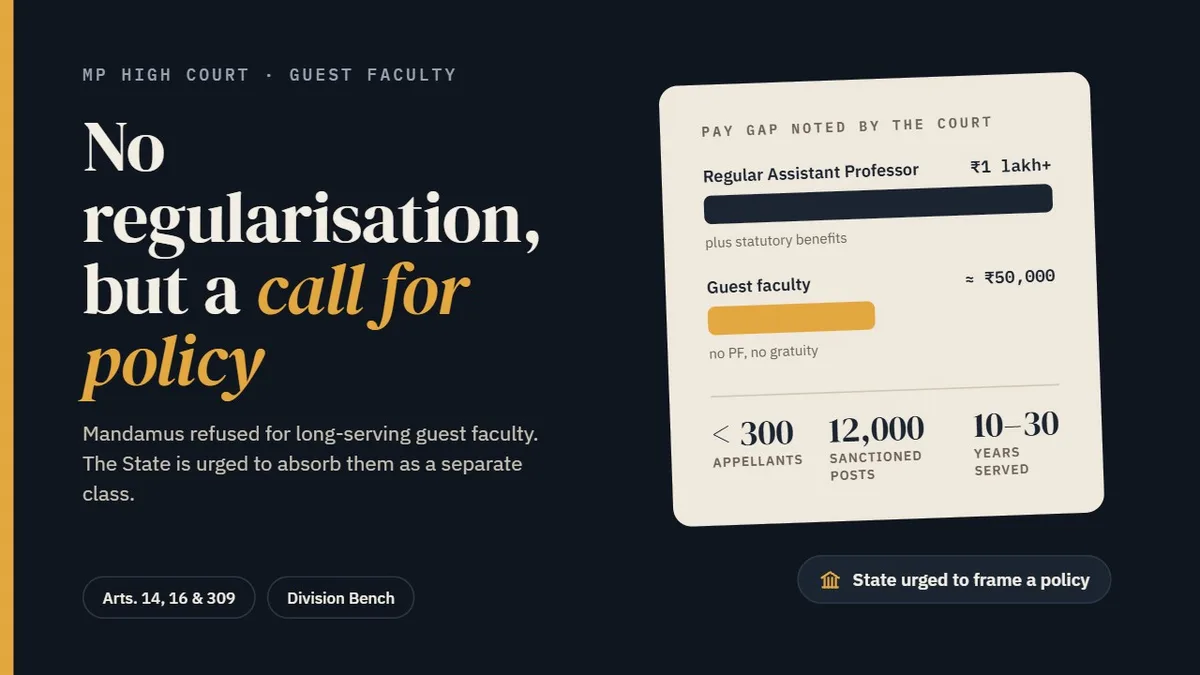
A batch of writ appeals was filed by guest faculty – Assistant Professors, Sports Officers and Librarians engaged after advertisement and selection and serving 10 to 30 years in…

Directorate of Enforcement, Mumbai Zonal Office-I | Draft Press Release | 23 November 2026 The Directorate of Enforcement's draft press release states that its Mumbai Zonal…

The Directorate of Enforcement's draft press release states that its Guwahati Zonal Office-I has provisionally attached movable and immovable properties valued at ₹70.09 lakh in a…

The National Company Law Tribunal, New Delhi Court-IV, approved a resolution plan valued at ₹30.90 crore for Shyam Indofab Private Limited on 8 September 2026. The plan, submitted…