The Supreme Court clarified the temporal operation of its 11 March 2026 judgment on OBC creamy-layer status. It declined to reopen selections, appointments or seniority already…
Civil Law
Court / Authority
Himachal Pradesh High Court
Update / Judgement Date
31 Oct 2026
Date of Publication
03 Nov 2026
Case No.
CWP No. 6015 of 2026
Source
WCP News Bulletin
Author
Soumya Gupta — WCP Legal Desk
Reading Time
7 min read
View Count
5
● The petitioners were schools and educational institutions operating or arranging vehicles to transport students and staff. They challenged Cause (xi) of Rule 73-A(1)A of the Himachal Pradesh Motor Vehicles Rules, 1999, inserted by Notification dated 12 October 2018.
● The impugned clause provided that vehicles providing transportation facilities to schools would not be more than 15 years old.
● The petitioners contended that vehicle age alone could not determine roadworthiness; some vehicles travelled only short distances and remained fit for use beyond 15 years. They also raised concerns about the financial burden of replacing vehicles.
● The petitioners challenged the State’s competence to prescribe the age restriction, relying principally on Section 59 of the Motor Vehicles Act, which empowers the Central Government to specify the life of motor vehicles.
● The State traced the amendment to the Nurpur school-bus accident of 9 April 2018, in which 27 persons, including 23 schoolchildren, died. A High-Level Committee was constituted, draft safety guidelines were circulated for stakeholder comments, and the 15-year restriction was incorporated into Rule 73-A.
● The lead petition was CWP No. 11377 of 2025. The present matter, CWP No. 6015 of 2026, was one of 21 petitions decided through the common judgment reserved on 27 October 2026 and pronounced on 31 October 2026.
● The petitioners sought, inter alia, a direction restraining application of the clause and its quashing.
Issues For Consideration :
● Whether the State Government had authority under Section 96 of the Motor Vehicles Act to prescribe a maximum age of 15 years for vehicles used to transport students.
● Whether Rule 73-A(1)A(xi) encroached upon the Central Government’s power under Section 59 to fix the life of motor vehicles.
● Whether the 15-year restriction was arbitrary, unreasonable or discriminatory, particularly where a vehicle remained roadworthy and its use was economically viable.
● Whether the expression “School” in Rule 73-A(1)A(xi) extended to educational institutions other than conventional schools.
Submissions Of Parties :
Petitioners:
● Section 59 vested the Central Government with the power to fix the life of motor vehicles; the State could not create a separate age-based disability through subordinate rules.
● Section 96 did not expressly authorize the State to fix the maximum age of vehicles used for school transportation.
Full Judgement / Attachment
Full Judgement
● Age was not a reliable indicator of roadworthiness. Vehicles maintained in good condition and certified fit should be permitted to transport students.
● The vehicles covered short distances, and the restriction imposed an avoidable financial burden on educational institutions, which could ultimately be passed on to students.
● Nursing and pharmacy institutions argued that they were not “Schools” and should not be covered by Clause (xi).
Respondents / State:
● Section 96 conferred broad rule-making power on the State for carrying out Chapter V of the Motor Vehicles Act, including conditions relating to private service vehicle permits under Section 76.
● The 15-year restriction was introduced as a student-safety measure after the Nurpur school-bus tragedy and followed committee deliberations and stakeholder consultation.
● School-transport vehicles formed a distinct category requiring stricter safety standards. Financial considerations could not override the safety of children.
● The restriction applied to all educational institutions whose vehicles were governed by Rule 73-A, including colleges, training centres and vocational institutions.
● Comparable restrictions existed under the motor vehicle rules of Chhattisgarh, Uttar Pradesh and Haryana.
Court's Observations & Analysis :
Re: Distinction between Sections 59 and 96
● Section 59 empowered the Central Government to specify the overall life of a motor vehicle, after which it would not be deemed compliant with the Act and Rules.
● Clause (xi), in contrast, did not declare that a vehicle had reached the end of its legal life. It restricted only the period during which the vehicle could be used to provide transportation facilities to schools.
● After the 15-year period, a vehicle could still be used for another lawful purpose, provided it remained within the overall life fixed by the Central Government under Section 59.
● The State’s restriction therefore did not usurp or alter the Central Government’s power under Section 59. (Paras 41–46, 56–58)
Re: State’s rule-making competence under Section 96
● Section 96(1) authorized the State Government to make rules to carry into effect Chapter V of the Act. Its power was not confined to the illustrative matters listed in Section 96(2).
● Section 76, which governed private service vehicle permits, formed part of Chapter V. The State could therefore prescribe conditions connected with such permits, including the permissible period for use of a vehicle for school transportation.
● The Court applied the principles governing challenges to subordinate legislation and held that Rule 73-A was traceable to Section 96 and remained within the scope of the delegated power. (Paras 47–55, 59–65)
Re: Arbitrariness, roadworthiness and financial burden
● The Court held that the safety of school-going children was paramount and could not be measured in monetary terms.
● The 15-year limit was not arbitrary. Other States had adopted comparable restrictions, including a 12-year limit in Chhattisgarh and a 15-year limit in Uttar Pradesh and Haryana.
● Periodic fitness inspections and roadworthiness alone were not sufficient to address risks associated with older vehicles, including structural fatigue, material degradation, outdated safety technology and sudden mechanical failure.
● The fact that students might also travel in older public or government transport vehicles did not invalidate a separate safety condition for vehicles specifically used as educational institution buses.
● The restriction did not make a vehicle useless after 15 years; it could continue to be used for other purposes in accordance with the Act and Rules. (Paras 66–75)
Re: Meaning of “School” and coverage of educational institutions
● The heading of Rule 73-A referred to buses or vehicles owned by or attached to Schools/Educational Institutions.
● Reading Rule 73-A harmoniously, the Court held that “School” in the general conditions was not confined to institutions imparting education up to Class 10 or 10+2.
● Nursing, pharmacy, engineering, medical and other educational institutions were included where they were subject to the general conditions under Rule 73-A(1)A.
● An institution required to comply with Clauses (i) to (x) and (xii) to (xx) could not claim exemption from Clause (xi). (Paras 76–80)
Notable Observations:
● “the safety of the students is paramount.” (Para 69)
● “roadworthiness of a vehicle cannot be the sole criteria” for deciding the maximum age of a vehicle used to transport students. (Para 72)
Decision & Directions :
● All connected writ petitions, including CWP No. 6015 of 2026, were dismissed as devoid of merit.
● The Court upheld the validity of Rule 73-A and Clause (xi) of Rule 73-A(1)A of the Himachal Pradesh Motor Vehicles Rules, 1999.
● The Court held that the 15-year restriction was within the State’s rule-making competence under Section 96 and did not offend Section 59 of the Motor Vehicles Act.
● The Court clarified that the clause applied to all educational institutions bound by the general conditions in Rule 73-A(1)A; “School” was not restricted to institutions imparting education up to Class 10 or 10+2.
● Interim orders were vacated forthwith. Pending miscellaneous applications, if any, were disposed of.
● No order as to costs.
● Separate Opinions: None
© 2026 White Collar Professional Technologies Pvt. Ltd. All rights reserved. CIN: U74999MH2024PTC000001
The Supreme Court clarified the temporal operation of its 11 March 2026 judgment on OBC creamy-layer status. It declined to reopen selections, appointments or seniority already…
The Supreme Court upheld the Delhi High Court Full Bench decision that the National Book Trust, India is an instrumentality of the State under Article 12 of the Constitution. The…
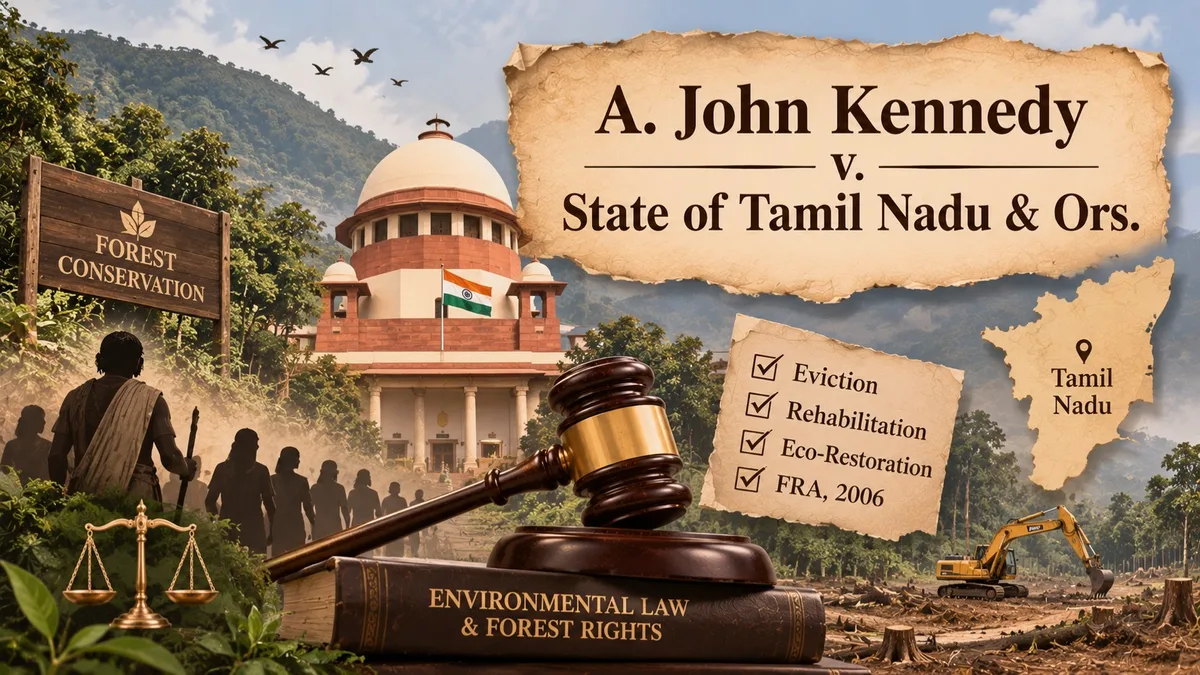
The Supreme Court issued further directions in the continuing proceedings concerning encroachments and ecological restoration in the Agasthyamalai landscape of Tamil Nadu. It…
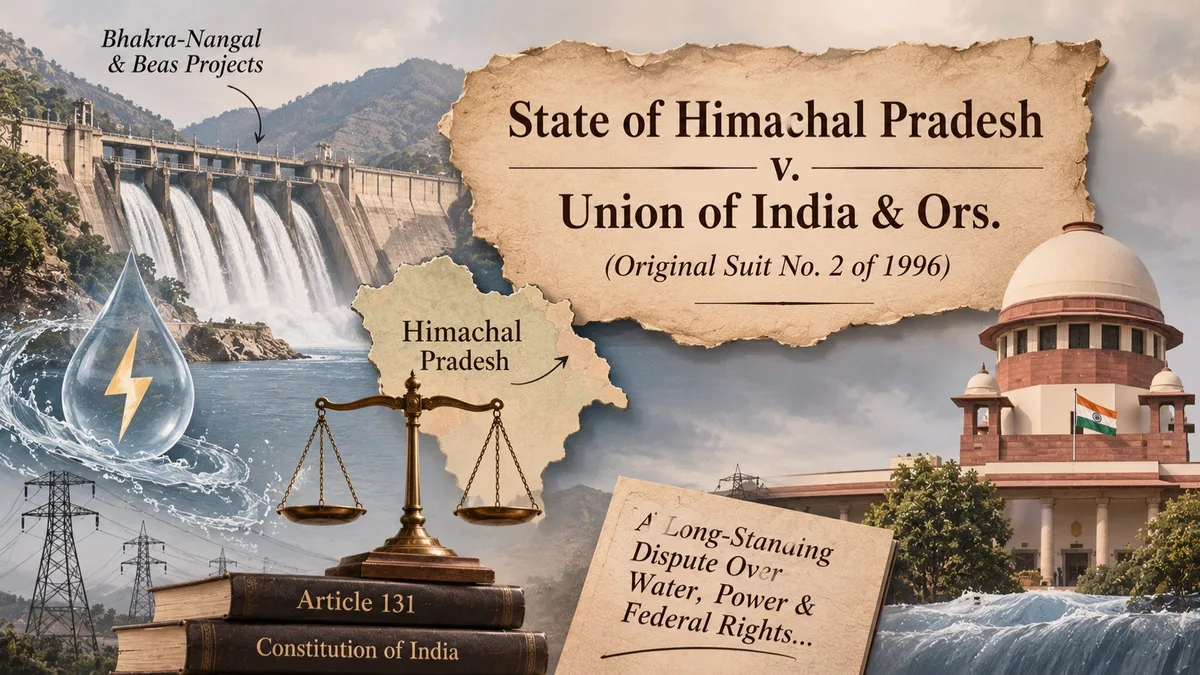
The Supreme Court issued final directions to implement Himachal Pradesh’s entitlement to power from the Bhakra-Nangal and Beas hydro-electric projects. It fixed energy arrears at…

The Securities and Exchange Board of India SEBI has modified the threshold limits for taking unhedged positions in foreign exchange currency derivative contracts involving the…
Registration & Launch of AIF Schemes ● Standardized Private Placement Memorandum PPM : Mandatory adherence to templated disclosures for Category I, II, and III AIFs, ensuring…
The Reserve Bank of India has introduced strict regulatory measures for the foreign exchange market to enhance discipline and risk management. Under the new directions issued via…
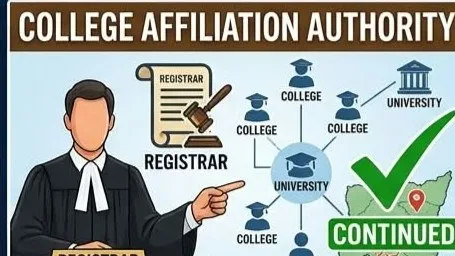
The petitioner dental college challenged the Registrar’s order rejecting continuation of its affiliation for the academic year 2026–27. The High Court held that, under the Kerala…
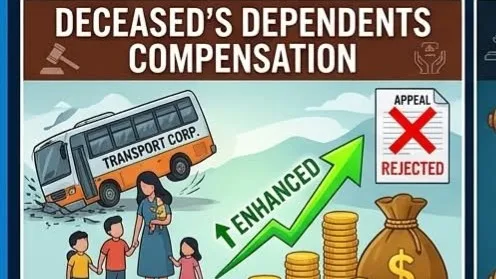
The High Court of Karnataka dismissed the appeal filed by the Karnataka State Road Transport Corporation KSRTC challenging its liability and partly allowed the appeal filed by the…
The Supreme Court upheld the compulsory retirement of two Assistant Grade-III employees of the Chhattisgarh Legal Metrology Department. It found that the State had reviewed their…