The Supreme Court clarified the temporal operation of its 11 March 2026 judgment on OBC creamy-layer status. It declined to reopen selections, appointments or seniority already…
Civil Law
Court / Authority
Himachal Pradesh High Court
Update / Judgement Date
31 Oct 2026
Date of Publication
03 Nov 2026
Case No.
CWP No. 20937 of 2025
Source
WCP News Bulletin
Author
Soumya Gupta — WCP Legal Desk
Reading Time
8 min read
View Count
5
● Twenty-one writ petitions were heard together because they raised common questions concerning Rule 73-A of the Himachal Pradesh Motor Vehicles Rules, 1999. Shiva Educational Society was the petitioner in CWP Nos. 20934, 20936 and 20937 of 2025; this summary concerns CWP No. 20937 of 2025. (Paras 1–3)
● Rule 73-A was inserted by notification dated 12 October 2018. Clause (xi) of Rule 73-A(1)A provided that vehicles providing transportation facilities to schools could not be more than 15 years old. (Paras 2, 4)
● The petitioners operated vehicles under private service vehicle permits to transport students and staff, and contended that their vehicles travelled short distances and remained roadworthy beyond 15 years. (Paras 5–9)
● The petitioners sought, among other reliefs, to prevent application of the clause to their vehicles and to have the impugned clause quashed. The common judgment treated CWP No. 11377 of 2025 as the lead case for pleadings; the reliefs in the connected petitions were stated to be almost the same. (Para 3)
● The State traced the amendment to the Nurpur school-bus accident of 9 April 2018, in which 27 persons, including 23 schoolchildren, lost their lives. A High-Level Committee was constituted on 10 April 2018; draft guidelines were published and stakeholder comments considered before the rule was notified. (Paras 17, 36–37)
Issues For Consideration :
● Whether the State Government had authority under the Motor Vehicles Act, 1988 to insert Rule 73-A and prescribe a 15-year age limit for vehicles used to transport students.
● Whether Rule 73-A(1)A(xi) conflicted with Section 59 of the Motor Vehicles Act, which empowered the Central Government to specify the life of motor vehicles.
● Whether the 15-year restriction was arbitrary or unreasonable under Article 14, particularly where a vehicle remained roadworthy and was used for short distances.
● Whether the word “School” in Rule 73-A(1)A(xi) covered nursing, pharmacy and other educational institutions.
Submissions Of Parties :
Petitioners:
● The State had exceeded its rule-making competence. Section 59 vested the Central Government with the power to specify the life of motor vehicles, and Section 96 did not expressly authorize the State to impose a separate age-based prohibition. (Paras 11, 13–14)
● Vehicle age was not a reliable indicator of roadworthiness. Vehicles that were properly maintained and certified fit should be permitted to transport students, particularly where they travelled only short distances. The restriction was alleged to violate Article 14. (Paras 11–12)
Full Judgement / Attachment
Full Judgement
● The restriction ignored the financial position of educational institutions, would force them to replace otherwise usable vehicles and could shift the cost to students. (Paras 5, 12–14)
● Nursing and pharmacy institutions contended that they were not “Schools” and therefore should not be covered by a clause using that word. (Para 11)
Respondents / State:
● Sections 76 and 96 empowered the State to prescribe conditions for private service vehicle permits. The impugned rule was within the State’s delegated rule-making power. (Paras 16, 22)
● The 15-year limit was introduced after the Nurpur school-bus tragedy, a committee process, public consultation and consideration of stakeholder suggestions. (Para 17)
● Student safety was paramount. Older vehicles could suffer structural fatigue, material degradation, outdated safety technology and sudden mechanical failures not necessarily revealed by periodic fitness inspections. (Para 18)
● The restriction applied to vehicles used by all educational institutions for student transportation, and did not prevent a vehicle from being used for other lawful purposes after 15 years. (Paras 16–18)
Court's Observations & Analysis :
Re: Issue 1 – State’s rule-making competence
● Section 76(3)(vii) permitted the Regional Transport Authority to attach to a permit such other conditions as may be prescribed. Section 96(1) authorized the State Government to make rules to carry out the provisions of Chapter V, which included Section 76. (Paras 30–35, 47–55)
● The Court held that the State’s power to prescribe permit conditions included the power to specify the period for which a vehicle could be used to provide transportation to schools. The rule supplemented the parent statute and was within the delegated field. (Paras 54–55, 61–65)
● Comparative rules in Chhattisgarh, Uttar Pradesh and Haryana also prescribed maximum ages for educational institution vehicles, supporting the conclusion that such permit conditions could be framed by States. (Paras 66–68)
● Held: Rule 73-A(1)A(xi) was within the State’s rule-making competence and was not ultra vires the parent Act. (Paras 61–68)
Re: Issue 2 – Relationship between Sections 59 and 96
● Section 59 empowered the Central Government to specify the life of a motor vehicle, after which it would not be deemed compliant with the Motor Vehicles Act and the rules. The State could not alter or supplant that overall vehicle-life determination. (Paras 29, 41–44, 56–57)
● Rule 73-A(1)A(xi), however, did not determine the general legal life of a vehicle. It restricted the use of a vehicle for the specific purpose of transporting students to schools to 15 years. After that period, the vehicle could still be used for other lawful purposes if otherwise registered and compliant. (Paras 43–46, 58, 69)
● The 15-year permit condition had to operate within Section 59: it could not extend a vehicle’s use beyond a shorter life fixed by the Central Government. (Paras 56–58)
● Held: The two provisions operated in distinct fields; the impugned clause did not offend Section 59. (Paras 56–65)
Re: Issue 3 – Arbitrariness and student safety
● The Court treated the age limit as a preventive measure intended to reduce safety risks before an accident occurred. It accepted that older vehicles could have structural fatigue, material degradation, outdated safety technology and mechanical-failure risks that periodic fitness inspections might not detect. (Paras 69–72)
● The financial burden on institutions did not outweigh the safety of school-going children. The restriction did not render vehicles unusable for all purposes after 15 years. (Para 69)
● The fact that students might also travel in older public or private vehicles did not invalidate a special age condition for vehicles specifically used by educational institutions. (Para 70)
● The Court considered the 15-year period reasonable in light of the hilly terrain of Himachal Pradesh and the shorter 12-year limit adopted in Chhattisgarh. It held that roadworthiness alone could not be the sole criterion for deciding the maximum permissible age. (Paras 71–73)
● Held: The 15-year restriction was not arbitrary and did not violate Article 14. (Paras 69–73)
Re: Issue 4 – Meaning of “School” and coverage of educational institutions
● Rule 73-A’s heading referred to buses or vehicles owned or attached to “School/Educational Institutions”. The rule also set out general conditions applicable to the listed categories of vehicles. (Paras 74–77)
● Reading Rule 73-A harmoniously, the Court held that “School” in the general safety conditions was not confined to institutions imparting education up to Class 10 or 10+2. It included nursing, pharmacy, engineering, medical and other educational institutions. (Paras 78–80)
● An institution required to comply with the other general conditions in Clauses (i)–(x) and (xii)–(xx) could not claim exemption from Clause (xi). The petitioners did not dispute that the other general conditions applied to them. (Para 80)
● Held: Clause (xi) applied to all educational institutions governed by the general conditions in Rule 73-A(1)A. (Paras 80–81)
Notable Observations:
● The Court reasoned that student safety could not be subordinated to the financial considerations of the institutions. (Para 69; paraphrase)
● The Court held that roadworthiness alone could not determine the maximum permissible age of a vehicle used to transport students. (Para 72; paraphrase)
Decision & Directions :
● All connected writ petitions, including CWP No. 20937 of 2025, were dismissed as devoid of merit. (Para 81)
● The Court upheld the validity of the notification dated 12 October 2018 inserting Rule 73-A and upheld Clause (xi) of Rule 73-A(1)A. (Para 81)
● It was declared that Clause (xi) applied to all educational institutions to which the general conditions in Rule 73-A(1)A applied; “School” was not to be read narrowly as covering only schools up to Class 10 or 10+2. (Para 81)
● Interim orders were vacated forthwith. Pending miscellaneous applications, if any, stood disposed of. There was no order as to costs. (Para 81)
● Separate opinions: None. The common judgment was authored by Justice Ajay Mohan Goel.
© 2026 White Collar Professional Technologies Pvt. Ltd. All rights reserved. CIN: U74999MH2024PTC000001
The Supreme Court clarified the temporal operation of its 11 March 2026 judgment on OBC creamy-layer status. It declined to reopen selections, appointments or seniority already…
The Supreme Court upheld the Delhi High Court Full Bench decision that the National Book Trust, India is an instrumentality of the State under Article 12 of the Constitution. The…
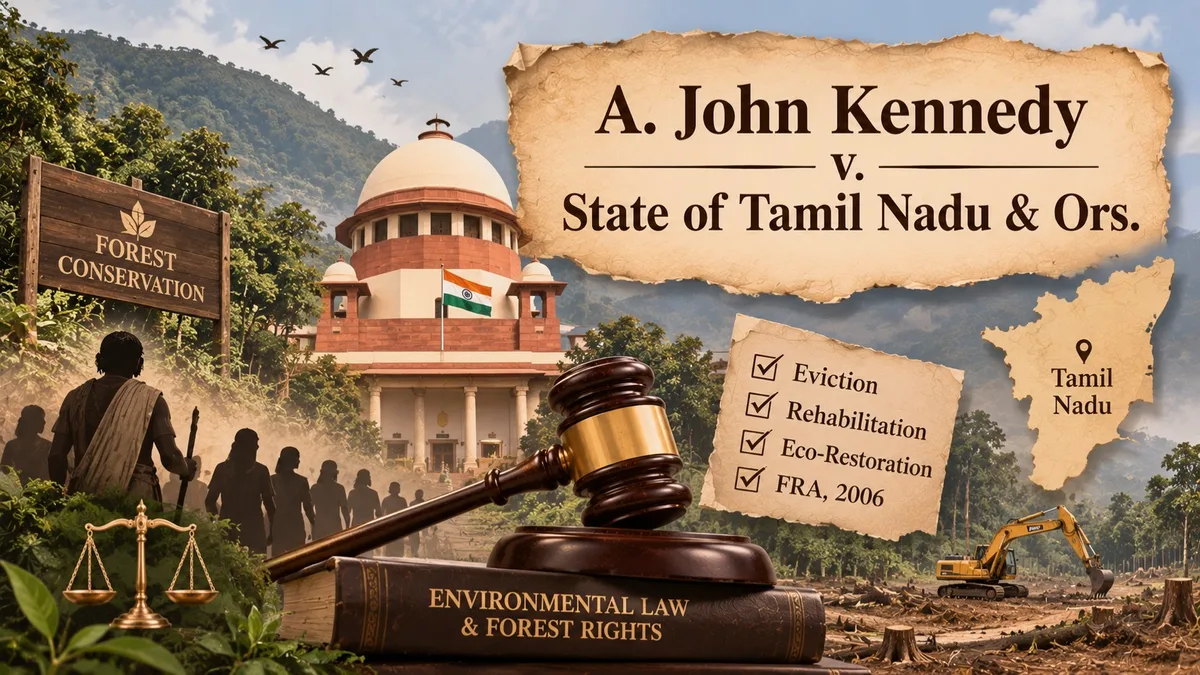
The Supreme Court issued further directions in the continuing proceedings concerning encroachments and ecological restoration in the Agasthyamalai landscape of Tamil Nadu. It…

The Supreme Court issued final directions to implement Himachal Pradesh’s entitlement to power from the Bhakra-Nangal and Beas hydro-electric projects. It fixed energy arrears at…

The Securities and Exchange Board of India SEBI has modified the threshold limits for taking unhedged positions in foreign exchange currency derivative contracts involving the…
Registration & Launch of AIF Schemes ● Standardized Private Placement Memorandum PPM : Mandatory adherence to templated disclosures for Category I, II, and III AIFs, ensuring…
The Reserve Bank of India has introduced strict regulatory measures for the foreign exchange market to enhance discipline and risk management. Under the new directions issued via…
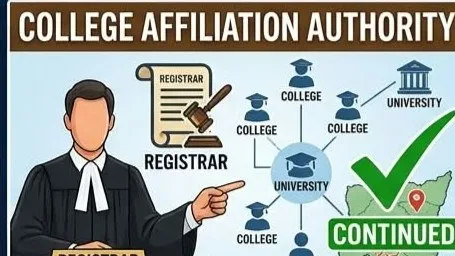
The petitioner dental college challenged the Registrar’s order rejecting continuation of its affiliation for the academic year 2026–27. The High Court held that, under the Kerala…
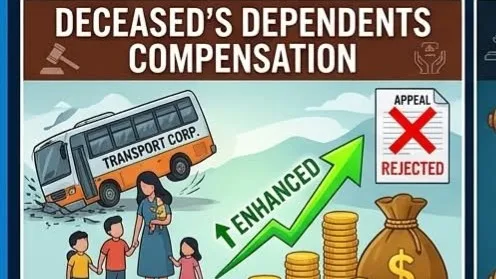
The High Court of Karnataka dismissed the appeal filed by the Karnataka State Road Transport Corporation KSRTC challenging its liability and partly allowed the appeal filed by the…
The Supreme Court upheld the compulsory retirement of two Assistant Grade-III employees of the Chhattisgarh Legal Metrology Department. It found that the State had reviewed their…