
The Supreme Court dismissed the husband’s appeals and upheld the enhancement of interim maintenance payable to his wife from ₹75,000 to ₹1,50,000 per month. The Court found the…
Family Law
Court / Authority
Supreme Court of India
Update / Judgement Date
16 Nov 2026
Source
WCP News Bulletin
Author
Dipanshi Bansal — WCP Legal Desk
Reading Time
5 min read
View Count

The Supreme Court examined the termination of an Associate Professor during probation at the Indian Institute of Science, Bengaluru. The central question was whether a termination order expressed as a simple discharge was genuinely an assessment of suitability or was punitive in substance because it rested on adverse findings recorded behind the employee’s back. The judgment provides a detailed discussion of the purpose of probation, the distinction between a termination simpliciter and a stigmatic or punitive termination, and the limits of judicial review.
Key Highlights
Background and Procedural History
The appellant joined the Indian Institute of Science on 15 April 2011 after appointment under a project supported by the Ministry of Earth Sciences. The appointment was contractual for five years, with an initial probationary period of one year. Committees assessed his performance and recommended extension of probation in 2012. A committee constituted in March 2013 recommended discontinuation. The Institute issued an office memorandum dated 10 April 2013 terminating his service with effect from 9 May 2013. The Karnataka High Court dismissed his writ petition and writ appeal. The Supreme Court appeal was filed after delay, when the original contractual period had practically expired.
Full Judgement / Attachment
Full Judgement
Issues for Determination
Court’s Analysis and Findings
Final Decision / Outcome
The Supreme Court dismissed the appeal as devoid of merit and upheld the Institute’s decision to discharge the appellant during probation. It held that the termination was a genuine termination simpliciter following an assessment of suitability, not a punitive order founded on a proved charge of misconduct. The challenge to Regulation 13.5 and the objection to extension of probation were also rejected. Parties were directed to bear their own costs.
Relevant Statutes and Precedents
The judgment discusses Article 226 of the Constitution, the Institute’s Regulations 13.3 and 13.5, and principles governing probationary employment. Ajit Singh v. State of Punjab explains the purpose of probation; Parshotam Lal Dhingra provides the foundational distinction between termination simpliciter and punitive termination. Samsher Singh, Anoop Jaiswal, Indra Pal Gupta, Mahaveer C. Singhvi and Palak Modi address cases where the apparent form of a termination order must be tested against its true foundation.
© 2026 White Collar Professional Technologies Pvt. Ltd. All rights reserved. CIN: U74999MH2024PTC000001
The Supreme Court dismissed the husband’s appeals and upheld the enhancement of interim maintenance payable to his wife from ₹75,000 to ₹1,50,000 per month. The Court found the…
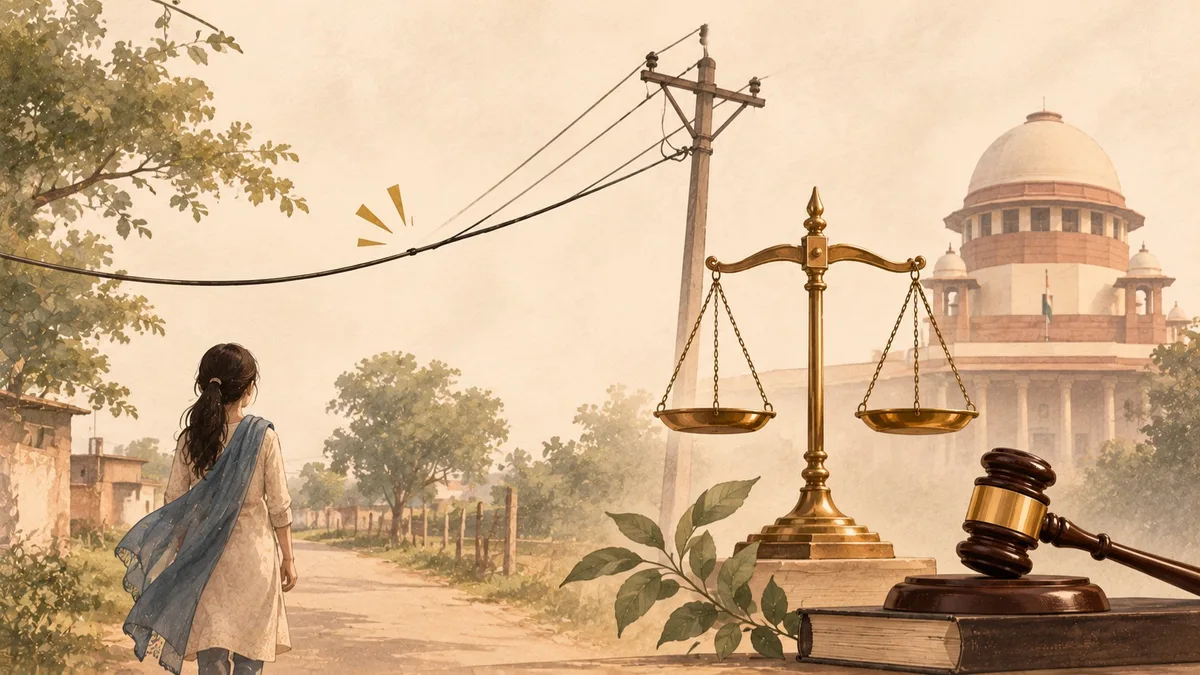
The Supreme Court allowed the appeal of a woman who suffered severe electrocution injuries, resulting in amputation of her right hand and permanent disability. It set aside the…

The Supreme Court dismissed the Delhi Development Authority’s appeals and upheld directions requiring release of gratuity to two retired employees who had been honourably…

The Supreme Court dismissed the challenge by candidates to the recruitment process for Excise Constables in Nagaland. It held that the recruitment was governed by the Nagaland…

The Supreme Court dismissed the State of Kerala’s appeal against a finding that 12 acres of land in Edakkara Village, Malappuram District, did not constitute private forest and…

The Supreme Court allowed the Union of India’s transfer petitions and directed that two cases registered in Jammu and Kashmir and Haryana be transferred to the NIA Special Court…
The Supreme Court considered a batch of appeals arising from the insolvency resolution processes of Videocon Industries Limited VIL , twelve other Videocon group companies and…
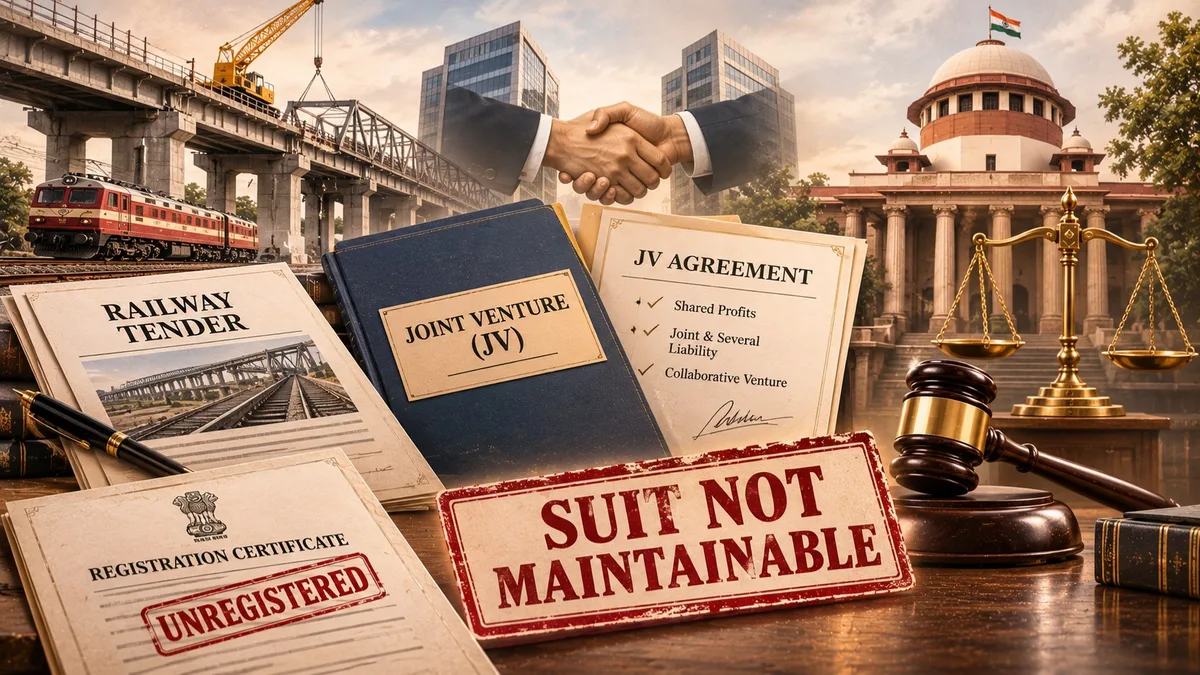
A joint venture formed by two companies was a partnership on the substance of its agreement, including the project business, profit-sharing and mutual agency; because the…
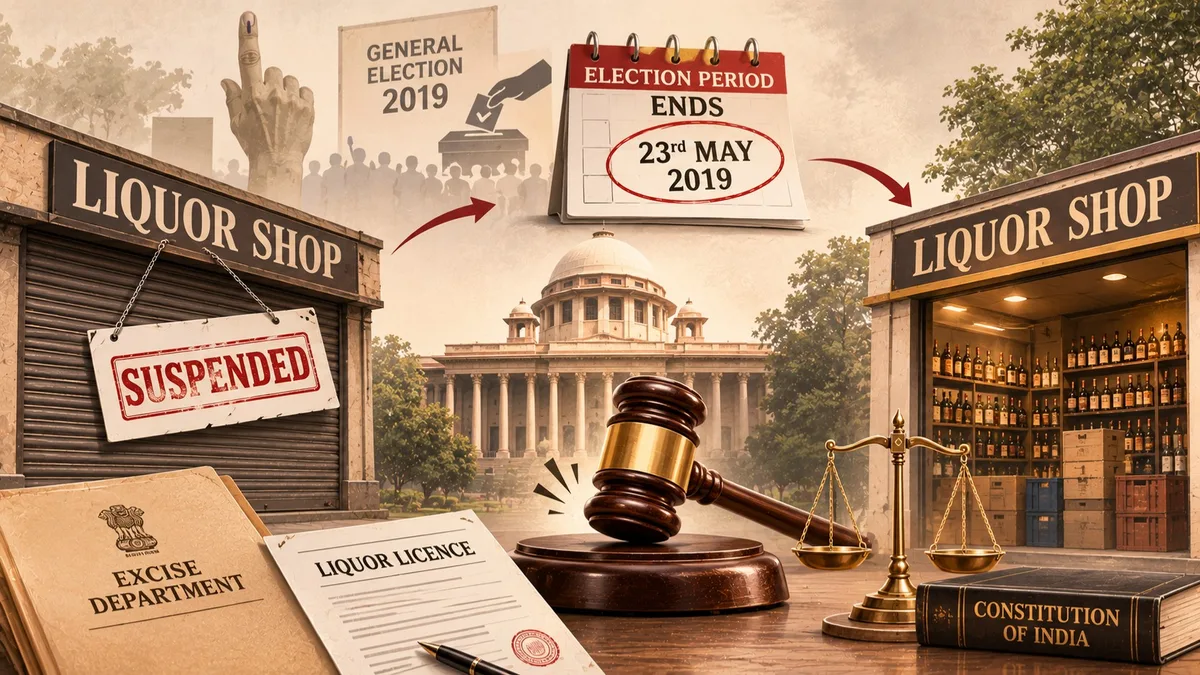
Although no fundamental right exists to carry on the liquor trade, the State cannot keep temporary licences suspended beyond the election period without disclosing cogent reasons…
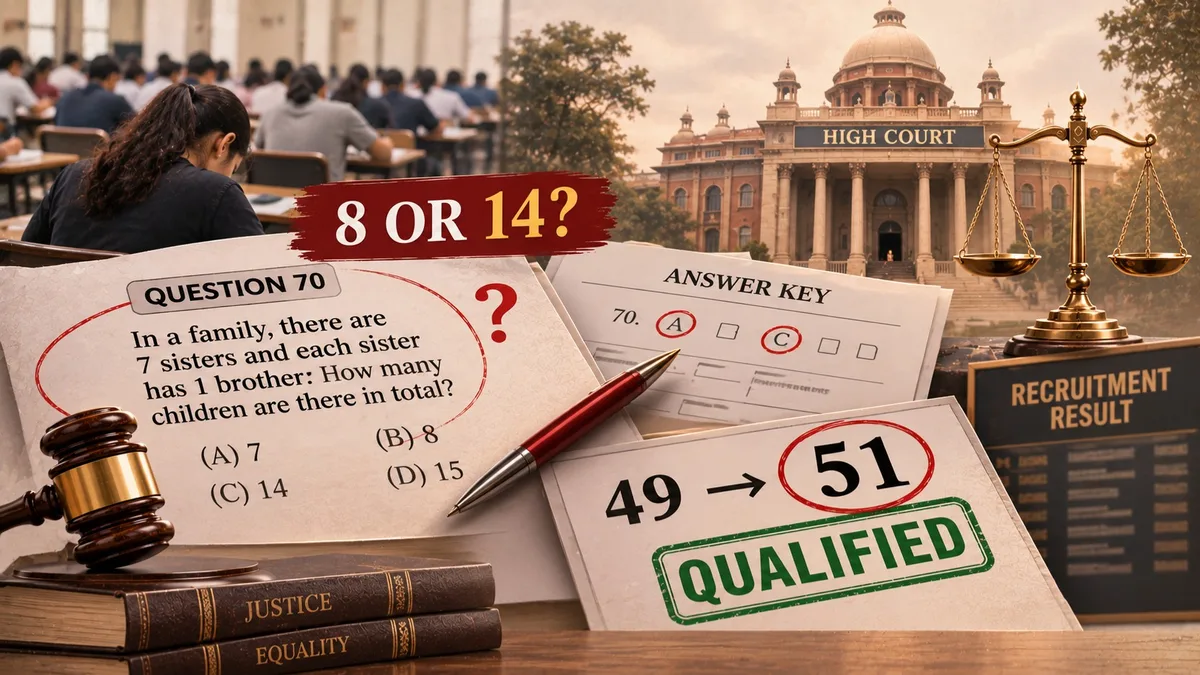
In the LDA/24 recruitment examination, candidates who selected either of the two disputed answers to Question No. 70 were directed to receive the mark and have the negative…