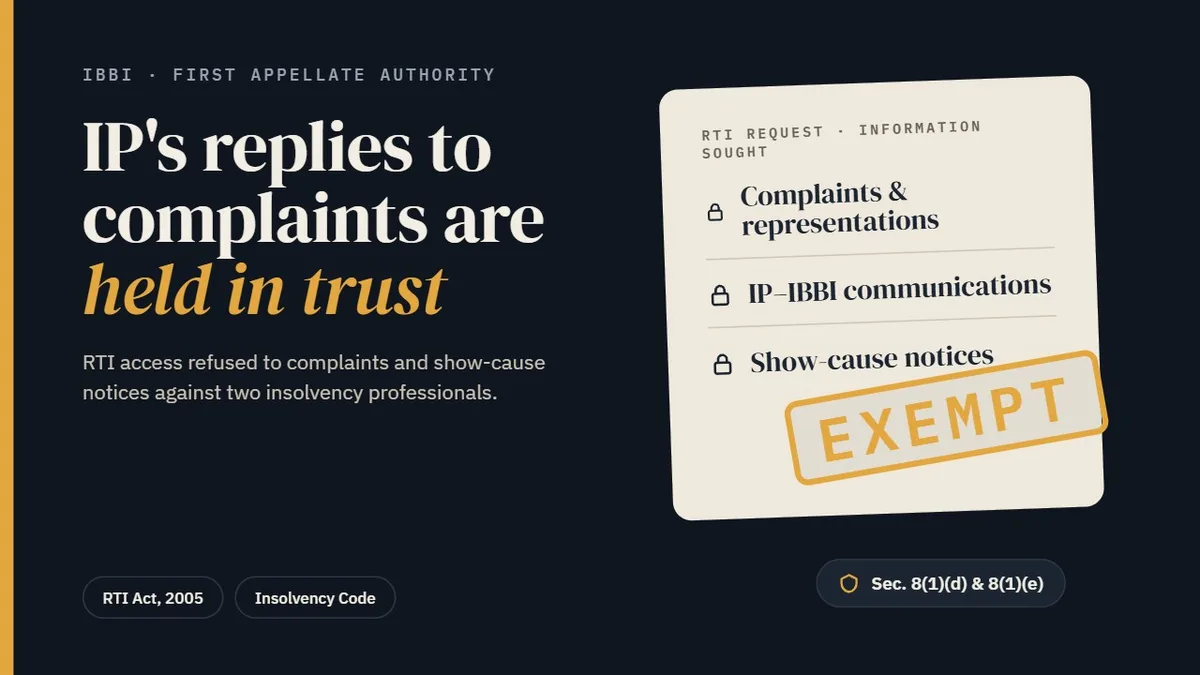
The appellant sought, under the RTI Act, records of complaints and representations received by IBBI, communications between IBBI and the insolvency professionals, and copies of…
Insolvency & Bankruptcy Code
24/11/20264 min read
Update / Judgement Date
17 Oct 2025
Source
WCP News Bulletin
Author
Sakshi Bhardwaj — WCP Legal Desk
Reading Time
2 min read
View Count
Headnote:
The Supreme Court of India allowed the appeal filed by Kannaiya and his co-accused, Govardhan, Raja Ram, and Bhima, and acquitted them of charges under Section 302 IPC. The Court found material contradictions and improbabilities in the prosecution evidence, including inconsistent accounts of the incident’s genesis and place, omission of key witnesses in the FIR, and conflicting testimonies from eyewitnesses Madho Singh (PW-5) and Puniya (PW-12). Observing that such contradictions rendered the prosecution case unsafe, the Court held that conviction could not be sustained. The appeal was allowed, and the accused were acquitted.
Background:
• The deceased, Ramesh, was allegedly assaulted by the appellants during a political rivalry.
• FIR alleged the incident began with demolition of a hut by the accused.
• Key eyewitnesses, Madho Singh (PW-5) and Puniya (PW-12), claimed to have witnessed the assault.
• The appellants challenged the conviction, highlighting contradictions in witness statements and omission of critical facts from the FIR.
Court’s Observations:
• Genesis and circumstances of the incident were inconsistently described.
• Omission of Puniya’s presence from the FIR raised doubts about the prosecution’s narrative.
• Madho Singh’s testimony conflicted with site inspection findings.
• Absence of corroborative evidence and inherent improbabilities made the prosecution case unsafe.
• Following precedents such as Vadivelu Thevar v. State of Madras, Pankaj v. State of Rajasthan, and Bhagwan Sahai v. State of Rajasthan, the Court held that conviction cannot be sustained when facts are doubtful.
Legal Provisions Discussed:
• Section 302, Indian Penal Code – Punishment for murder.
• Principles of criminal jurisprudence regarding evaluation of witness evidence, contradictions, and safe conviction.
Citation: 2025:SC:CR:2339
Case: Kannaiya & Ors. v. State of Maharashtra
Court: Supreme Court of India
Criminal Appeal No.: [CRIMINAL APPEAL No./SLP(CRIMINAL) 2339/2025]
© 2026 White Collar Professional Technologies Pvt. Ltd. All rights reserved. CIN: U74999MH2024PTC000001
The appellant sought, under the RTI Act, records of complaints and representations received by IBBI, communications between IBBI and the insolvency professionals, and copies of…

IGNOU entrusted recruitment to 200 Junior Assistant-cum-Typist posts to NTA; after a computer-based test 25,094 candidates and a typing test 1,985 candidates , NTA declared 199…
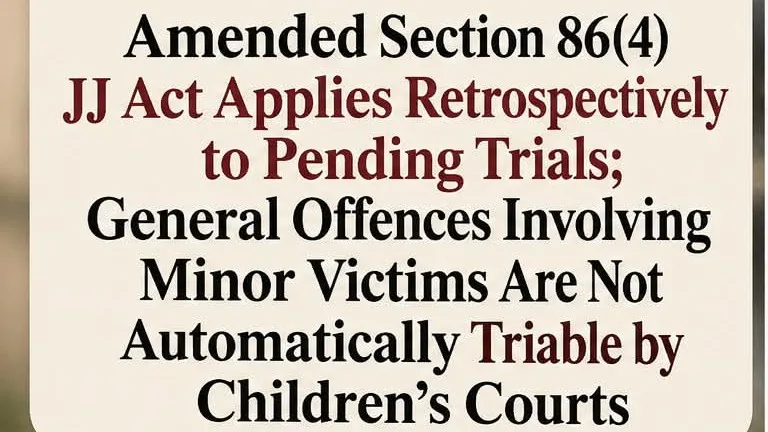
The Delhi High Court considered whether the 2021 amendment inserting Section 86 4 into the Juvenile Justice Care and Protection of Children Act, 2015 applied to trials already…
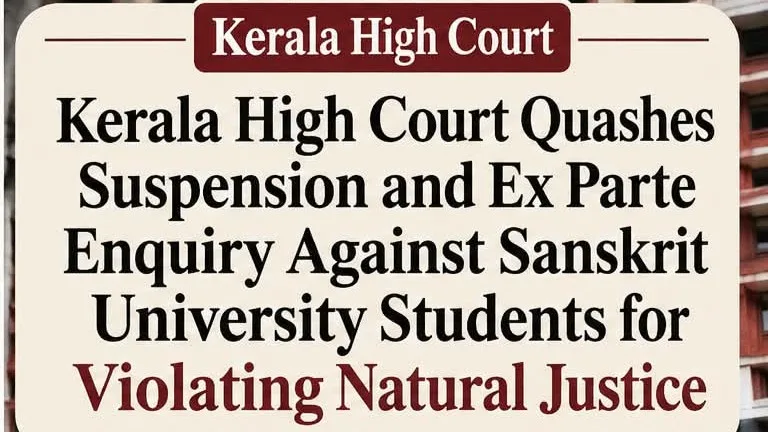
Sixteen students of Sree Sankaracharya University of Sanskrit, Kalady challenged their suspension and subsequent disciplinary punishments arising out of a campus protest during a…
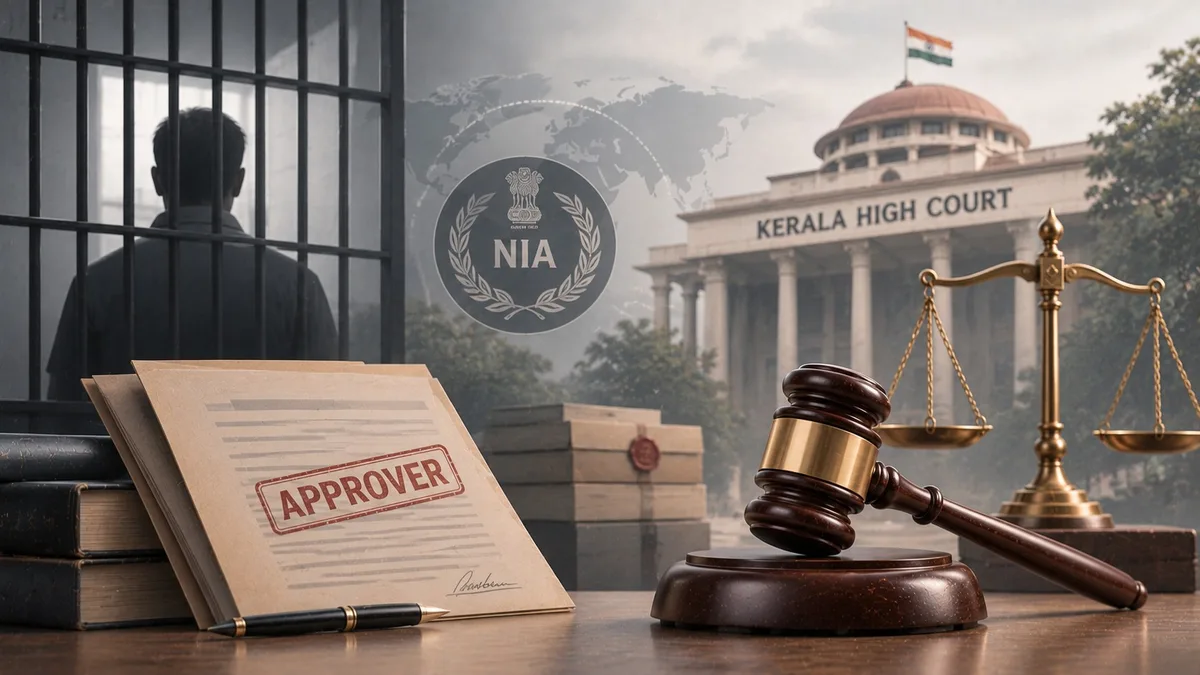
The Kerala High Court held that the custody requirement in Section 306 4 b of the Code of Criminal Procedure, 1973 CrPC applies to a pardon tendered by a Magistrate under Section…

National Testing Agency had applied an incorrect typing-speed threshold and the assessment required correction, the identified discrepancies did not establish that the…
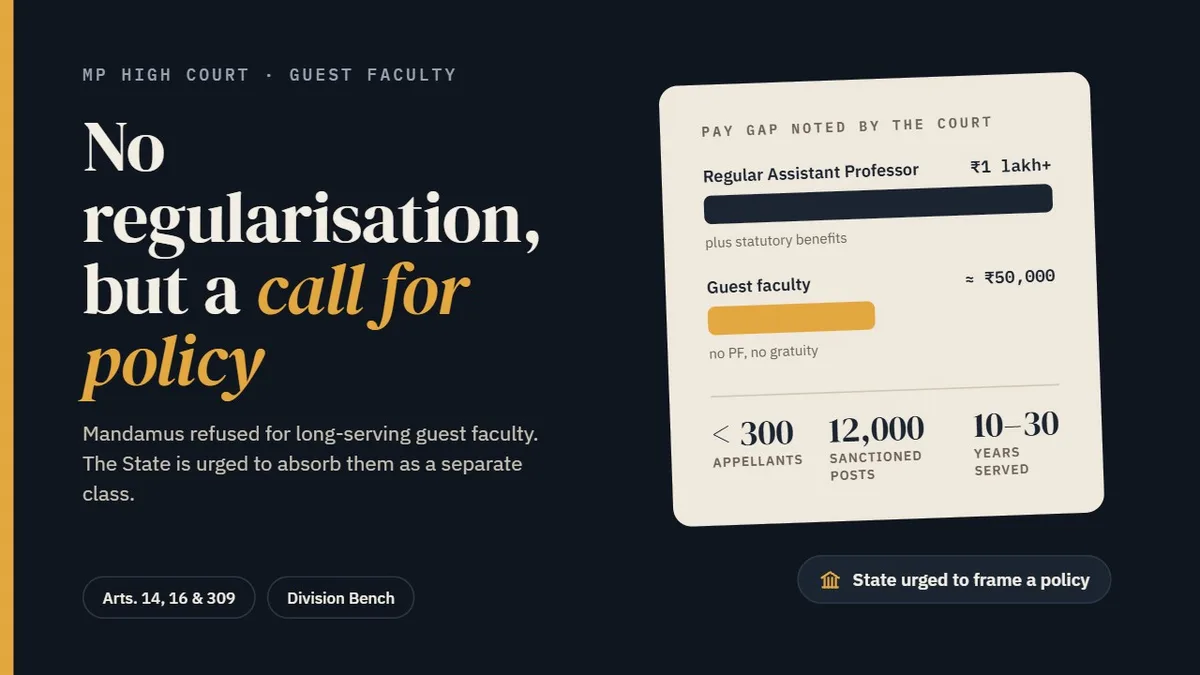
A batch of writ appeals was filed by guest faculty – Assistant Professors, Sports Officers and Librarians engaged after advertisement and selection and serving 10 to 30 years in…
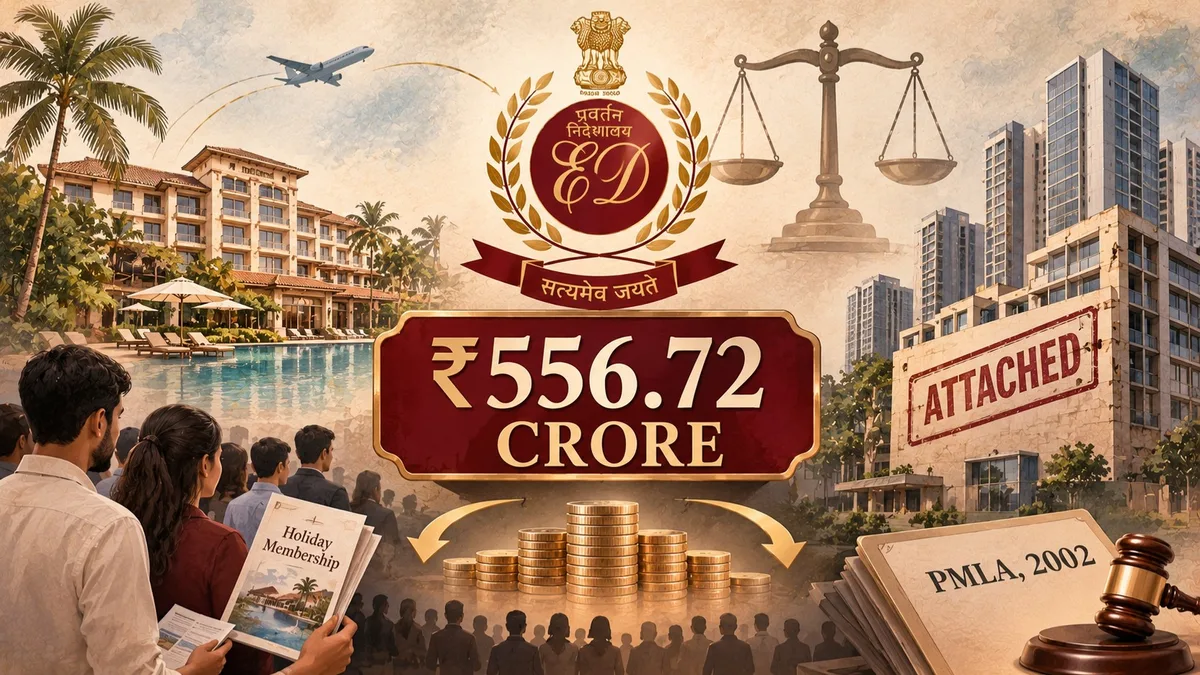
Directorate of Enforcement, Mumbai Zonal Office-I | Draft Press Release | 23 November 2026 The Directorate of Enforcement's draft press release states that its Mumbai Zonal…

The Directorate of Enforcement's draft press release states that its Guwahati Zonal Office-I has provisionally attached movable and immovable properties valued at ₹70.09 lakh in a…

The National Company Law Tribunal, New Delhi Court-IV, approved a resolution plan valued at ₹30.90 crore for Shyam Indofab Private Limited on 8 September 2026. The plan, submitted…