
The Division Bench dismissed the connected writ appeals, while making a limited modification to the Single Judge’s findings concerning the Bar Council of Kerala. In light of…
Civil Law
Update / Judgement Date
31 Oct 2025
Source
WCP News Bulletin
Author
Sakshi Bhardwaj — WCP Legal Desk
Reading Time
3 min read
View Count
1
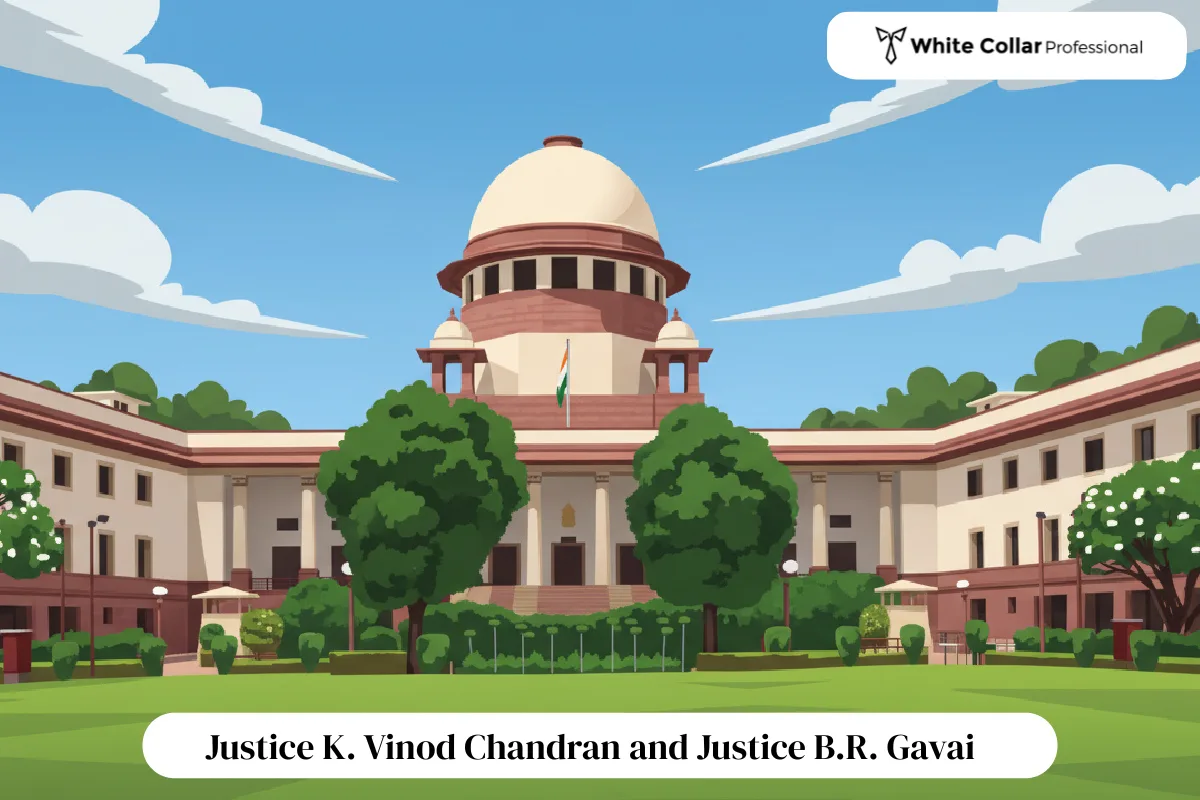
The Supreme Court rejected a plea for de-sealing of premises in New Rajinder Nagar Market, New Delhi, within the ongoing M.C. Mehta v. Union of India proceedings concerning misuse of residential properties for commercial purposes. The Court held that the applicant failed to prove authorized commercial use of upper floors beyond the ground floor. It emphasized that even in “shop-cum-residence” zones, commercial conversion is permissible only after due payment of conversion and penalty charges under the Delhi Master Plan.
• The applicant sought de-sealing of property bearing Plot No. 106, New Rajinder Nagar Market, claiming that it had historically been used for commercial purposes and should be regularized under the Judicial Committee’s 2023 directions.
• The premises had been sealed for unauthorized commercial use as part of the M.C. Mehta monitoring process addressing large-scale misuse of residential buildings in Delhi.
• Delhi’s land-use regulation evolved through the 1962 Master Plan, the establishment of a Monitoring Committee in 2006, and later a Judicial Committee in 2022 to handle sealing and de-sealing issues.
• On examining the lease deed, L&DO records, and sanctioned building plan, the Court found that only the ground floor of the property was approved for commercial use, while the remaining floors were residential.
• The applicant’s claim of long-standing commercial activity was unsupported by any official authorization or documentary evidence.
• The Court noted that the Master Plan for Delhi 2021 classified New Rajinder Nagar as a “Local Shopping Centre (LSC)” or “shop-cum-residence” area, allowing commercial use only after due conversion and penalty payments.
• The Court directed the Municipal Corporation of Delhi (MCD) to inspect the premises, assess unauthorized constructions, and allow regularization upon compliance with applicable regulations and payment of charges.
• The application for de-sealing was dismissed, reaffirming the principle that land-use conversions must strictly conform to statutory planning norms.
• Delhi Development Act, 1957 – Regulation of land use and building development.
• Master Plan for Delhi 2021 – Classification of residential, commercial, and mixed-use zones.
• Articles 32 & 142, Constitution of India – Supreme Court’s jurisdiction to enforce environmental and planning regulations.
Citation: 2025 INSC 1274
Case: M.C. Mehta v. Union of India & Ors.
Court: Supreme Court of India
Coram: Chief Justice B.R. Gavai & Justice K. Vinod Chandran
Date of Decision: 31 October 2025
I.A. No.: 138132 of 2023 in W.P.(C) No. 4677 of 1985
© 2026 White Collar Professional Technologies Pvt. Ltd. All rights reserved. CIN: U74999MH2024PTC000001
The Division Bench dismissed the connected writ appeals, while making a limited modification to the Single Judge’s findings concerning the Bar Council of Kerala. In light of…

The High Court held that the trial court was not justified in directing the parties to undergo fresh DNA testing when the existing expert report had not been rejected for legally…

The High Court held that a subsequently communicated minimum 20% local-content requirement, including an indigenously developed EMS software condition, could not be…
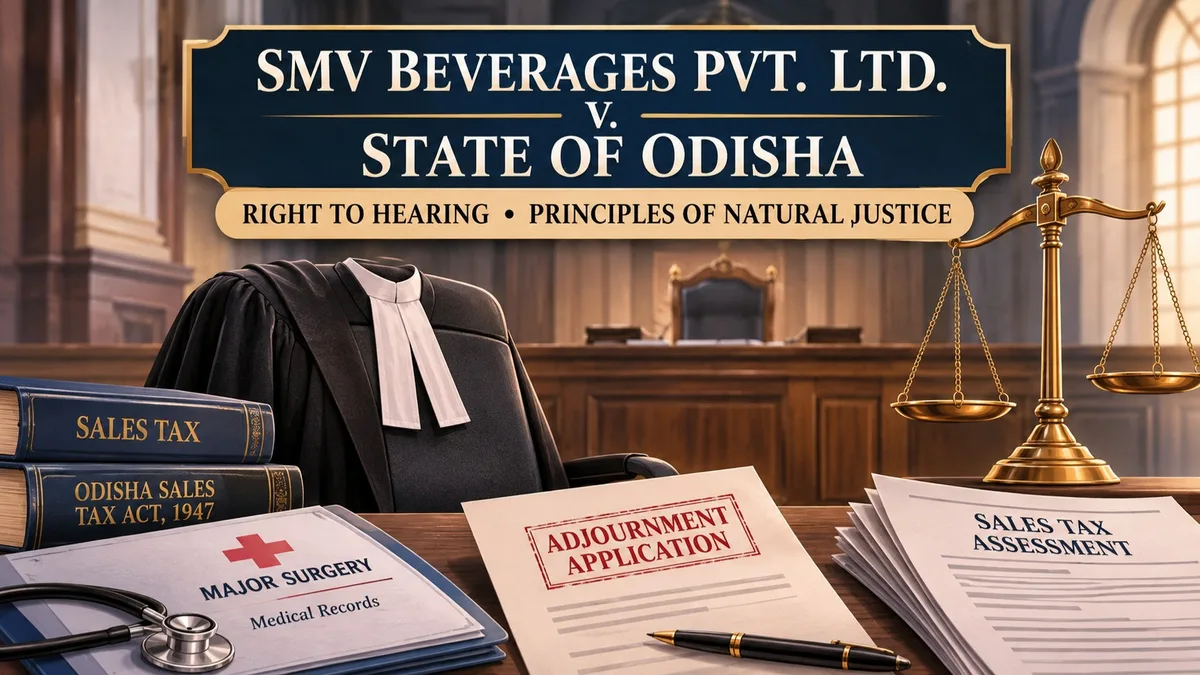
The Division Bench held that the petitioner had been deprived of a reasonable opportunity to present its case before the Commissioner of Sales Tax. An adjournment request must be…

The High Court exercised its inherent jurisdiction to quash a POCSO FIR and the pending trial after obtaining independent reports verifying the parties’ marriage, family…

The Division Bench held that the writ court had exceeded the proper scope of the dispute between the supplier and KSBCL by deciding, in effect, the Revenue’s separate tax…

The High Court considered the petitioners’ request for regular bail in an Enforcement Directorate prosecution alleging money laundering under the Prevention of Money Laundering…

The High Court upheld the appellant’s conviction under Section 18 c of the NDPS Act for possession of opium but reduced the sentence of seven years’ rigorous imprisonment to the…

The High Court dismissed the State’s appeal against acquittal, holding that the trial court’s view was a reasonably possible view on the evidence and that material inconsistencies…
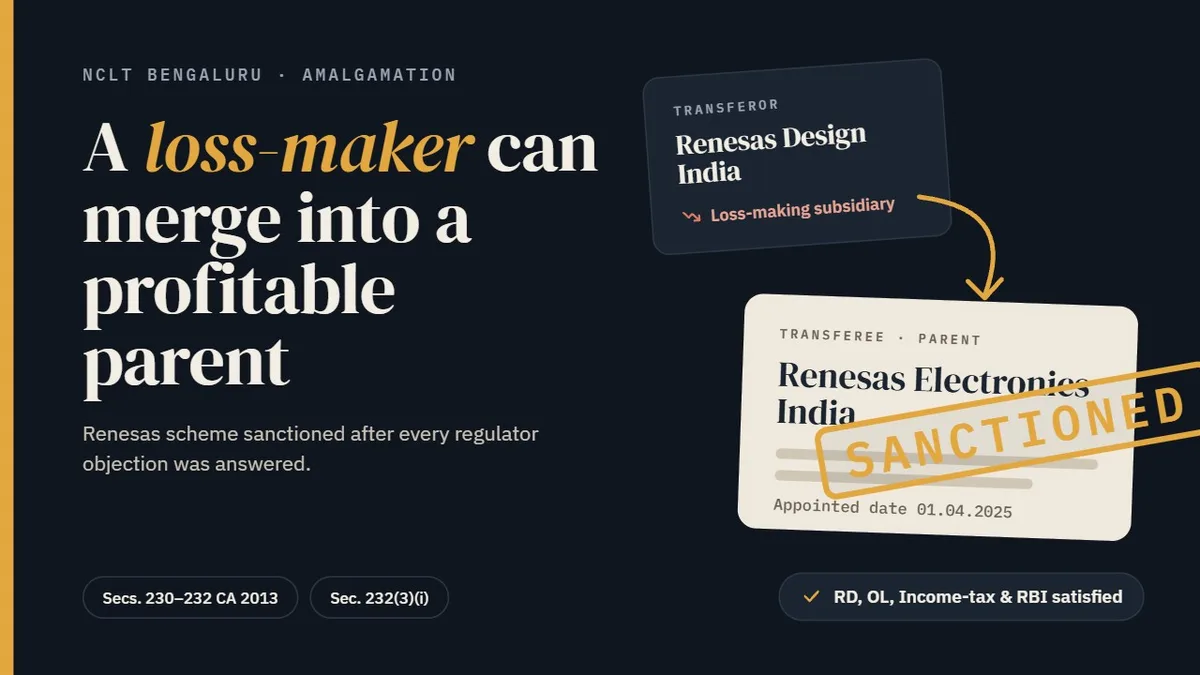
Renesas Design India Pvt. Ltd., a loss-making wholly owned subsidiary engaged in semiconductor design, and its parent Renesas Electronics India Pvt. Ltd. sought sanction of a…