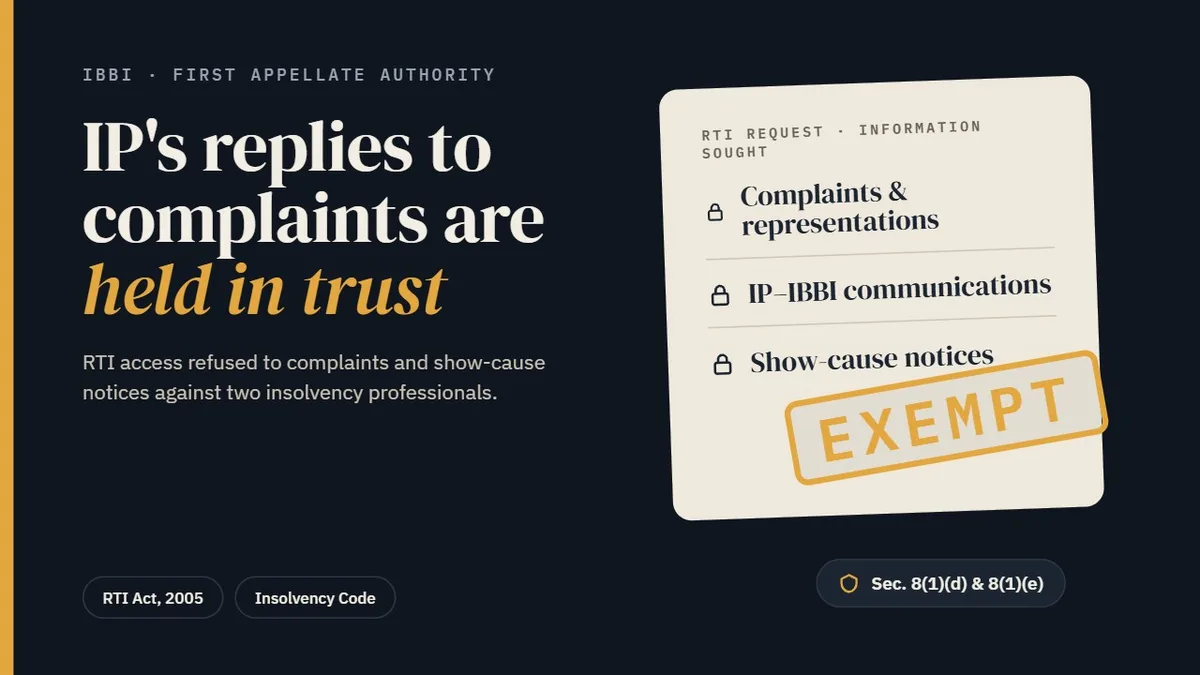
The appellant sought, under the RTI Act, records of complaints and representations received by IBBI, communications between IBBI and the insolvency professionals, and copies of…
Insolvency & Bankruptcy Code
24/11/20264 min read
Update / Judgement Date
08 Sept 2025
Source
Author
Team — WCP Legal Desk
Reading Time
2 min read
View Count
1
The Supreme Court directed the Election Commission of India (ECI) to formally issue a notification permitting the use of Aadhaar cards as valid identification proof for voting, resolving ambiguity that had arisen in Bihar regarding its acceptance at polling stations. The matter came before the Court after reports surfaced that polling officials in certain districts refused to accept Aadhaar, creating difficulties for voters who did not possess voter ID cards or other prescribed documents. The Court noted that Aadhaar, as a government-issued biometric identity, is widely recognized and linked to multiple citizen services, and therefore its exclusion in the electoral process created unnecessary obstacles to voter participation. Stressing the constitutional mandate to ensure free and fair elections under Article 324, the Court held that ECI must adopt a uniform and transparent approach to ID verification so that no eligible voter is disenfranchised due to technical inconsistencies. It directed the Commission to publicize the acceptance of Aadhaar through formal notifications and awareness campaigns to ensure nationwide compliance. The judgment is significant for enhancing electoral inclusivity, particularly for migrant workers, rural populations, and economically weaker citizens who may lack other forms of identification. At the same time, the Court emphasized the need for data protection and confidentiality of Aadhaar information, clarifying that its use for electoral purposes should remain strictly limited to identity verification. This order reinforces the principle that electoral processes must facilitate, rather than hinder, citizen participation, ensuring that administrative barriers do not compromise the constitutional right to vote.
© 2026 White Collar Professional Technologies Pvt. Ltd. All rights reserved. CIN: U74999MH2024PTC000001
The appellant sought, under the RTI Act, records of complaints and representations received by IBBI, communications between IBBI and the insolvency professionals, and copies of…

IGNOU entrusted recruitment to 200 Junior Assistant-cum-Typist posts to NTA; after a computer-based test 25,094 candidates and a typing test 1,985 candidates , NTA declared 199…
The Delhi High Court considered whether the 2021 amendment inserting Section 86 4 into the Juvenile Justice Care and Protection of Children Act, 2015 applied to trials already…
Sixteen students of Sree Sankaracharya University of Sanskrit, Kalady challenged their suspension and subsequent disciplinary punishments arising out of a campus protest during a…

The Kerala High Court held that the custody requirement in Section 306 4 b of the Code of Criminal Procedure, 1973 CrPC applies to a pardon tendered by a Magistrate under Section…

National Testing Agency had applied an incorrect typing-speed threshold and the assessment required correction, the identified discrepancies did not establish that the…
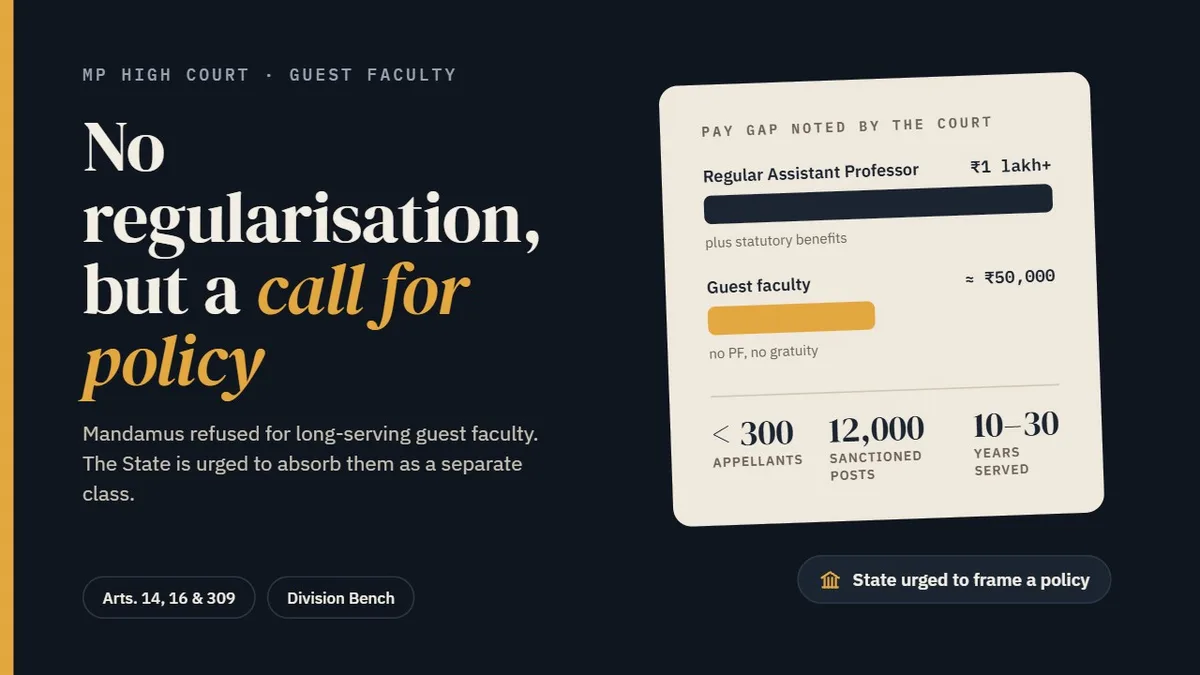
A batch of writ appeals was filed by guest faculty – Assistant Professors, Sports Officers and Librarians engaged after advertisement and selection and serving 10 to 30 years in…
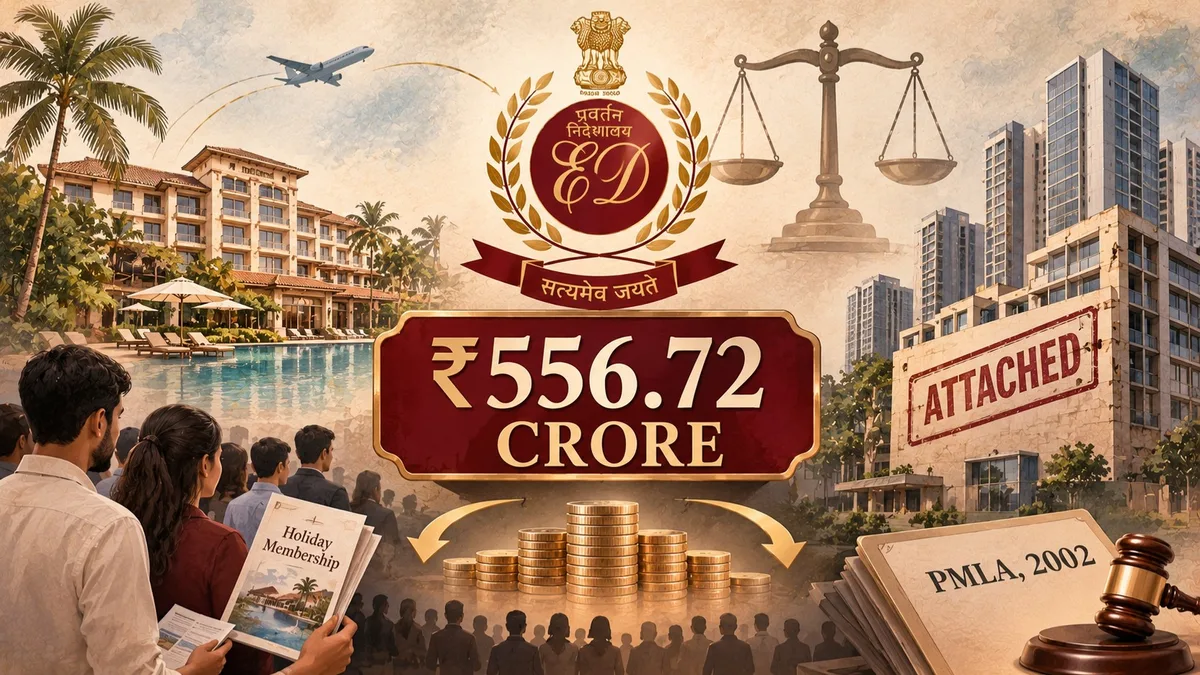
Directorate of Enforcement, Mumbai Zonal Office-I | Draft Press Release | 23 November 2026 The Directorate of Enforcement's draft press release states that its Mumbai Zonal…

The Directorate of Enforcement's draft press release states that its Guwahati Zonal Office-I has provisionally attached movable and immovable properties valued at ₹70.09 lakh in a…

The National Company Law Tribunal, New Delhi Court-IV, approved a resolution plan valued at ₹30.90 crore for Shyam Indofab Private Limited on 8 September 2026. The plan, submitted…