
The Division Bench dismissed the connected writ appeals, while making a limited modification to the Single Judge’s findings concerning the Bar Council of Kerala. In light of…
Civil Law
Court / Authority
Supreme Court of India
Update / Judgement Date
17 Nov 2026
Source
WCP News Bulletin
Author
Dipanshi Bansal — WCP Legal Desk
Reading Time
3 min read
View Count
2
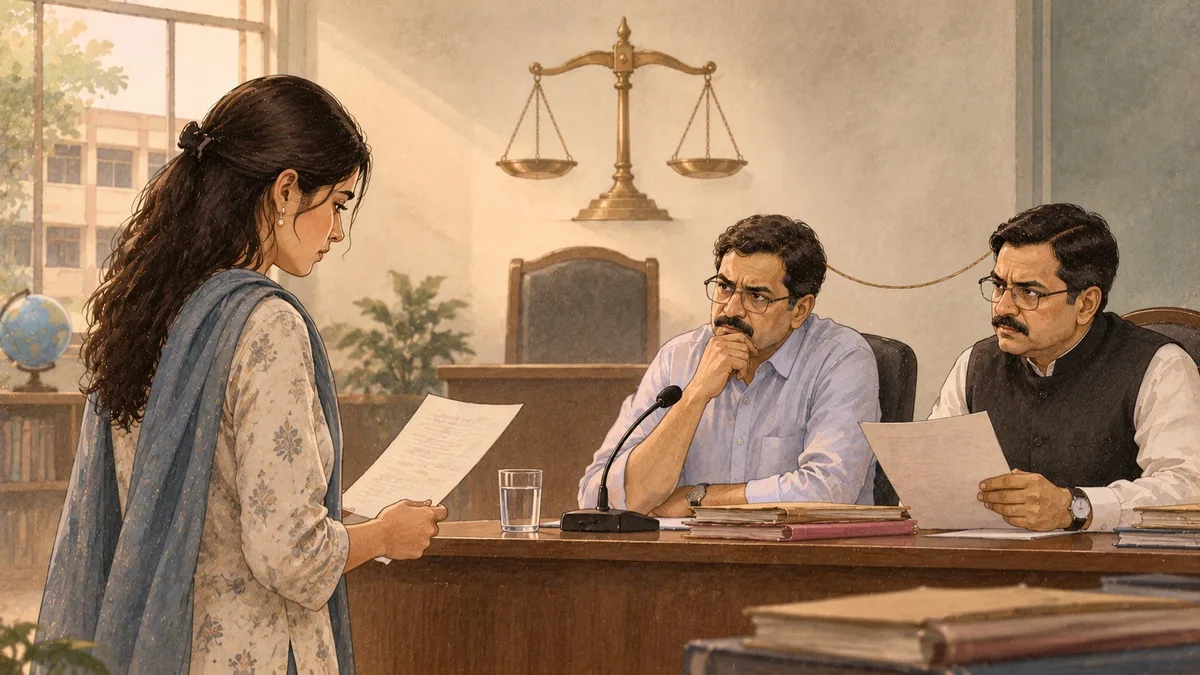
The appeal arose from the termination of an Assistant Teacher employed at a school run by Sudhir Shikshan Sanstha. The School Tribunal had set aside the termination and directed reinstatement with continuity of service and back wages. The Bombay High Court, Nagpur Bench, reversed that decision and upheld the management’s action. The Supreme Court examined the fairness and impartiality of the disciplinary inquiry, particularly the composition and functioning of the Inquiry Committee and the overlapping roles of persons connected with the school management.
Key Legal Issues
Whether the disciplinary inquiry was vitiated by bias and breach of natural justice; whether the High Court was justified in overturning the School Tribunal’s order; and what relief should follow for the teacher.
Analysis and Findings
The Court found that the inquiry process raised a reasonable likelihood of bias when assessed from the perspective of a fair-minded observer. The roles of complainant, prosecutor, witness and adjudicator had overlapped or intersected within a close-knit group connected with the management. In particular, Rajesh Masurkar was a key witness on multiple charges and had a personal interest arising from his appointment as Headmaster over the appellant’s claim of seniority. The appellant had also objected to the appointment of the Inquiry Committee’s Convenor, Prakash Masurkar, on the ground of his relationship with members of the management. The Court stressed that impartiality is not confined to proof of actual pecuniary interest; the appearance or reasonable likelihood of bias can undermine a fair disciplinary process. It concluded that the inquiry was legally unsustainable.
Final Outcome
The appeal was allowed. The Bombay High Court’s judgment dated 29 April 2025 was set aside and the School Tribunal, Nagpur’s order dated 21 March 2024 was restored. The Education Officer was directed to consider whether the appellant could be absorbed in another 100% grant-in-aid school within the jurisdiction, in accordance with Rule 26(2)(iii) of the MEPS Rules.
Relevant Law and Precedents
Full Judgement / Attachment
Full Judgement
The ruling applies principles of natural justice, especially the rule against bias (nemo judex in causa sua: no one should be a judge in their own cause). It also refers to Rule 26(2)(iii) of the Maharashtra Employees of Private Schools (Conditions of Service) Rules. The key point is that a disciplinary inquiry must be institutionally and objectively impartial; a reasonable likelihood of bias can invalidate it even without proof of actual prejudice.
This summary is based on the uploaded judgment/order. It is an editorial summary and should be read with the original source for the complete record and operative directions.
© 2026 White Collar Professional Technologies Pvt. Ltd. All rights reserved. CIN: U74999MH2024PTC000001
The Division Bench dismissed the connected writ appeals, while making a limited modification to the Single Judge’s findings concerning the Bar Council of Kerala. In light of…

The High Court held that the trial court was not justified in directing the parties to undergo fresh DNA testing when the existing expert report had not been rejected for legally…

The High Court held that a subsequently communicated minimum 20% local-content requirement, including an indigenously developed EMS software condition, could not be…
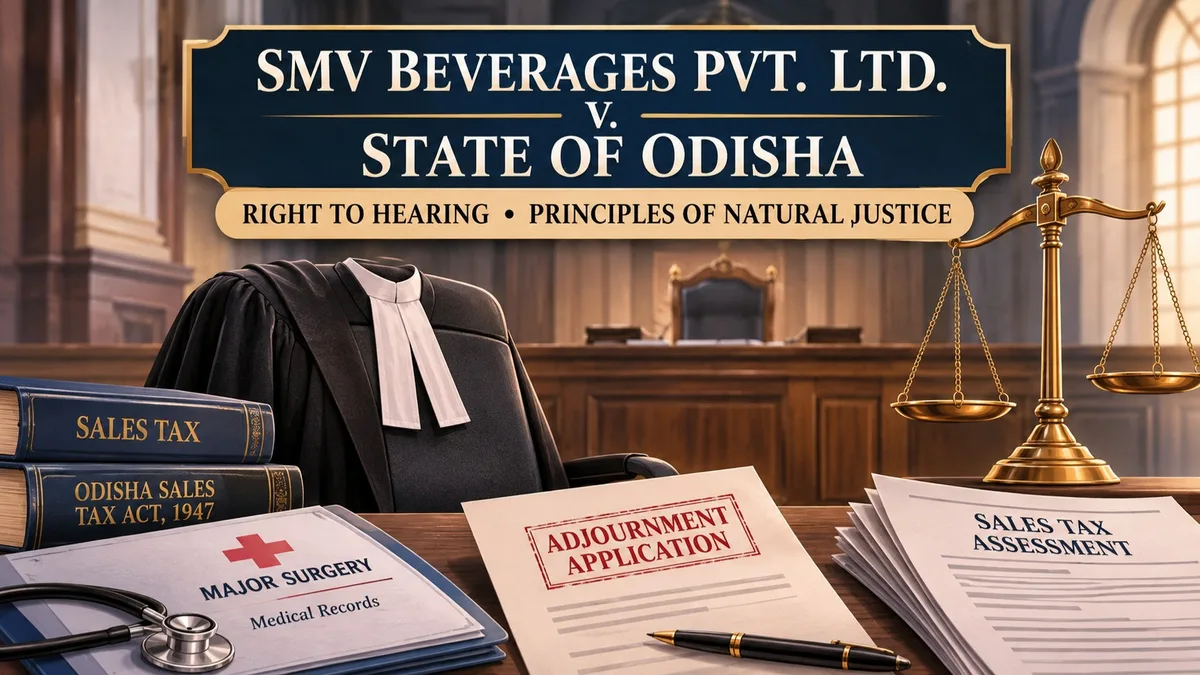
The Division Bench held that the petitioner had been deprived of a reasonable opportunity to present its case before the Commissioner of Sales Tax. An adjournment request must be…

The High Court exercised its inherent jurisdiction to quash a POCSO FIR and the pending trial after obtaining independent reports verifying the parties’ marriage, family…

The Division Bench held that the writ court had exceeded the proper scope of the dispute between the supplier and KSBCL by deciding, in effect, the Revenue’s separate tax…

The High Court considered the petitioners’ request for regular bail in an Enforcement Directorate prosecution alleging money laundering under the Prevention of Money Laundering…

The High Court upheld the appellant’s conviction under Section 18 c of the NDPS Act for possession of opium but reduced the sentence of seven years’ rigorous imprisonment to the…

The High Court dismissed the State’s appeal against acquittal, holding that the trial court’s view was a reasonably possible view on the evidence and that material inconsistencies…
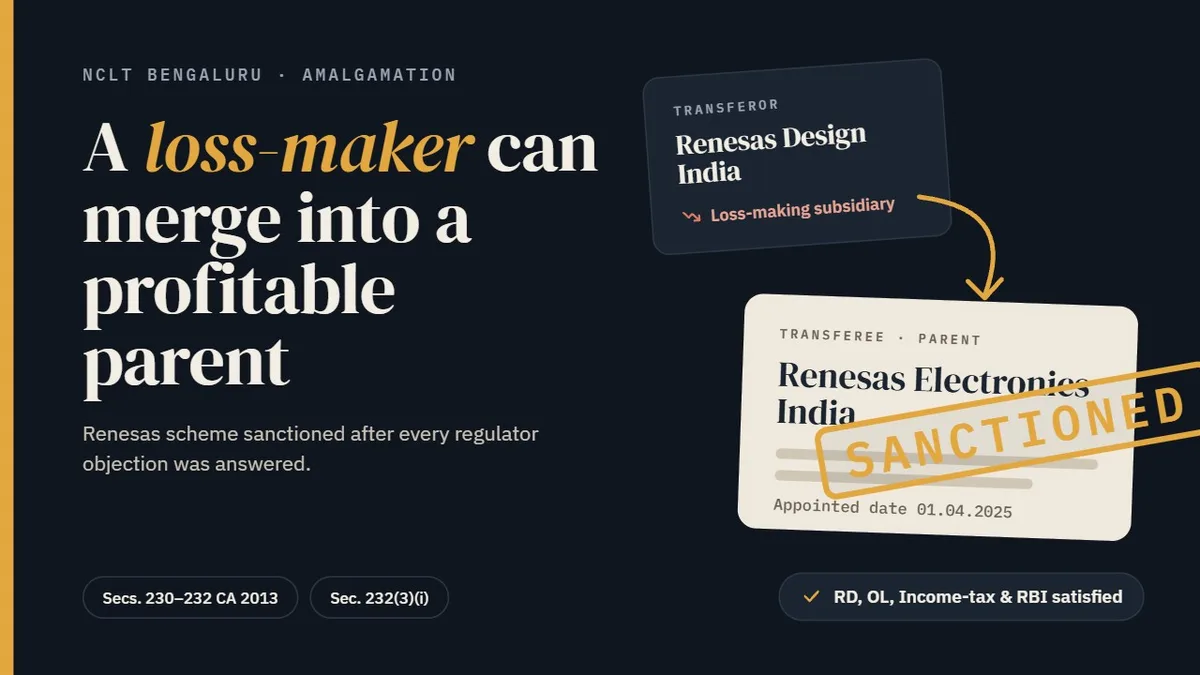
Renesas Design India Pvt. Ltd., a loss-making wholly owned subsidiary engaged in semiconductor design, and its parent Renesas Electronics India Pvt. Ltd. sought sanction of a…