Mining Lease Extension: Orissa High Court Holds Substance Prevails Over the Label ‘Captive Use'
Court / Authority
Orissa High Court
Update / Judgement Date
10 Nov 2026
Date of Publication
13 Nov 2026
Case No.
W.P.(C) No. 25566 of 2023
Source
WCP News Bulletin
Author
Dipanshi Bansal — WCP Legal Desk
Reading Time
10 min read
View Count
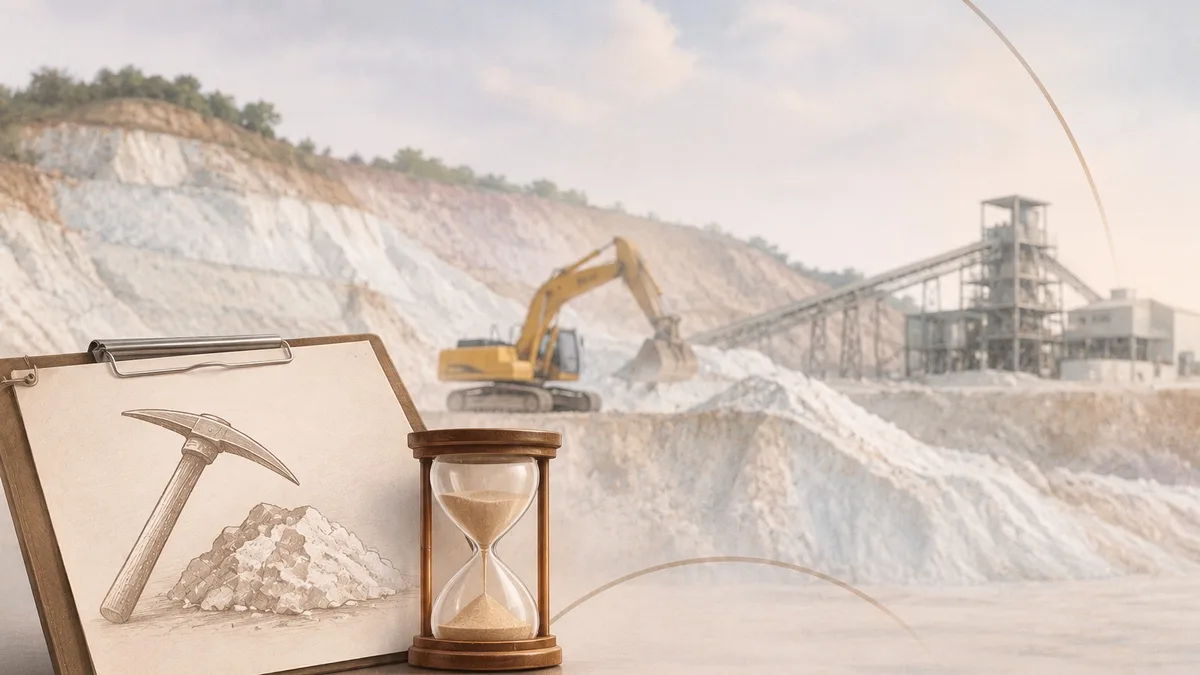
The High Court of Orissa considered whether a long-standing mining lease for China Clay could be treated as a lease for captive use for the purpose of obtaining the extended lease period contemplated under Section 8-A(5) of the Mines and Minerals (Development and Regulation) Act, 1957. The State had rejected the petitioner's claim on the ground that the original 1966 lease did not expressly use the words “captive use” and was therefore a merchant mining lease. The Division Bench rejected that approach, holding that the nature of the lease had to be determined from the substance and intention reflected in the original lease, particularly Clause 8 permitting beneficiation of the extracted ore. The Court further held that although China Clay subsequently became a minor mineral and Section 14 ordinarily excludes Sections 5–13 of the MMDR Act in respect of minor minerals, Rule 66 of the Odisha Minor Minerals Concession Rules, 2016 preserved the applicability of Section 8-A to minerals which had earlier been major minerals. Since the petitioner had been using the extracted mineral in his own beneficiation plants, the lease qualified as one for captive use. The impugned order was quashed and the authorities were directed to execute a supplementary lease deed for the period contemplated by Section 8-A(5). (Paras 9–17)
Key Proposition: For determining whether an old mining lease qualifies as a captive-use lease under Section 8-A(5) of the MMDR Act, the authorities must examine the substance and purpose of the original lease, and the absence of the express words “captive use” is not by itself decisive where the lease permits beneficiation and the extracted mineral is in fact used in the lessee's own beneficiation plant.
- MMDR Act, 1957 – Sections 8-A(5), 8-A(6) and 14 – extension of mining leases and exclusion concerning minor minerals – Whether Section 8-A could apply to China Clay after its classification as a minor mineral – Held, yes, by virtue of Rule 66 of the OMMC Rules, 2016. (Paras 10–13)
- Odisha Minor Minerals Concession Rules, 2016 – Rule 2(d) and Rule 66 – captive use and transitional protection – Whether use of China Clay in the lessee's own beneficiation plant constituted captive use – Held, yes. (Paras 9, 12–16)
- Mining Lease Deed dated 15 September 1966 – Clause 8 – interpretation of “beneficiation” – Whether the absence of the words “captive use” made the lease a merchant mining lease – Held, no. (Paras 8–16)
Background / Synopsis :
- The petitioner's father was granted a mining lease for China Clay on 15 September 1966 for a period of 20 years in respect of mines situated at Jhankarpalli in Sambalpur district.
- After expiry of the original tenure, the lease was renewed for another 10 years with effect from 14 September 1986.
- Following the death of the original lessee, the petitioner sought a further renewal for 20 years, specifically stating that the China Clay extracted from the mine would be used in a beneficiation plant.
- The second renewal was ultimately granted on 13 March 2003 with effect from 15 September 1996.
- The petitioner established a beneficiation plant in April 2004 and subsequently constructed another beneficiation plant within the leased area in 2008.
- The petitioner maintained that the mineral extracted from the mine was being used in his own beneficiation plants and therefore constituted captive use.
- The 2015 amendment to the MMDR Act inserted Section 8-A. Under Section 8-A(5), mining leases granted for captive use were eligible for extension up to 31 March 2030, whereas Section 8-A(6) dealt with leases where the mineral was used for purposes other than captive use.
- The authorities ultimately treated the petitioner's lease as a merchant mining lease and extended it only up to 31 March 2020.
- The petitioner challenged the decision through successive writ proceedings. Earlier proceedings resulted in orders requiring the authorities to reconsider the issue after giving reasons and, subsequently, after providing an opportunity of hearing.
- The impugned order dated 13 July 2023 again rejected the petitioner's claim on the ground that the original lease did not contain the expression “captive use”.
- The petitioner therefore filed the present writ petition challenging that order and seeking the benefit of Section 8-A(5).
Issues For Consideration :
- Whether the petitioner's China Clay mining lease, originally executed in 1966, was a lease for captive use or a merchant mining lease.
- Whether Section 8-A of the MMDR Act could be invoked in respect of China Clay after it had subsequently been classified as a minor mineral.
- Whether the absence of the express words “captive use” in the original lease was sufficient to deny the benefit of Section 8-A(5).
- Whether the actual use of the extracted mineral in the petitioner's own beneficiation plants established captive use.
Submissions Of Parties :
Petitioner:
- The petitioner contended that the extracted China Clay had consistently been used in his own beneficiation plants.
- Reliance was placed upon Clause 8 of the original 1966 lease, which permitted the lessee to enter upon the land, beneficiate ore produced from the land and carry away the beneficiated ore.
- It was argued that the substance of the transaction, rather than the mere absence of the expression “captive use”, demonstrated that the lease was intended for captive purposes.
- The petitioner relied upon the actual conduct of the parties and the subsequent establishment and operation of beneficiation plants.
- The petitioner also relied upon the statutory framework introduced through Section 8-A and the definition of captive use subsequently incorporated in the 2016 Rules.
State / Opposite Parties:
- The State contended that Section 8-A(5) applied only to mining leases granted for captive use.
- Since the original 1966 lease did not expressly contain the words “captive use”, the State treated it as a merchant mining lease.
- The State further contended that China Clay had subsequently become a minor mineral and therefore Section 14 of the MMDR Act excluded the applicability of Sections 5 to 13, including Section 8-A
- According to the authorities, merely using the extracted mineral in a plant or establishment did not convert the original lease into a captive-use lease.
Court's Observations & Analysis :
Re: Applicability of Section 8-A after China Clay became a minor mineral
- Section 14 of the MMDR Act excludes Sections 5 to 13 from application to minor minerals.
- The Court noted that China Clay had originally been classified as a major mineral but subsequently came within the category of minor minerals.
- The State consequently argued that Section 8-A could no longer be invoked.
- The Court examined Rule 66 of the Odisha Minor Minerals Concession Rules, 2016.
- Rule 66 specifically provides transitional protection for specified minor minerals which had been major minerals when the 2015 amendment came into force.
- The Court held that Rule 66 made the benefit of Section 8-A available notwithstanding the subsequent classification of China Clay as a minor mineral.
- Held: The State's contention that Section 14 completely excluded the operation of Section 8-A was untenable in view of Rule 66 of the 2016 Rules. (Paras 11–13)
Re: Whether the original lease was for captive use
- Clause 8 of the 1966 lease permitted the lessee to beneficiate ore produced from the leased land and carry away the beneficiated ore.
- The Court examined the ordinary meaning of “beneficiation” and treated it as a process by which the economic value and grade of ore are improved through separation of valuable minerals from gangue.
- The Court emphasised that the expression “captive use” was not defined in the MMDR Act or the 2004 Rules.
- A statutory definition was subsequently introduced by Rule 2(d) of the 2016 Rules.
- Under that definition, captive use means use of the mineral extracted from the mining lease in a mineral processing or beneficiation unit owned by the lessee, subject to the stated exclusion of substandard minerals and rejects.
- The Court therefore considered the actual use of the mineral and the substance of Clause 8 rather than insisting upon the presence of the precise expression “captive use”.
- Held: The absence of the words “captive use” in the 1966 lease did not by itself make the lease a merchant mining lease. (Paras 14–15)
Re: Actual conduct of the petitioner and authorities
- The petitioner had established his beneficiation plant in 2004 and another plant in 2008.
- The extracted minor mineral had continuously been used in those plants.
- The authorities were aware of this use when the earlier renewals were granted.
- The Director of Mines had also reported that the petitioner was consuming the minerals extracted from the mines for captive use in his own beneficiation plant.
- The Court found that the authorities had therefore misinterpreted Clause 8 by searching for the literal expression “captive use” in the original lease.
- The later definition in the 2016 Rules supported the conclusion that use of the mineral in the petitioner's own beneficiation plant satisfied the concept of captive use.
- Held: The lease was required to be treated as a captive-use lease for purposes of Section 8-A(5). (Paras 15–16)
Notable Observations: None.
Decision & Directions :
- The writ petition was disposed of.
- The impugned order dated 13 July 2023 was quashed.
- The Court held that the petitioner's mining lease qualified for captive use.
- The authorities were directed to execute a supplementary lease deed for the period contemplated under Section 8-A(5) of the MMDR Act.
- The supplementary lease deed was directed to be executed within three weeks from the date of communication of the judgment.
- There was no separate or dissenting opinion. Justice Chittaranjan Dash expressly agreed with the judgment authored by Chief Justice Harish Tandon.
Legal Provisions Discussed & Precedents Cited :
- Mines and Minerals (Development and Regulation) Act, 1957 – Section 8-A(5): Provides for extension of mining leases granted for captive use up to the statutory period, subject to the conditions prescribed by the Act.
- MMDR Act – Section 8-A(6): Governs extension of pre-existing leases where the mineral is used for purposes other than captive use.
- MMDR Act – Section 14: Excludes Sections 5 to 13 from application to minor minerals.
- Odisha Minor Minerals Concession Rules, 2016 – Rule 2(d): Defines “captive use” as use of the entire quantity of mineral extracted from the lease in a mineral processing or beneficiation unit owned by the lessee, excluding substandard mineral and rejects.
- OMMC Rules, 2016 – Rule 66: Provides transitional protection for specified minor minerals which were major minerals when the 2015 amendment came into force and makes the Section 8-A regime applicable to such leases.
- Clause 8 of the Mining Lease Deed dated 15 September 1966: Permitted beneficiation of ore produced from the leased land and removal of the beneficiated ore.
Case Details :
- Case / Party Name: Prabir Ghose v. State of Odisha and others
- Case Number(s): W.P.(C) No. 25566 of 2023; CNR No. ODHC010621542023; Neutral citation 2026:OHC:287-DB.
- Coram / Judges: Hon'ble Chief Justice Harish Tandon and Hon'ble Mr Justice Chittaranjan Dash – Division Bench.
- Counsel Appearances: For the petitioner: Ms. Pami Rath, Senior Advocate and Mr. P. Mohanty, Advocate. For the opposite parties: Mr. Debashis Tripathy, Additional Government Advocate.
Disclaimer: This summary is an editorial aid and does not form part of the judgment. Refer to the original judgment before citing.
Full Judgement / Attachment
Full Judgement
Frequently asked questions about Orissa High Court
- Where does the Orissa High Court sit and which areas does it cover?
- The Orissa High Court sits in Cuttack. It has jurisdiction over the State of Odisha. It was established in 1948 and retains its historical name, Orissa High Court.
- How do I check Orissa High Court case status and judgements?
- The official website, orissahighcourt.nic.in, provides case status, cause lists and judgements. The court has digitised a large part of its records, and many hearings are held in hybrid mode. Orders are also on the eCourts High Court Services portal (hcservices.ecourts.gov.in).
- What kinds of cases does the Orissa High Court hear?
- It hears writs on service, mining and land matters, civil and criminal appeals from across Odisha, and income-tax appeals arising from the ITAT Cuttack Bench.
- How is a single-judge order of the Orissa High Court appealed?
- Certain single-judge orders, particularly in writ petitions, can be challenged by a Writ Appeal before a Division Bench. A final judgement can be challenged by a Special Leave Petition under Article 136, ordinarily within 90 days.
- How can White Collar Professional help with a Orissa High Court matter?
- Post your requirement on White Collar Professional to receive proposals from verified Advocates, Chartered Accountants and Company Secretaries, compare them, and pay securely through the platform. This page also tracks the latest Orissa High Court judgements and legal updates as they are reported.