COVID-19 Hardship Justified Condonation of Delay in Filing Form 10B Audit Report
Court / Authority
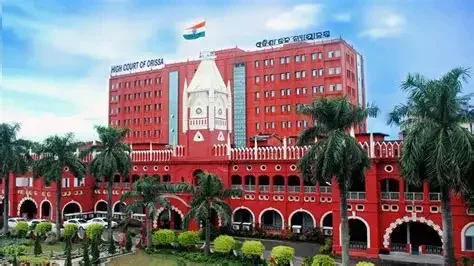
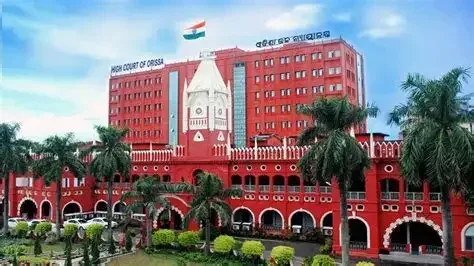
Orissa High Court
Update / Judgement Date
03 Nov 2026
Date of Publication
05 Nov 2026
Case No.
Case Number W.P.(C) No. 9560 of 2025
Source
WCP News Bulletin
Author
Soumya Gupta — WCP Legal Desk
Reading Time
5 min read
View Count
1
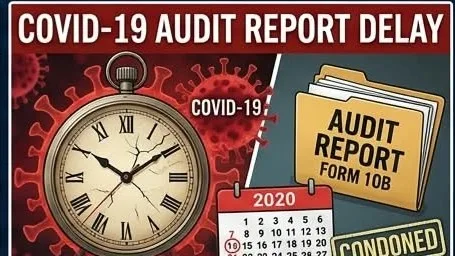
Key Proposition: Where genuine hardship arising from the COVID-19 situation is established, delay in furnishing Form 10B should not, by itself, defeat a claim for exemption under Section 12A; the authority must exercise its condonation discretion under Section 119(2)(b) judiciously.
● Income Tax Act, 1961 – Section 119(2)(b) – Condonation of delay – Whether delay in filing Form 10B could be condoned on account of genuine hardship during COVID-19? – Held, yes. (Paras 6.1–6.4)
● Income Tax Act, 1961 – Section 12A; Income Tax Rules, 1962 – Rule 17B – Audit report – Whether exemption could be denied merely for delayed furnishing of the audit report? – Held, no, where sufficient cause was shown. (Paras 6.1–6.4)
Background / Synopsis :
● The petitioner, Novel Sidharth English Medium Educational Trust, sought exemption from income tax under Section 12A of the Income Tax Act, 1961 for Assessment Year 2020-21.
● The audit report in Form 10B, prescribed under Rule 17B of the Income Tax Rules, 1962, was due on 15 January 2021 but was submitted on 31 May 2021, resulting in a delay of 137 days.
● The petitioner applied for condonation under Section 119(2)(b). The Commissioner of Income Tax (Exemption), Hyderabad rejected the application by order dated 6 January 2025.
● The petitioner challenged that order under Articles 226 and 227 of the Constitution, seeking interference with the rejection and consideration of the Form 10B report for the exemption claim.
Issues For Consideration :
● Whether the Commissioner of Income Tax (Exemption) properly exercised discretion under Section 119(2)(b) while rejecting the application to condone the 137-day delay in filing Form 10B.
● Whether the delay, attributed to COVID-19-related hardship, justified consideration of the audit report for the purpose of the Section 12A exemption.
Submissions Of Parties :
Petitioner:
● The delay of 137 days was caused by the COVID-19 pandemic and sufficient cause had been shown.
● The audit report had been filed on 31 May 2021, though it was due on 15 January 2021; the requirement of furnishing the report with the return was procedural and the report could be produced before assessment.
● The Commissioner had discretion under Section 119(2)(b), read with CBDT Circular No. 10 of 2019 dated 22 May 2019 and Circular No. 16 of 2024 dated 18 November 2024, but had failed to exercise it appropriately.
● Reliance was placed on Sarvodaya Charitable Trust v. Income Tax Officer (Exemption), (2021) 18 ITR-OL 253 (Guj).
Respondent / Income Tax Department:
● The Commissioner had exercised discretion under Section 119(2)(b) and rejected the application because no sufficient cause had been shown.
● The petitioner had not demonstrated genuine hardship; therefore, the rejection was justified.
Court's Observations & Analysis :
Re: Exercise of condonation discretion and COVID-19 hardship
● The Court noted that the 137-day delay in submitting Form 10B was undisputed. (Para 6)
● It considered that the exemption should not have been denied merely because the audit report was furnished late, since it could be produced at a later stage before the Assessing Officer or the Appellate Authority upon sufficient cause being assigned. (Para 6.1)
● The Court accepted the petitioner's COVID-19-related explanation as genuine, noting the pandemic situation and that the Department's counsel had not objected to the statement that the petitioner had suffered from COVID-19. (Para 6.1)
● Applying the approach discussed in Action Research for Health and Socio-economic Development v. Central Board of Direct Taxes (CBDT) and others, W.P.(C) No. 8035 of 2025, decided on 25 April 2025, the Court found that the Commissioner had not applied his mind in the proper perspective. (Paras 6.2–6.3)
● The Court held that substantial justice should prevail over mere technicality and that the Commissioner had failed to consider the condonation application in its proper earnest under Section 119(2)(b), read with the relevant CBDT circulars. (Para 6.3)
● Held: The refusal to condone the delay was an arbitrary exercise of discretion in the facts of the case, where genuine hardship had been faced by the petitioner. (Para 6.4)
Notable Observations: “when technical consideration and cause of substantial justice are pitted against each other, it is the substantial justice which is to prevail” (Para 6.3).
Decision & Directions :
● The order dated 6 January 2025 passed by the Commissioner of Income Tax (Exemption), Hyderabad was set aside. (Para 6.4)
● The matter was remitted to the authority concerned (Opposite Party No. 3) to consider the Form 10B audit report furnished under Rule 17B for claiming exemption under Section 12A. (Para 6.4)
● The authority was directed to grant all consequential relief by taking the Form 10B audit report for Assessment Year 2020-21, submitted on 31 May 2021, as if it had been filed within the prescribed period, invoking Section 119(2)(b). (Para 6.4)
● The writ petition was disposed of; pending interlocutory applications, if any, also stood disposed of. No order as to costs was stated.
● Separate Opinions: None.
Full Judgement / Attachment
Full Judgement
Frequently asked questions about Orissa High Court
- Where does the Orissa High Court sit and which areas does it cover?
- The Orissa High Court sits in Cuttack. It has jurisdiction over the State of Odisha. It was established in 1948 and retains its historical name, Orissa High Court.
- How do I check Orissa High Court case status and judgements?
- The official website, orissahighcourt.nic.in, provides case status, cause lists and judgements. The court has digitised a large part of its records, and many hearings are held in hybrid mode. Orders are also on the eCourts High Court Services portal (hcservices.ecourts.gov.in).
- What kinds of cases does the Orissa High Court hear?
- It hears writs on service, mining and land matters, civil and criminal appeals from across Odisha, and income-tax appeals arising from the ITAT Cuttack Bench.
- How is a single-judge order of the Orissa High Court appealed?
- Certain single-judge orders, particularly in writ petitions, can be challenged by a Writ Appeal before a Division Bench. A final judgement can be challenged by a Special Leave Petition under Article 136, ordinarily within 90 days.
- How can White Collar Professional help with a Orissa High Court matter?
- Post your requirement on White Collar Professional to receive proposals from verified Advocates, Chartered Accountants and Company Secretaries, compare them, and pay securely through the platform. This page also tracks the latest Orissa High Court judgements and legal updates as they are reported.