
The Supreme Court dismissed the husband’s appeals and upheld the enhancement of interim maintenance payable to his wife from ₹75,000 to ₹1,50,000 per month. The Court found the…
Family Law
Court / Authority
Orissa High Court
Update / Judgement Date
11 Nov 2026
Date of Publication
13 Nov 2026
Source
WCP News Bulletin
Author
Arshee Saifi — WCP Legal Desk
Reading Time
6 min read
View Count
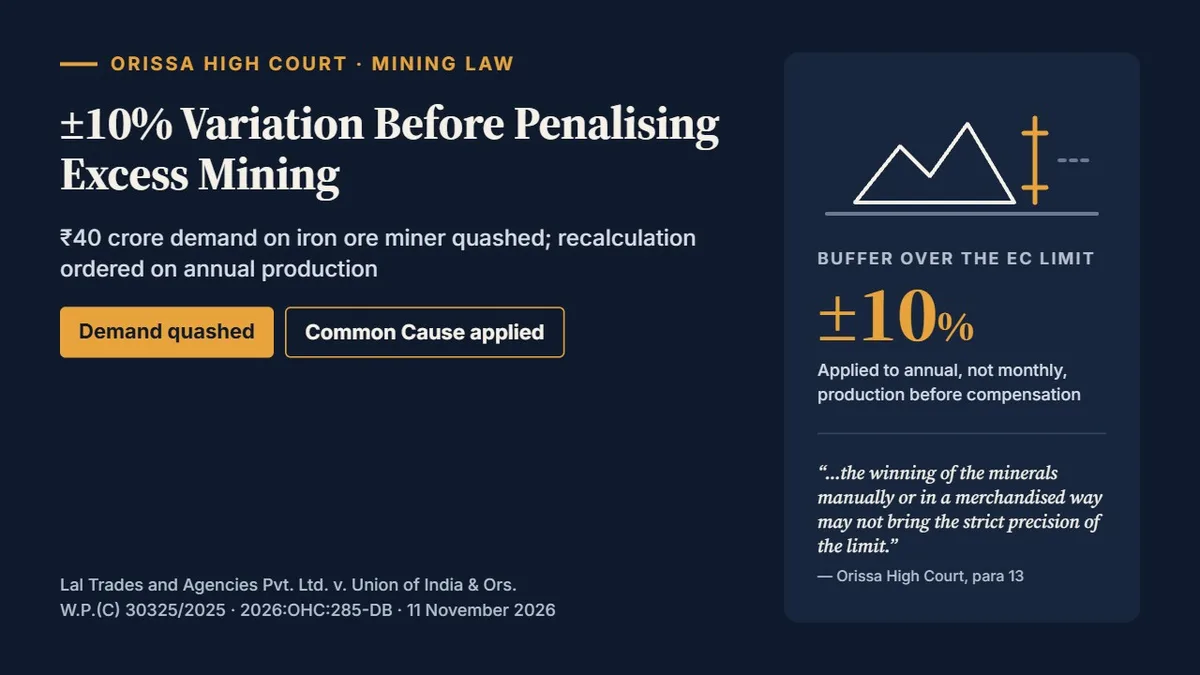
Key Proposition: In computing compensation under Section 21(5) of the MMDR Act for extraction beyond the limit in an Environmental Clearance, the authorities must first allow the ±10% variation accepted by the Supreme Court in Common Cause v. Union of India, applied to annual and not monthly production; only extraction beyond that buffer attracts compensation under the CEC formula.
A. Background / Synopsis :
Whether a permissible variation of ±20% (or any variation) in production can be read harmoniously with Common Cause v. Union of India in relation to production beyond the EC limit. (Para 7)
Full Judgement / Attachment
Full Judgement
© 2026 White Collar Professional Technologies Pvt. Ltd. All rights reserved. CIN: U74999MH2024PTC000001
C. Submissions Of Parties :
Production targets are fixed annually, not monthly, and once the annual target is enhanced in the EC, production within it is lawful. (Para 4)
IBM had approved a variation of up to 20% of tentative annual production, so the alleged excess was within permissible limits. (Para 4)
The ore was extracted within the mining plan limit but beyond the EC limit for 2019-20, which under Common Cause is unlawful extraction attracting Section 21(5); reliance on para 151 of Common Cause. (Paras 7, 14)
D. Court's Observations & Analysis :
Sections 4, 5, 18 and 21(5) of the MMDR Act, the MCR and MCDR, and the EIA Notifications require mining to conform to both the mining plan and the EC; Common Cause held the mining plan subordinate to the EC. (Paras 8–10)
What Common Cause decided on variation
The Hoda Committee noted that IBM allows a grace of ±10% for market fluctuation and process complexity and suggested the same cushion in EC; the Supreme Court found no clarity why the Ministry of Mines shifted to ±20%. (Paras 10–11)
Common Cause permitted at most a 20% variation in a year, subject to the five-year mining plan limit, and held mining beyond permissible limits under the mining plan, EC or FC to be unlawful. (Paras 12–13)
Read as a whole, the Supreme Court accepted the ±10% variation; IBM's assessment covers both yearly extraction and environmental impact, and extraction cannot achieve exact precision. (Para 13)
Para 151 of Common Cause relates to calculating compensation and does not mean extraction within the ±10% variation attracts compensation or penalty under Section 21(5). (Para 14)
Held: the authorities ought to have allowed the ±10% buffer on annual production while applying the CEC formula in para 155 of Common Cause. (Paras 15–16)
Notable Observations: “…the winning of the minerals manually or in a merchandised way may not bring the strict precision of the limit.” (Para 13)
E. Decision & Directions :
1. Order of the Revisional Authority dated 01.10.2025 and the demand quashed. (Para 16)
2. Authorities directed to recalculate allowing ±10% variation over the EC limit on annual production; if extraction exceeds that limit, compensation is to be calculated under Common Cause with reasonable time to pay. (Para 16)
3. Writ petition disposed of. (Para 17)
Costs: Not stated in judgment.
Separate Opinions: None; judgment by Harish Tandon, CJ, with Chittaranjan Dash, J. agreeing.
F. Legal Provisions Discussed & Precedents Cited :
G. Case Details :
Disclaimer: This summary is an editorial aid and does not form part of the judgment. Refer to the original judgment before citing.
The Supreme Court dismissed the husband’s appeals and upheld the enhancement of interim maintenance payable to his wife from ₹75,000 to ₹1,50,000 per month. The Court found the…
The Supreme Court allowed the appeal of a woman who suffered severe electrocution injuries, resulting in amputation of her right hand and permanent disability. It set aside the…
The Supreme Court dismissed the Delhi Development Authority’s appeals and upheld directions requiring release of gratuity to two retired employees who had been honourably…
The Supreme Court dismissed the challenge by candidates to the recruitment process for Excise Constables in Nagaland. It held that the recruitment was governed by the Nagaland…
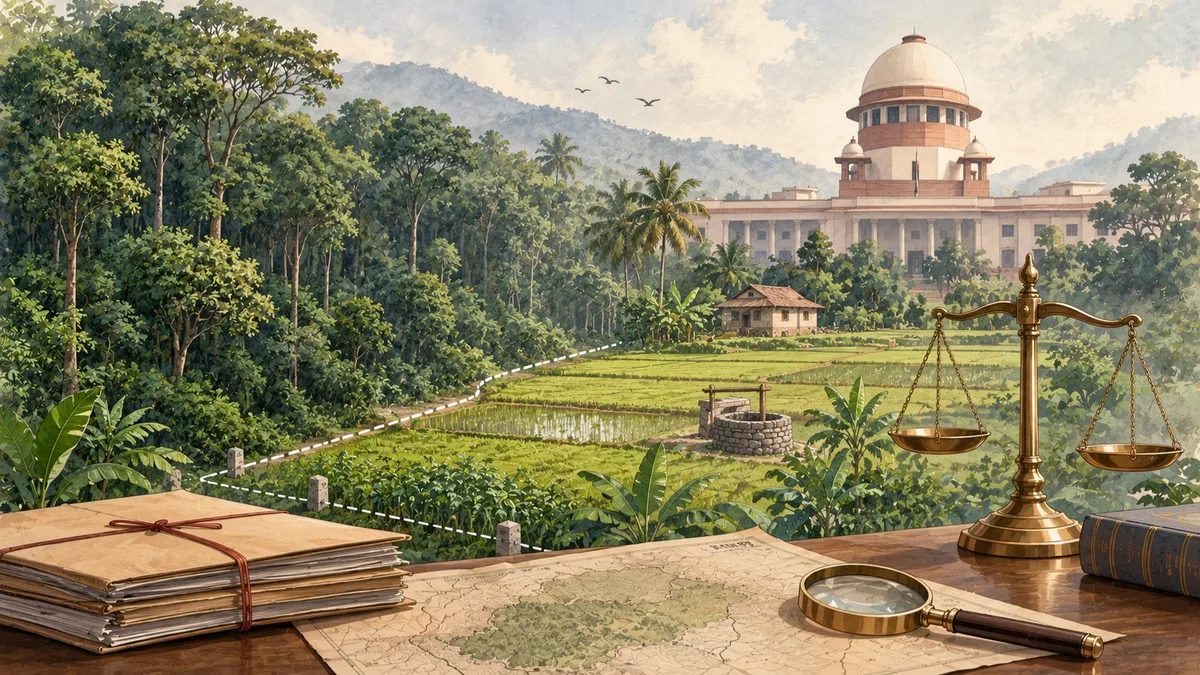
The Supreme Court dismissed the State of Kerala’s appeal against a finding that 12 acres of land in Edakkara Village, Malappuram District, did not constitute private forest and…

The Supreme Court allowed the Union of India’s transfer petitions and directed that two cases registered in Jammu and Kashmir and Haryana be transferred to the NIA Special Court…

The Supreme Court examined the termination of an Associate Professor during probation at the Indian Institute of Science, Bengaluru. The central question was whether a termination…
The Supreme Court considered a batch of appeals arising from the insolvency resolution processes of Videocon Industries Limited VIL , twelve other Videocon group companies and…
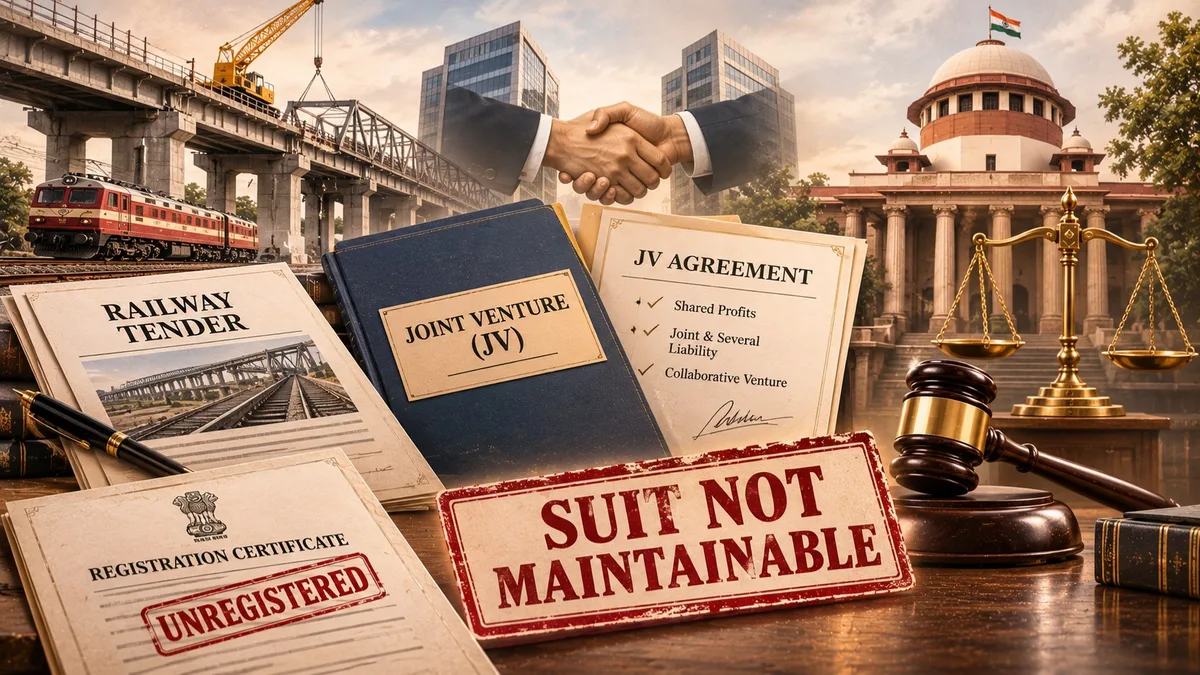
A joint venture formed by two companies was a partnership on the substance of its agreement, including the project business, profit-sharing and mutual agency; because the…
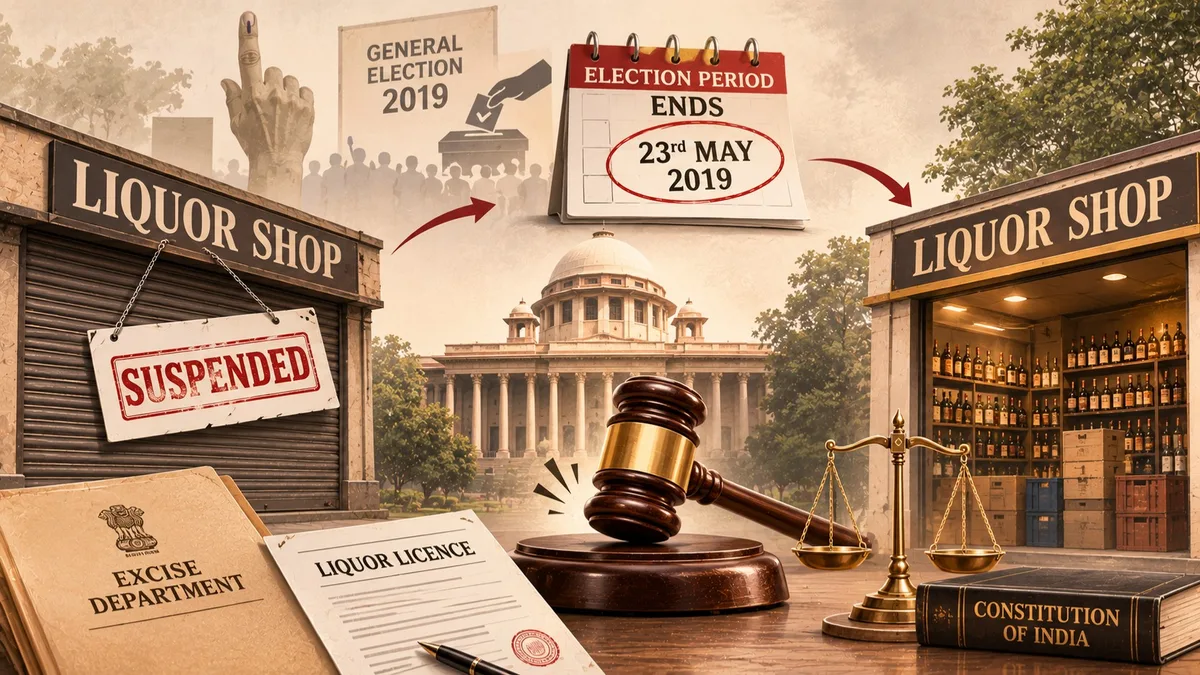
Although no fundamental right exists to carry on the liquor trade, the State cannot keep temporary licences suspended beyond the election period without disclosing cogent reasons…