
The Supreme Court dismissed the husband’s appeals and upheld the enhancement of interim maintenance payable to his wife from ₹75,000 to ₹1,50,000 per month. The Court found the…
Family Law
Court / Authority
Orissa High Court
Update / Judgement Date
10 Nov 2026
Date of Publication
13 Nov 2026
Case No.
W.P.(C) No. 25566 of 2023
Source
WCP News Bulletin
Author
Dipanshi Bansal — WCP Legal Desk
Reading Time
10 min read
View Count
The High Court of Orissa considered whether a long-standing mining lease for China Clay could be treated as a lease for captive use for the purpose of obtaining the extended lease period contemplated under Section 8-A(5) of the Mines and Minerals (Development and Regulation) Act, 1957. The State had rejected the petitioner's claim on the ground that the original 1966 lease did not expressly use the words “captive use” and was therefore a merchant mining lease. The Division Bench rejected that approach, holding that the nature of the lease had to be determined from the substance and intention reflected in the original lease, particularly Clause 8 permitting beneficiation of the extracted ore. The Court further held that although China Clay subsequently became a minor mineral and Section 14 ordinarily excludes Sections 5–13 of the MMDR Act in respect of minor minerals, Rule 66 of the Odisha Minor Minerals Concession Rules, 2016 preserved the applicability of Section 8-A to minerals which had earlier been major minerals. Since the petitioner had been using the extracted mineral in his own beneficiation plants, the lease qualified as one for captive use. The impugned order was quashed and the authorities were directed to execute a supplementary lease deed for the period contemplated by Section 8-A(5). (Paras 9–17)
Key Proposition: For determining whether an old mining lease qualifies as a captive-use lease under Section 8-A(5) of the MMDR Act, the authorities must examine the substance and purpose of the original lease, and the absence of the express words “captive use” is not by itself decisive where the lease permits beneficiation and the extracted mineral is in fact used in the lessee's own beneficiation plant.
Full Judgement / Attachment
Full Judgement
Issues For Consideration :
Submissions Of Parties :
Petitioner:
State / Opposite Parties:
Court's Observations & Analysis :
Re: Applicability of Section 8-A after China Clay became a minor mineral
Re: Whether the original lease was for captive use
Re: Actual conduct of the petitioner and authorities
Notable Observations: None.
Decision & Directions :
Legal Provisions Discussed & Precedents Cited :
Case Details :
Disclaimer: This summary is an editorial aid and does not form part of the judgment. Refer to the original judgment before citing.
© 2026 White Collar Professional Technologies Pvt. Ltd. All rights reserved. CIN: U74999MH2024PTC000001
The Supreme Court dismissed the husband’s appeals and upheld the enhancement of interim maintenance payable to his wife from ₹75,000 to ₹1,50,000 per month. The Court found the…
The Supreme Court allowed the appeal of a woman who suffered severe electrocution injuries, resulting in amputation of her right hand and permanent disability. It set aside the…
The Supreme Court dismissed the Delhi Development Authority’s appeals and upheld directions requiring release of gratuity to two retired employees who had been honourably…
The Supreme Court dismissed the challenge by candidates to the recruitment process for Excise Constables in Nagaland. It held that the recruitment was governed by the Nagaland…
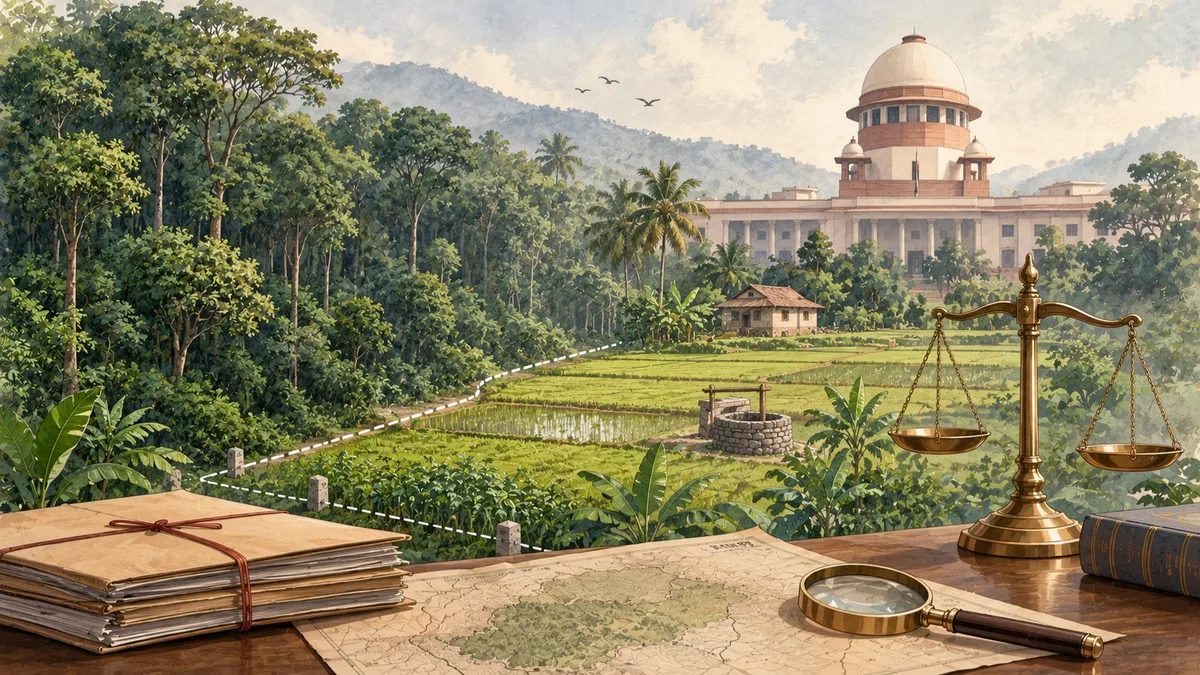
The Supreme Court dismissed the State of Kerala’s appeal against a finding that 12 acres of land in Edakkara Village, Malappuram District, did not constitute private forest and…

The Supreme Court allowed the Union of India’s transfer petitions and directed that two cases registered in Jammu and Kashmir and Haryana be transferred to the NIA Special Court…

The Supreme Court examined the termination of an Associate Professor during probation at the Indian Institute of Science, Bengaluru. The central question was whether a termination…
The Supreme Court considered a batch of appeals arising from the insolvency resolution processes of Videocon Industries Limited VIL , twelve other Videocon group companies and…
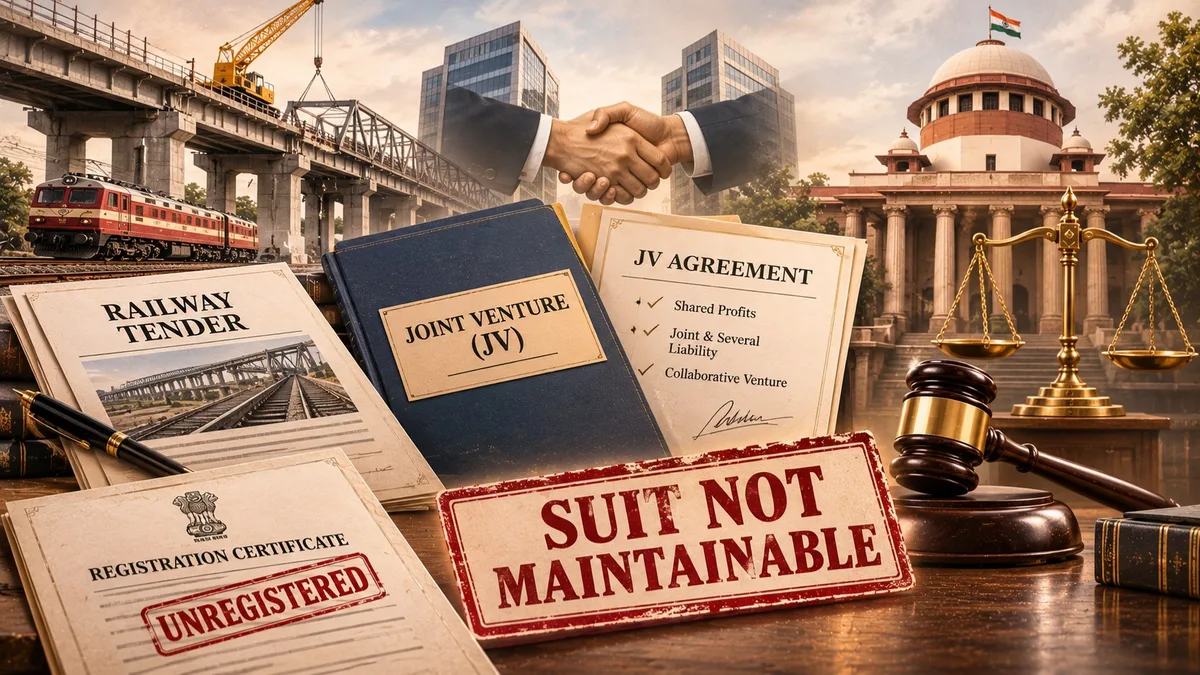
A joint venture formed by two companies was a partnership on the substance of its agreement, including the project business, profit-sharing and mutual agency; because the…
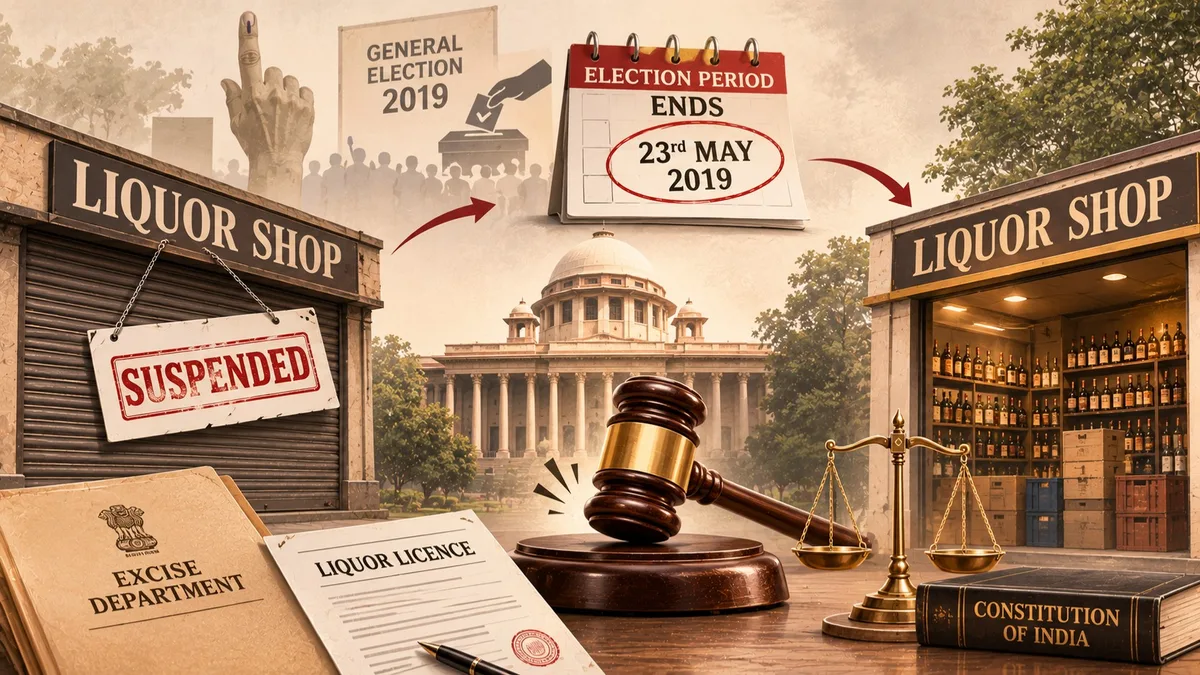
Although no fundamental right exists to carry on the liquor trade, the State cannot keep temporary licences suspended beyond the election period without disclosing cogent reasons…