
The Supreme Court dismissed the husband’s appeals and upheld the enhancement of interim maintenance payable to his wife from ₹75,000 to ₹1,50,000 per month. The Court found the…
Family Law
Court / Authority
Kerala High Court
Update / Judgement Date
12 Nov 2026
Source
WCP News Bulletin
Author
Arshee Saifi — WCP Legal Desk
Reading Time
7 min read
View Count
2
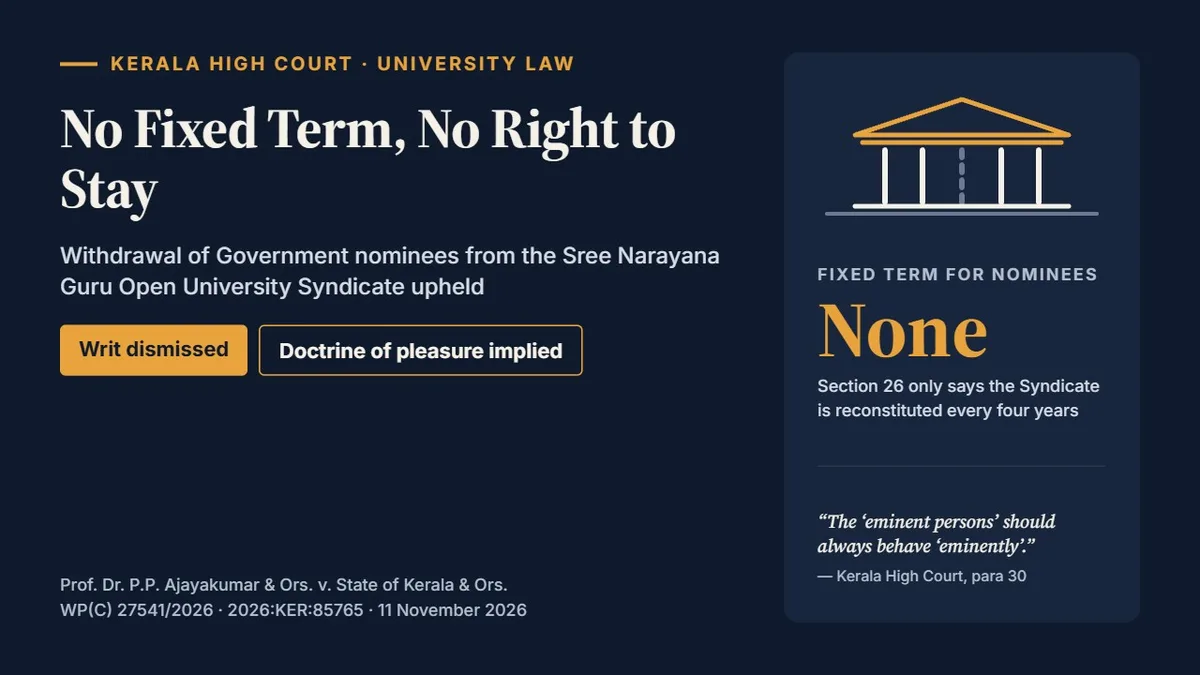
Key Proposition: Where a university statute fixes no term of office for members nominated by the Government to its Syndicate, and only provides that the Syndicate shall be reconstituted every four years, the nominees have no statutory right to continue for four years, and the Government may withdraw their nominations without assigning reasons when the withdrawal casts no stigma.
A. Background / Synopsis :
B. Issues For Consideration :
Full Judgement / Attachment
Full Judgement
© 2026 White Collar Professional Technologies Pvt. Ltd. All rights reserved. CIN: U74999MH2024PTC000001
C. Submissions Of Parties :
Read together, Sections 25 and 26 fix a four-year term, which would run till 13.03.2029; unlike other university Acts, the 2021 Act gives no power to recall nominees or invoke the doctrine of pleasure. (Paras 1–2)
Even where that doctrine is expressly provided, it cannot be used arbitrarily (Deepak S.P. v. Chancellor, University of Kerala); the withdrawal without reasons or misconduct violates Article 14, and universities must be kept free of political control. (Paras 2–3, 5)
State and University:
The power to appoint includes the power to dismiss (Section 16, General Clauses Act; State of Maharashtra v. Shaikh Mahemud). (Para 6)
Nomination differs from appointment; the power to nominate includes the power to rescind (Section 21, General Clauses Act), and judicial review of such decisions is limited absent mala fides. (Para 7)
Section 26 only sets an outer limit for reconstituting the Syndicate; every other Kerala university Act expressly fixes a term for members, which the 2021 Act does not. (Para 8)
D. Court's Observations & Analysis :
Section 26 fixes no term for the Syndicate or its nominated members and only requires reconstitution every four years; the Kerala University Act, 1974 and other statutes, by contrast, give members a four-year term. (Paras 13–15)
Whether to fix a term is a matter of legislative wisdom, and the Court cannot read one in where the provision is not ambiguous. Ext.P1 and Ext.P2 also mention no term. (Para 15)
Being nominated as an 'eminent person' gives no right to continue in office without statutory backing, and withdrawing a nomination does not withdraw recognition of eminence. (Para 12)
Section 16 of the General Clauses Act deals with 'appointment', not 'nomination', so it has little application here; Shaikh Mahemud only reiterates Section 16 and was not discussed further. (Paras 16–18)
Thiruvanchoor Radhakrishnan (fixed four-year term under the CUSAT Act), Saji D. Anand (express removal provision) and Cheviti Venkanna Yadav (fixed term) were distinguished; the 2021 Act has neither a fixed term nor a removal provision. (Paras 19–25)
Withdrawing a nomination that the Act empowers the Government to make is not Government domination of the University (All Kerala Pvt. College Teachers' Assn.). (Para 24)
Agreeing with the Karnataka High Court, the doctrine of pleasure can be implied, and once it applies, neither natural justice nor an opportunity before removal arises. (Paras 26–28)
Held: no legal or statutory right of the petitioners is violated; there is nothing to interfere with in the withdrawal orders. (Paras 29–30)
Notable Observations: ““Eminence” alone cannot confer an indefeasible right to continue in office unless there is statutory backing.” (Para 12); “The “eminent persons” should always behave “eminently”.” (Para 30)
E. Decision & Directions :
1. Writ petition dismissed; the withdrawal of the petitioners' nominations (Exts.P4 and P5) upheld. (Para 30)
2. The Court observed that the withdrawal does not mean the petitioners are not 'eminent persons', and that a graceful acceptance would only enhance their eminence. (Paras 12, 30)
Costs: Not stated in judgment.
Separate Opinions: None (Single Judge).
F. Legal Provisions Discussed & Precedents Cited :
G. Case Details :
Disclaimer: This summary is an editorial aid and does not form part of the judgment. Refer to the original judgment before citing.
The Supreme Court dismissed the husband’s appeals and upheld the enhancement of interim maintenance payable to his wife from ₹75,000 to ₹1,50,000 per month. The Court found the…
The Supreme Court allowed the appeal of a woman who suffered severe electrocution injuries, resulting in amputation of her right hand and permanent disability. It set aside the…
The Supreme Court dismissed the Delhi Development Authority’s appeals and upheld directions requiring release of gratuity to two retired employees who had been honourably…
The Supreme Court dismissed the challenge by candidates to the recruitment process for Excise Constables in Nagaland. It held that the recruitment was governed by the Nagaland…
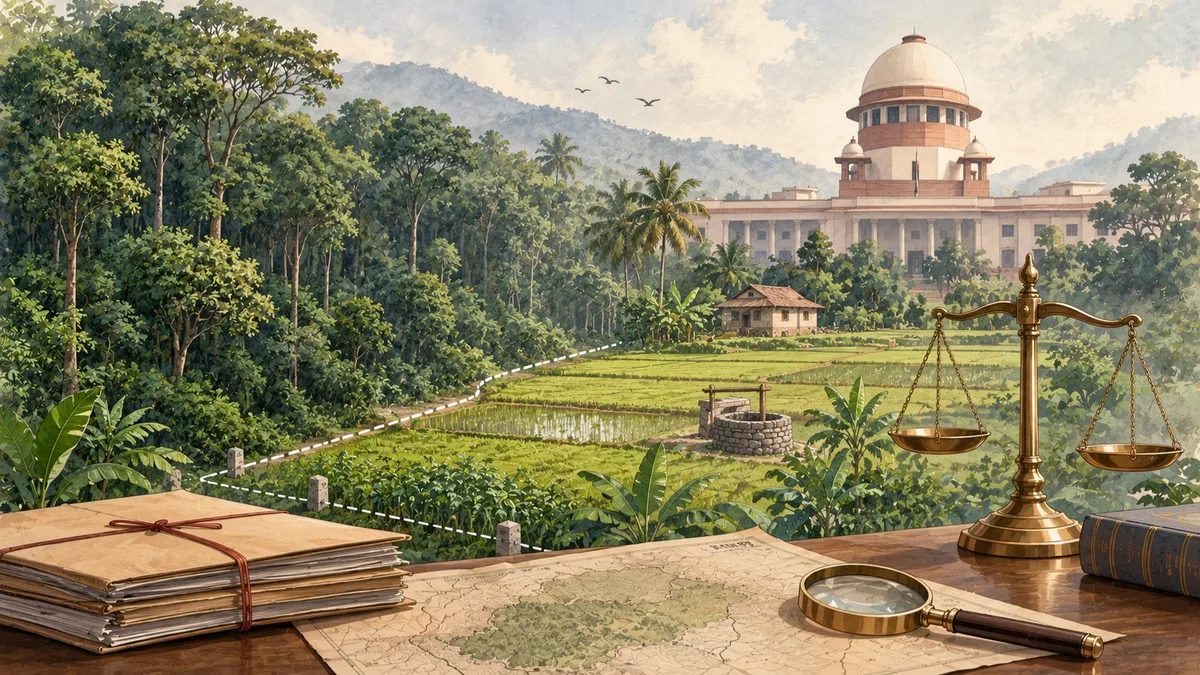
The Supreme Court dismissed the State of Kerala’s appeal against a finding that 12 acres of land in Edakkara Village, Malappuram District, did not constitute private forest and…

The Supreme Court allowed the Union of India’s transfer petitions and directed that two cases registered in Jammu and Kashmir and Haryana be transferred to the NIA Special Court…

The Supreme Court examined the termination of an Associate Professor during probation at the Indian Institute of Science, Bengaluru. The central question was whether a termination…
The Supreme Court considered a batch of appeals arising from the insolvency resolution processes of Videocon Industries Limited VIL , twelve other Videocon group companies and…
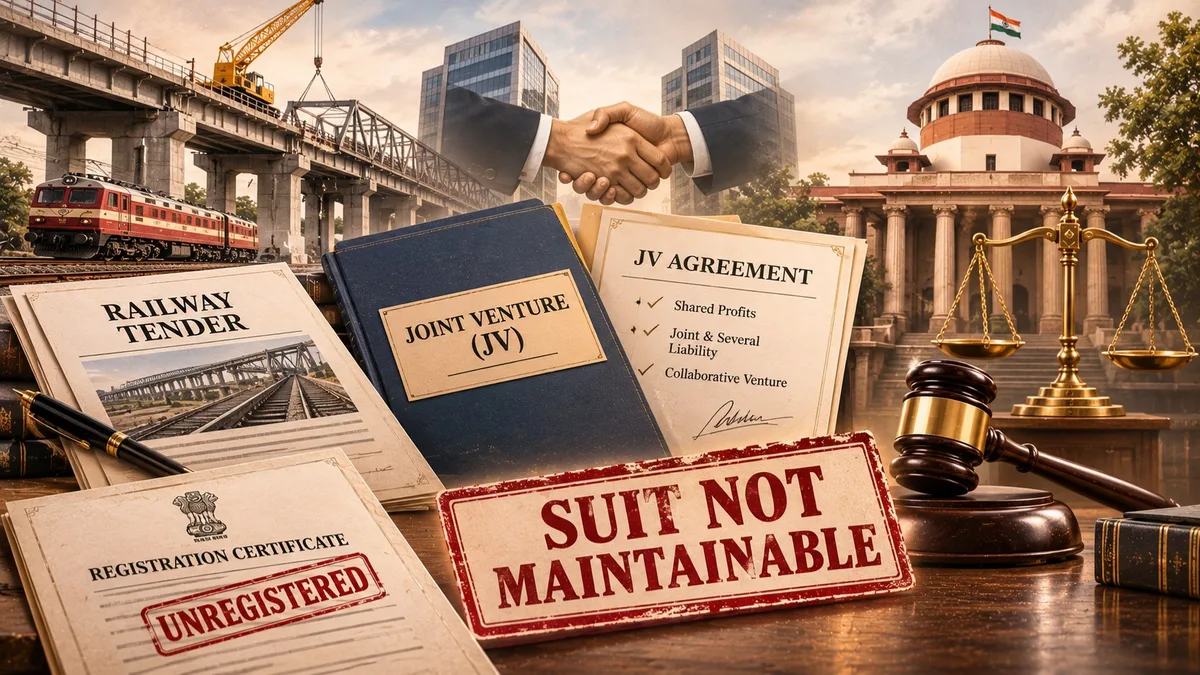
A joint venture formed by two companies was a partnership on the substance of its agreement, including the project business, profit-sharing and mutual agency; because the…

Although no fundamental right exists to carry on the liquor trade, the State cannot keep temporary licences suspended beyond the election period without disclosing cogent reasons…