Section 197 CrPC Protection Not Available for Alleged Forgery and Conspiracy by Public Servants: Supreme Court
Court / Authority
Supreme Court of India
Update / Judgement Date
17 Nov 2026
Source
WCP News Bulletin
Author
Dipanshi Bansal — WCP Legal Desk
Reading Time
2 min read
View Count

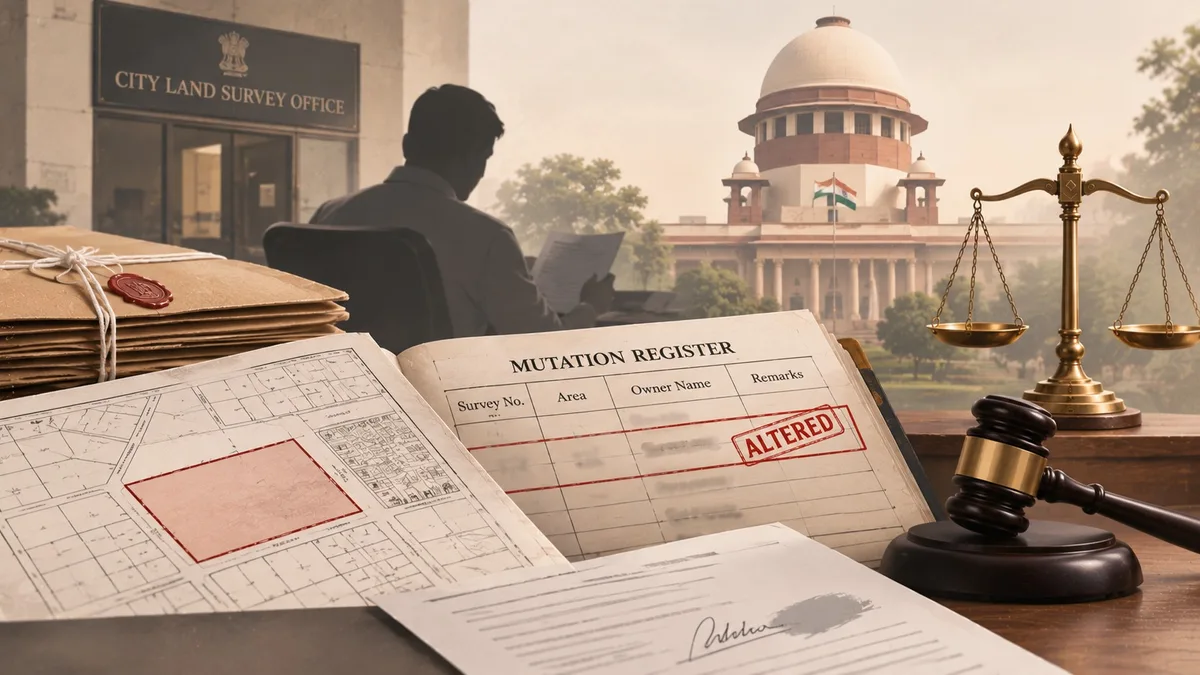
The appeals concerned criminal proceedings arising from alleged manipulation of land records and mutation entries in Dhule, Maharashtra. The complainant alleged that public officials had acted in concert to facilitate mutation of land in favour of private parties despite the complainant’s trust claiming ownership under an earlier gift deed. The High Court had quashed the proceedings on the ground that prior sanction was required under Section 197 CrPC read with the Maharashtra amendment to Section 156(3) CrPC, and that applications for sanction had been made to authorities said to be incompetent.
Key Legal Issues
Whether sanction under Section 197 CrPC and the Maharashtra amendment to Section 156(3) was required before ordering investigation into the alleged acts; and whether the alleged forgery, conspiracy and manipulation of land records could be treated as acts done in discharge or purported discharge of official duty.
Analysis and Findings
The Supreme Court held that the allegations were of conspiring to commit criminal offences by preparing forged documents, using them as genuine, and manipulating property records and mutation entries with an intention to cheat. Such conduct, as alleged, could not be treated as an act performed in discharge or purported discharge of official duties. Consequently, Section 197 CrPC and the Maharashtra amendment to Section 156(3) were not attracted. The Court clarified that its observations were limited to the question of sanction and would not affect the independent assessment of the criminal cases on their merits.
Final Outcome
The appeals were allowed. The High Court’s order dated 27 November 2024 was set aside, and the two criminal cases (RCC Nos. 1020 of 2023 and 119 of 2024) were restored to the file of the Chief Judicial Magistrate, Dhule, to proceed in accordance with law.
Relevant Law and Precedents
Section 197 of the Code of Criminal Procedure, 1973, protects public servants from prosecution for acts reasonably connected with official duty, subject to the statutory requirements. The Maharashtra amendment to Section 156(3) imposed a sanction-related requirement at the investigation-order stage in the circumstances covered by it. The protection does not extend to alleged criminal acts such as forgery and conspiracy merely because the accused holds public office.
This summary is based on the uploaded judgment/order. It is an editorial summary and should be read with the original source for the complete record and operative directions.
Full Judgement / Attachment
Full Judgement
Frequently asked questions about Supreme Court of India
- What is the role of the Supreme Court of India?
- The Supreme Court, established on 28 January 1950, is the highest court of appeal in India. Under Article 141 of the Constitution, the law it declares is binding on all courts in India. It also hears writ petitions for enforcement of fundamental rights under Article 32.
- How can I check Supreme Court case status or download a judgement?
- Case status, cause lists, daily orders and judgements are published on the official website, sci.gov.in. Reported judgements are also available free through the Digital SCR (Supreme Court Reports) on the same website.
- What is a Special Leave Petition (SLP) and what is the time limit?
- An SLP under Article 136 asks the Supreme Court for permission to appeal against a judgement or order of any court or tribunal in India. Against a High Court judgement it is ordinarily filed within 90 days. Leave is discretionary, and most SLPs are decided at the admission stage.
- Who can file a case in the Supreme Court?
- Only an Advocate-on-Record, a lawyer who has passed the Supreme Court's AOR examination, can file pleadings in the Supreme Court. A party may appear in person with the Court's permission, but most litigants engage an Advocate-on-Record along with arguing counsel.
- How can White Collar Professional help with a Supreme Court matter?
- Post your requirement on White Collar Professional to receive proposals from verified Advocates, Chartered Accountants and Company Secretaries, compare them, and pay securely through the platform. This page also tracks the latest Supreme Court judgements and legal updates as they are reported.