Supreme Court Allows Release of Gratuity to Retired Employees Despite Pending State Appeal Against Acquittal
Court / Authority
Supreme Court of India
Update / Judgement Date
16 Nov 2026
Case No.
Civil Appeals Nos. 14204 and 14205 of 2026
Source
WCP News Bulletin
Author
Dipanshi Bansal — WCP Legal Desk
Reading Time
3 min read
View Count
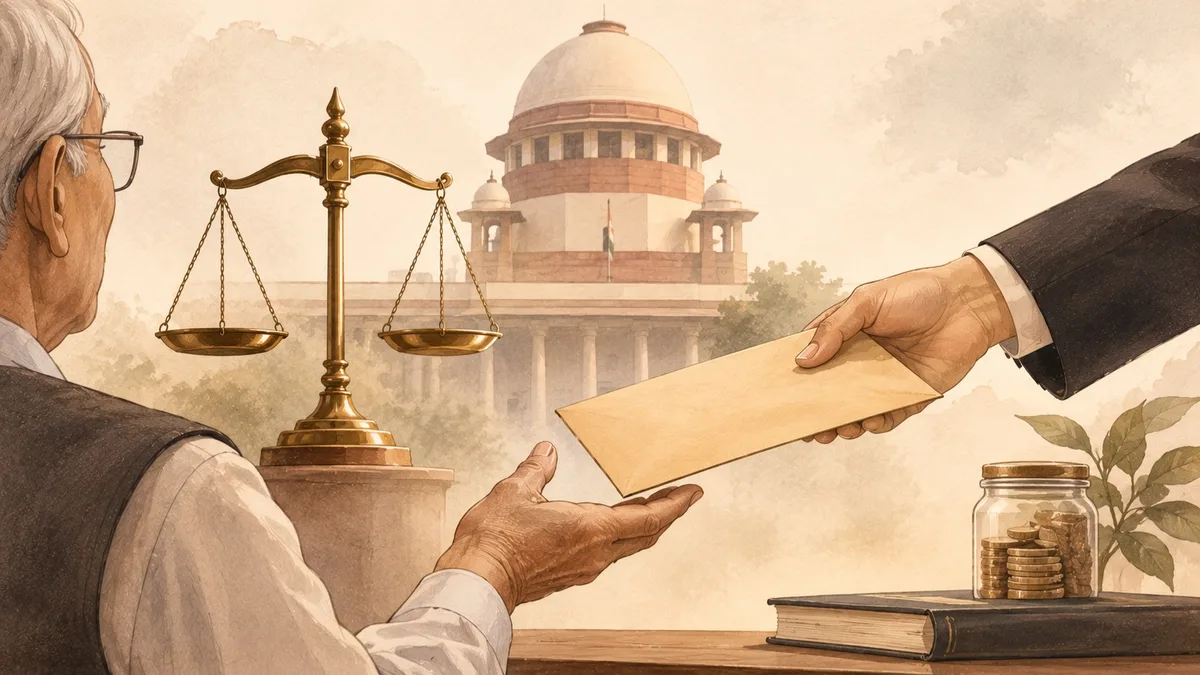
The Supreme Court dismissed the Delhi Development Authority’s appeals and upheld directions requiring release of gratuity to two retired employees who had been honourably acquitted at trial, even though the State’s criminal leave petition challenging the acquittal remained pending. The employees were required to furnish undertakings to refund the gratuity with interest if the proceedings ultimately resulted against them.
Key Highlights
- The DDA had withheld gratuity of ₹18,52,224 and ₹15,43,113 under Rule 69(1)(c) of the CCS (Pension) Rules, 1972.
- The employees had been honourably acquitted after a full-fledged criminal trial. The pending challenge to the acquittal had not resulted in a stay of the trial court judgment.
- The Tribunal and Delhi High Court directed release of gratuity with interest, subject to undertakings to refund the amounts if the judicial proceedings ultimately concluded against the employees.
- The Supreme Court held that the pending appellate challenge, by itself, did not justify withholding terminal benefits indefinitely after acquittal.
- The Court balanced protection of public funds against the retired employees’ right to receive benefits earned over years of service.
Background and Procedural History
The respondents had served the Delhi Development Authority and retired on 30 September 2021 and 31 December 2018. Their gratuity was withheld because a criminal leave petition challenging their acquittal was pending. Their representations for release were rejected. The Central Administrative Tribunal directed release subject to undertakings, and the Delhi High Court affirmed that approach. The DDA appealed to the Supreme Court.
Issues for Determination
- Whether gratuity could continue to be withheld solely because a challenge to the employees’ acquittal remained pending, where the acquittal had not been stayed.
- Whether release of gratuity subject to an undertaking to refund the amount if the proceedings ultimately went against the employees adequately protected public funds.
- Whether the rule prohibiting payment of gratuity during pending judicial proceedings applied in the circumstances after the trial had concluded in acquittal.
Court’s Analysis and Findings
- The Court held that the reasoning in Kishan Lal Taneja v. Government of NCT of Delhi applied equally to the respondents, who had been honourably acquitted after trial.
- The Court distinguished Bikram Chand Rana v. Himachal Pradesh Road Transport Corporation. That case concerned a different procedural situation in which departmental proceedings had concluded but the criminal trial remained pending. Here, the trial had concluded and resulted in acquittal.
- The Court observed that an appellate court may or may not disturb an acquittal, but until it does so, the acquittal continues to operate. A pending challenge without a stay could not justify withholding terminal dues for an uncertain period.
- The undertaking requirement balanced the public authority’s interest in possible recovery against the retired employees’ need to enjoy their earned retirement benefits. Requiring elderly retired employees to wait indefinitely could render those benefits illusory.
Final Decision / Outcome
The appeals were dismissed. The directions to release gratuity with applicable interest, subject to undertakings to refund the amounts with interest if the proceedings ultimately went against the employees, were upheld.
Relevant Statutes and Precedents
The central provision was Rule 69(1)(c) of the Central Civil Services (Pension) Rules, 1972, concerning non-payment of gratuity until conclusion of departmental or judicial proceedings and final orders. The Court applied Kishan Lal Taneja and distinguished Bikram Chand Rana. The judgment also referred to subsequent relief granted to similarly placed employees in Rajinder Khurana and Laxmi Narain.
Supreme Court of India judgment/order dated 16 November 2026. This summary is an editorial aid and should be read with the original judgment for authoritative text.
Full Judgement / Attachment
Full Judgement
Frequently asked questions about Supreme Court of India
- What is the role of the Supreme Court of India?
- The Supreme Court, established on 28 January 1950, is the highest court of appeal in India. Under Article 141 of the Constitution, the law it declares is binding on all courts in India. It also hears writ petitions for enforcement of fundamental rights under Article 32.
- How can I check Supreme Court case status or download a judgement?
- Case status, cause lists, daily orders and judgements are published on the official website, sci.gov.in. Reported judgements are also available free through the Digital SCR (Supreme Court Reports) on the same website.
- What is a Special Leave Petition (SLP) and what is the time limit?
- An SLP under Article 136 asks the Supreme Court for permission to appeal against a judgement or order of any court or tribunal in India. Against a High Court judgement it is ordinarily filed within 90 days. Leave is discretionary, and most SLPs are decided at the admission stage.
- Who can file a case in the Supreme Court?
- Only an Advocate-on-Record, a lawyer who has passed the Supreme Court's AOR examination, can file pleadings in the Supreme Court. A party may appear in person with the Court's permission, but most litigants engage an Advocate-on-Record along with arguing counsel.
- How can White Collar Professional help with a Supreme Court matter?
- Post your requirement on White Collar Professional to receive proposals from verified Advocates, Chartered Accountants and Company Secretaries, compare them, and pay securely through the platform. This page also tracks the latest Supreme Court judgements and legal updates as they are reported.